Complete Guide to Taimatsuden Inari Shrine (Kyoto Prefecture) | History, Deities, Access, and Highlights Explained in Detail
Located at the western end of Shichijo Ohashi Bridge in Shimogyo Ward, Kyoto City, Taimatsuden Inari Shrine is a historic shrine founded in 948 during the mid-Heian period. As an outlying subsidiary shrine of Fushimi Inari Taisha, it continues to preserve its unique faith and traditions. The beautiful vermilion shrine buildings along the Kamo River are beloved by locals, yet it’s gaining attention as a hidden gem relatively unknown to tourists.
History and Origins of Taimatsuden Inari Shrine
Circumstances of Founding and Imperial Festival during the Tenryaku Era
Taimatsuden Inari Shrine was founded in the second year of the Tenryaku era (948). This period was the mid-Heian period, a time when Inari worship was widely prevalent among the people of Kyoto. Eight years after its founding, in Tenryaku 10 (956), a torch-lighting festival was held by imperial decree, and at that time, the shrine was granted the name “Taimatsuden” (Torch Hall). This imperial festival is recorded as an important event demonstrating the high status of the shrine.
Origin of the Name “Taimatsuden”
The distinctive name “Taimatsuden” is deeply connected to the spring Inari Festival of Fushimi Inari Taisha. During the Inari Festival, there is an ancient custom where the parishioners of this shrine light torches to welcome the portable shrine of Fushimi Inari Taisha, and this tradition led to the name “Taimatsuden.” It is also known by the alternative names “Tanaka-sha” or “Kyoka-sha,” and these names also originate from the tradition of carrying torches.
History of Repeated Relocations
Taimatsuden Inari Shrine has experienced several relocations since its founding. Originally, the shrine was located near the present-day Rihga Royal Hotel Kyoto, south of Kuromon-dori Shio-koji. Later, after moving through Shichijo Higashi-no-toin and other locations, it was relocated to its current location west of Kamogawa on Shichijo-dori in 1711 (Hoei 8). This history of relocation reflects the urban development and regional changes of Kyoto, and the shrine has watched over the area from its current location for over 300 years.
Deities and Divine Virtues
About the Main Deity
The Taimatsuden Inari Shrine enshrines several deities. The main deities are as follows:
Ōnamuchi-no-mikoto
Also known as Ōkuninushi-no-mikoto, he is revered as the god of nation-building. He is believed to bestow blessings of matchmaking, business prosperity, and abundant harvests.
Izanagi-no-mikoto and Izanami-no-mikoto
These are the gods of creation in Japanese mythology. As a married couple of deities, they bestow blessings for matchmaking, family safety, and prosperity of descendants.
Sarutahiko-no-Mikoto Known as the god of opening paths, he is a deity who guides people on their life’s journey. He bestows blessings for traffic safety and protection from misfortune.
Ukanomitama-no-Mikoto A representative deity of Inari, he bestows blessings for abundant harvests and business prosperity.
Enshrined Divine Statues
The shrine grounds enshrine wooden statues of Emperor Tenji and Prince Otomo. These statues are of high historical value and are valuable cultural assets that speak to the deep history of the shrine.
Relationship with Fushimi Inari Taisha
Positioning as an Outlying Subsidiary Shrine
Taimatsuden Inari Shrine is an outlying subsidiary shrine of Fushimi Inari Taisha. An outlying shrine is a subsidiary shrine located away from the main shrine. While deeply connected to the main shrine, it functions as an independent place of worship. Fushimi Inari Taisha has numerous shrines within and outside its grounds, but Taimatsuden Inari Shrine is particularly historically significant and known for its unique traditions.
Deep Connection to the Inari Festival
The spring Inari Festival of Fushimi Inari Taisha is one of Kyoto’s most important festivals. The parishioners of Taimatsuden Inari Shrine have traditionally played a crucial role in this festival, lighting torches to welcome the portable shrine. This tradition has been documented since ancient times and is deeply intertwined with the shrine’s significance. Even today, this tradition is cherished and passed down as part of the shrine’s identity.
Access and Basic Information
Access by Train
From Shichijo Station on the Keihan Main Line
The nearest station is Shichijo Station on the Keihan Main Line. It is conveniently located about 1-2 minutes on foot from Exit 1. Exit the station and head towards the Kamo River. You will see the shrine on the south side of the western end of Shichijo Bridge, just before crossing it.
From other stations:
- From JR Kyoto Station: Approximately 15 minutes on foot, or by bus.
- From Keihan Gion-Shijo Station: Approximately 5 minutes on the Keihan Main Line to Shichijo Station.
Access by car and parking
Although located along Shichijo Street, there is no dedicated parking lot. If you are visiting by car, you will need to use nearby coin-operated parking lots. Due to its location along the Kamo River, the surrounding roads are busy, so caution is advised.
Basic Information
- Location: 452-1 (or 452) Inari-cho, Shichijo-dori Kamogawa Nishi-iru, Shimogyo-ku, Kyoto City, Kyoto Prefecture
- Visiting Hours: Grounds are freely accessible
- Admission Fee: Free
- Phone Number: Please check various map services for official information
Highlights of the Grounds
The Vermilion Shrine and the View of the Kamo River
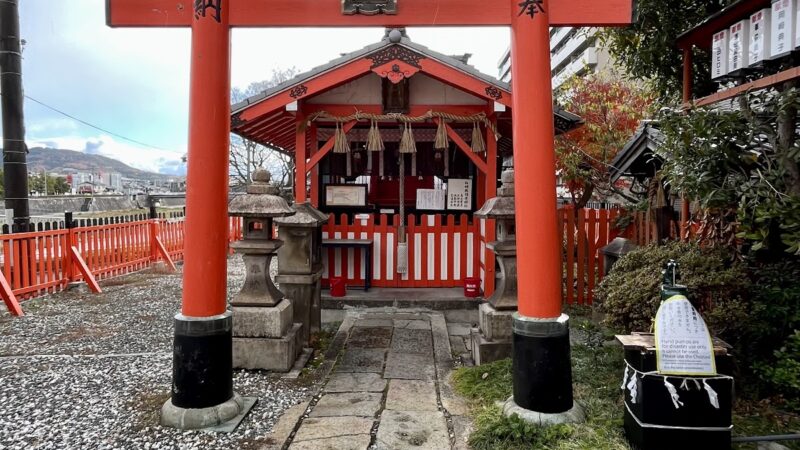
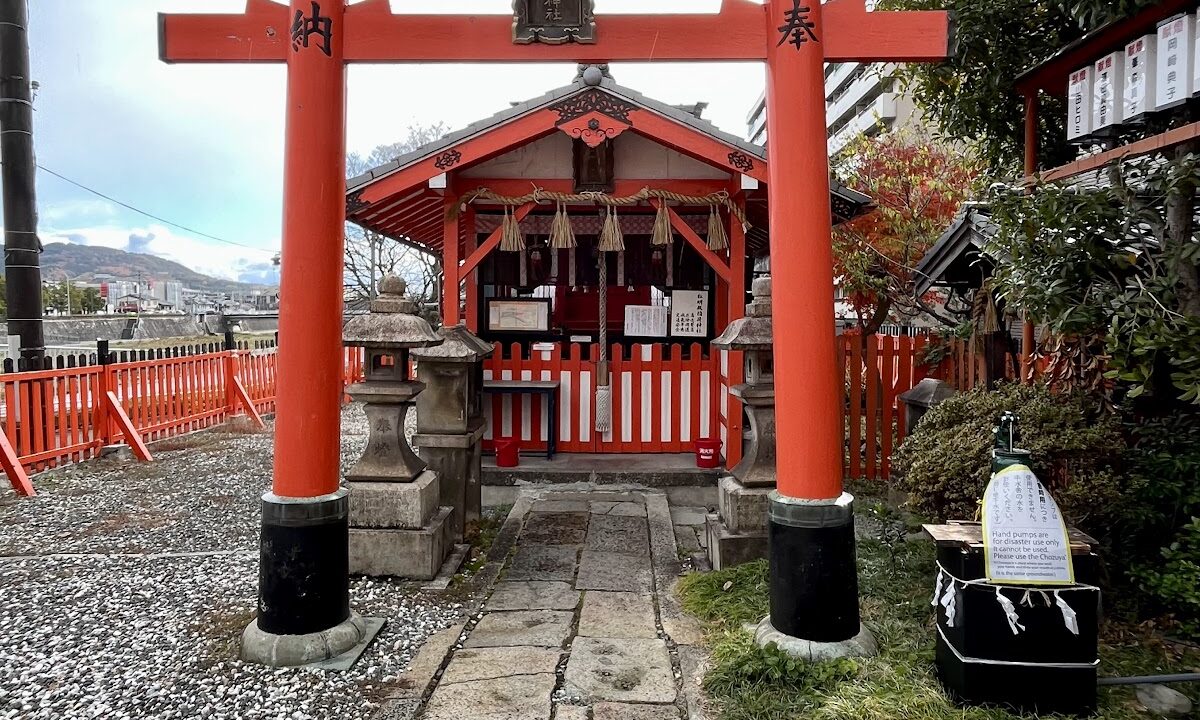
The most striking feature of Taimatsuden Inari Shrine is its beautiful vermilion shrine visible from Shichijo Bridge. The shrine, built along the Kamo River, creates a picturesque landscape harmonizing with the river’s flow. Especially on sunny days, the contrast between the blue sky and the vermilion is stunning, making it a popular photo spot. When crossing Shichijo Bridge, be sure to admire the shrine from the bridge.
Water Basin and Well of Mokujiki Shōzen Yōa
On the west side of the shrine grounds is a water basin and well bearing the inscription of Mokujiki Shōzen Yōa, a monk from the mid-Edo period. Mokujiki Shōzen Yōa was a Shugendō monk who was active during the Edo period and is known for leaving behind stone structures in various locations. This water basin and well are valuable cultural assets that convey the form of faith from the Edo period.
Shrine within the Grounds: Tenmangu Shrine
Within the grounds of Taimatsuden Inari Shrine is a Tenmangu shrine. This shrine, dedicated to Sugawara no Michizane, the god of learning, is popular with students taking exams and those praying for academic success. The coexistence of Inari and Tenjin worship within the same grounds is a characteristic feature of shrines in Kyoto.
Compact Yet Well-Maintained Grounds
Taimatsuden Inari Shrine is a small shrine in terms of size, but the grounds are carefully maintained, creating a refreshing atmosphere. Despite being located amidst the hustle and bustle of the city, the shrine maintains a tranquil space for worship, reflecting the deep faith of the local people.
Points to Note and How to Enjoy Your Visit
A Quiet Environment for Worship
Unlike the touristy atmosphere of Fushimi Inari Taisha, Taimatsuden Inari Shrine offers a quiet and peaceful environment for worship. Conveniently located just a short walk from Shichijo Station, it’s known as a hidden gem, allowing for a peaceful and calm worship experience.
Combine with a Stroll Along the Kamo River
The Kamo River, which flows right beside the shrine, is a representative walking spot in Kyoto. Combining a visit to Taimatsuden Inari Shrine with a stroll along the Kamo River will enhance your Kyoto sightseeing experience. Especially during the cherry blossom season in spring and the autumn foliage season, the scenery along the river is beautiful, allowing you to enjoy both shrine worship and nature.
View from Shichijo Bridge
The view of Taimatsuden Inari Shrine from Shichijo Bridge is highly regarded by many worshippers and photography enthusiasts. The view of the vermilion shrine and the Kamo River from the bridge evokes a distinctly Kyoto atmosphere. We highly recommend viewing the shrine from the bridge before or after your visit.
Experiencing Local History
The area around Taimatsuden Inari Shrine has long flourished as a vital transportation hub in Kyoto. Shichijo Street was an important road connecting east and west, and the Kamo River was a key waterway connecting north and south. Visiting the shrine allows you to truly appreciate Kyoto’s historical and geographical importance.
Nearby Tourist Attractions
Kyoto National Museum
Located about a 10-minute walk east from Taimatsuden Inari Shrine, the Kyoto National Museum is one of Japan’s leading art museums. It exhibits a valuable collection, primarily focusing on Kyoto’s cultural properties and works of art. It’s an ideal spot to visit in conjunction with a shrine visit.
Sanjusangen-do Temple
Across from the Kyoto National Museum is Sanjusangen-do Temple (Rengeo-in), famous for its 1001 statues of the Thousand-Armed Kannon. Taimatsuden Inari Shrine is about a 12-minute walk away and is a popular tourist spot in Kyoto.
Chishaku-in Temple
Chishaku-in Temple, the head temple of the Chizan branch of Shingon Buddhism, is also within walking distance. Known for its beautiful gardens and screen paintings, it offers a peaceful and calming atmosphere.
Around Kyoto Station
Taimatsuden Inari Shrine is about a 15-minute walk from Kyoto Station. You can enjoy shopping and dining at Kyoto Tower and the Kyoto Station Building. Combining a shrine visit with sightseeing around Kyoto Station allows for an efficient sightseeing plan.
Annual Events and Festivals
Connection to the Inari Festival
As mentioned above, Taimatsuden Inari Shrine has a deep connection to the Inari Festival of Fushimi Inari Taisha. The Inari Festival is an important festival of Fushimi Inari Taisha held every spring, and the tradition of the parishioners of Taimatsuden Inari Shrine carrying torches to welcome the portable shrine is still practiced. During this festival period, you can enjoy a lively atmosphere that is different from the usual.
Everyday Worship
Besides the major festivals, local people continue to worship there on a daily basis. Many local residents can be seen stopping by during their morning and evening walks, and it functions as a place of worship deeply rooted in their lives.
Summary of the Charms of Taimatsuden Inari Shrine
Taimatsuden Inari Shrine is a venerable shrine with a history of over 1000 years dating back to the Heian period, yet it maintains a simple charm that has not been commercialized for tourism. As an outlying subsidiary shrine of Fushimi Inari Taisha, its history of preserving the tradition of carrying torches during the Inari Festival speaks to the depth of Kyoto’s religious culture.
Its beautiful location along the Kamo River, excellent access just a one-minute walk from Shichijo Station, its openness with free and free worship, and its quiet and peaceful atmosphere—all of these factors enhance the value of visiting Taimatsuden Inari Shrine.
When sightseeing in Kyoto, try visiting not only famous tourist spots but also small, locally rooted shrines like this one. A visit to Taimatsuden Inari Shrine will provide an opportunity to gain a deeper understanding of Kyoto’s history and culture. When crossing Shichijo Bridge, be sure to take a look at the vermilion shrine buildings and visit this historic shrine.