Complete Guide to Shimogoryo Shrine (Kyoto Prefecture) | History, Access, and Highlights of Goryo Faith
Located on Teramachi Street, east of the Kyoto Imperial Palace, Shimogoryo Shrine is an important center of Goryo faith, which has continued since the Heian period. As a historical shrine that has appeased the vengeful spirits of those who met untimely deaths and protected the capital from epidemics and disasters, it continues to attract many worshippers.
History and Origins of Shimogoryo Shrine
Background of Founding and Goryo Faith
The founding of Shimogoryo Shrine dates back to the 5th year of the Jogan era (863 AD). In the early Heian period, Kyoto experienced a series of epidemics and natural disasters, which people believed to be the curses of the vengeful spirits of those who had met untimely deaths. The Imperial Court held Japan’s first Goryo-e (a ritual to appease vengeful spirits) at Shinsen-en Garden, where the six Goryo spirits were appeased, which is considered the origin of the founding of Shimogoryo Shrine.
Originally founded in Shimo-Izumoji (present-day Kamigyo Ward), and located south of Kamigoryo Shrine, it came to be called “Shimo-Goryo Shrine.” Historically, it played an important role in protecting the Kyoto Imperial Palace, in conjunction with Kamigoryo Shrine.
History of Relocation
Shimo-Goryo Shrine has experienced several relocations since its founding. The most significant change occurred in 1590, during Toyotomi Hideyoshi’s large-scale reorganization of temples and shrines in Kyoto. At this time, it moved to its current location in Shimo-Goryo-mae-cho, Teramachi-dori Marutamachi-sagaru, Nakagyo Ward, and has continued to attract the faith of the people of Kyoto in this location ever since.
Even after the relocation, it has been revered as the tutelary deity of the Imperial Palace and as a shrine protecting the capital from epidemics and disasters, walking hand in hand with the history of Kyoto.
Deities: About the Eight Goryo
Eight Deities
Shimo-Goryo Shrine enshrines eight deities known as the “Eight Goryo.” These are the six deities enshrined at the Shinsen-en Goryo-e (spirit appeasement ceremony), with the addition of Kibi no Seirei and Karai Tenjin.
The Eight Main Deities:
- Kibi no Seirei – Kibi no Makibi. Scholar and politician of the Nara period.
- Emperor Sudo – Prince Sawara. Younger brother of Emperor Kanmu, who died in anger after being falsely accused.
- Prince Iyo – Son of Emperor Kanmu. Driven to suicide on suspicion of rebellion.
- Fujiwara no Daibunin – Fujiwara no Yoshiko. Mother of Prince Iyo.
- Todaibu – Fujiwara no Hirotsugu. A nobleman of the Nara period who led a rebellion and was executed.
- Kitsudaibu – Tachibana no Hayanari. Known as a calligrapher, he was exiled on suspicion of rebellion.
- Bundaibu – Funya no Miyatamaro. Exiled for a crime he did not commit.
- Karaitenjin – Sugawara no Michizane. Known as the god of learning.
The Meaning of Goryo Faith
What these deities have in common is that they all became victims of political intrigue and power struggles, meeting untimely deaths. People in the Heian period believed that these vengeful spirits brought disease and disaster, and sought to appease their curses by worshipping them with great reverence, and conversely, worship them as guardian deities.
Shimogoryo Shrine, as a center of this Goryo faith, has been revered since ancient times as a shrine for warding off disease, protecting against misfortune, and safeguarding the Imperial Palace.
Highlights of the Shrine Grounds
Main Hall and Architectural Features
The current main hall was built in 1791 (Kansei 3), and it is said to have been relocated from the temporary Naishidokoro (Imperial Palace Office) of the Imperial Palace. The Naishidokoro was an important place where the Emperor performed rituals, and it is a valuable building that conveys the formality of Imperial Palace architecture to this day.
The main hall is characterized by its elegantly curved roof and meticulously crafted decorations, showcasing the finest examples of late Edo period shrine architecture.
Front Gate (Kenreimon Gate)
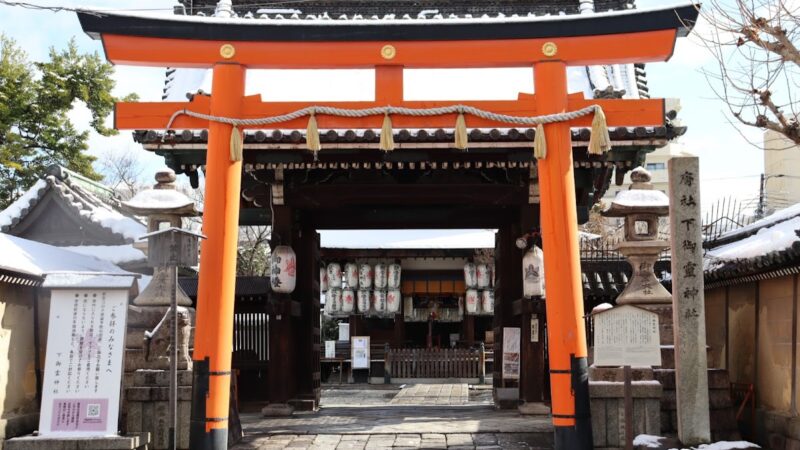
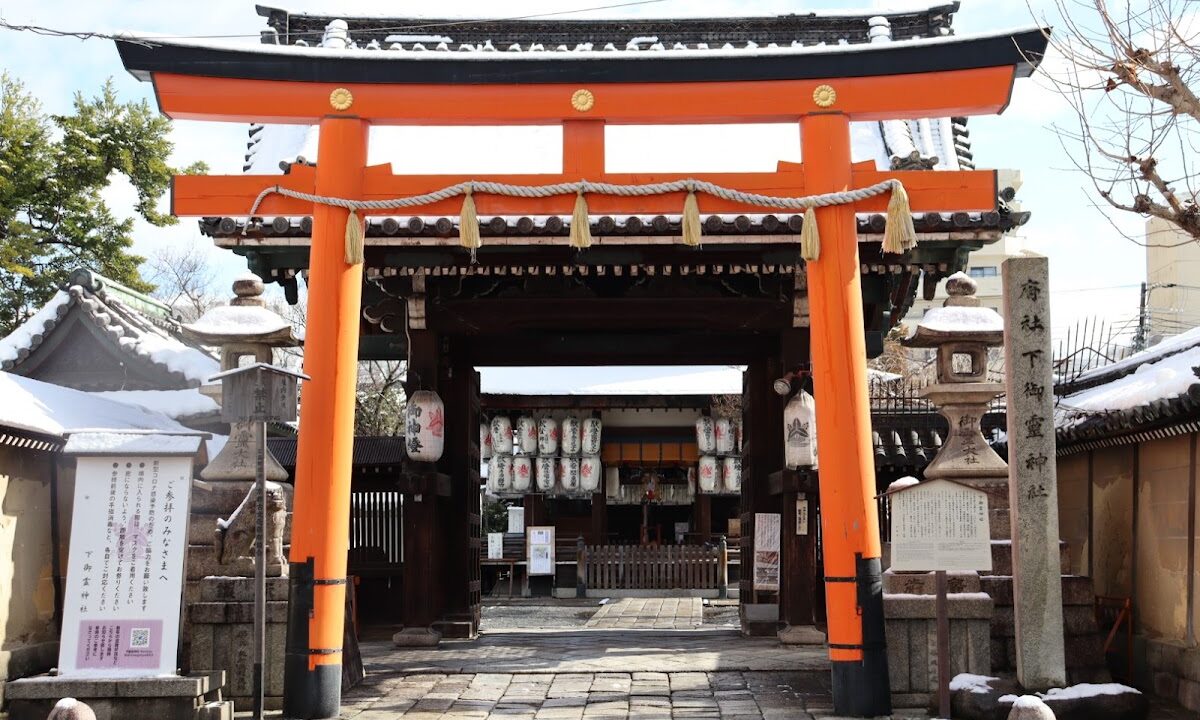
The front gate facing Teramachi Street is said to have been relocated from the Kenreimon Gate of the temporary Imperial Palace. The Kenreimon Gate was originally a highly prestigious gate used as the main gate of the Imperial Palace, and the front gate of Shimogoryo Shrine still retains its dignified appearance.
The vermilion-painted pillars and imposing roof are impressive, making it an important building that tells the story of the deep connection with the Kyoto Imperial Palace.
Nature and the Seasons of the Shrine Grounds
The shrine grounds are adorned with beautiful flowers that bloom throughout the seasons, including red plum blossoms and double-flowered cherry blossoms. Especially in spring, the double-flowered cherry blossoms are in full bloom, delighting visitors. In autumn, the autumn leaves are also beautiful, allowing visitors to feel the changing seasons in the tranquil grounds.
Despite being in the heart of the city, the shrine grounds maintain a peaceful atmosphere and are a beloved place of relaxation for Kyoto residents.
Annual Events and Festivals
Kankosai (Goryosai)
The most important festival at Shimogoryo Shrine is the Kankosai, held annually on the third Sunday of May (sometimes the fourth Sunday). This festival, also known as the Goryosai, is a quintessential symbol of early summer in Kyoto.
Highlights of the Kankosai Festival:
- Procession of the Divine Artifacts: A magnificent procession of the imperial palanquin (horen) and portable shrine (mikoshi) parades through the parish area.
- Children’s Portable Shrine: On the eve of the festival, approximately 300 elementary school students carry the children’s portable shrine, passing on the local tradition to the next generation.
- Kagura Dedication: Traditional Kagura (sacred dance and music) is performed within the shrine grounds, creating a solemn atmosphere.
The Kankosai Festival is an important event that strengthens the bonds among local residents and attracts many spectators.
Lantern Festival (Moon Viewing Evening)
In autumn, the Lantern Festival is held, and countless lanterns are lit within the shrine grounds. Also known as the “Moon Viewing Evening,” this event creates a magical atmosphere with the moonlight and lantern light, providing a time for quiet prayer.
Other Annual Events
- New Year’s Day Festival: A festival to pray for peace in the new year.
- Setsubun Festival: Bean-throwing to ward off evil and invite good fortune.
- Summer Purification Ceremony: A Shinto ritual to purify and cleanse away the impurities accumulated over the past six months.
Through these events, Shimogoryo Shrine continues to function as a central hub for the local community.
Goshuin (Shrine Seals) and Amulets
About Goshuin
In addition to regular goshuin, Shimogoryo Shrine also offers seasonal goshuin. The powerful calligraphy, reflecting the history of Goryo faith, and the shrine’s seal make these goshuin popular as souvenirs of visits.
The shrine office is open from 9:00 to 17:00. Both direct writing in goshuin notebooks and pre-printed goshuin are available.
Amulets and Items Offered
Shimogoryo Shrine offers amulets for various blessings, including protection against evil, disease, and academic success. In particular, amulets for warding off evil spirits, based on the belief in vengeful spirits, have long been revered.
Also, since the shrine enshrines the deity of thunder and lightning (Sugawara no Michizane), amulets for academic success are also popular.
Basic Information and Access
Basic Information
Address
〒604-0995 Shimogoryomae-cho, Teramachi-dori Marutamachi-sagaru, Nakagyo-ku, Kyoto City, Kyoto Prefecture
Visiting Hours
6:00 AM – 7:30 PM (until 8:00 PM in winter)
Shrine Office
9:00 AM – 5:00 PM
Closed Days
Open every day
Admission Fee
Free
Phone Number
075-231-3530
Shrine Rank
Former Prefectural Shrine
Access by Train
Kyoto Municipal Subway
- Get off at Marutamachi Station on the Karasuma Line, approximately 10 minutes on foot
Keihan Railway
- Get off at Jingu-Marutamachi Station, approximately 5 minutes on foot (nearest station)
Jingu-Marutamachi Station on the Keihan Railway is the closest. Cross the Kamo River and walk a short distance south along Teramachi Street to reach the shrine. Located east of the Kyoto Imperial Palace, it’s recommended to visit in conjunction with sightseeing at the Imperial Palace.
Access by Bus
Kyoto City Bus
- Get off at the “Kawaramachi Marutamachi” bus stop, approximately 3 minutes on foot
- Get off at the “Kyoto City Hall” bus stop, approximately 8 minutes on foot
From Kyoto Station, you can use city bus routes 4, 17, and 205.
Access by Car and Parking
By Car
- Approximately 30 minutes from the Meishin Expressway “Kyoto Minami IC”
- Approximately 25 minutes from the Meishin Expressway “Kyoto Higashi IC”
Parking
There is no dedicated parking lot on the grounds. Please use nearby coin-operated parking lots. There are several paid parking lots around the Kyoto Imperial Palace.
Recommended Nearby Spots
Kyoto Imperial Palace
Located approximately 5 minutes on foot from Shimogoryo Shrine, the Kyoto Imperial Palace was once the residence of the Emperor. Beautiful gardens and historical buildings are scattered throughout the vast grounds, and it can be visited without prior reservation (excluding some areas). Visiting both Shimogoryo Shrine and Kamigoryo Shrine will give you a deeper understanding of Kyoto’s history from the Heian period onward.
Kyoto Gyoen National Garden
This vast park surrounding the Kyoto Imperial Palace offers beautiful scenery throughout the seasons. Known for its plum blossoms, cherry blossoms, and autumn leaves, it’s a popular recreational spot for citizens. Well-maintained walking paths allow you to stroll leisurely and experience Kyoto’s nature and history.
Kamigoryo Shrine
Kamigoryo Shrine, a counterpart to Shimogoryo Shrine, is also an important center of Goryo faith. Located north of Kyoto Gyoen, it’s also known as the birthplace of the Onin War. Visiting both shrines will give you a comprehensive understanding of Kyoto’s Goryo faith.
Nashiki Shrine
Nashiki Shrine, located east of Kyoto Gyoen, is known for its beautiful bush clover. The well water within the shrine grounds, “Somei no Mizu,” is one of Kyoto’s three famous springs, attracting many visitors.
Recommended Restaurants in the Area
Coffee Base NASHINOKI
A specialty coffee shop located within walking distance of Shimogoryo Shrine. Enjoy carefully selected coffee and light meals in a relaxed atmosphere, perfect for a break after visiting the shrine.
Bio Sweet’s Capo Capo Kaho Kyoto Gosho Nishi Branch
A sweets shop located west of the Kyoto Imperial Palace. Popular for its healthy sweets made with organic ingredients, it also offers seasonal limited-time menus.
SASAYAIORI+ Kyoto Gyoen
A restaurant near Kyoto Gyoen offering authentic Kyoto-style Japanese cuisine. Known for its dishes utilizing local ingredients, it offers particularly affordable set menus during lunchtime.
Cafes and Restaurants around Teramachi Street
Many cafes and restaurants line Teramachi Street. From long-established Japanese confectionery shops to modern cafes, there are various options, making it convenient for meals and breaks before or after visiting the shrine.
The Charm and Points to Note When Visiting Shimogoryo Shrine
A Quiet Urban Oasis
Located in the heart of Kyoto City, very close to the Kyoto Imperial Palace, the shrine grounds are enveloped in tranquility. The peaceful environment, away from the hustle and bustle of the city, is one of Shimogoryo Shrine’s greatest charms.
Architecture Reflecting History
The main hall and front gate, relocated from the Imperial Palace, preserve the dignified architectural style of the Edo period. Through these structures, you can feel the history of the shrine, which has deep ties to the Kyoto Imperial Palace.
Learning About Goryo Faith
This is a valuable place to learn about the history of Goryo faith, which has continued since the Heian period. Understanding the origins of each of the eight Goryo spirits provides clues to understanding the politics, culture, and faith of the people of the Heian period.
Beauty of the Seasons
Enjoy the beauty of each season: cherry blossoms in spring, fresh greenery in early summer, autumn leaves, and the tranquility of winter. The seasons of double cherry blossoms and red plum blossoms are particularly magnificent and ideal for photography.
Points to Note and Manners When Visiting a Shrine
Proper Way to Visit a Shrine
- Bow before passing through the torii gate.
- Cleanse your hands and mouth at the water basin.
- Perform “two bows, two claps, one bow” in front of the main hall.
- Walk quietly around the shrine grounds.
- Bow again at the torii gate when leaving.
Regarding Photography
Photography is generally permitted on the shrine grounds, but please refrain from taking photos during festivals or Shinto rituals, or obtain permission. Also, please be considerate of other visitors.
Regarding Clothing
There are no particularly strict dress code regulations, but please dress appropriately for a sacred place like a shrine. It is advisable to avoid revealing clothing.
Summary: Experiencing History and Faith at Shimogoryo Shrine
Shimogoryo Shrine is a valuable shrine that conveys the history of Goryo faith, which has continued since the Heian period. The Shimogoryo Shrine, with its long history of enshrining the eight spirits who met tragic deaths and protecting the capital from epidemics and disasters, continues to be revered and worshipped by many people today.
Despite its location very close to the Kyoto Imperial Palace, the shrine grounds offer a quiet and peaceful atmosphere, providing a tranquil oasis in the city for visitors. Through historical buildings such as the main hall and front gate, relocated from the Imperial Palace, the changing seasons, and annual events, visitors can experience the deep history and culture of Kyoto.
Visiting the shrine in conjunction with a visit to the Kyoto Imperial Palace will allow for a more comprehensive understanding of Kyoto’s history from the Heian period onward. Why not spend some time quietly contemplating the weight of history while experiencing the unique Japanese form of Goryo faith?
Shimogoryo Shrine is a shrine well worth visiting, where you can feel the depth of Kyoto’s history and faith.