
Kannabi Shrine (Kyotanabe City, Kyoto Prefecture) Complete Guide | Goshuin (Shrine Seal), Access, History, and Hiking Information
Kannabi Shrine, located on the summit of Mt. Kannabi in Kyotanabe City, Kyoto Prefecture, is a Shikinaisha (a shrine listed in the Engishiki, an ancient Japanese legal code) that has been revered since ancient times as a place where gods descended. From its 221-meter-high summit, it offers panoramic views of Kyoto city, making it a special shrine that attracts attention from worshippers and hiking enthusiasts alike, offering both a sacred atmosphere and breathtaking scenery.
This article comprehensively covers everything you need to know before visiting Kannabi Shrine, including its history, enshrined deities, goshuin information, detailed access methods, hiking routes, parking information, and nearby tourist spots.
Basic Information about Kannabi Shrine
Location: 10 Kannabi-yama, Maki, Kyotanabe City, Kyoto Prefecture
Shrine Rank: Shikinaisha (listed in the Engishiki Jinmyocho), former village shrine
Deities Enshrined: Amaterasu Omikami, Amenokoyane-no-Mikoto, Ushifukiaezu-no-Mikoto, Okuninushi-no-Mikoto
Annual Festival: October 15th
Access: From Kintetsu Kyoto Line “Osumi Station” or JR Gakken Toshi Line “Kyotanabe Station,” walk or drive to the Kannabi-yama trailhead.
Kannabi Shrine is located near the summit of Kannabi-yama, and hiking is required to visit. The time required to reach the summit from the trailhead is about 20-30 minutes, and it is a relatively easy hiking course.
History and Origins of Kannabi Shrine
Meaning and Sacredness of “Kannabi”
“Kannabi (神南備/甘南備)” is a word that has meant the dwelling place of a god since ancient times. In ancient forms of worship that lacked shrine buildings, mountains and forests themselves were considered dwelling places of the gods, and were called “Kanno-yashiro” (god’s shrine), “Kannabi,” or “Mimoro.”
Mount Kannabi is a typical sacred mountain of this “Kannabi” concept, and the entire mountain has been revered as a deity. The Kannabi Shrine, situated at the summit, has been a central sacred site of this mountain worship, attracting the faith of people since ancient times.
The Legend of Tsukuyomi-no-Mikoto’s Descent
An ancient legend remains on Mount Kannabi that Tsukuyomi-no-Mikoto descended upon the mountain. Tsukuyomi-no-Mikoto is an important deity, along with Amaterasu-Omikami and Susanoo-no-Mikoto, known as one of the Three Noble Children, and this legend is an important element that illustrates the sacredness of Mount Kannabi.
This legend demonstrates the religious importance of Mount Kannabi in ancient times and shows a unique form of worship that combined Tsukuyomi-no-Mikoto, the moon god, with mountain worship.
Status as an Engishiki-listed Shrine
Kannabi Shrine is a Shikinaisha (a shrine listed in the Engishiki Jinmyocho, compiled in 927 AD) listed as “Kannabi Shrine, Tsuzuki District, Yamashiro Province.” Under the Engishiki system, it was classified as a minor shrine, and was a prestigious shrine recognized by the imperial court since ancient times.
In 1873 (Meiji 6), it was elevated to the rank of a village shrine, and in 1877 (Meiji 10), it was officially recognized as an Engishiki-listed Kannabi Shrine. This historical background demonstrates that Kannabi Shrine has remained a center of local faith for over a thousand years.
Connection with Zen Master Ikkyu
It is said that Ikkyu Sojun (Ikkyu-san), a high-ranking monk of the Muromachi period, also climbed Mount Kannabi. Zen Master Ikkyu is known for spending his later years at Shūon-an Ikkyu-ji Temple (Makino Ikkyu-ji Temple) in Kyōtanabe City, and it is believed that Mount Kannabi was a place of training and meditation for him.
This historical connection suggests that Kannabi Shrine functioned not only as a place of mountain worship, but also as a site of syncretism with Buddhism and practice of Shugendo (mountain asceticism).
Deities and Divine Virtues
Four deities are enshrined at Kannabi Shrine.
Amaterasu Omikami
The supreme deity in Japanese mythology, a goddess revered as the sun goddess. She is also the ancestral deity of the Imperial family and bestows divine virtues of national peace and security, abundant harvests, and good fortune.
Amenokoyane no Mikoto
The ancestral deity of the Nakatomi clan (later the Fujiwara clan) and known as the god who recited prayers in the Amano-Iwato myth. He bestows divine virtues of academic success, career advancement, and family safety.
Ugayafukiaezu-no-Mikoto
The father of Emperor Jimmu, a god born in the palace of the sea god. He is revered for safe childbirth, child-rearing, and matchmaking.
Okuninushi-no-Mikoto
The god who built the land of Izumo, he is revered for matchmaking, business prosperity, abundant harvests, and healing from illness.
By enshrining these four deities, Kannabi Shrine has become a comprehensive place of worship with diverse divine blessings.
Highlights and Cultural Assets of the Shrine Grounds
Shrine Buildings and Atmosphere
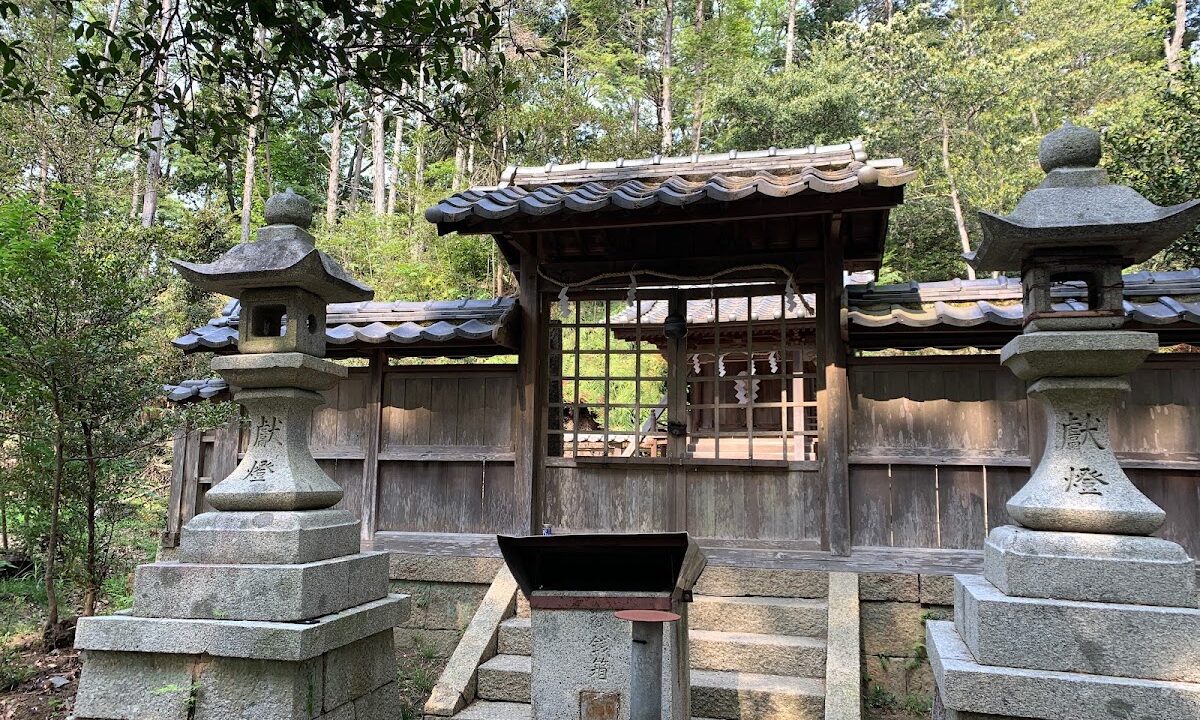
The shrine buildings of Kannabi Shrine stand in a tranquil forest near the summit of Mount Kannabi. Due to its mountaintop location, the shrine grounds, though small, are filled with a sacred atmosphere.
The shrine buildings are surrounded by trees, creating a space that conveys the traces of ancient mountain worship. Because it is not frequently visited, it is known as a hidden gem of a shrine where one can pray in peace.
View from the Summit
From the summit of Mt. Kannabi, at an altitude of 221 meters, you can enjoy a panoramic view of Kyoto city to the north. On clear days, you can see famous Kyoto landmarks such as Kyoto Tower, Mt. Hiei, and Mt. Atago in the distance, making it a popular spot for spectacular views.
The scenery is especially magnificent during the autumn foliage season and on clear winter days.
Natural Environment of Mt. Kannabi
Mt. Kannabi is located in the northern part of the Ikoma Mountains and is blessed with abundant nature. Along the hiking trails, you can see plants of all seasons, and enjoy birdwatching.
It shows a different face each season: fresh greenery in spring, deep green in summer, vibrant autumn leaves, and a tranquil mountain landscape in winter.
Information on Goshuin (Shrine Seals) and Goshuincho (Shrine Seal Books)
Regarding the Issuance of Goshuin
Kannabi Shrine is an unmanned shrine located on a mountaintop, so there is no permanent shrine office or priests, and goshuin are not usually issued.
However, on special festival days or during the annual festival (October 15th), priests may be present to issue goshuin. Those wishing to obtain a goshuin are advised to inquire in advance with the Kyotanabe City Tourism Association or related shrines.
Pilgrimage to Nearby Shrines
Even if you cannot obtain a goshuin at Kannabi Shrine, there are many other shrines and temples in the Kyotanabe City area.
- Shūon-an Ikkyū-ji Temple: A famous temple associated with Zen Master Ikkyū, popular for its beautiful garden and goshuin (temple stamp).
- Tsukuyomi Shrine: A shrine dedicated to Tsukuyomi-no-Mikoto, also connected to the legend of Tsukuyomi-no-Mikoto on Mount Kannabi.
- Ōmidō Kannon-ji Temple: An ancient temple housing a national treasure, the Eleven-Headed Kannon standing statue.
By combining these temples and shrines, you can enjoy a historical tour of Kyōtanabe City.
Access and Parking Information
Access by Train
If using the Kintetsu Kyoto Line:
- Get off at “Osumi Station,” then walk approximately 40 minutes to the Kannabi-yama trailhead.
- From the trailhead to the summit, it’s approximately 20-30 minutes on foot.
If using the JR Gakken Toshi Line:
- Get off at “Kyotanabe Station,” then walk approximately 50 minutes to the Kannabi-yama trailhead.
- Alternatively, take a taxi from the station (approximately 10 minutes).
Access by Car
From Kyoto:
- Head south on National Route 307 to the Maki area of Kyotanabe City.
- Follow the signs for the Kannabi-yama trailhead.
From Osaka:
- Approximately 15 minutes from the Hirakata-Higashi IC on the Daini Keihan Expressway.
- Alternatively, approximately 10 minutes from the Tanabe-Nishi IC on the Keina-Wa Expressway.
Parking Information
Free parking is available at the Kannabi-yama trailhead.
Parking Capacity: Approximately 10 cars
Usage Fee: Free
Operating Hours: 24 hours (however, nighttime hiking is not recommended)
The parking lot is small and may be full on holidays and during the autumn foliage season. We recommend visiting earlier in the day.
Hiking Route and Estimated Time
Main Route (from Maki Trailhead)
Estimated Time: Approximately 20-30 minutes one way
Difficulty: Beginner-friendly (some steep stairs)
Distance: Approximately 1km
The trail from the trailhead to the summit is well-maintained. The first half is a gentle uphill slope, while the second half includes sections with stairs. We recommend wearing athletic shoes or trekking shoes.
Precautions for Hiking
- Clothing: Wear comfortable clothing and non-slip shoes.
- Hydration: Bring plenty of water, especially in summer.
- Insect Repellent: Insect repellent spray is effective from spring to autumn.
- Time of Day: Hiking during daylight hours is recommended (descend before sunset).
- Weather Check: Be careful as the ground can become slippery in rainy weather.
Enjoying the Seasons
Spring (March-May): Beautiful fresh greenery and wildflowers make it the perfect season for hiking.
Summer (June-August): Enjoy the deep green forest, but be prepared for the heat.
Autumn (September-November): Beautiful autumn foliage makes it the most popular season.
Winter (December-February): The air is clear, offering excellent views and a peaceful atmosphere for worship.
Nearby Tourist Spots
Shūon-an Ikkyū-ji Temple
Located about a 10-minute drive from Kannabi Shrine, this is a renowned temple associated with Zen Master Ikkyū. With its beautiful gardens and important cultural property buildings, it is a representative tourist spot in Kyōtanabe City.
Visiting Hours: 9:00 AM – 5:00 PM
Admission Fee: 500 yen for adults
Tsukuyomi Shrine (Shrine within the grounds of Ichimachi-da Shrine)
This shrine is related to the legend of Tsukuyomi-no-Mikoto’s descent to Mount Kannabi, and enshrines Tsukuyomi-no-Mikoto as its main deity. Many people visit this shrine in conjunction with Kannabi Shrine.
Ōmidō Kannon-ji Temple (Fugen-ji Temple)
This ancient Shingon Buddhist temple houses a national treasure, the Eleven-Headed Kannon standing statue. Said to have been founded during the Nara period, it is a treasure trove of cultural properties in Kyōtanabe City.
Visiting Hours: 9:00 AM – 4:30 PM
Admission Fee: 500 yen for adults
Local Products and Gourmet Food of Kyotanabe City
Kyotanabe City is also known as a production area for gyokuro and matcha green tea. After visiting the temple, we recommend enjoying gyokuro from Kyotanabe at a local tea house. It is also a production area for bamboo shoots, and you can enjoy fresh bamboo shoot dishes in the spring.
Manners and Etiquette for Visiting a Shrine
Basic Worship Etiquette
- Before Passing Through the Torii Gate: Bow before entering the shrine grounds.
- Water Purification Pavilion: If there is no water purification pavilion due to the mountaintop location, pray with a pure heart.
- In Front of the Main Hall: Pray using the two bows, two claps, and one bow ritual.
- Behavior on the Shrine Grounds: Behave quietly and respect nature.
Consideration for a Sacred Site of Mountain Worship
Kannabi Shrine is a sacred site of mountain worship that has continued since ancient times. It is important to be aware that the entire mountain is considered a sacred object and to be mindful of protecting the natural environment. Always take your trash with you and be careful not to harm plants and animals.
Points to Note When Visiting Kannabi Shrine
Recommended Time to Visit
Most Recommended: Autumn (October-November) – the fall foliage season
Quiet Visit: Weekdays in Winter (December-February)
Annual Festival: October 15th (Shinto priests attend, creating a special atmosphere)
Estimated Time Required
- Round-trip hike from the parking lot: Approximately 1 hour
- Visiting the shrine grounds and taking a break: Approximately 30 minutes
- Enjoying the view from the summit: Approximately 30 minutes
- Total: Approximately 2 hours
If combining with other nearby tourist attractions, it’s recommended to plan a half-day to full-day schedule.
Useful Items to Bring
- Trekking shoes or athletic shoes
- Drinking water (500ml or more)
- Towel/sweat wipes
- Insect repellent spray (spring to autumn)
- Camera (for taking scenic photos)
- Goshuincho (stamp book) (for special days such as festivals)
Summary: The Charm of Kannabi Shrine
Kannabi Shrine is a valuable shrine that preserves ancient mountain worship, located on the summit of Mt. Kannabi in Kyotanabe City, Kyoto Prefecture. It boasts a rich history and culture, including its status as an Engishiki-listed shrine, the legend of Tsukuyomi-no-Mikoto’s descent, and its connection to Zen Master Ikkyu.
The view from the 221-meter-high summit is magnificent, making it a popular spot for its panoramic views of Kyoto City. The hiking trails are well-maintained, making it relatively easy even for beginners, making it an attractive spot to enjoy both shrine visits and hiking.
Free parking is available, and there are many other tourist attractions nearby, such as Shūon-an Ikkyu-ji Temple and Ōmidō Kannon-ji Temple. Easily accessible from Kyoto and Osaka, it’s an ideal destination for a day trip.
Nestled in the tranquil mountains, Kannabi Shrine offers a sacred atmosphere that has persisted since ancient times, allowing you to refresh both mind and body. We highly recommend visiting this special sacred site. The mystical space, woven from the changing seasons and over a thousand years of history, will warmly welcome visitors.



