Complete Guide to Kurusu Shrine (Nantan City, Kyoto Prefecture) | The Legend of Abe Sadato and the Benefits of Healing Headaches
Kurusu Shrine, located in Yagi-cho, Nantan City, Kyoto Prefecture, is a historical shrine known for its legends related to Abe Sadato, a military commander of the Heian period, and for its benefits in healing headaches. This article comprehensively introduces all the information you need to know before visiting Kurusu Shrine, including detailed information about the enshrined deities, historical background, highlights of the grounds, and access methods.
Basic Information about Kurusu Shrine
Kurusu Shrine is a historical shrine located in Osakabe, Yagi-cho, Nantan City, Kyoto Prefecture, and is a place of worship for the local community.
Location: 3 Miyanomoto, Gyobu, Yagi-cho, Nantan City, Kyoto Prefecture
Deity Enshrined: Hikohodemi-no-Mikoto
Nearest Station: Yagi Station, JR Sagano Line (San’in Main Line)
Visiting Hours: Grounds are open freely (Shrine office is open irregularly)
Parking: Available (for visitors)
Corporate Number: 3130005007446
The name Kurusu Shrine is said to have been derived from the meaning “to stay and protect for a long time,” and it has been revered since ancient times as a shrine that protects the region.
About the Enshrined Deity: Hikohodemi-no-Mikoto
Hikohodemi-no-Mikoto, the enshrined deity of Kurusu Shrine, is an important god appearing in Japanese mythology. Also known as “Yamasachihiko,” he is famous for the myth of “Umisachi Yamasachi,” who visited the palace of the sea god.
Hikohohodemi-no-Mikoto is the son of Ninigi-no-Mikoto, known for the descent of the heavenly grandchild, and the grandfather of Emperor Jimmu, the first emperor of Japan. He is worshipped as the god of agriculture, fishing, and safe childbirth, and is enshrined in various places as a god deeply involved in people’s lives.
At Kurusu Shrine, while Hikohohodemi-no-Mikoto is the main deity, it has a unique form of worship linked to the legend of Abe no Sadato, which will be discussed later.
The Legend of Abe no Sadato and the Benefits of Headache Relief
The Legend of the Burial of Abe no Sadato’s Head
The most distinctive feature that sets Kurusu Shrine apart from other shrines is the legend surrounding Abe no Sadato, a military commander of the Heian period.
Abe no Sadatō was a powerful local lord from the Tohoku region who fought against the imperial army during the Former Nine Years’ War (1051-1062) in the mid-Heian period. After fierce battles against the imperial army led by Minamoto no Yoriyoshi and his son Yoshiie, he was defeated and killed at the Battle of Kuriyagawa-no-saku.
According to legend, Abe no Sadatō’s body was dismembered on its way to Kyoto as a warning, and his head was buried on the grounds of this Kurusu Shrine. The shrine’s name, “Higashiku damemori mamoru beshi” (meaning “to remain and protect for a long time”), is said to have originated from a desire to appease the spirit of Abe no Sadatō.
Miraculous Healing of Headaches
Due to this legend of the burial of Abe no Sadatō’s head, Kurusu Shrine has long been revered as a shrine with miraculous healing properties for headaches. The legend surrounding the head developed into a folk belief that the shrine is effective against head ailments and headaches.
Even today, people suffering from headaches and migraines, as well as students and those praying for academic success (for mentally demanding work or studies), visit the shrine to pray for good health. This unique form of worship is rare even within Kyoto Prefecture and is a major characteristic of Kurusu Shrine.
Highlights of the Shrine Grounds and Subsidiary Shrines
Main Hall and Worship Hall
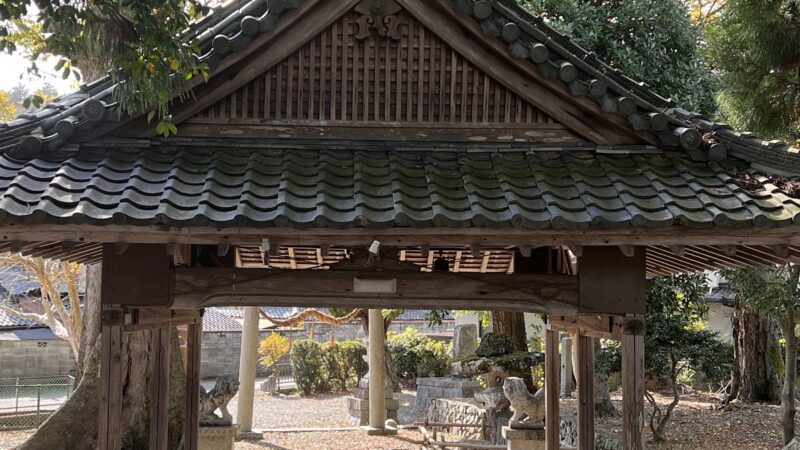
The main hall of Kurusu Shrine is a tasteful building that reflects the region’s history. Although not large in scale, the meticulously maintained grounds are enveloped in a refreshing atmosphere.
In front of the worship hall is a purification fountain where worshippers can cleanse their hands, allowing them to purify their minds and bodies according to the proper etiquette before proceeding to the main hall.
Subsidiary Shrines (Auxiliary Shrines and Minor Shrines)
In addition to the main hall enshrining the principal deity, Kurusu Shrine has four subsidiary shrines within its grounds.
- Kumano Shrine: This shrine enshrines the deities of the Kumano Sanzan (Three Grand Shrines of Kumano) and is believed to bring blessings of health, longevity, and family safety.
- Tenmangu Shrine: This shrine enshrines Sugawara no Michizane, the god of learning, and is a popular shrine within the grounds for those praying for academic success and passing exams.
- Hirano Shrine: This shrine is believed to have been established by inviting the deity from Hirano Shrine in Kyoto and is worshipped as the god of vitality and energy.
- Inari Shrine: This shrine enshrines Inari, known as the god of abundant harvests and business prosperity.
By visiting these subsidiary shrines as well, you can receive a wider range of blessings.
Natural Environment of the Shrine Grounds
The grounds of Kurusu Shrine are located in a quiet environment surrounded by the rich nature of Nantan City. The grounds, where you can feel the changing seasons, are an ideal space for peaceful worship. You can enjoy particularly beautiful scenery during the seasons of fresh greenery and autumn leaves.
Goshuin (Shrine Seal) Information
Kurusu Shrine offers goshuin, but since there is no permanent shrine office, prior confirmation is necessary when requesting a goshuin.
Regarding the Issuance of Goshuin:
- The chief priest is often absent, so if you definitely want a goshuin, we recommend contacting them in advance.
- The priest may also serve at nearby shrines, so we recommend checking the latest information before visiting.
- It is important to bring your goshuin book and make a polite request.
The goshuin will include the shrine name and date of visit, and will be stamped with the shrine’s seal. For those who collect goshuin, the goshuin from Kurusu Shrine, with its unique history related to the Abe Sadato legend, will be a valuable item.
Access and Surrounding Information
Access by Train
Nearest Station: Yagi Station, JR Sagano Line (San’in Main Line)
Distance from Station: Approximately 16 minutes on foot (approximately 1.3 km)
Route from Station: Exit Yagi Station and head northwest towards the Yagi-cho Gyobu area.
The JR Sagano Line runs from Kyoto Station towards Kameoka and Sonobe. Yagi Station is approximately 40 minutes from Kyoto Station. It’s a convenient location for day trips from Kyoto city.
Access by Car
Nearest Interchange: Yagi-Nishi IC or Yagi-Higashi IC on the Kyoto Jukan Expressway
Travel Time from IC: Approximately 10-15 minutes
Parking: Parking available for visitors on the temple grounds.
For car access, using the Kyoto Jukan Expressway is convenient. When using a car navigation system, please search for “3 Miyamoto, Gyobu, Yagi-cho, Nantan City, Kyoto Prefecture” or “Kurusu Shrine.”
Nearby Attractions
Besides Kurusu Shrine, there are several other places worth visiting around Yagi-cho, Nantan City.
Nearby Shrines and Temples:
- Yagi-cho has many other historical shrines and temples, making it a great place for shrine hopping.
- Nantan City as a whole boasts numerous cultural properties and historical sites, making it ideal for historical exploration.
Tourist Spots:
- Nantan City is a region rich in nature and offers good access to famous tourist destinations such as Miyama Kayabuki no Sato (Miyama Thatched Village).
- There are also many direct sales outlets selling local agricultural products and specialty goods.
Manners and Etiquette for Visiting Shrines
When visiting Kurusu Shrine, please observe basic shrine visiting manners.
Basic Flow of Worship
- Bow Before Passing Through the Torii Gate: As a sign of respect before entering the sacred area, bow before the torii gate.
- Purify at the Water Basin: Purify your left hand, then your right hand, then your mouth, and finally your left hand.
- Walking Along the Path: The center of the path is considered the path of the gods, so it is preferable to walk along the edges.
- Worship at the Main Hall:
- Quietly place your offering.
- Ring the bell if there is one.
- Worship using the two bows, two claps, and one bow ritual.
- Make your wish silently.
- Worship at the Shrines Within the Grounds: After visiting the main shrine, also visit the shrines within the grounds.
- Returning: Turn back and bow when leaving through the torii gate.
Points to Note When Worshiping
- While photography is often permitted, please note that there are areas where photography is prohibited, such as inside the main shrine building.
- The shrine grounds are a sacred place, so please be considerate and refrain from speaking loudly or making noise.
- Please take your trash with you and help keep the grounds clean.
- It is recommended to check in advance whether pets are allowed.
Annual Events at Kurusu Shrine
At Kurusu Shrine, various Shinto rituals and festivals are held throughout the year to preserve the local faith.
Main Annual Events
Annual Grand Festival: The most important festival held every autumn, bringing together local parishioners and devotees.
New Year’s Festival: A Shinto ritual held to pray for peace and prosperity throughout the year.
Monthly Festival: A Shinto ritual held regularly each month, offering daily gratitude and prayers.
For detailed dates of these festivals, it is recommended to check the latest information before visiting. Participating in local traditional events allows you to experience the history and culture of Kurusu Shrine more deeply.
Kurumori Shrine and Local History
Historical Background of Yagi-cho, Nantan City
Yagi-cho in Nantan City has flourished since ancient times as a key point on the San’in Road. As a vital transportation hub connecting Kyoto and the San’in region, it was a place where many people passed through and cultures exchanged.
The place name Osakabe, where Kurumori Shrine is located, is also a historical place name derived from an ancient official title. Archaeological sites dating back to the Kofun period have been discovered in this area, indicating that people have lived here since ancient times.
The Former Nine Years’ War and Abe Sadato
The Former Nine Years’ War, deeply connected to the legend of Kurumori Shrine, was a large-scale conflict that occurred in the Tohoku region during the mid-Heian period (1051-1062).
This conflict, fought between the Abe clan, who ruled Mutsu Province (present-day Tohoku region), and Minamoto no Yoriyoshi and his son Yoshiie, who were dispatched by the imperial court, lasted for 12 years (the actual fighting period was 9 years, and it is known as the “Former Nine Years’ War”).
Abe no Sadatō, the eldest son of Abe no Yoriyoshi, the head of the Abe clan, continued to resist even after his father’s death, but was ultimately killed at Kurikawa Fort. After this battle, control of the Tohoku region shifted to the Minamoto and Kiyohara clans, leading to the rise of the later Ōshū Fujiwara clan.
Why was the head transported to Kyoto?
It was customary at the time to transport the heads of those who rebelled against the imperial court to Kyoto. This served to demonstrate the authority of the court and as a deterrent to the rebels.
The legend that Abe no Sadatō’s body was dismembered along the way has various interpretations, including the problem of preservation during long-distance transport and the theory that the dismemberment was to demonstrate the court’s victory in various locations. The legend that a head was buried at Kurusu Shrine is thought to be related to the fact that this area was located along the road to Kyoto.
The Charm of Visiting Kurusu Shrine
A Visit to Experience Historical Romance
The greatest charm of Kurusu Shrine is the opportunity to experience the historical romance of the Heian period. Many history enthusiasts are drawn to the fact that the historical event known only in textbooks, the Former Nine Years’ War, is passed down as a concrete legend at this small shrine.
A Peaceful Environment for Mental Healing
Kurusu Shrine, which has not been commercialized for tourism, is a precious place where you can worship in a quiet and peaceful atmosphere. For those who want to escape the hustle and bustle and offer prayers in peace, it offers an ideal environment for worship.
Unique Benefits
The unique benefit of headache relief resonates with the worries of modern people. For those suffering from headaches in our stressful society, or those who use their brains a lot for studying or work, this shrine offers emotional support.
Clothing and Items to Bring When Visiting
Recommended Attire
While there are no specific dress code requirements for visiting the shrine, it is advisable to dress appropriately for a sacred place.
- Clean and presentable clothing
- Avoid excessive exposure
- Comfortable walking shoes (there may be stairs or unpaved areas on the shrine grounds)
- Dress appropriately for the season (cold or hot)
Useful Items to Bring
- Goshuincho: Essential for those wishing to receive Goshuin (shrine stamps)
- Camera: Allows you to record the beautiful scenery of the shrine grounds (please observe proper photography etiquette)
- Drinks: Hydration is especially important in the summer
- Rain Gear: Bring an umbrella or raincoat during periods of unpredictable weather
- Small Change: It’s a good idea to have some on hand for offerings
Nearby Accommodation and Dining Information
Accommodation
The following accommodations are available in and around Yagi-cho, Nantan City.
- Business Hotels: There are several business hotels around JR Yagi Station.
- Hot Spring Inns: A short drive will take you to hot spring resorts such as Rurikei Onsen.
- Guesthouses and Inns: There are also accommodations scattered throughout the area where you can experience local life.
Restaurants
Yagi Town is a place where you can enjoy dishes made with local specialties.
- Local Restaurants: You can enjoy dishes made with Kyoto vegetables and local ingredients.
- Cafes: There are cafes with a nice atmosphere, such as those renovated from old houses.
- Roadside Stations: At roadside stations in Nantan City, you can purchase fresh local agricultural products and processed goods.
Summary: Points to Note When Visiting Kurusu Shrine
Kurusu Shrine is a shrine steeped in history and legend, located in Yagi Town, Nantan City, Kyoto Prefecture.
Points to Note When Visiting:
- The Legend of Abe Sadato: A valuable place to experience the historical romance of the Heian period.
- Benefits for Healing Headaches: A shrine with a unique form of worship.
- Quiet Worship Environment: A peaceful atmosphere away from the hustle and bustle.
- Four Subsidiary Shrines: Offering a variety of blessings.
- Easy Access: A day trip from Kyoto city is possible.
If you wish to receive a Goshuin (shrine stamp), please be sure to check in advance and observe proper etiquette during your visit. For history buffs, those suffering from headaches, and those who wish to offer quiet prayers, Kurusu Shrine is a shrine worth visiting.
Why not spend some peaceful time while experiencing the rich nature and history of Nantan City? We hope your visit to Kurusu Shrine will be a meaningful experience.