Complete Guide to Hachiman Shrines | A Thorough Explanation of History, Deities, Blessings, and Famous Hachiman Shrines Nationwide
Hachiman shrines (Hachiman Jinja) are the most numerous type of shrine in Japan, with approximately 44,000 shrines located throughout the country. Also known as “Hachiman-gu” or “Hachiman-sha,” they have long been revered as a god of war. This article provides a detailed explanation of everything about Hachiman worship, from the history of Hachiman shrines, their enshrined deities, blessings, representative Hachiman shrines nationwide, and how to worship.
What are Hachiman Shrines?
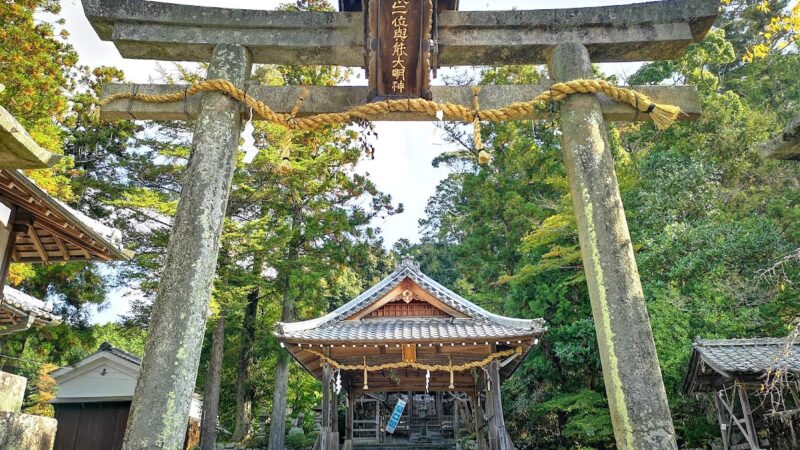
Hachiman shrines are a general term for shrines that enshrine Hachiman-no-kami (Yahata-no-kami, or Hachiman-shin). They are the most numerous type of shrine in Japan, second only to Inari shrines, or perhaps even the most numerous. Also known as “Hachiman-gu,” “Hachiman-sha,” or “Hachiman-sama,” they are deeply rooted in local communities.
Number and Distribution of Hachiman Shrines
According to the Agency for Cultural Affairs’ religious statistics survey, there are approximately 44,000 Hachiman shrines throughout Japan. They are distributed in almost all prefectures, and are particularly numerous in the Kyushu region (centered around Oita Prefecture, the birthplace of Hachiman). Many Hachiman shrines are also located in the Kanto and Tohoku regions.
Names for Hachiman Shrines
- Hachiman Shrine (Hachiman Jinja)
- Hachiman-gu (Hachimangu)
- Hachiman-sha (Hachimansha)
- Wakamiya Hachiman-gu (Wakamiya Hachimangu)
While there is no strict distinction between these names, “Hachiman-gu” generally tends to be used for shrines of higher status.
Deities Enshrined at Hachiman Shrines
The main deity enshrined at Hachiman shrines is Emperor Ojin (Ojin Tenno). Many Hachiman shrines also enshrine the following deities alongside Emperor Ojin:
Main Deities Enshrined
- Emperor Ōjin (Homudawake-no-Mikoto)
- 15th Emperor
- Central figure of Hachiman deities
- Revered as a god of war and archery
- Himegami
- Often identified with the Munakata Three Goddesses (Tagitsuhime-no-Mikoto, Ichikishimahime-no-Mikoto, Takirihime-no-Mikoto)
- Goddess of the sea and traffic safety
- Empress Jingū
- Mother of Emperor Ōjin
- Known for the legend of the conquest of the Three Kingdoms of Korea
- Goddess of safe childbirth and child-rearing
These three deities together are called the “Three Hachiman Gods.”
Why is Emperor Ōjin enshrined as Hachiman?
There are various theories as to how Emperor Ōjin came to be enshrined as Hachiman, but the following reasons are considered:
- Emperor of Valor: During the reign of Emperor Ōjin, exchanges with the continent flourished, and advanced technologies and culture were introduced.
- Master Archer: In legend, he was a master archer and possesses the characteristics of a war god.
- Legend of Empress Jingū: He is linked to the legend of his mother, Empress Jingū, and her conquest of the Three Kingdoms of Korea.
- Local Deity of Usa Region: Originally a local deity worshipped in the Usa region of Ōita Prefecture, he was syncretized with Emperor Ōjin.
History of Hachiman Shrines
The history of Hachiman worship is ancient, and it was already established during the Nara period.
Origins and Usa Shrine
The origin of Hachiman worship is Usa Shrine (Usa Hachiman Shrine) in Usa City, Ōita Prefecture. According to shrine tradition, Hachiman appeared in the Usa area in 571 (32nd year of Emperor Kinmei’s reign).
In 725 (2nd year of the Jinki era), Usa Shrine was founded at its current location. Usa Shrine is considered the “head shrine of all Hachiman shrines” throughout Japan.
Development during the Nara Period
During the Nara period, Hachiman flourished rapidly under the protection of the imperial court. In particular, there is a legend that Hachiman assisted in the construction of the Great Buddha of Todai-ji Temple in 749 (Tenpyo Shoho 1), leading to Hachiman being revered as the “guardian deity of Todai-ji Temple.”
Around this time, Hachiman received the divine title of “Hachiman Daibosatsu” for the first time, becoming a representative example of the syncretism of Shinto and Buddhism.
Founding of Iwashimizu Hachimangu Shrine
In 859 (Jogan 1), Iwashimizu Hachimangu Shrine was founded in Yawata City, Kyoto Prefecture. It was established by inviting Hachiman from Usa Shrine and was considered important as a guardian deity of the imperial court. Iwashimizu Hachimangu Shrine was considered the “second most important shrine in the nation,” after Ise Grand Shrine, and attracted the reverence of emperors and nobles.
Rise in Samurai Society
From the late Heian period to the Kamakura period, as the samurai class rose to power, Hachiman became a “god of war” and attracted the faith of samurai.
The Minamoto clan, in particular, revered Hachiman as their tutelary deity. It is well known that Minamoto no Yoshiie, the son of Minamoto no Yoriyoshi, came of age at Iwashimizu Hachimangu Shrine in Kyoto in 1063, taking the name “Hachiman Taro Yoshiie.”
Minamoto no Yoritomo founded Tsurugaoka Hachimangu Shrine in Kamakura, making it the guardian deity of the Kamakura Shogunate. From then on, under the samurai government, Hachiman worship spread throughout the country, and Hachiman shrines were established in various locations.
From the Edo Period Onward
During the Edo period, Hachiman worship spread not only among the samurai class but also among the common people. Hachiman shrines were enshrined as the guardian shrines of villages and became the center of local faith.
Although the title “Hachiman Daibosatsu” was abolished due to the Meiji-era separation of Shinto and Buddhism, Hachiman shrines continued to exist as shrines and remain so to this day.
Benefits of Hachiman Shrines
While Hachiman shrines are known as shrines dedicated to the god of war, their benefits are diverse.
Main Benefits
- Long-lasting Military Fortune and Good Luck in Competitions
- Due to its nature as a war god, it brings good fortune in all kinds of competitions.
- Prayers for success in sports, exams, business, etc.
- Protection from Evil and Disaster
- Wards off evil spirits and protects from disaster.
- Traffic safety and family safety.
- National Protection
- Believed in as a god who protects the country.
- Peace and prosperity in the region.
- Safe Childbirth and Child-rearing
- Because Empress Jingu is enshrined here.
- Prayers for fertility and safe childbirth.
- Career Advancement and Good Fortune
- Because Emperor Ojin ascended to the throne here.
- Career advancement, good fortune, and prosperity.
- Academic Achievement
- Because it was involved in the development of culture and learning.
- Prayers for passing exams and improving academic ability.
Hachiman Worship in Modern Times
Even today, Hachiman shrines are cherished by many people as guardian deities of their communities and places of prayer at important life events. They are visited for various occasions, including New Year’s visits, Shichi-Go-San (a traditional rite of passage for children), exorcism, and prayers for success in exams.
Famous Hachiman Shrines Nationwide
While there are numerous Hachiman shrines throughout Japan, here we introduce some particularly famous ones.
Usa Shrine (Usa City, Oita Prefecture)
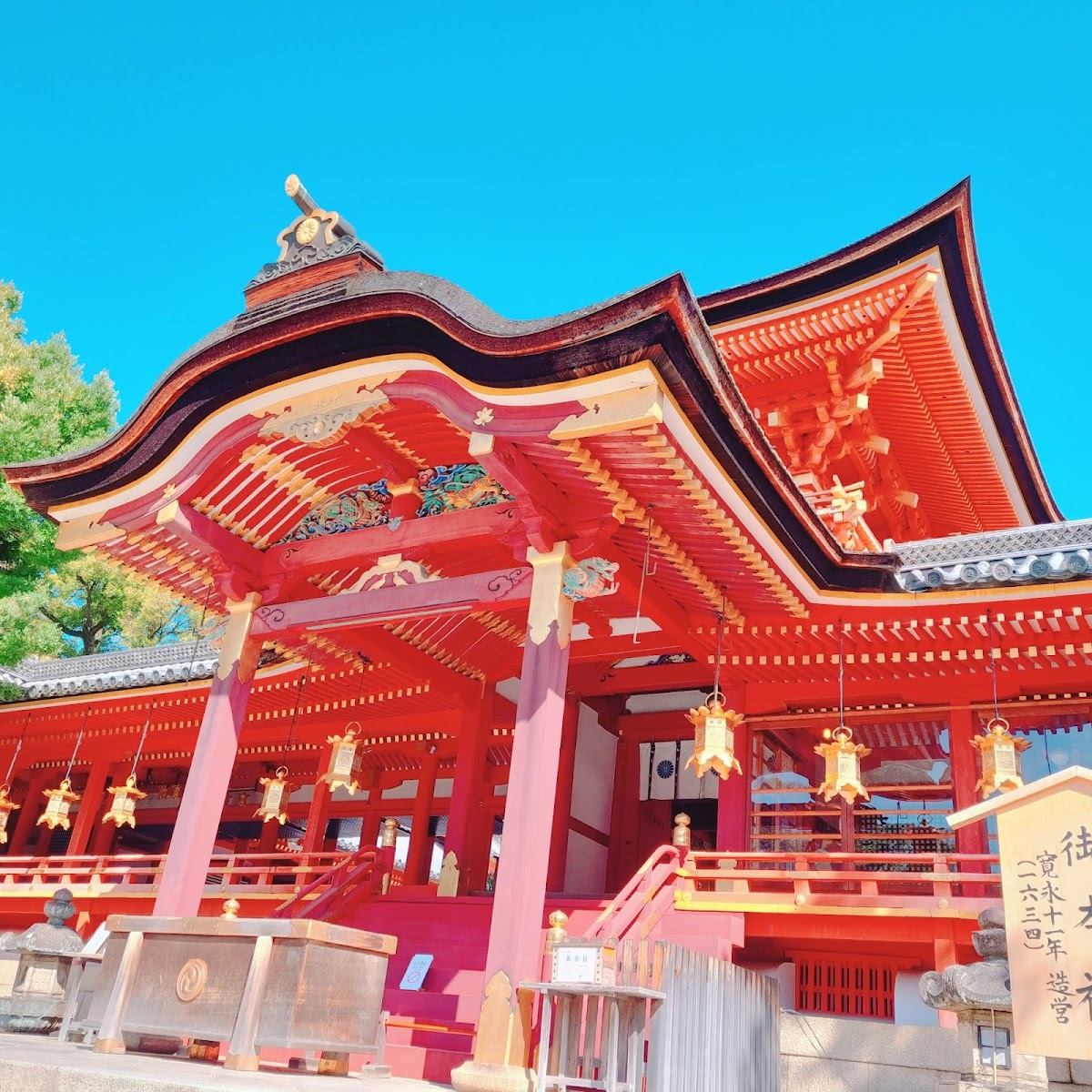
This is the head shrine of all Hachiman shrines nationwide. It is said to have been founded in 571 and is the birthplace of Hachiman worship. The vast grounds contain many important cultural properties, including the main hall, a national treasure.
- Deities Enshrined: Hachiman-Ōkami (Emperor Ōjin), Hime-Ōkami, Empress Jingū
- Benefits: Protection from misfortune and good fortune, traffic safety, academic success, safe childbirth
- Features: Unique torii gate known as “Usa Torii,” beautiful vermilion-lacquered shrine buildings
Iwashimizu Hachiman-gū (Yawata City, Kyoto Prefecture)
Founded in 859, this Hachiman shrine protects Kyoto. Located on Mount Otokoyama, its main hall, a national treasure, is a prime example of Hachiman-zukuri architecture. It has been revered as the “second most important shrine in the nation,” after Ise Grand Shrine.
- Deities Enshrined: Emperor Ōjin, Himegami, Empress Jingū
- Benefits: Protection from evil, prayers for victory, traffic safety
- Features: National Treasure main shrine, beautiful vermilion shrine buildings, Edison Memorial
Tsurugaoka Hachimangū (Kamakura City, Kanagawa Prefecture)
Founded in 1063 by Minamoto no Yoriyoshi, and moved to its current location in 1180 by Minamoto no Yoritomo. Known as the guardian deity of the Kamakura Shogunate and a representative tourist attraction of Kamakura.
- Deities Enshrined: Emperor Ōjin, Himegami, Empress Jingū
- Benefits: Good fortune in victory, career advancement, matchmaking
- Features: Approach road leading from Wakamiya-ōji, Dankazura, large ginkgo tree (currently a young tree after the original fell)
Hakozaki-gū (Fukuoka City, Fukuoka Prefecture)
Founded in 923, this shrine is also known as “Hakozaki Hachimangū.” It is sometimes considered one of the “Three Great Hachiman Shrines of Japan,” along with Usa Shrine and Iwashimizu Hachiman Shrine. It is known for the prayers offered there for the “surrender of the enemy nation” during the Mongol invasions.
- Deities Enshrined: Emperor Ojin, Empress Jingu, Tamayorihime-no-Mikoto
- Benefits: Protection from evil, victory, good fortune
- Features: Plaque inscribed with “Surrender of the Enemy Nation,” Hakozaki-gu Hojo-e (one of the three major festivals of Hakata)
Tomioka Hachiman Shrine (Koto Ward, Tokyo)
Founded in 1627, it is the largest Hachiman shrine in Edo. Affectionately known as “Fukagawa Hachiman,” it is famous for the “Fukagawa Hachiman Festival,” one of the three major festivals of Edo. It has strong ties to sumo wrestling, and there is a monument to a Yokozuna (grand champion) sumo wrestler.
- Deities Enshrined: Emperor Ōjin and others
- Benefits: Good fortune in competitions, good luck, business prosperity
- Features: Fukagawa Hachiman Festival (Water-Splashing Festival), Yokozuna Sumo Wrestler Monument, Ozeki Sumo Wrestler Monument
Ōita Hachiman Shrine (Ōita City, Ōita Prefecture)
A Hachiman shrine revered as the guardian shrine of the region, affectionately known as “Hachiman-sama of West Ōita.”
Hōjōzu Hachiman Shrine (Imizu City, Toyama Prefecture)
An ancient shrine said to have been founded during the Nara period, it was the principal shrine of Etchū Province.
Other Notable Hachiman Shrines
- Iwashimizu Hachimangu (Yawata City, Kyoto Prefecture): Another name for Iwashimizu Hachimangu
- Kameoka Hachimangu (Kameoka City, Kyoto Prefecture)
- Tsuboi Hachimangu (Habikino City, Osaka Prefecture): Birthplace of the Minamoto clan
- Homoda Hachimangu (Habikino City, Osaka Prefecture): Adjacent to the tomb of Emperor Ojin
- Hamamatsu Hachimangu (Hamamatsu City, Shizuoka Prefecture)
- Shinagawa Shrine (Shinagawa Ward, Tokyo): The guardian shrine of Shinagawa
- Setagaya Hachimangu (Setagaya Ward, Tokyo)
How to Worship at Hachiman Shrines
Worship at Hachiman Shrines is basically done in the same way as at other shrines.
Basic Flow of Worship
- Passing Through the Torii Gate
- Bow before the torii gate
- Walk along the edge of the path, as the center is the path for the gods.
- Purifying at the Water Basin
- Hold the ladle in your right hand and purify your left hand.
- Switch the ladle to your left hand and purify your right hand.
- Switch the ladle back to your right hand, receive water in your left hand, and rinse your mouth.
- Finally, stand the ladle upright to purify the handle.
- Worshiping in Front of the Main Hall
- Place your offering in the offering box.
- Ring the bell (if present).
- “Two bows, two claps, one bow”
- Bow deeply twice.
- Clap twice.
- Pray silently.
- Bow deeply once.
- Walking Around the Shrine Grounds
- Visit the subsidiary shrines and smaller shrines.
- Obtain a Goshuin (shrine stamp) (if desired).
Unique Points of Worship at Hachiman Shrines
While there are no specific rituals unique to Hachiman Shrines, it’s advisable to worship with the understanding that Hachiman is a god of war, expressing your determination for success in competitions and achieving your goals.
Suitable Times for Worship
- New Year’s Visit: January 1st-3rd (or throughout January)
- Annual Festival: Varies by shrine (often around September 15th)
- Exorcism: Beginning of the year for those in their unlucky years
- Shichi-Go-San (7-5-3 Festival): Around November 15th
Architectural Style of Hachiman Shrines
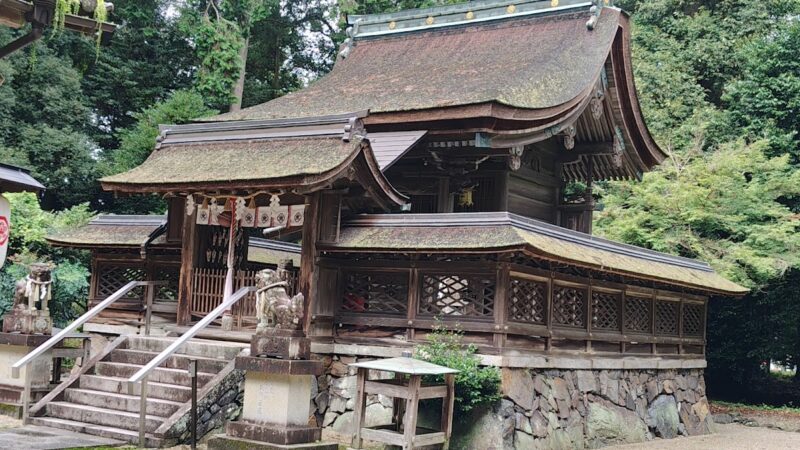
The main halls of Hachiman Shrines sometimes feature a unique architectural style called “Hachiman-zukuri.”
What is Hachiman-zukuri?
Hachiman-zukuri is a style where two gable-roofed buildings are placed side-by-side, connected by a “connecting corridor.” The front building is called the “outer sanctuary,” and the rear building is called the “inner sanctuary.”
The main halls of Usa Shrine and Iwashimizu Hachiman Shrine are representative examples and are designated as National Treasures.
Other Architectural Styles
Not all Hachiman shrines are built in the Hachiman style; various architectural styles can be seen, including the Nagare-zukuri and Kasuga-zukuri styles.
Hachiman Shrines and Divine Emblems
The most common divine emblem (shrine crest) of Hachiman shrines is the Tomoe-mon (comma-shaped crest). The “Mitsu-Tomoe” (three commas) is particularly common.
Meaning of the Tomoe-mon
The Tomoe-mon represents the swirling motion of water and is believed to have the meaning of protection against fire. It is also said to represent the shape of the tomo (a protective piece used to prevent the bowstring from hitting the arm when shooting a bow), making it a fitting crest for Hachiman, the god of war.
Other Divine Emblems
- Dove: Considered the divine messenger of Hachiman
- Facing Doves: A design of two doves facing each other
Hachiman Shrines and Doves
At Hachiman shrines, doves are considered divine messengers (messengers of the gods). Many Hachiman shrines feature statues and amulets of doves.
Why Doves?
- Legend of Empress Jingu: A legend says that doves guided Empress Jingu during her conquest of the Three Kingdoms of Korea.
- Tradition of Usa Shrine: A legend says that Hachiman appeared in the form of a dove.
- Symbol of Peace: Doves are also birds that symbolize peace.
Dove Fortune Slips and Dove Bells
Many Hachiman shrines offer dove-shaped fortune slips (“dove fortune slips”) and dove-shaped bells (“dove bells”).
Festivals at Hachiman Shrines
Hachiman shrines hold various festivals throughout the year.
Main Festivals
- Annual Grand Festival: The most important festival at each shrine (often held around September 15th)
- Release of Captive Animals: A ceremony to release captured animals (Hakozaki Shrine is famous for this)
- Yabusame: A Shinto ritual of shooting arrows at targets from horseback (Tsurugaoka Hachimangu Shrine, etc.)
- Imperial Festival: A festival attended by an envoy of the Emperor (Iwashimizu Hachimangu Shrine)
Goshuin (Shrine Seals) at Hachiman Shrines
Collecting Goshuin has become popular in recent years, and you can also obtain them at Hachiman Shrines.
How to Obtain a Goshuin (Shrine/Temple Stamp)
- Complete your visit to the shrine.
- Leave your Goshuincho (stamp book) at the shrine office or reception area.
- Pay the offering fee (approximately 300-500 yen).
- Receive your Goshuin.
Characteristics of Hachiman Shrine Goshuin
Many Hachiman shrines stamp their Goshuin with the words “Hachiman-gu” or “Hachiman Shrine,” a Tomoe crest, or a dove. The design varies from shrine to shrine, making visiting multiple Hachiman shrines a fun experience.
The Relationship Between Hachiman Shrines and the Minamoto Clan
An essential aspect of discussing Hachiman shrines is their deep connection with the Minamoto clan.
The Minamoto Clan’s Clan Deity
The Minamoto clan revered Hachiman as their clan deity. Since Minamoto no Yoriyoshi’s coming-of-age ceremony at Iwashimizu Hachiman-gu, the Minamoto clan and Hachiman have been strongly linked.
Minamoto no Yoshiie was known as “Hachiman Taro Yoshiie,” and Minamoto no Yoritomo founded Tsurugaoka Hachimangu Shrine in Kamakura. As the Minamoto clan seized power as the leaders of the samurai class, Hachiman worship spread throughout Japan.
Guardian Deity of the Samurai Class
From the Kamakura period onward, Hachiman came to be revered as the guardian deity of the entire samurai class. The Muromachi and Edo shogunates also valued Hachiman, and various daimyo (feudal lords) enshrined Hachiman in their territories.
How to Enjoy Visiting Hachiman Shrines
Visiting the numerous Hachiman shrines throughout Japan is a wonderful way to experience Japanese history and culture.
Recommended Ways to Visit
- Conquer the Three Great Hachiman Shrines: Visit Usa Shrine, Iwashimizu Hachiman Shrine, and Tsurugaoka Hachiman Shrine (or Hakozaki Shrine)
- Visit Local Hachiman Shrines: Visit Hachiman shrines in your local area or travel destinations
- Collect Goshuin (Shrine Stamps): Visit various Hachiman shrines with your goshuin book
- Explore History: Visit Hachiman shrines associated with the Minamoto clan
Points to Note When Visiting
- Check Visiting Hours: Visit during the hours the shrine office is open
- Be Considerate of Attire: Avoid overly casual clothing as it is a sacred place
- Photography: Be mindful of areas where photography is prohibited, such as inside the main hall
- Worship Quietly: Be considerate of other visitors
Summary
Hachiman shrines are the most numerous type of shrine in Japan, with approximately 44,000 shrines throughout the country. Hachiman shrines, with Emperor Ōjin as their principal deity, have long been revered as a god of war. Usa Shrine is the head shrine, and there are many other famous Hachiman shrines throughout Japan, including Iwashimizu Hachimangu and Tsurugaoka Hachimangu.
They offer various blessings, such as military success, good fortune in competitions, protection from evil, and safe childbirth, and remain popular with many people today. As shrines visited at important life events like New Year’s Day, Shichi-Go-San (a traditional rite of passage for children), and for protection against evil, and as guardian deities of local communities, Hachiman shrines are deeply rooted in the spiritual culture of Japan.
Why not visit a Hachiman shrine near you and experience its history and traditions? You’re sure to make new discoveries and find peace of mind.