Complete Guide to Niutsuhime Shrine | The Charm and Visiting Methods of the World Heritage Site Dedicated to the Guardian Deity of Koyasan
What is Niutsuhime Shrine?
Niutsuhime Shrine, located in Katsuragi-cho, Ito-gun, Wakayama Prefecture, is one of Japan’s most historically significant shrines. In 2004, it was registered as a UNESCO World Heritage Site as part of the “Sacred Sites and Pilgrimage Routes in the Kii Mountain Range.”
Value as a World Heritage Site
Niutsuhime Shrine, along with Kongobu-ji Temple on Koyasan and the Kumano Sanzan, is recognized internationally as an important shrine that forms the sacred site culture of the Kii Mountain Range. There is a legend that when Kobo Daishi Kukai founded Koyasan, he borrowed the sacred land of Niutsuhime-no-Okami, the guardian deity of this area, and the shrine is known for its close relationship with Koyasan.
History of Niutsuhime Shrine
Founded approximately 1700 years ago, the shrine enshrines Niutsuhime-no-Okami as its principal deity. According to the “Niu Daimyojin Kokumon” (a historical record), it was founded during the reign of Empress Jingu and has been revered by the imperial court since ancient times.
During the Heian period, a legend remains that when Kobo Daishi Kukai founded Mount Koya, he was guided by Niutsuhime-no-Okami and Koya-no-Mikoto-no-Okami (Kariba Myojin) to receive the land of Mount Koya. Because of this connection, Niutsuhime Shrine was positioned as the “guardian deity of Mount Koya” and has been considered a shrine that must be visited when making a pilgrimage to Mount Koya.
In the Middle Ages, it was widely worshipped as “Niu Myojin” and held a high status as the Ichinomiya (first-ranked shrine) of Kii Province. Although it declined temporarily during the Sengoku period, it was restored under the patronage of the Kishu Tokugawa family during the Edo period, and many of the current shrine buildings were rebuilt during this time.
Deities and Divine Virtues
First Shrine: Niutsuhime-no-Okami
The principal deity, Niutsuhime-no-Okami, is a goddess considered to be the younger sister of Amaterasu-Omikami. “Ni” refers to cinnabar, a mineral containing mercury, and she has been worshipped as the guardian deity of mercury, an important resource in ancient times.
Divine Virtues:
- Protection of Agriculture
- Protection of Fisheries
- Matchmaking
- Prayers for Safe Childbirth
- Protection of Child-rearing
Second Shrine: Takanomiko-no-Okami
Also known as “Kariba Myojin,” this deity is known as the god who guided Kobo Daishi Kukai to Mount Koya. They are considered the child of Niutsuhime-no-Okami.
Divine Virtues:
- God of Guidance
- Good Fortune and Prosperity
- Business Prosperity
Third Shrine: Oogetsuhime-no-Okami
A goddess who presides over food and is revered as the god of abundant harvests.
Divine Virtues:
- Abundant Harvests
- Protection of Food
- Business Prosperity
Fourth Shrine: Ichikishimahime-no-Okami
One of the three Munakata goddesses, she is a goddess of beauty, often identified with Benzaiten.
Divine Virtues:
- Improvement in Performing Arts
- Beauty and Appearance
- Increased Financial Fortune
Highlights of the Shrine Grounds
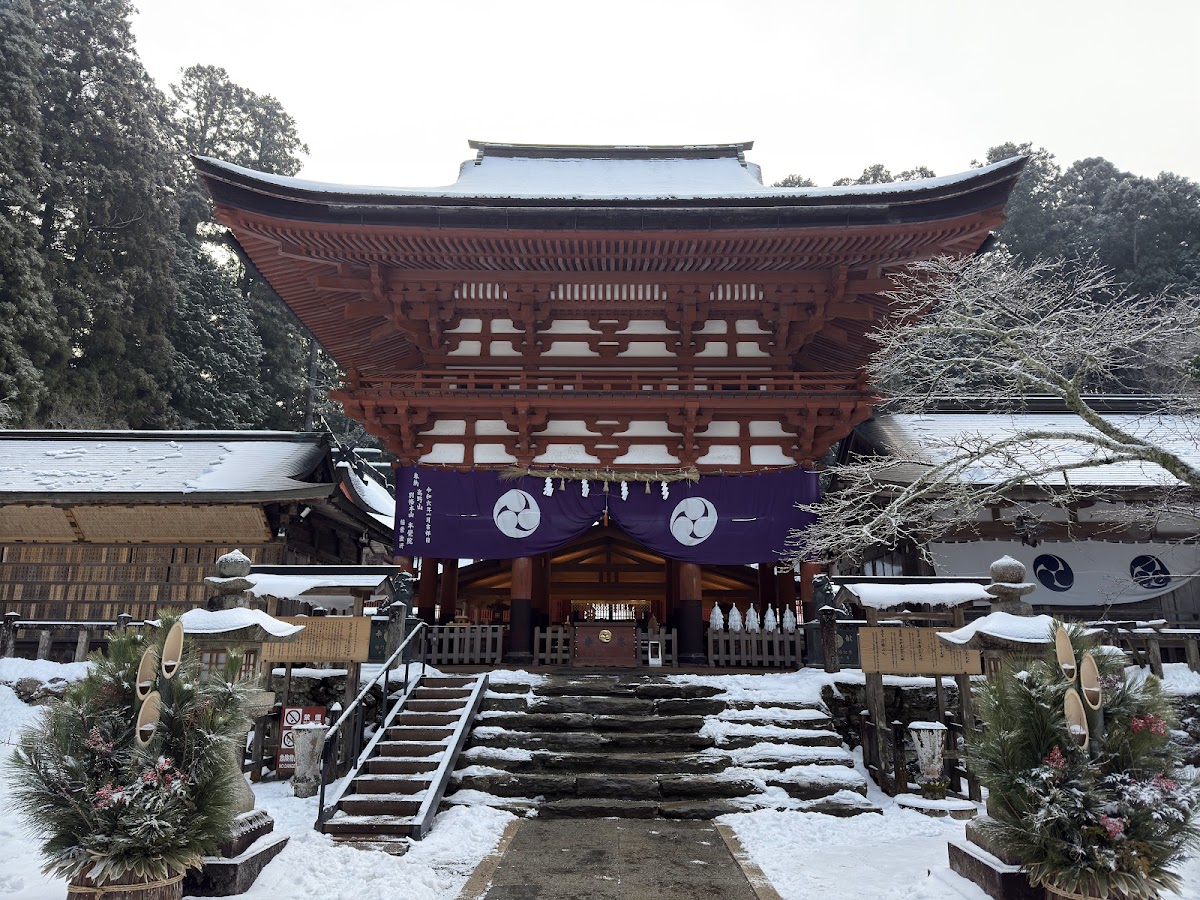
Tower Gate (Important Cultural Property)
A beautiful vermilion-lacquered tower gate that conveys the architectural style of the Muromachi period. It is a two-story gate with magnificent carvings in detail. Passing through this gate, you enter a sacred space.
Main Shrine (Important Cultural Property)
The current main shrine was rebuilt during the Edo period and features a rare architectural style called “Ikkensha Kasuga-zukuri,” where four shrine buildings are lined up side by side. The vermilion-painted shrine buildings are beautiful, and the cypress bark roofs evoke a sense of historical weight.
Ring Bridge (Drum Bridge)
This vermilion-painted arched bridge spans the shrine grounds and is considered a symbolic bridge connecting the sacred realm to the human world. While it was once used only during religious ceremonies, it is now accessible to visitors (however, there may be restrictions on passage depending on the situation).
Sacred Trees
The shrine grounds are lined with giant cedar and cypress trees over several hundred years old, creating a sacred atmosphere. The giant trees behind the main shrine, in particular, have a presence that speaks of a long history.
Treasure Hall
This hall houses valuable treasures, including national treasures and important cultural properties. In particular, the “Niu Myojin Statue” is known as an excellent example of divine sculpture from the Kamakura period.
Annual Events and Festivals
January 1st: New Year’s Day Festival
A festival celebrating the New Year, attracting many visitors for their first shrine visit of the year.
April 16th: Spring Grand Festival
One of the most important festivals at Niu-Tsuhime Shrine. A portable shrine is paraded, and traditional performing arts are offered.
July 20th: Rice Planting Festival
A Shinto ritual praying for a bountiful harvest, featuring a performance of ancient rice planting rituals.
October 16th: Autumn Grand Festival
A festival expressing gratitude for the harvest, an important event alongside the Spring Grand Festival.
December 31st: Great Purification Ceremony and New Year’s Eve Festival
A Shinto ritual to purify and cleanse away the sins and impurities of the past year.
Goshuin (Shrine Seals) and Amulets
Goshuin (Shrine Seals)
At Niutsuhime Shrine, in addition to regular goshuin, seasonal and special goshuin are sometimes available. Beautifully designed goshuin notebooks are also available and are popular as souvenirs of your visit.
Reception Hours: 9:00 AM to around 4:00 PM (may vary depending on the season)
Offering Fee: Usually around 300-500 yen
Main Amulets
- Matchmaking Amulet: An amulet related to the divine virtues of Niutsuhime-no-Okami
- Safe Childbirth Amulet: An amulet for praying for a safe childbirth
- Academic Success Amulet: A prayer for success in academics and qualification exams
- Good Fortune Amulet: An amulet for general good fortune and prosperity
- Traffic Safety Amulet: An amulet for praying for traffic safety
How to Worship and Manners
Basic Worship Etiquette
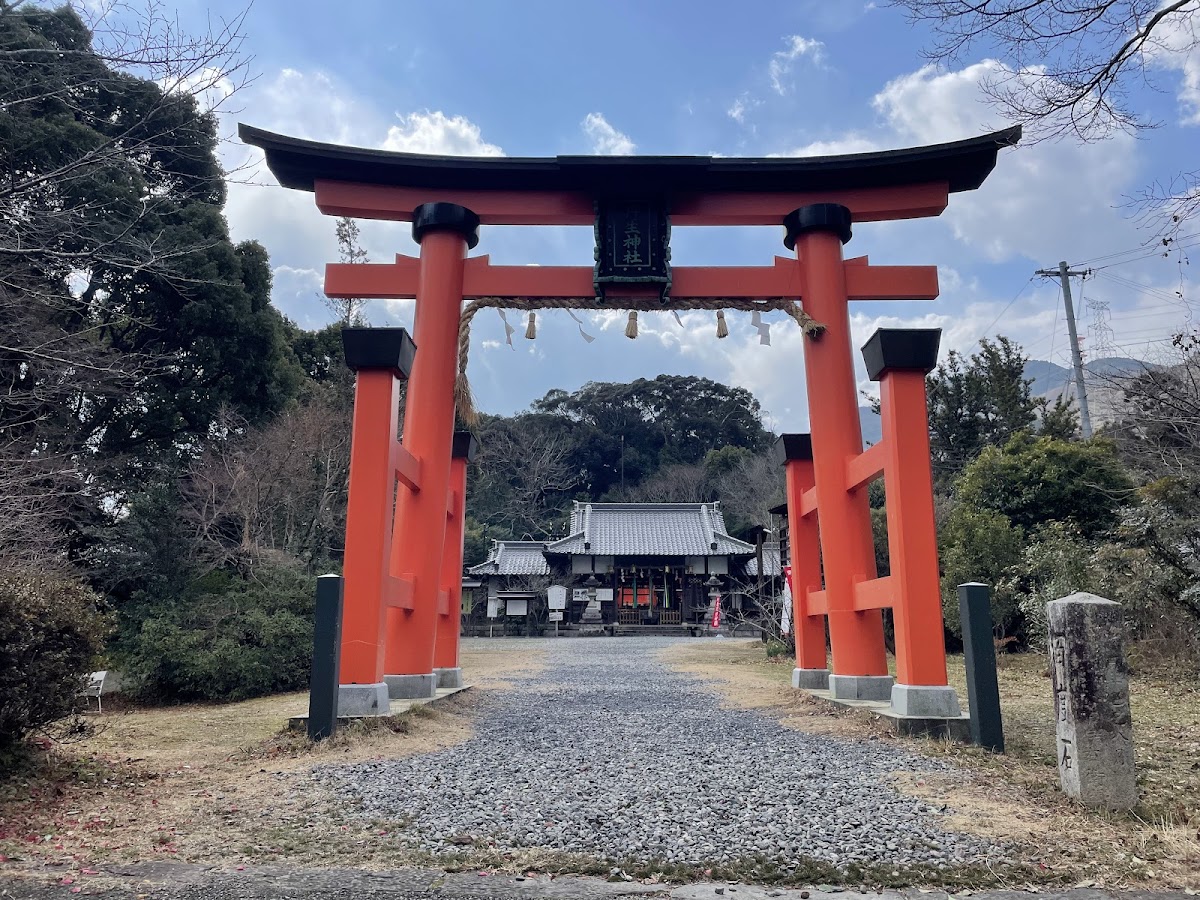
- Bow before the Torii Gate: Bow before entering the sacred area
- Purify at the Water Basin: Purify your left hand, right hand, and mouth in that order
- How to Walk the Path: The center of the path is considered the path of the gods, so walk along the sides
- Etiquette at the Worship Hall: The basic procedure is two bows, two claps, and one bow.
- Bow upon Exit: Before leaving through the torii gate, turn around and bow once.
Photography
Photography is generally permitted within the shrine grounds, but photography is prohibited inside the main hall and the treasure hall. Please be considerate of other worshippers.
Attire
There are no strict dress code regulations, but appropriate attire for a sacred place is desirable.
Access Methods
Access by Train
If using Nankai Electric Railway:
- Get off at Kasada Station on the Nankai Koya Line
- Take the Katsuragi Town Community Bus “Amano Line” from the station (approximately 20 minutes)
- Get off at the “Niutsuhime Shrine” bus stop and it’s a short walk.
If using JR:
- Get off at Kasada Station on the JR Wakayama Line
- Use the community bus as described above.
Important Note: Since the number of community buses is limited, we strongly recommend checking the timetable in advance. Especially on weekends and holidays, the number of buses is limited, so please consider using a taxi.
Access by Car
From the Kyoto-Osaka-Kobe Area:
- Approximately 40 minutes from Wakayama IC on the Hanwa Expressway via National Route 24 and Prefectural Road 13.
- Approximately 20 minutes from Katsuragi-Nishi IC on the Keina-Wa Expressway via Prefectural Road 13.
Parking: Free parking available (approximately 50 spaces for regular cars).
By Taxi
Approximately 15 minutes by taxi from Kasada Station to Niutsuhime Shrine, fare around 3,000 yen.
Nearby Tourist Attractions
Koyasan
A sacred site of Japanese Buddhism located approximately 30 minutes by car from Niutsuhime Shrine. It boasts numerous attractions, including Kongobu-ji Temple, Okunoin, and Danjo Garan. When visiting Koyasan, we highly recommend stopping by Niutsuhime Shrine.
Amano no Sato
The area around the shrine is called “Amano no Sato,” and a peaceful rural landscape unfolds. Beautiful scenery can be enjoyed in every season, especially during the autumn foliage season.
Jison-in Temple
This temple is the starting point of the pilgrimage route to Mount Koya and is known as “Women’s Koya.” It is about a 15-minute drive from Niutsuhime Shrine.
Niu Sakadono Shrine
This is a sub-shrine of Niutsuhime Shrine, and its main hall, built during the Kamakura period, is designated a National Treasure.
Best Time to Visit
Spring (March-May)
The fresh greenery is beautiful, and the area is particularly lively during the Spring Grand Festival in April. Cherry blossoms bloom profusely in the shrine grounds and surrounding areas during cherry blossom season.
Summer (June-August)
The lush green grounds are cool, making it suitable for escaping the summer heat. The Ota Matsuri festival in July is a valuable opportunity to witness traditional events. ### Autumn (September-November)
The autumn foliage season is particularly beautiful, and it’s recommended to visit in conjunction with the Autumn Grand Festival in October. The rural landscape of Amano Village is also dyed in golden hues.
Winter (December-February)
There are fewer visitors, allowing for a peaceful visit. Snow sometimes accumulates, and the snow-covered grounds are magical.
Visiting Hours and Admission Fees
Visiting Hours: 8:30 AM – 4:30 PM (may vary depending on the season)
Admission Fee: Free entry to the shrine grounds
Treasure Hall: Adults 300 yen, Junior/Senior High School Students 200 yen, Elementary School Students 100 yen (Please check opening hours)
Accommodation Information
There are few accommodations around Niutsuhime Shrine, so it is common to stay in Koyasan, Hashimoto City, or Wakayama City. Mount Koya has numerous temple lodgings where visitors can experience vegetarian cuisine and morning prayers.
Myths and Legends of Niutsuhime Shrine
Origin with Kukai
In 816 AD (Kōnin 7), when Kobo Daishi Kukai was searching for land to establish a Shingon Esoteric Buddhism training hall, he encountered a hunter with two dogs, one white and one black, in Uchi District, Yamato Province (present-day Gojo City, Nara Prefecture). This hunter is believed to be an incarnation of Koya-no-Mikoto-Ōkami (Kariba Myōjin), who guided Kukai to Mount Koya.
Afterward, Kukai requested permission from Niutsuhime-Ōkami to use the land of Mount Koya, and upon receiving permission, founded Kongōbu-ji Temple. Therefore, Niutsuhime Shrine has been revered as the guardian deity of Mount Koya and a shrine that must be visited by pilgrims to Mount Koya.
The Goddess of Niu and Mercury
The name “Niu” originates from cinnabar (mercury ore), a valuable resource in ancient times. Cinnabar was highly prized as a red pigment and as an elixir of immortality. Kii Province was one of the major cinnabar producing areas in ancient Japan, and Niu-tsuhime-no-Okami was worshipped as its guardian deity.
Special Prayers and Sorrows
Niu-tsuhime Shrine accepts various prayers and blessings.
- Prayer for Safe Childbirth: Generally performed on the Day of the Dog in the fifth month of pregnancy.
- First Shrine Visit: A prayer for the baby’s health, performed around 30 days after birth.
- Shichi-Go-San (7-5-3 Festival): Accepted mainly in November.
- Prayer for Protection from Misfortune: A prayer for those in their unlucky year.
- Prayer for Family Safety and Business Prosperity: Accepted throughout the year.
- Traffic Safety: Car blessings are also available.
Reservations: Advance reservations are recommended, but same-day reservations are also possible. Please contact the shrine directly for details.
Cultural Properties of Niutsuhime Shrine
National Treasures
The ancient documents and other treasures housed here include those designated as National Treasures.
Important Cultural Properties
- Four main shrine buildings
- Tower gate
- Wooden seated statue of Niu Myojin
- Wooden seated statue of Koya Myojin
- Numerous other divine statues and ancient documents
World Heritage Site
Registered as a component of “Sacred Sites and Pilgrimage Routes in the Kii Mountain Range.”
Points to Note When Visiting Niu-Tsuhime Shrine
- Public Transportation: Bus service is limited, so check the timetable in advance and plan your trip with ample time.
- Mountain Climate: Located at an altitude of approximately 450m, temperatures are lower than in urban areas. Warm clothing is especially necessary in winter.
- Restaurants and Convenience Stores: There are very few restaurants or convenience stores around the shrine. It is recommended to prepare in advance or eat near Kasada Station.
- Cell Phone Signal: Due to the mountainous location, cell phone signal may be weak in some areas.
- Opening Hours: Please note that visiting hours and the opening hours of the Treasure Hall may change depending on the season and weather.
Summary of the Charms of Niutsuhime Shrine
Niutsuhime Shrine is a venerable shrine with a 1700-year history and deep ties to Mount Koya. The shrine grounds, registered as a World Heritage Site, harmonize beautiful vermilion-lacquered buildings with abundant nature, deeply moving visitors.
When visiting Mount Koya, be sure to also visit Niutsuhime Shrine, which enshrines the “guardian deity of Mount Koya,” and experience the depth of Japanese spiritual culture. In this shrine nestled in the quiet mountains, you can purify your heart and feel the blessings of the gods.
With its grounds that showcase the beauty of each season, its important cultural property buildings, and its history of faith dating back to ancient times, Niutsuhime Shrine is a sacred place well worth visiting, offering a deep understanding of Japanese shrine culture.