Complete Guide to Iōji Temples: A Thorough Explanation of the History, Principal Deities, and Visiting Information of Famous Temples Nationwide
Iōji is a name for numerous temples throughout Japan. Its name originates from “Iō,” an alternative name for Yakushi Nyorai (Medicine Buddha), and many Iōji temples enshrine Yakushi Nyorai as their principal deity. This article comprehensively explains the history, characteristics, and visiting information of major Iōji temples throughout Japan.
Origin and Meaning of the Temple Name Iōji
The temple name Iōji is based on the Buddhist concept of “Iō.” Iō is another name for Yakushi Nyorai, also known as “Dai-Iō” or “Iō Zensei.” Yakushi Nyorai has been worshipped since ancient times as the principal deity of the Eastern Pure Land, healing the suffering of sentient beings and bringing physical and mental health.
Temples generally have three names: mountain name, temple name, and temple name. In the case of Iōji temples, while each temple has its own unique mountain name and temple name, they all share the common name “Iōji.” This indicates the spread of Yakushi (Medicine Buddha) worship and the motivation for the construction of temples throughout Japan, driven by people’s desire for healing from illness.
Characteristics and History of Major Iōji Temples Nationwide
Kamatayama Iōji Temple, Iwata City, Shizuoka Prefecture
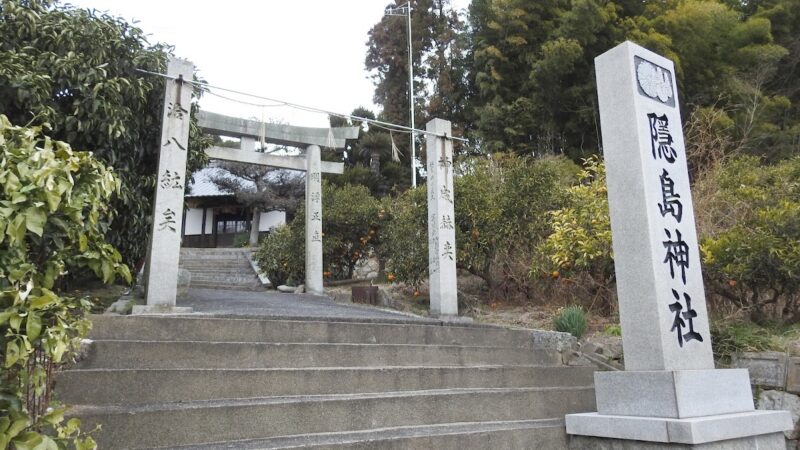
Located in Iwata City, Shizuoka Prefecture, Kamatayama Iōji Temple belongs to the Chizan branch of the Shingon sect. Its official name is “Kamatayama Kongōin Iōji.”
Founding and History
It is said to have been founded between 734 and 748 (Tenpyō 6-20) by imperial decree of Emperor Shōmu. This period coincides with the mid-Nara period, when Emperor Shōmu established provincial temples and nunneries throughout the country. As a rare Shingon Chizan sect temple in Iwata City, it has served as a center of local faith.
The head temple of the Chizan sect is Chishakuin Temple in Higashiyama Shichijo, Kyoto. Iōji Temple enshrines Yakushi Nyorai (the Medicine Buddha) as its principal deity, and many worshippers visit to pray for recovery from illness and longevity.
Highlights of the Temple Grounds
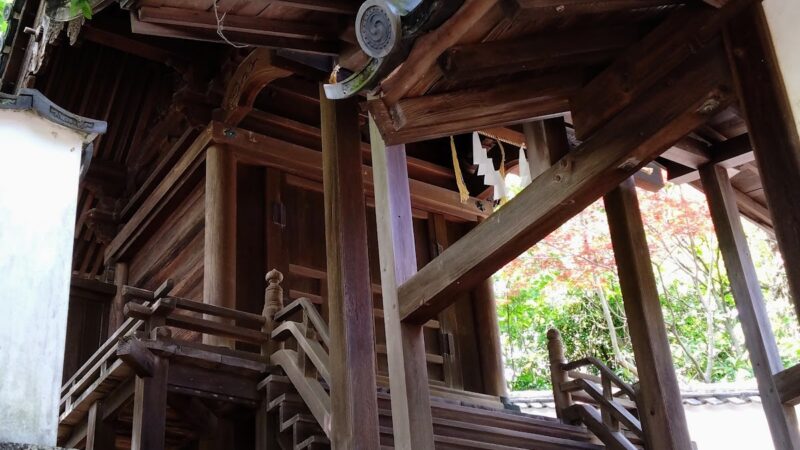
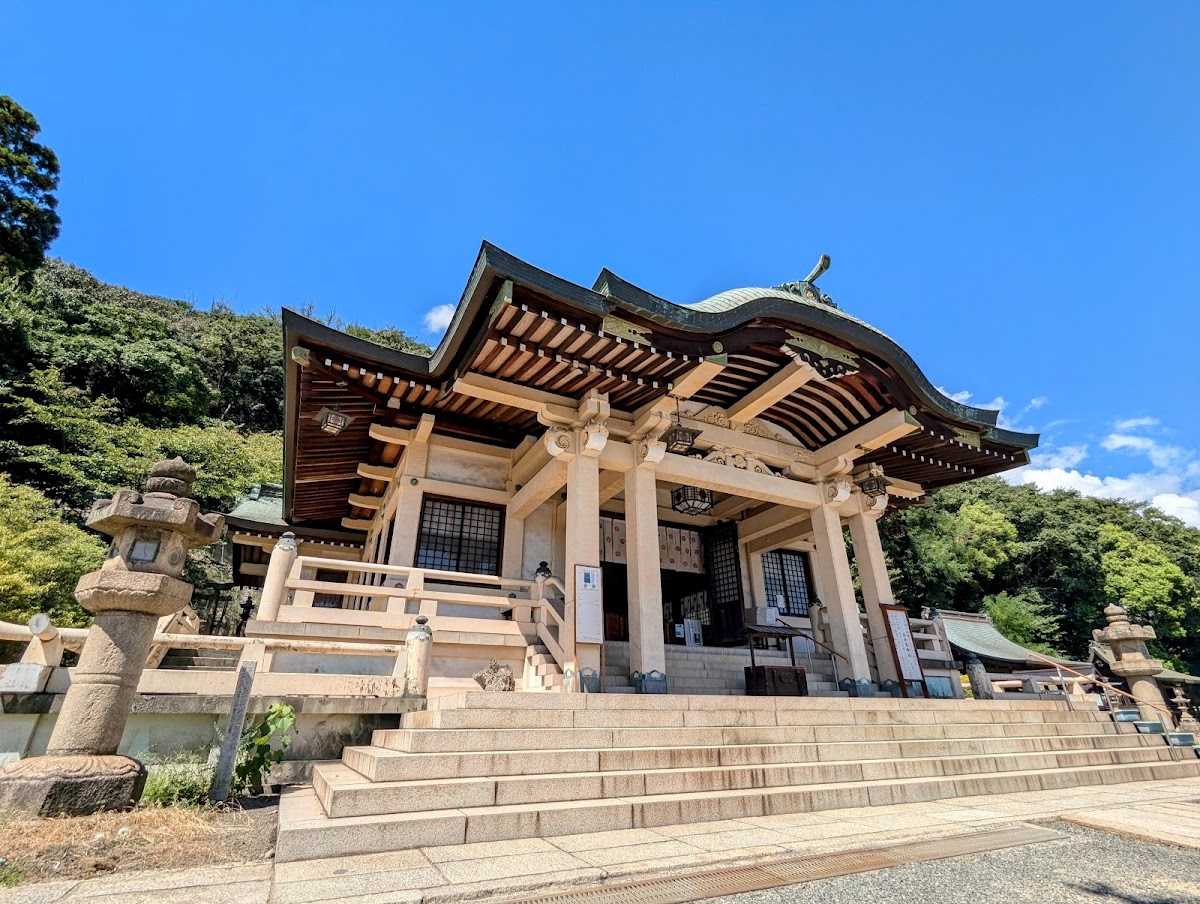
The grounds of Kamadayama Iōji Temple feature a historic main gate and main hall, as well as other buildings such as the Yakushi-dō (Medicine Buddha Hall). Its tranquil environment and peaceful atmosphere make it a charming place for worship.
Iōji Temple, Fukuyama City, Hiroshima Prefecture
Iōji Temple in Fukuyama City, Hiroshima Prefecture, is a Shingon Buddhist temple said to have been founded in 826 (Tenchō 3) by Kōbō Daishi (Kukai).
Founding and Kōbō Daishi
Tenchō 3 falls in the early Heian period, after Kōbō Daishi Kūkai founded Mount Kōya. It is said that Kobo Daishi traveled throughout Japan and founded many temples, and Io-ji Temple in Fukuyama City is considered one of them.
Spectacular View from Taishi-den
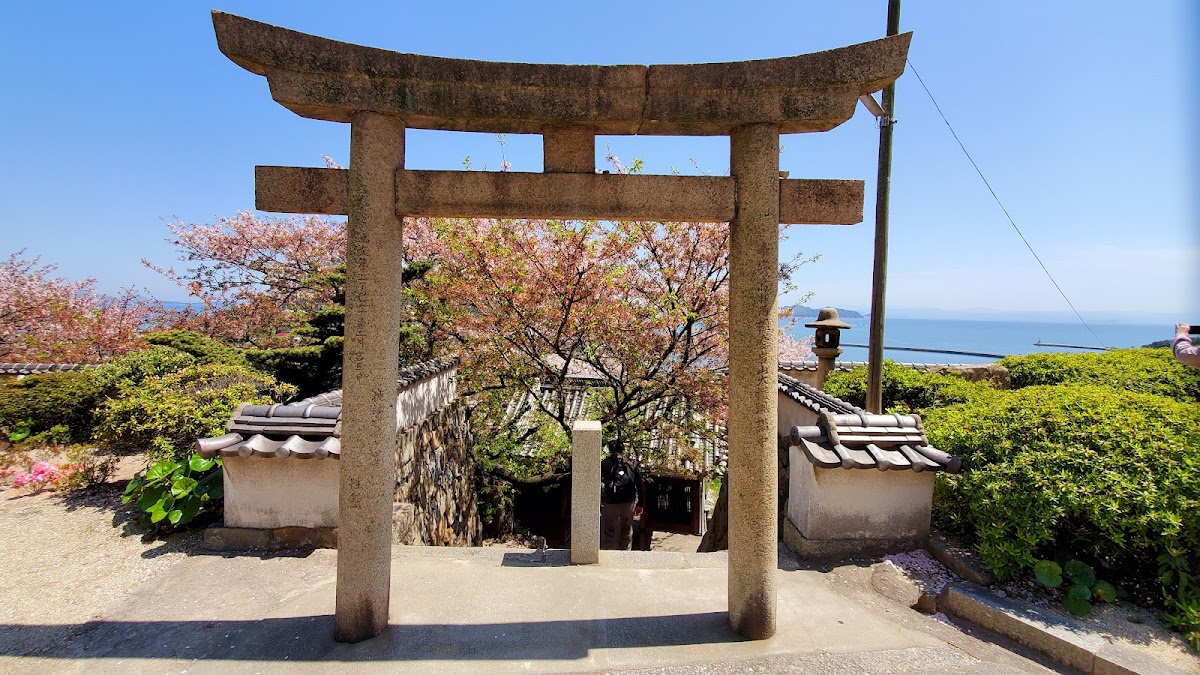
The greatest feature of Io-ji Temple in Fukuyama City is its magnificent view. From the “Taishi-den” (Prince’s Hall) located on the hillside behind the temple, you can enjoy a panoramic view of the town of Tomo and the Seto Inland Sea. The scenery, a blend of the beautiful islands of the Seto Inland Sea and the historic port town of Tomonoura, continues to captivate visitors. Enjoying this spectacular view in conjunction with your visit to the temple is a unique charm of Io-ji Temple in Fukuyama City.
Access and Visiting Information
Many visitors combine their visit with sightseeing in Tomonoura, and the temple is known as a place where one can quietly pray while enjoying the scenic beauty of the Seto Inland Sea.
Rurikōzan Iōji Temple, Saitama Prefecture
Located in Saitama Prefecture, Iōji Temple belongs to the Buzan branch of the Shingon sect, and its mountain name is Rurikōzan. Rurikō refers to the Eastern Pure Land of Lapis Lazuli, the Pure Land of Yakushi Nyorai (Medicine Buddha).
Founding and History
It is said to have been founded in the third year of Tenchō (826 AD) during the Heian period. Taking “Iō” (Medicine King), another name for Yakushi Nyorai, as its temple name, it has long attracted the faith of people praying for healing from illness.
Principal Image and Temple Buildings
The principal image in the main hall is Dainichi Nyorai (Vairocana Buddha), and the principal image in the Yakushi Hall is a statue of Yakushi Nyorai said to have been created by Kōbō Daishi (Kukai). It has long been known as “Sabano Yakushi” and has been cherished by the local people.
The head temple of the Buzan branch of the Shingon sect is Hase-dera Temple in Sakurai City, Nara Prefecture. While inheriting the doctrines and practices of the Buzan sect, the temple continues its community-based activities.
Wakayama Prefecture, Koyasan Nagamine Pilgrimage Site No. 3: Iōji Temple
Located in Wakayama Prefecture, Iōji Temple belongs to the Koyasan Shingon sect and its mountain name is Rurikōzan. As the third temple on the Koyasan Nagamine Pilgrimage Site, it attracts the faith of pilgrims.
Koyasan West Road and Pilgrimage Route
The old National Route 370 (commonly known as the Koyasan West Road), which runs from Kainan City through Kimino Town to Koyasan, has long been a popular pilgrimage route to Koyasan. Iōji Temple is located along this road and serves as an important base for pilgrims heading to Koyasan.
Surrounded by beautiful nature and warm hospitality, it remains a sacred site where many visitors can receive a connection to Buddhism.
Higashi-Koyasan Mirokuin Iōji Temple, Kanuma City, Tochigi Prefecture
Located in Kitahanda, Kanuma City, Tochigi Prefecture, Iōji Temple is a Shingon sect temple of the Buzan branch, and its formal name is Higashi-Koyasan Mirokuin.
Center of Yakushi Worship
As its name suggests, Iō Nyorai, another name for Yakushi Nyorai (Medicine Buddha), indicates, this temple enshrines Yakushi Nyorai as its principal deity. The lecture hall houses a seated statue of Yakushi Nyorai as its hidden principal image, while the main hall houses a Yakushi Triad.
The Yakushi Triad is a three-figure arrangement with Yakushi Nyorai at the center, flanked by Nikko Bosatsu (Sunlight Bodhisattva) and Gekko Bosatsu (Moonlight Bodhisattva). This arrangement is a typical form of Yakushi worship and forms the core of Iōji Temple’s faith.
Meaning of Higashi-Koyasan
The mountain name “Higashi-Koyasan” indicates its role as a center of Koyasan worship in the Kanto region. Even in the Kanto region, far removed from Mount Koya, it has functioned as a training ground for practicing the teachings of Kobo Daishi and the practices of Shingon Esoteric Buddhism.
Io-ji Temple, Fukushima City, Fukushima Prefecture
Located in Iizaka-machi, Fukushima City, Fukushima Prefecture, Io-ji Temple is one of the important temples in the Tohoku region.
History and Cultural Assets
Io-ji Temple, which has long been a center of local faith, possesses numerous valuable cultural assets and treasures. The temple grounds are lined with historical buildings, conveying the form of faith rooted in the Tohoku region’s climate and culture.
As a Tourist Spot
It is also attracting attention as a tourist spot in Fukushima City, with many visitors coming for historical walks and cultural asset appreciation.
Io-ji Temple, Oe-machi, Nishimurayama-gun, Yamagata Prefecture
Located in Sagisawa, Oe-machi, Nishimurayama-gun, Yamagata Prefecture, Io-ji Temple is a Tendai sect temple.
Iōji Temple (Tendai Sect)
While many Iōji temples belong to the Shingon sect, Iōji Temple in Ōe Town is unique in that it belongs to the Tendai sect. The head temple of the Tendai sect is Enryaku-ji Temple on Mount Hiei, and it is an important sect of Japanese Buddhism founded by Saichō.
In the Tendai sect, the worship of Yakushi (Medicine Buddha) is highly valued, attracting people who pray for healing from illness and worldly benefits.
Iōji Temple, Shiga Prefecture
Iōji Temple in Shiga Prefecture is an uninhabited temple quietly nestled along the Takatoki River.
Eleven-Faced Kannon (National Important Cultural Property)
The Eleven-Faced Kannon, carved from a single piece of camphor wood, is designated as a National Important Cultural Property. Known for its dignified yet graceful demeanor, it was referred to as “the village maiden’s Kannon” in Yasushi Inoue’s novel “Stars and Festivals.”
Ichiboku-zukuri is a technique of carving an entire Buddha statue from a single piece of wood, a method widely used from ancient times to the Heian period. The Eleven-Headed Kannon, crafted from camphor wood, is a masterpiece that combines the warmth of the wood with exquisite carving techniques.
Tranquility Surrounded by Nature
The environment, surrounded by the clear waters of the Takatoki River and the surrounding nature, offers a space where one can quietly contemplate the Buddha, away from the hustle and bustle of the city.
Iōji Temple, Shinshiro City, Aichi Prefecture (Site of Takeda Katsuyori’s Headquarters)
Iōji Temple in Shinshiro City, Aichi Prefecture, is a temple deeply intertwined with the history of the Sengoku period.
Takeda Katsuyori and the Battle of Nagashino
This is known as the site where Takeda Katsuyori established his headquarters during the Battle of Nagashino in 1575. The Battle of Nagashino was a crucial battle of the Sengoku period, where the combined forces of Oda Nobunaga and Tokugawa Ieyasu clashed with the Takeda army, and is famous for its three-stage volley of muskets. Iōji Temple is also valuable as a historical site of the Sengoku period, as it is the site of the main camp of Lord Takeda Katsuyori. It is a popular destination for history buffs and those interested in the Sengoku period.
Etiquette and Manners for Visiting Iōji Temple
When visiting Iōji Temple, follow the general etiquette for visiting temples.
Bow at the Temple Gate
Bow before passing through the temple gate and compose yourself before entering the grounds. The temple gate is a boundary separating the secular world from the sacred realm, and showing respect is important.
Purification at the Water Basin
If there is a water basin, purify your hands and mouth. Hold the ladle in your right hand and wash your left hand, then switch to your left hand and wash your right hand, then switch back to your right hand, receive water in your left hand, and rinse your mouth.
Worship at the Main Hall
In front of the main hall, quietly offer your donation and bow with clasped hands. In Shingon Buddhist temples, the Heart Sutra, the Mantra of Light, and the mantra of Yakushi Nyorai (Medicine Buddha), “Om Korokoro Sendari Matougi Sowaka,” are sometimes chanted.
Strolling the Temple Grounds
After praying, take a leisurely stroll through the temple grounds, viewing the various halls, stone Buddha statues, and gardens. Walk quietly and be considerate of other visitors.
Photography Guidelines
Photography is only permitted in designated areas. Always abide by any restrictions on photography inside the main hall or of Buddha statues.
Yakushi Nyorai Faith and Io-ji Temple
The fact that many Io-ji temples enshrine Yakushi Nyorai as their principal deity has deep religious significance.
The Vows of Yakushi Nyorai
Yakushi Nyorai made twelve great vows, including those related to worldly benefits such as “curing illness,” “removing physical disabilities,” and “providing food, clothing, and shelter.” These vows are the reason why this Buddha has been widely worshipped from ancient times to the present day, as a Buddha who answers people’s earnest wishes.
Belief in an Era Before Medical Advances
In times when modern medical systems were not in place, illness and injury were serious matters that could be life-threatening. People prayed to Yakushi Nyorai for recovery from illness and found spiritual support by visiting Iōji Temple.
Significance in Modern Times
Even in modern times, Iōji Temple plays an important role as a place to pray for mental illnesses that cannot be fully addressed by medical technology, for wishes for health and longevity, and for the health and well-being of family members.
Access and Visiting Information for Iōji Temples
Access to each Iōji Temple varies depending on its location.
Using Public Transportation
Iōji Temples located near urban areas can be accessed by public transportation such as trains and buses. It is recommended to check the distance and travel time from the nearest station on each temple’s official website.
Access by Car
For Iōji Temples located in mountainous areas or suburbs, access by car is convenient. It’s a good idea to check the availability and capacity of parking in advance.
Visiting Hours
Many temples accept visitors during the day, but specific hours vary by temple. Generally, visiting hours are from around 9:00 AM to 4:00 PM.
Admission Fee
Entry to the temple grounds is often free, but there may be an admission fee for the treasure hall or special viewings.
Annual Events
At Iōji Temple, special memorial services are sometimes held on the days of Yakushi Nyorai (the 8th and 12th of each month), during the spring and autumn equinoxes, and during Obon. Visiting during these events can provide a deeper religious experience.
Treasures and Cultural Properties of Iōji Temple
Each Iōji Temple possesses valuable treasures and cultural properties that have been preserved and passed down through a long history.
Buddhist Statues
The temple houses various Buddhist statues, including the principal image of Yakushi Nyorai (Medicine Buddha), the attendant bodhisattvas Nikko and Gekko, the Twelve Heavenly Generals, and Fudo Myoo (Acala). Many of these are designated as cultural properties by the national or local government.
Ancient Documents
Ancient documents, temple registers, and scriptures recording the temple’s history and origins are important resources for regional history research.
Architectural Structures
The buildings themselves, such as the main hall, temple gate, and bell tower, sometimes possess cultural value. They are valuable legacies that convey the techniques and styles of traditional temple architecture.
Paintings and Crafts
Crafts such as Buddhist paintings, mandalas, Buddhist implements, and temple bells are also carefully preserved as treasures of the temple.
Io-ji Temple and the Local Community
Io-ji Temple is not merely a religious facility; it has played diverse roles in the local community.
Spiritual Pillar of the Community
For centuries, it has served as a spiritual anchor for local residents, playing a central role in weddings, funerals, and annual events.
Educational and Cultural Space
During the Edo period, it provided education as a terakoya (temple school) and functioned as a center for cultural activities. Even today, it strives to spread Buddhist culture through activities such as sutra copying sessions and Dharma talks.
Tourist Resource
Due to its historical value and scenic beauty, it is attracting attention as a tourist spot and contributing to regional development.
Disaster Shelter
Due to the size of the temple grounds and the sturdiness of the buildings, it can also function as a shelter during disasters.
Training and Faithful Life at Iōji Temple
At Iōji Temple, not only monks undergo training, but also ordinary believers can engage in various forms of faithful life.
Sutra Copying
Copying sutras such as the Heart Sutra is an excellent method of training that calms the mind and allows one to connect with Buddhist teachings. Many Iōji Temples hold sutra copying sessions.
Zazen and Meditation
Shingon Buddhism teaches a meditation method called Ajikan, which allows one to walk the path to mental stability and enlightenment.
Dharma Talks
Dharma talks by the head priest offer an easy-to-understand way to learn Buddhist teachings. It’s a valuable opportunity to gain wisdom that can be applied to daily life.
Pilgrimage
Iōji Temple, a temple on the Kōyasan Nagamine pilgrimage route, welcomes pilgrims. Pilgrimages are a journey of spiritual training that deepens faith and strengthens mind and body.
The Future and Challenges of Iōji Temple
Modern Iōji Temple is facing the need to adapt to the new era while preserving its traditions.
The Problem of Successors
Due to the declining birthrate and aging population, the shortage of successors for temples is becoming serious. The number of temples without resident priests is increasing, making the protection of cultural properties and the continuation of religious activities a challenge.
Changes in the Danka System
Due to urbanization and the rise of nuclear families, the traditional Danka system is changing. Temples are exploring new ways to build relationships with their followers.
Preservation of Cultural Properties
Maintaining old buildings and Buddhist statues incurs significant costs. Efforts continue to pass on valuable cultural properties to future generations through support from the national and local governments, as well as donations.
Towards Opener Temples
In modern times, there are movements to open temples to the public through diverse activities such as temple cafes, concerts, and yoga classes, aiming to broaden the base of people interested in religion.
Summary
Iōji temples, centered on the worship of Yakushi Nyorai (Medicine Buddha), have served as a spiritual support for people throughout Japan. Each Iōji temple possesses its own unique history, cultural properties, and landscape, reflecting the richness of Japanese Buddhist culture.
From the ancient temple in Iwata City, Shizuoka Prefecture, founded by Emperor Shomu; to the temple boasting breathtaking views in Fukuyama City, Hiroshima Prefecture; to the pilgrimage site on the Koyasan route in Wakayama Prefecture; Higashi-Koyasan in Tochigi Prefecture; to the Tohoku religious centers in Fukushima and Yamagata Prefectures; to the temples in Shiga Prefecture possessing important cultural properties; and to the Sengoku period historical sites in Aichi Prefecture, each temple possesses its own unique charm rooted in its region.
Iōji Temple, where one can reflect on history, feel the compassion of Yakushi Nyorai (Medicine Buddha), and find peace of mind through worship, remains relevant and relevant even in modern society.
We encourage you to visit an Iōji Temple near you, or one you encounter during your travels, and experience the history of Japanese Buddhist culture and faith. As you join your hands in prayer in the tranquil temple grounds, you will feel connected to a history of prayer that has continued for over a thousand years.