Complete Guide to Iwashimizu Hachimangu Shrine | History, Blessings, Access, and Highlights Explained in Detail
Iwashimizu Hachimangu Shrine is a historic shrine located on the summit of Mt. Otokoyama in Yawata City, Kyoto Prefecture. Since the Heian period, it has been revered by the imperial court and samurai families, and has been affectionately known as “Yawata no Hachiman-san.” This article comprehensively explains everything you need to know before visiting Iwashimizu Hachimangu Shrine, including its history, blessings, worship methods, and access information.
What is Iwashimizu Hachimangu Shrine?
Iwashimizu Hachimangu Shrine is a prestigious shrine, counted as one of the “Three Great Hachimangu Shrines of Japan,” along with Usa Jingu Shrine in Oita Prefecture and Tsurugaoka Hachimangu Shrine in Kanagawa Prefecture. Located on the summit of Mt. Otokoyama, at an altitude of approximately 143 meters, it is also known as a scenic spot offering panoramic views of the Kyoto Basin.
Main Deities
The following three deities are enshrined at Iwashimizu Hachimangu Shrine:
- Emperor Ōjin: The 15th Emperor and the central figure of Hachiman-sama.
- Hime Ōkami: The collective name for the three Munakata goddesses.
- Empress Jingū: The mother of Emperor Ōjin.
These deities are collectively known as the “Three Great Gods of Hachiman” and are worshipped as gods of national protection, warding off evil, and prayers for victory.
History of Iwashimizu Hachiman-gū Shrine
Origin of its Founding
The founding of Iwashimizu Hachiman-gū Shrine dates back to the first year of the Jōgan era (859 AD). Gyōkyō, a monk of Daian-ji Temple in Nara, received a divine oracle from Hachiman-sama while training at Usa Shrine in Buzen Province (present-day Ōita Prefecture), stating, “I wish to be enshrined near the capital and protect the nation.”
Gyōkyō petitioned the imperial court, and by imperial decree of Emperor Seiwa, the Hachiman deity was enshrined on the peak of Mt. Otokoyama. This is considered the beginning of Iwashimizu Hachimangu Shrine. The name “Iwashimizu” originates from the sacred spring that gushes forth from the middle of Mt. Otokoyama.
Prosperity in the Heian Period
Shortly after its founding, Iwashimizu Hachimangu Shrine came to receive the deep reverence of the imperial court. In 863 (Jōgan 5), it was granted the highest rank of Shinto deity, Junior First Rank, and positioned as the guardian deity of the imperial family.
Especially from the mid-Heian period onward, emperors and retired emperors frequently visited the shrine, and grand festivals such as the “Iwashimizu Temporary Festival” and the “Iwashimizu Hōjō-e” were held. The Hōjō-e was the most important festival, held on the 15th day of the 8th month of the lunar calendar, and is still held on September 15th today.
Connections with the Samurai Government
During the Kamakura period, the shrine gained deep reverence from the samurai class as the tutelary deity of the Minamoto clan. Minamoto no Yoritomo, when establishing Tsurugaoka Hachimangu Shrine, invited the deity from Iwashimizu Hachimangu Shrine, demonstrating the deep connection between the two shrines.
During the Muromachi period, the Ashikaga shogunate, and during the Sengoku period, Oda Nobunaga and Toyotomi Hideyoshi also contributed to the repair and donation of shrine buildings. In the Edo period, Tokugawa Ieyasu donated land to the shrine, and the third shogun, Iemitsu, constructed the current shrine buildings.
Modern Era
With the separation of Shinto and Buddhism during the Meiji era, the Buddhist facilities that had previously existed as Jinguji (shrines associated with the shrine) were abolished. However, Iwashimizu Hachimangu Shrine continued to receive national reverence as a Kanpei Taisha (a high-ranking shrine).
In 2016, ten buildings of the main shrine were designated as National Treasures, reaffirming its historical and cultural value.
Benefits of Iwashimizu Hachimangu Shrine
Iwashimizu Hachimangu Shrine is known for its diverse benefits, but it attracts worshippers particularly in the following areas:
Protection from Misfortune and Disaster
Iwashimizu Hachimangu Shrine is known as “Yawata’s God of Misfortune” and is famous for its benefits in warding off misfortune. People in their unlucky years, in particular, visit the shrine from all over Japan. Within the shrine grounds, there is a prayer hall where prayers for protection from misfortune can be received, and both individuals and groups can pray for protection from misfortune.
Good Fortune in Competitions and Victory
Hachiman, who has the characteristics of a god of war, has been worshipped as an object of prayer for success in competitions and contests. Students taking exams, athletes, business people, and others facing various “competitions” visit the shrine to pray for victory.
National Protection and Prosperity
As indicated in the history of its founding, Iwashimizu Hachimangu Shrine has been positioned as a shrine that protects the peace and prosperity of the nation. Even today, prayers for national peace and security are offered during important national milestones and international events.
Traffic Safety
The shrine grounds also have a prayer area for traffic safety, accepting prayers for safe driving of cars, bicycles, and other vehicles. Many visitors come for blessings upon purchasing a new car or to pray for safe driving every day.
Safe Childbirth and Child-Rearing
Based on the myth of Empress Jingu safely giving birth to Emperor Ojin, the shrine is also believed to offer blessings for safe childbirth and child-rearing. Pregnant women and families raising children visit to pray for safe childbirth and the healthy growth of their children.
National Treasure Shrine Architecture
The greatest highlight of Iwashimizu Hachimangu Shrine is the 10 main shrine buildings, which were designated as National Treasures in 2016.
Masterpiece of Hachiman-zukuri Architecture
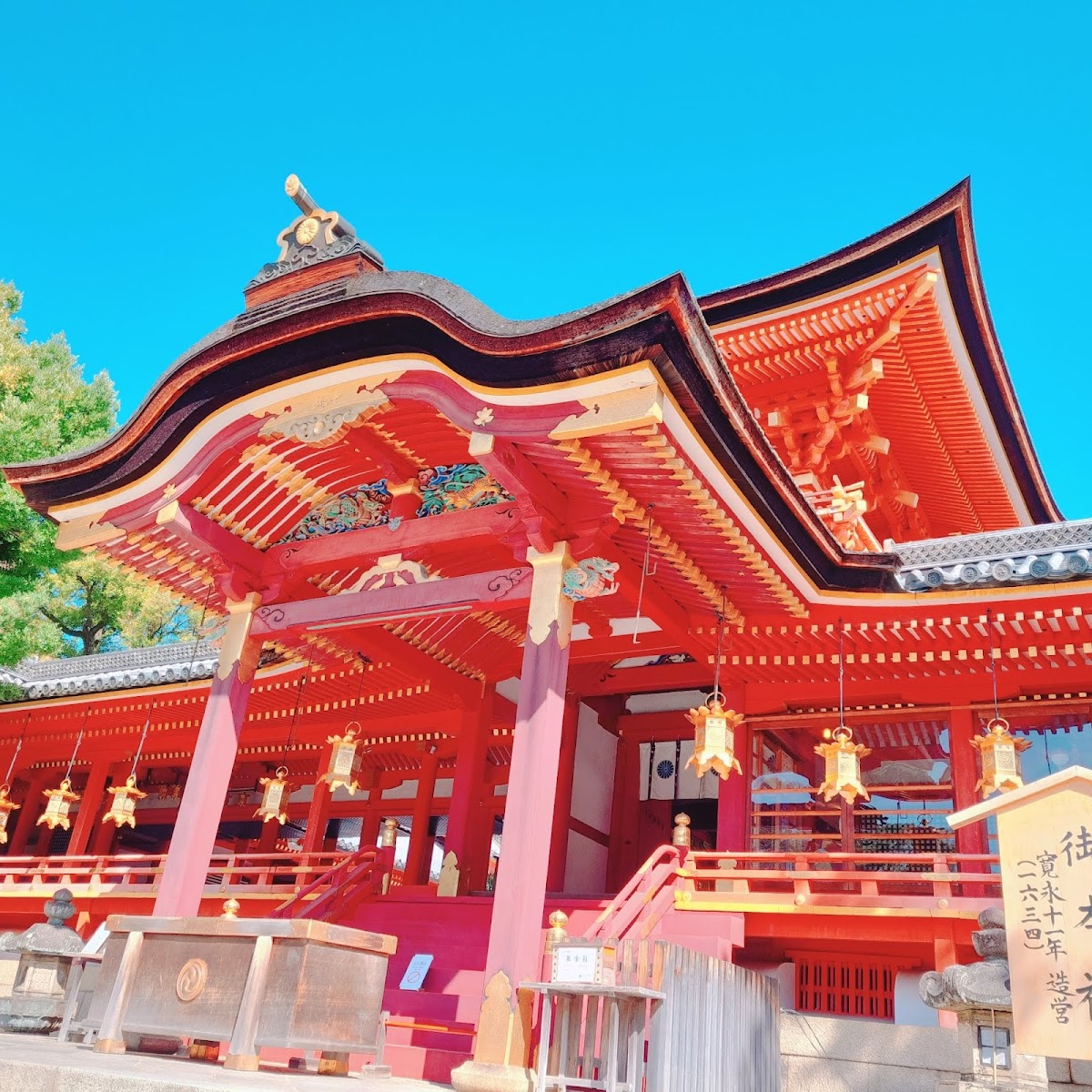
The main hall of Iwashimizu Hachimangu Shrine is built in a unique architectural style called “Hachiman-zukuri.” The Hachiman style is a unique architectural style found only at Iwashimizu Hachimangu Shrine and Usa Jingu Shrine, where two buildings (front and rear halls) are covered by a single roof.
The current shrine buildings were constructed in 1634 by order of Tokugawa Iemitsu and are considered a masterpiece representing the pinnacle of early Edo period shrine architecture.
Splendid Decorations
The entire shrine building is adorned with vibrant colors and gold leaf, and the details are exquisitely carved. The following decorations are particularly noteworthy:
- Kaerumata: A carving applied to the structural members of a building, featuring elaborate works depicting flowers, birds, wind, and moon, or Chinese historical stories.
- Gegyo: A decorative carving suspended below the gable.
- Koryo: A carving of dragons or lions applied to the horizontal beam supporting the building.
These decorations strongly reflect the influence of the opulent Momoyama culture, which is also evident in Nikko Toshogu Shrine, a representative example of the Gongen-zukuri style.
10 Buildings Designated as National Treasures
The following 10 buildings have been designated as National Treasures.
- Main Shrine
- Outer Shrine (Front Hall)
- Tower Gate
- East Gate
- West Gate
- Corridor (East)
- Corridor (West)
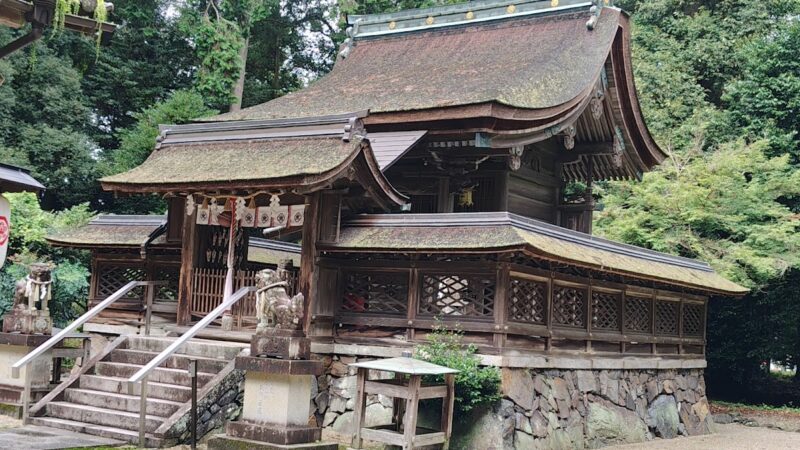
- Main Shrine of Takeuchi Shrine (Subsidiary Shrine)
- Main Shrine of Wakamiya Shrine (Subsidiary Shrine)
- Main Shrine of Wakamiya Shrine (Subsidiary Shrine)
These structures are valued as a unified architectural group and have been designated a National Treasure.
Highlights of the Shrine Grounds
Front and Back Approaches
Iwashimizu Hachimangu Shrine has two approaches leading from the foot of the mountain to the summit.
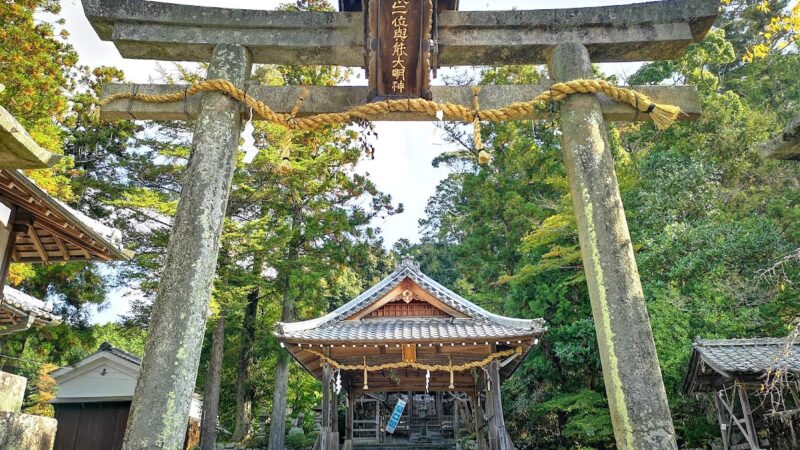
The Front Approach is the official approach from Iwashimizu Hachimangu Station, involving a climb of approximately 700 stone steps. Along the way, you’ll find the first, second, and third torii gates, and numerous subsidiary shrines and stone monuments are scattered along the path. Those confident in their physical fitness can experience the essence of worship more deeply by walking up this approach.
The back approach is the path leading from the Otokoyama Cable Car’s Otokoyama Sanjo Station to the shrine. It’s a relatively gentle slope. Those with time or physical limitations may find using the cable car more convenient.
Kusunoki Masashige’s Camphor Tree
Within the shrine grounds stands a large camphor tree said to be over 700 years old, affectionately known as “Kusunoki Masashige’s Camphor Tree.” Legend says that Kusunoki Masashige, a warrior from the Nanboku-cho period, rested beneath this tree when he visited to pray for victory in battle.
Even today, this camphor tree, with its branches still vigorously extending, is a popular spot for visitors as a symbol of vitality.
Iwashimizu Shrine (Sacred Water)
On the mountainside of Otokoyama, the “Iwashimizu” spring, from which the shrine’s name originates, still flows. This spring water is revered as sacred water and has been believed since ancient times to bring healing from illness and longevity.
Even today, visitors can freely drink the sacred water, and many can be seen taking it home in plastic bottles.
Edison Memorial
You might be surprised to learn that there is a monument to Thomas Edison on the temple grounds. This is based on the historical fact that when Edison was searching for a material for the filament of his incandescent light bulb, the bamboo growing on the grounds of Iwashimizu Hachimangu Shrine was the perfect fit.
Edison succeeded in developing a light bulb that could burn for a long time using bamboo from Yawata, making a significant contribution to the practical application of electric lighting. A monument was erected in 1934 to commemorate this connection.
View from the Observation Deck
From the summit of Mt. Otokoyama, you can enjoy a panoramic view of the Kyoto Basin and the Osaka area. On clear days, you can see Kyoto Tower, Mt. Hiei, and even the distant skyscrapers of Osaka, making it a popular spot for its spectacular views.
The view at sunset is particularly exceptional; the Kyoto cityscape bathed in the setting sun is well worth a visit.
Major Festivals and Events
Iwashimizu Festival (September 15th)
The most important festival of Iwashimizu Hachimangu Shrine is the “Iwashimizu Festival,” held annually on September 15th. Also known as “Hojo-e,” it is a traditional event dating back to the Heian period and is designated as a National Important Intangible Folk Cultural Property.
During the festival, after a Shinto ritual is performed at the main shrine late at night, the portable shrine is carried to the temporary shrine at the foot of the mountain in the early morning. In the evening, it returns to the mountaintop, and the procession is as magnificent as a Heian-era picture scroll.
Aoyama Festival (May 5th)
The “Aoyama Festival” is held on May 5th, the Boys’ Festival (Tango no Sekku). This festival prays for lasting military fortune and includes Yabusame (mounted archery) rituals and martial arts demonstrations, attracting many worshippers.
New Year’s Visit
Iwashimizu Hachimangu Shrine is one of the most popular New Year’s visit spots in Kyoto Prefecture, attracting approximately 300,000 visitors during the first three days of the New Year. On New Year’s Day, the Saitansai (New Year’s Day Festival) is held, praying for national peace and prosperity in the new year and the happiness of the worshippers.
For those who wish to avoid crowds, visiting in the early morning or evening is recommended. The cable car operates specially from late night to early morning on New Year’s Day.
Setsubun Festival
On February 3rd, Setsubun, the Setsubun Festival is held, featuring a bean-throwing ritual. Known as a shrine for warding off evil, the Setsubun Festival at Iwashimizu Hachimangu Shrine is particularly popular among those in their unlucky years.
How to Worship and Manners
Basic Worship Procedure
Worship at Iwashimizu Hachimangu Shrine follows the following procedure:
- Passing through the Torii Gate: Bow before passing through the torii gate.
- Purifying at the Water Basin: Purify your left hand, right hand, and mouth in that order, and finally purify the handle of the ladle.
- Proceeding to the Main Shrine: Walk along the path, avoiding the center.
- Worship: Worship using the two bows, two claps, and one bow ritual.
- Amulets and Goshuin (Shrine Seals): If desired, please inquire at the reception area.
About Prayers
Iwashimizu Hachimangu Shrine accepts prayers for individuals and groups. The main types of prayers are as follows:
- Protection from Evil
- Family Safety
- Business Prosperity
- Traffic Safety
- Safe Childbirth
- First Shrine Visit for a Newborn
- Shichi-Go-San (7-5-3 Festival)
- Success in Exams
- Victory
Reservations are not required for prayers; you can apply at the reception on the day of your visit. The visit takes approximately 30 minutes, and the offering fee starts from 5,000 yen.
Amulets and Goshuin (Shrine Seals)
Iwashimizu Hachimangu Shrine offers a variety of amulets. The following amulets are particularly popular:
- Exorcism Amulet: An amulet for warding off evil.
- Victory Amulet: An amulet for improving luck in competitions.
- Traffic Safety Amulet: An amulet for praying for traffic safety.
- Safe Childbirth Amulet: An amulet for praying for safe childbirth.
Goshuin (shrine seals) can be obtained at the office near the main hall. In addition to regular goshuin, seasonal special goshuin are sometimes offered. Goshuin notebooks with original Iwashimizu Hachimangu designs are also sold.
Access Information
Access by Train
Using the Keihan Railway
The Keihan Railway is the most convenient way to access Iwashimizu Hachimangu Shrine.
- Get off at Iwashimizu Hachimangu Station on the Keihan Main Line
- Approximately 3 minutes from the station to Otokoyama Cable Car Station
- Approximately 5 minutes on foot from Otokoyama Cable Car Station to the main shrine
From Kyoto, it takes approximately 30 minutes by Keihan Main Line; from Osaka, it takes approximately 40 minutes by express train.
If using JR
From JR Kyoto Line Yawata-shi Station, take a Keihan bus or walk to Keihan Iwashimizu Hachimangu Station, then take the Otokoyama Cable Car.
About the Otokoyama Cable Car
The Otokoyama Cable Car connects Otokoyama Cable Car Station at the foot of the mountain and Otokoyama Cable Car Station at the top of the mountain in approximately 3 minutes.
- Operating Hours: First departure around 7:40 AM ~ Last departure around 6:15 PM (may vary depending on the season)
- Operating Frequency: Every 15 minutes
- Fare: One-way adult 200 yen, child 100 yen
Those confident in their physical fitness can also walk up the stone steps of Omotesando (approximately 700 steps). The estimated time is approximately 20-30 minutes.
Access by Car
Using the Expressway
- Approximately 10 minutes from Meishin Expressway “Oyamazaki IC”
- Approximately 10 minutes from Keiji Bypass “Kumiyama Yodo IC”
Parking
Iwashimizu Hachimangu Shrine has parking for visitors.
- Mountaintop Parking: Approximately 50 cars (paid)
- Foothill Parking: Approximately 100 cars (paid)
Due to expected congestion during New Year’s visits and festivals, the use of public transportation is recommended.
Nearby Tourist Attractions
Flying Shrine
Located near the foot of Iwashimizu Hachimangu Shrine, Flying Shrine is a rare shrine dedicated to Ninomiya Chuhachi, a pioneer of Japanese aviation. It attracts worshippers from those involved in aviation safety and aircraft-related work. The shrine grounds display actual aircraft engines and models, making it an interesting spot for aviation enthusiasts.
Shokado Garden and Museum
This garden and museum is associated with Shokado Shojo, a cultural figure from the early Edo period. It is also the origin of the name “Shokado Bento” (a type of bento box). Visitors can stroll through the beautiful Japanese garden and admire Shokado Shojo’s calligraphy, paintings, and tea ceremony utensils.
There is also a tea room within the garden where you can enjoy matcha green tea and Japanese sweets.
Cherry Blossoms at Sewari Embankment
In spring, the cherry blossom trees along the Sewari Embankment, where the Uji River and Kizu River meet, are magnificent. Approximately 250 Somei Yoshino cherry trees are planted along a 1.4km stretch, creating a tunnel of cherry blossoms when in full bloom.
Located about a 10-minute drive from Iwashimizu Hachimangu Shrine, it’s a popular tourist destination during the spring season, with many visitors coming to both.
Nagarebashi Bridge (Kamitsuya Bridge)
This wooden bridge, famous as a filming location for period dramas, has a unique structure designed so that its planks are swept away during floods. Situated amidst a tranquil rural landscape, it’s a spot where you can experience the quintessential Japanese scenery.
Visiting Information
Opening Hours
- April-September: 5:30-18:30
- October-March: 6:00-18:00
- November-February: 6:30-17:30
*Hours may change during the New Year period and festivals.
Admission Fee
Entry to the shrine grounds is free. However, a donation is required for prayers and blessings.
Estimated Time Required
- Visiting only via cable car: Approximately 1 hour
- Visiting by walking up the main approach: Approximately 1 hour 30 minutes
- Exploring the grounds thoroughly: Approximately 2 hours
Clothing and Items to Bring
Since Iwashimizu Hachimangu Shrine is located on a mountain, please note the following:
- Comfortable walking shoes (especially if climbing the main approach)
- Appropriate clothing for the season (temperatures are lower on the mountain than in the city)
- Parasol, hat, and drinks in summer
- Warm clothing in winter
Iwashimizu Hachimangu Shrine Trivia
How to Pronounce “Yawata”
While the place name “Hachiman” is generally pronounced “Hachiman,” in this region it is pronounced “Yawata.” This is a remnant of an ancient pronunciation, and locals still affectionately refer to it as “Yawata no Hachiman-san.”
Connection to Tsurezuregusa
Section 52 of the Kamakura period essay collection *Tsurezuregusa* recounts an anecdote about a monk who visited Iwashimizu Hachimangu Shrine but left after only visiting the subsidiary shrines at the foot of the mountain, without paying his respects at the main shrine on the mountaintop.
This story is still quoted today as a lesson about the importance of seeing things through to the end.
Connection to The Tale of Genji
*The Tale of Genji* also mentions Iwashimizu Hachimangu Shrine, suggesting it was an important pilgrimage site for Heian-era aristocrats. The story depicts characters visiting Iwashimizu Hachimangu Shrine.
Summary
Iwashimizu Hachimangu Shrine is a prestigious shrine with a history of over 1000 years. It is a power spot with many attractions, including its national treasure shrine buildings, blessings for warding off evil and improving luck in competitions, and a spectacular view overlooking the Kyoto Basin.
While it’s a little distance from the main tourist attractions in Kyoto city, it offers a quiet and peaceful atmosphere for worship. It’s easily accessible from Kyoto Station in about an hour using the Keihan Railway and the Otokoyama Cable Car, so be sure to visit during your Kyoto sightseeing trip.
It’s especially recommended for the following people:
- Those seeking protection from bad luck during their unlucky year
- Those facing important events such as exams or sports competitions
- Those interested in Japanese history and architecture
- Those seeking a peaceful atmosphere for worship
- Those looking to visit a hidden gem in Kyoto
Why not visit Iwashimizu Hachimangu Shrine and experience the sacred atmosphere that people of ancient times felt?