Complete Guide to Kumano Nachi Taisha Shrine | History, Worship Methods, Access, and Highlights Explained in Detail
Kumano Nachi Taisha Shrine, located in Nachikatsuura Town, Wakayama Prefecture, is one of Japan’s most sacred sites. Along with Kumano Hongu Taisha Shrine and Kumano Hayatama Taisha Shrine, it forms the Kumano Sanzan (Three Grand Shrines of Kumano) and is revered as the head shrine of over 5,000 Kumano shrines nationwide. Registered as part of the UNESCO World Heritage Site “Sacred Sites and Pilgrimage Routes in the Kii Mountain Range,” it has attracted numerous pilgrims since ancient times as the foremost sacred site and the 12 Kumano Gongen (Great Deity of Kumano).
This article comprehensively introduces everything you need to know before visiting Kumano Nachi Taisha Shrine, including its history, enshrined deities and blessings, worship methods, highlights, and access information.
History and Origins of Kumano Nachi Taisha Shrine
A Belief Originating from Nachi Falls
Kumano Nachi Taisha Shrine has a unique origin, distinct from the other three Kumano shrines. It is believed that the shrine buildings were constructed later than those of Kumano-za Shrine (Hongu) and Kumano Hayatama Taisha Shrine (Shingu), and its faith originates from a primitive nature worship of Nachi Falls (Nachi no Otaki) located in the Nachi Mountains.
Nachi Falls, boasting the greatest drop in Japan at 133 meters, has been considered sacred since ancient times and revered as a deity of “good fortune” and “longevity.” The belief in this waterfall as the sacred object developed, and later, the shrine buildings were constructed, marking the beginning of Kumano Nachi Taisha Shrine.
Founding and Development of the Shrine
According to tradition, the shrine’s origins lie in the discovery of Nachi Falls by Emperor Jimmu’s party upon landing on Nachi Beach during his eastern expedition. Moved by its sacred power, they enshrined it. While there are various theories regarding the exact founding date of the shrine, it was already established as a center of Kumano faith during the Heian period.
The current shrine buildings consist of the First to Sixth Halls, constructed between 1851 and 1854, and the Mikata-hiko Shrine, built in 1867. These buildings are designated as Important Cultural Properties of Japan and are also registered as components of a World Heritage Site.
As a Center of Kumano Faith
From the Heian period to the Kamakura period, Kumano Nachi Taisha flourished alongside the rise of Kumano faith. Pilgrimages to Kumano were popular among members of the imperial family and nobility, attracting such a large number of visitors that it was called the “Kumano Pilgrimage of Ants.”
Kumano Nachi Taisha Shrine was strongly influenced by the syncretism of Shinto and Buddhism, and along with Seiganto-ji Temple on Mount Nachi, it developed as a center of Kumano Gongen worship. Although it is now an independent shrine due to the Meiji-era separation of Shinto and Buddhism, many pilgrims still visit it along with the adjacent Seiganto-ji Temple.
Deities and Benefits
Main Deity: Kumano Fusumi no Okami
The main deity of Kumano Nachi Taisha Shrine is Kumano Fusumi no Okami. This deity is considered another name for Izanami no Mikoto and is revered as the god who governs the creation and nurturing of all things.
“Fusumi” means “connection” or “binding,” and the deity is widely worshipped as a god of matchmaking and the fulfillment of wishes. Furthermore, it is revered as the guardian deity of agriculture, forestry, fisheries, and fishing, and is believed to bring blessings to all aspects of life.
Kumano Twelve Deities
At Kumano Nachi Taisha, the Kumano Twelve Deities, centered around Kumano Fusumi Okami, are enshrined. This is a remnant of the era of syncretism of Shinto and Buddhism, and each deity is believed to possess different blessings:
- First Shrine: Takinomiya (Hiryu Gongen) – Ōkuninushi-no-Mikoto
- Second Shrine: Shōjōden (Honmiya Gongen) – Ietsumi-no-Mikoto-Ōkami
- Third Shrine: Nakagozen (Musubi-no-Miya) – Mikohayatama-Ōkami
- Fourth Shrine: Nishigozen (Wakamiya) – Amaterasu-Ōmikami
- Fifth Shrine: Wakamiya (Zenji-no-Miya) – Yatagarasu
- Sixth Shrine: Hasshaden – Various Deities
Main Blessings
The main blessings believed to be obtainable at Kumano Nachi Taisha are as follows:
- Matchmaking and Successful Relationships: The “binding” power of Kumano Fusumi-no-Ōkami
- Fulfillment of All Wishes: The miraculous power to grant all wishes
- Good Fortune and Prosperity: Increased luck and the arrival of happiness
- Longevity and Health: Health and longevity through the spiritual power of Nachi Falls
- Business Prosperity: Development and prosperity of business
- Family Safety: Peace and safety of family
- Protection from Evil and Disaster: Protection from all kinds of calamities
Highlights of the Shrine Grounds
473 Stone Steps
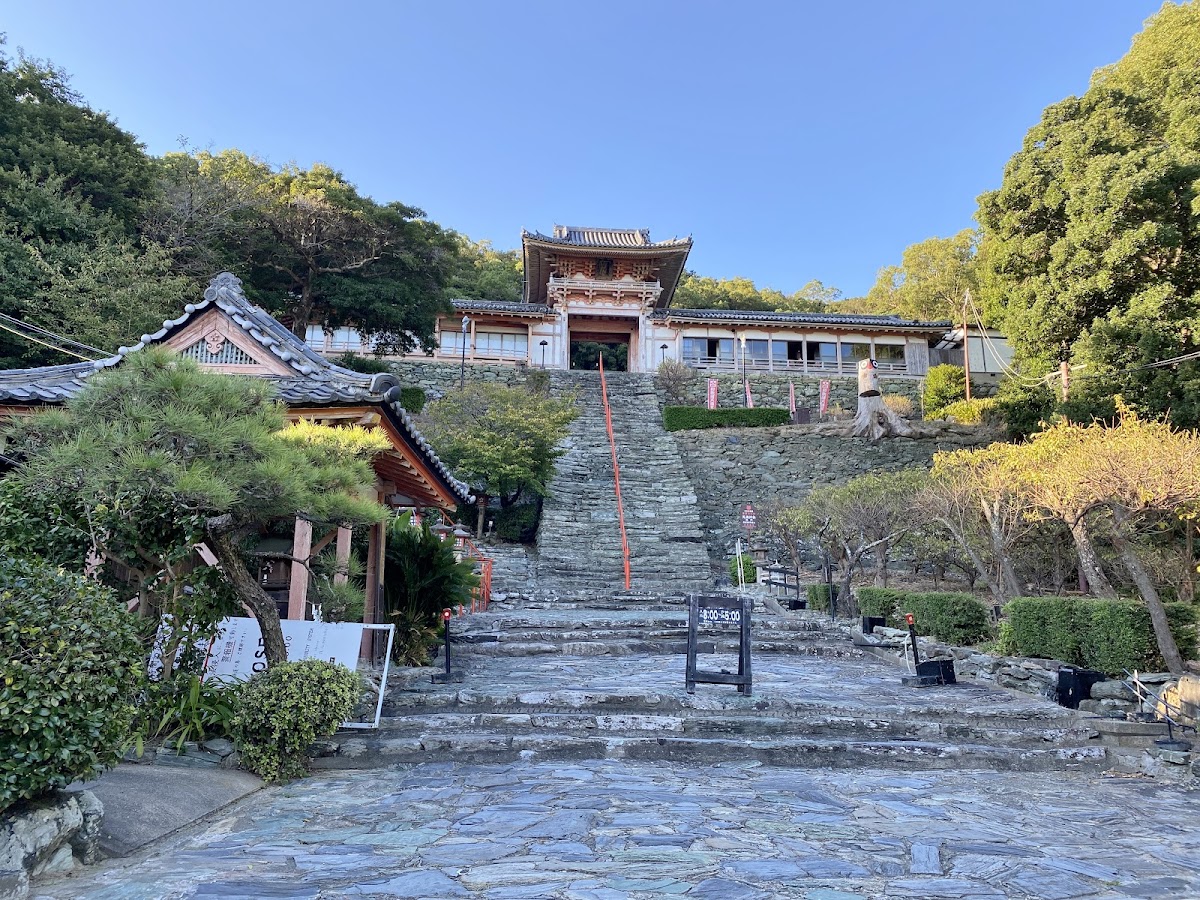
The approach to Kumano Nachi Taisha Shrine consists of 473 stone steps leading up to the middle of Mount Nachi, at an altitude of approximately 350 meters. Climbing these steps is considered a form of spiritual training, and it is believed that the mind and body are purified by taking each step carefully.
There are rest areas along the steps, allowing you to climb at your own pace. From the shrine grounds at the top of the steps, you can enjoy a magnificent view of the Nachi Mountains.
Shrine Buildings and Main Hall
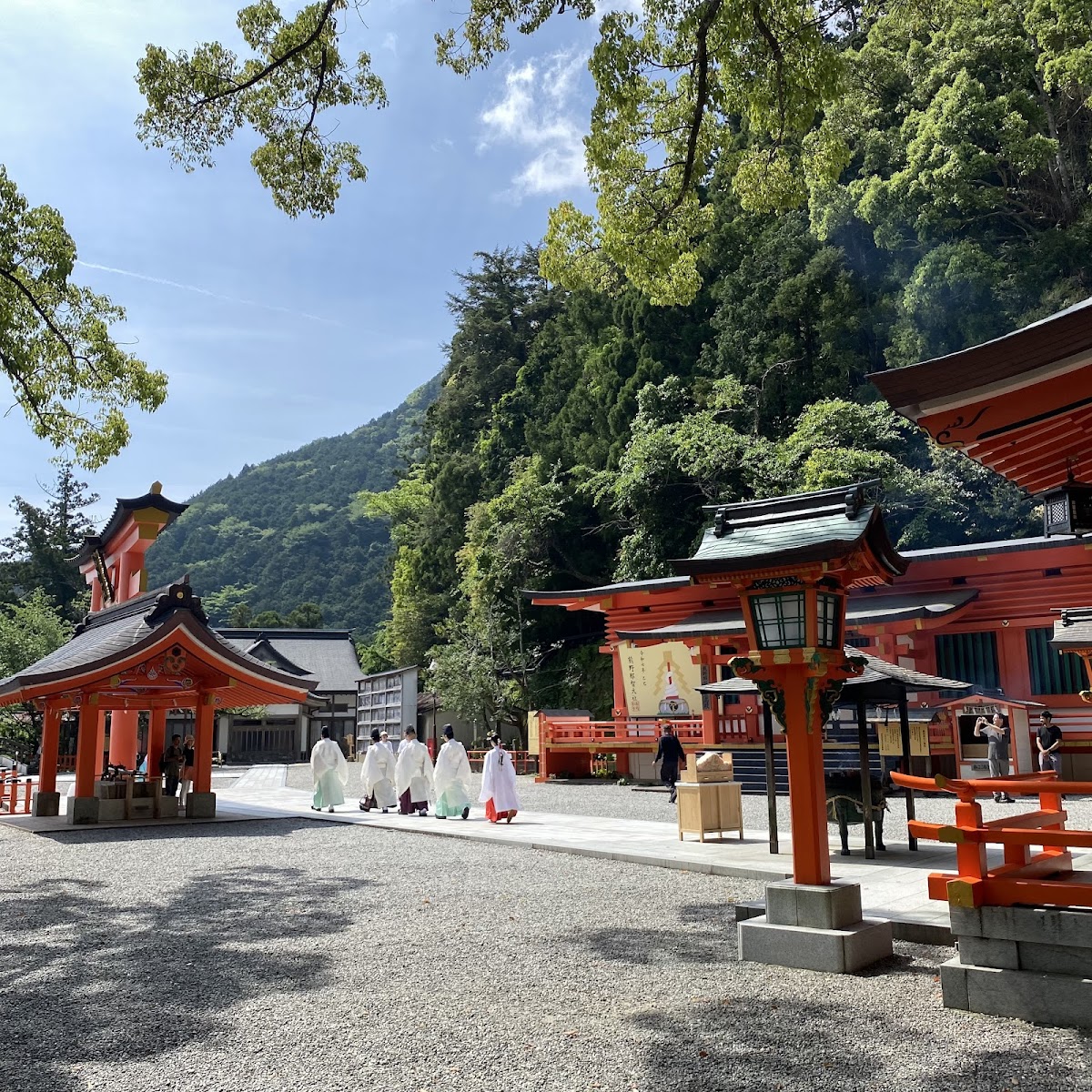
The shrine buildings of Kumano Nachi Taisha Shrine consist of six buildings, each designated as a National Important Cultural Property. The vermilion-lacquered shrine buildings are built in the Kumano style, presenting a majestic and elegant appearance.
The main shrine complex consists of six halls, each dedicated to a different deity. Worshippers can pray from the front worship hall towards each hall.
Yatagarasu and Karasuishi Stone
One of the symbols of Kumano Nachi Taisha Shrine is the Yatagarasu. The Yatagarasu is known as a three-legged sacred bird that guided Emperor Jimmu’s eastern expedition and is considered a divine messenger of Kumano.
Within the shrine grounds is the “Karasuishi Stone,” said to be the Yatagarasu transformed into a stone. This stone is revered as a sacred stone, and it is believed that touching it bestows the spiritual power of the Yatagarasu. Amulets and other items featuring the Yatagarasu are also popular.
850-Year-Old Camphor Tree
Within the shrine grounds stands a sacred camphor tree, estimated to be approximately 850 years old. This sacred tree has watched over Kumano Nachi Taisha Shrine for centuries, and it is believed that touching its trunk bestows blessings of vitality and longevity.
A small shrine stands at the base of the tree, a testament to the remnants of tree worship. During the seasons of fresh greenery and autumn foliage, the surrounding nature is also beautiful, making it a popular spot for photography.
Treasure Hall
The Treasure Hall of Kumano Nachi Taisha Shrine houses and displays valuable cultural artifacts donated throughout its long history. Visitors can see items that tell the history of Kumano faith, including ancient documents, swords, picture scrolls, and votive offerings.
In particular, materials related to the Kumano Mandala and Kumano pilgrimages are invaluable for understanding the state of faith at that time. While there is a separate admission fee for the Treasure Hall, it is highly recommended for those who wish to gain a deeper understanding of the history and culture of Kumano Nachi Taisha Shrine.
Miagatahiko Shrine
Separate from the main shrine complex, there is a shrine called Miagatahiko Shrine. Built in 1867 (Keio 3), this shrine is also designated as an Important Cultural Property and showcases a unique architectural style.
Hiro Shrine and Nachi Falls
A Sub-Shrine of Kumano Nachi Taisha Shrine
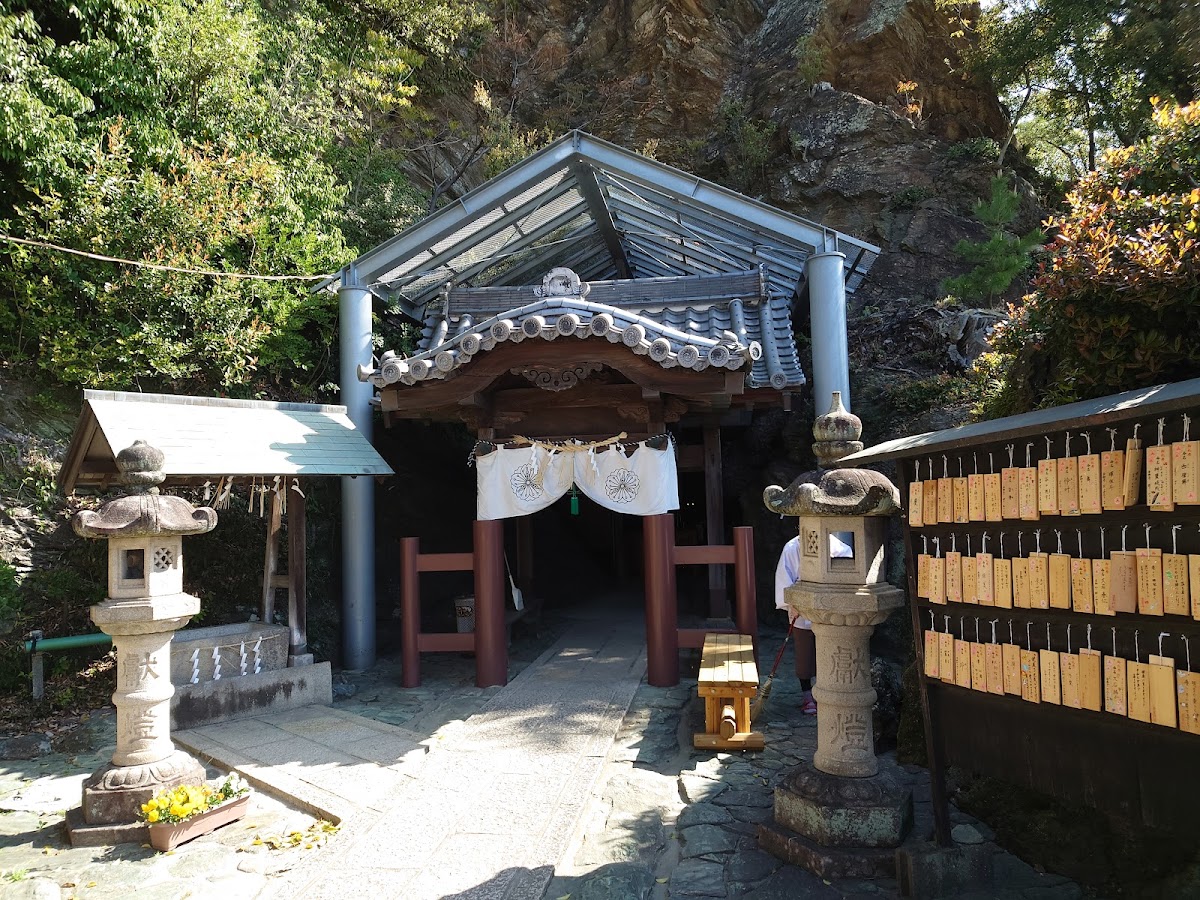
Hiro Shrine, a sub-shrine of Kumano Nachi Taisha Shrine, enshrines Nachi Falls itself as its deity. There is no shrine building; it preserves a primitive form of worship where worshippers directly pay homage to the waterfall.
Located about a 15-minute walk down a stone staircase from Kumano Nachi Taisha Shrine, a visit to Nachi Falls is generally done in conjunction with a visit to Kumano Nachi Taisha Shrine.
Nachi Falls, Japan’s Tallest Waterfall
Nachi Falls boasts a drop of 133 meters and a plunge pool 10 meters deep, making it Japan’s most magnificent waterfall. It is the tallest single-drop waterfall in Japan, and its grandeur has captivated people since ancient times.
The waterfall’s water is revered as a source of longevity, and you can drink the water near the main hall of Hiro Shrine (for a fee). Furthermore, by proceeding to the “Waterfall Worship Stage” (also for a fee), you can approach the waterfall directly and offer your prayers, experiencing its power and sacred atmosphere more intensely.
The Four Seasons of Nachi Falls
Nachi Falls displays different expressions in each of the four seasons:
- Spring: A refreshing waterfall surrounded by fresh greenery
- Summer: Increased water volume and a powerful flow
- Autumn: A beautiful contrast between the autumn leaves and the waterfall
- Winter: A mystical waterfall in the crisp air
How to Worship and Manners
Basic Worship Procedure
Worship at Kumano Nachi Taisha Shrine follows the following procedure:
- Bow at the Entrance Torii Gate: Bow before entering the shrine grounds
- Purify at the Water Basin: Purify your left hand, right hand, and mouth in that order
- Climb the Stone Steps: Climb the 473 stone steps with reverence
- Worship at the Main Hall: Worship using the two bows, two claps, and one bow ritual
- Visiting Each Shrine: If time permits, visit each shrine in order.
- Obtaining Amulets and Goshuin (Shrine Seals) at the Office: Receive items as desired.
About Goshuin
Kumano Nachi Taisha offers several types of goshuin:
- Kumano Nachi Taisha Goshuin
- Hiro Shrine Goshuin
- Kumano Sanzan Pilgrimage Goshuin
- Shinto and Buddhist Sacred Sites Pilgrimage Goshuin
Goshuin can be obtained at the office, with a donation of approximately 300 yen each. Goshuin notebooks are also sold, and original Kumano Nachi Taisha designs are popular.
Attire and Items to Bring When Visiting
Kumano Nachi Taisha Shrine is located in the mountains, and you will need to climb 473 stone steps. Please note the following:
- Comfortable Shoes: Sneakers or comfortable walking shoes are essential.
- Comfortable Clothing: Wear clothing that allows for easy movement as you will be climbing stone steps.
- Hydration: Bring water, especially in the summer.
- Rain Gear: Mountain weather is unpredictable, so bring an umbrella or rain gear.
- Warm Clothing: It can get cold in winter and early mornings, so bring a jacket.
Access Information
Access by Train and Bus
From JR Kiikatsuura Station:
- Take the Kumano Gobo Nankai Bus from Kiikatsuura Station.
- Get off at the “Nachisan” bus stop (approximately 30 minutes).
- Kumano Nachi Taisha Shrine is approximately a 15-minute walk from the bus stop.
Bus Fare: Approximately 600 yen one way
Bus Frequency: Approximately 1-2 buses per hour (varies depending on the season)
Access by Car
From Osaka:
- Hanwa Expressway → Kisei Expressway “Susami Minami IC” → National Route 42 → Nachikatsuura Town → Prefectural Road 46 to Nachisan (approximately 4 hours)
From Nagoya:
- Tomeihan Expressway → Ise Expressway → Kisei Expressway “Owase Kita IC” → National Route 42 → Nachikatsuura Town → Prefectural Road 46 to Nachisan (approximately 3.5 hours)
Parking Information
There are several parking lots around Kumano Nachi Taisha Shrine:
Shrine Disaster Prevention Road Parking (Paid):
- Fee: 800 yen (includes shrine disaster prevention road toll)
- Closest parking lot to Kumano Nachi Taisha Shrine
- You can drive close to the temple grounds without climbing the stone steps.
Nachisan Parking (Free and paid options available):
- Multiple parking lots around the Nachisan bus stop
- Fee: Approximately 500 yen
- Climb the stone steps from the parking lot to visit the temple.
Notes on Peak Season:
- It gets crowded during New Year’s, Golden Week, and the autumn foliage season.
- Early morning visits are recommended.
- If the parking lot is full, park in the lower parking lot and walk.
Nearby Tourist Spots
Nachisan Seiganto-ji Temple
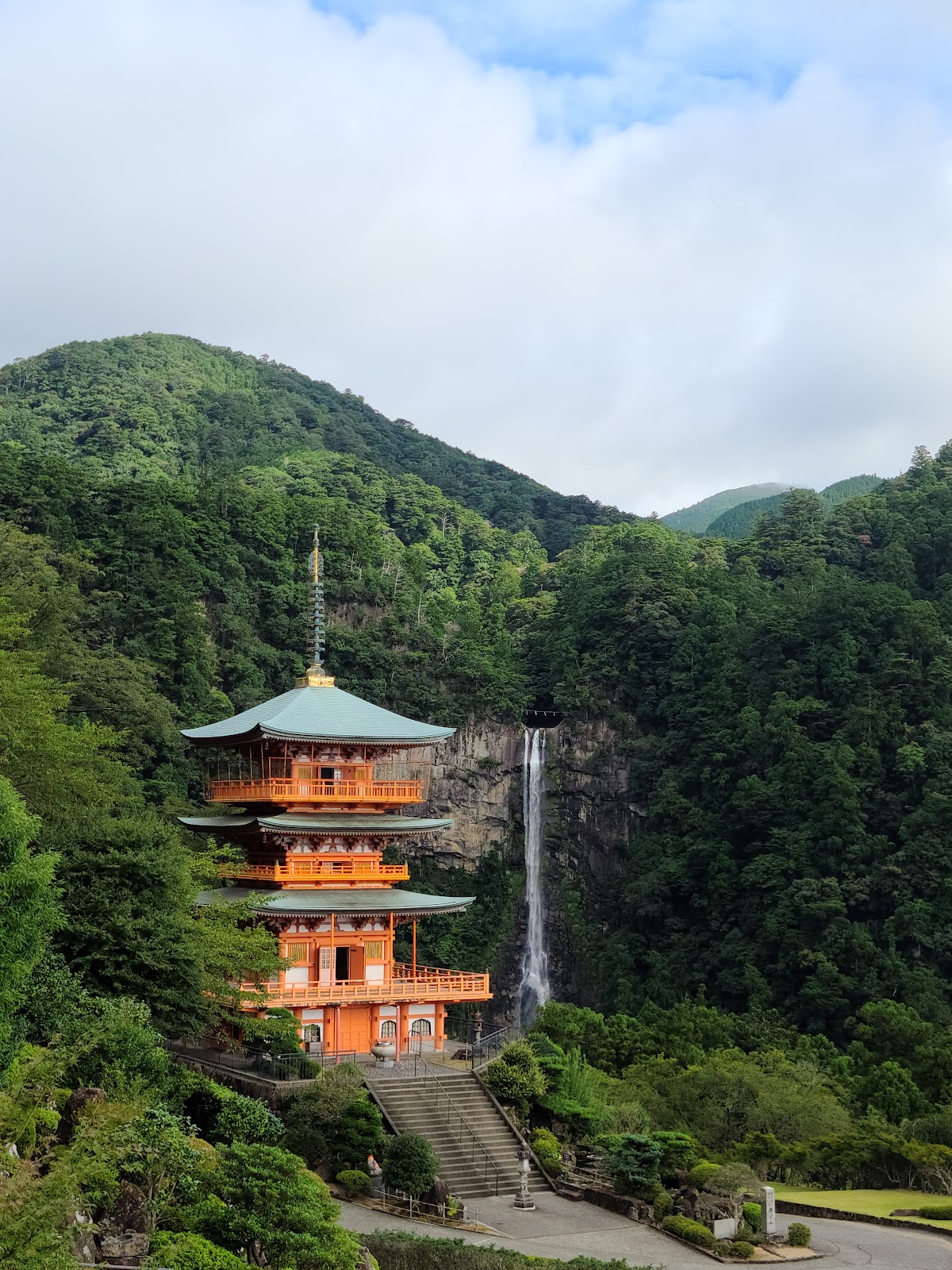
A Tendai sect temple adjacent to Kumano Nachi Taisha Shrine, and the first temple of the Saigoku Thirty-Three Kannon Pilgrimage. Before the separation of Shinto and Buddhism, it was one with Kumano Nachi Taisha Shrine. The main hall is an important cultural property, and the three-story pagoda with Nachi Falls in the background is known as an excellent photo spot.
Daimonzaka Slope
A stone-paved pilgrimage route considered to be the most beautiful of the Kumano Kodo pilgrimage trails. Surrounded by centuries-old cedar trees, the approximately 600-meter-long stone staircase offers an atmosphere that feels like a step back in time to the Heian period. It’s about a 40-minute walk from the entrance to Daimonzaka to Nachisan.
Nachikatsuura Onsen
After visiting Kumano Nachi Taisha Shrine, we recommend relaxing at Nachikatsuura Onsen. Many hot spring inns offer spectacular views of the Pacific Ocean, and you can also enjoy fresh tuna dishes. Day-use bathing facilities are also available.
Kumano Hayatama Taisha and Kumano Hongu Taisha
If you’re visiting the Kumano Sanzan (Three Grand Shrines of Kumano), be sure to also visit Kumano Hayatama Taisha (Shingu City) and Kumano Hongu Taisha (Tanabe City). They are about an hour’s drive apart, and visiting all three shrines will give you a comprehensive understanding of Kumano faith.
Annual Events and Festivals
Nachi Fan Festival (Nachi Fire Festival)
Held annually on July 14th, this is the grand festival of Kumano Nachi Taisha Shrine and is considered one of Japan’s three great fire festivals. Twelve massive torches, each weighing over 50 kilograms, burn brightly as twelve fan-shaped portable shrines, carrying the gods of Kumano, descend the stone steps in a magnificent spectacle.
This festival signifies the annual return of the deities to Nachi Falls and is an important Shinto ritual that preserves traditions from the era of syncretism of Shinto and Buddhism. It’s a popular event attracting many tourists, and advance accommodation reservations are essential.
Other Major Events
- January 1st: Saitansai (New Year’s Festival)
- February 3rd: Setsubun Festival
- April 14th: Spring Grand Festival
- October 14th: Autumn Grand Festival
- December 31st: Great Purification Ceremony/New Year’s Eve Festival
Basic Information
Visiting Hours and Admission Fees
Visiting Hours:
- Grounds are freely accessible (24-hour worship)
- Shrine Office: 7:00 AM – 4:30 PM
Admission Fees:
- Grounds worship: Free
- Treasure Hall: Adults 300 yen, Elementary and Junior High School Students 200 yen
- Hiro Shrine Waterfall Worship Stage: 300 yen
Location and Contact Information
Address: 649-5301 1 Nachisan, Nachikatsuura-cho, Higashimuro-gun, Wakayama Prefecture
Phone: 0735-55-0321
Official Website: https://kumanonachitaisha.or.jp/
Estimated Time Required
- Kumano Nachi Taisha Shrine only: 1 hour to 1 hour 30 minutes
- Including Hiro Shrine: 2 hours to 2 hours 30 minutes
- Including Seiganto-ji Temple: 2 hours 30 minutes to 3 hours
- Walking from Daimonzaka: Add another 1 hour 30 minutes
Best Season for Visiting
Spring (March to May)
The fresh greenery is beautiful, and the weather is mild, making it the perfect season for visiting. The cherry blossom season (early April) is especially beautiful, with a magnificent contrast between the Nachi Falls and the cherry blossoms. Weekdays are recommended as it gets crowded during Golden Week.
Summer (June-August)
While the rainy season brings heavy rain, the increased water volume of Nachi Falls is truly impressive. The Nachi Fan Festival on July 14th is a must-see, but climbing the stone steps in mid-summer requires precautions against the heat. Early morning visits are recommended.
Autumn (September-November)
The autumn foliage season (mid-to-late November) is the most beautiful time, attracting many tourists. The scenery created by the vermilion shrine buildings, autumn leaves, and Nachi Falls is breathtaking. The weather is pleasant, making it ideal for visiting.
Winter (December-February)
This season offers fewer tourists, allowing for a peaceful visit. The air is clear, enhancing the mystical atmosphere of Nachi Falls. While it gets crowded during the New Year’s visit period (January 1st-3rd), it’s relatively quiet at other times. Be sure to dress warmly.
Guidelines for Visiting Kumano Nachi Taisha Shrine
Respect as a Sacred Site
Kumano Nachi Taisha Shrine is a sacred site with a history of over 1700 years. When visiting, it is important to show respect not only as a tourist destination but also as a place of faith.
Harmony with Nature
At the heart of the faith at Kumano Nachi Taisha Shrine lies the worship of nature, exemplified by the Nachi Waterfall. Please cherish the natural environment of the shrine grounds, take your trash with you, and be careful not to harm plants or animals.
Take Your Time
Climbing the 473 stone steps, exploring the grounds, and extending your visit to Hiro Shrine takes time. By visiting slowly and without rushing, you can feel the mystery and spiritual energy of Kumano.
Summary
Kumano Nachi Taisha Shrine is one of Japan’s leading sacred sites, where Japanese nature worship and Shinto culture are fused. Beginning with a primitive faith that worshipped the Nachi Falls as its sacred object, it developed as one of the three Kumano shrines and is a treasure trove of history and culture, now registered as a World Heritage Site.
Climbing the 473 stone steps, visiting the vermilion-lacquered shrine, and standing before the Nachi Falls brings deep emotion and healing to the hearts of visitors. Many pilgrims still visit today seeking various blessings, such as matchmaking, the fulfillment of wishes, and good fortune.
A visit to Kumano Nachi Taisha is not merely sightseeing; it is a valuable experience that touches upon the spiritual culture of Japan. Please take your time to experience the mystique of Kumano.