Complete Guide to Yoshino Shrine: History and Benefits of the Meiji-era Grand Shrine Dedicated to Emperor Go-Daigo
Located on Mount Yoshino in Yoshino-cho, Yoshino-gun, Nara Prefecture, Yoshino Shrine is a prestigious shrine founded in 1889 by imperial decree of Emperor Meiji. This guide provides a detailed introduction to Yoshino Shrine, which preserves the history of Emperor Go-Daigo and the Kenmu Restoration, including its history, architecture, benefits, and information for visitors.
What is Yoshino Shrine?: A Shrine Dedicated to Emperor Go-Daigo, Founded by Emperor Meiji
Yoshino Shrine is a shrine dedicated to Emperor Go-Daigo and is one of the fifteen shrines of the Kenmu Restoration. Its former rank was the highest, a Grand Imperial Shrine, and it currently maintains its status as a Special Shrine of the Association of Shinto Shrines.
The Founding History and Emperor Meiji’s Intentions
Emperor Meiji, who achieved the Meiji Restoration, deeply admired the great achievements of Emperor Go-Daigo, who overthrew the Kamakura Shogunate and established direct imperial rule. In 1889 (Meiji 22), at Emperor Meiji’s strong insistence, Yoshino-no-miya was founded on Mount Yoshino, where Emperor Go-Daigo had established the Southern Court’s imperial palace. Later, it was renamed Yoshino Jingu, and under state management, a magnificent shrine building constructed entirely of cypress wood was erected.
The Historical Connection Between Emperor Go-Daigo and Mount Yoshino
Emperor Go-Daigo (1288-1339) was the emperor who overthrew the Kamakura Shogunate and implemented the Kenmu Restoration. However, due to conflict with Ashikaga Takauji, he was driven out of Kyoto and entered Mount Yoshino in 1336 (Engen 1), where he established the Southern Court’s imperial palace. Mount Yoshino is the place where Emperor Go-Daigo met his end, and Emperor Meiji chose it as the site for the founding of the shrine, recognizing it as a sacred place imbued with the spirit of the emperor.
The Magnificent Architecture of Yoshino Shrine
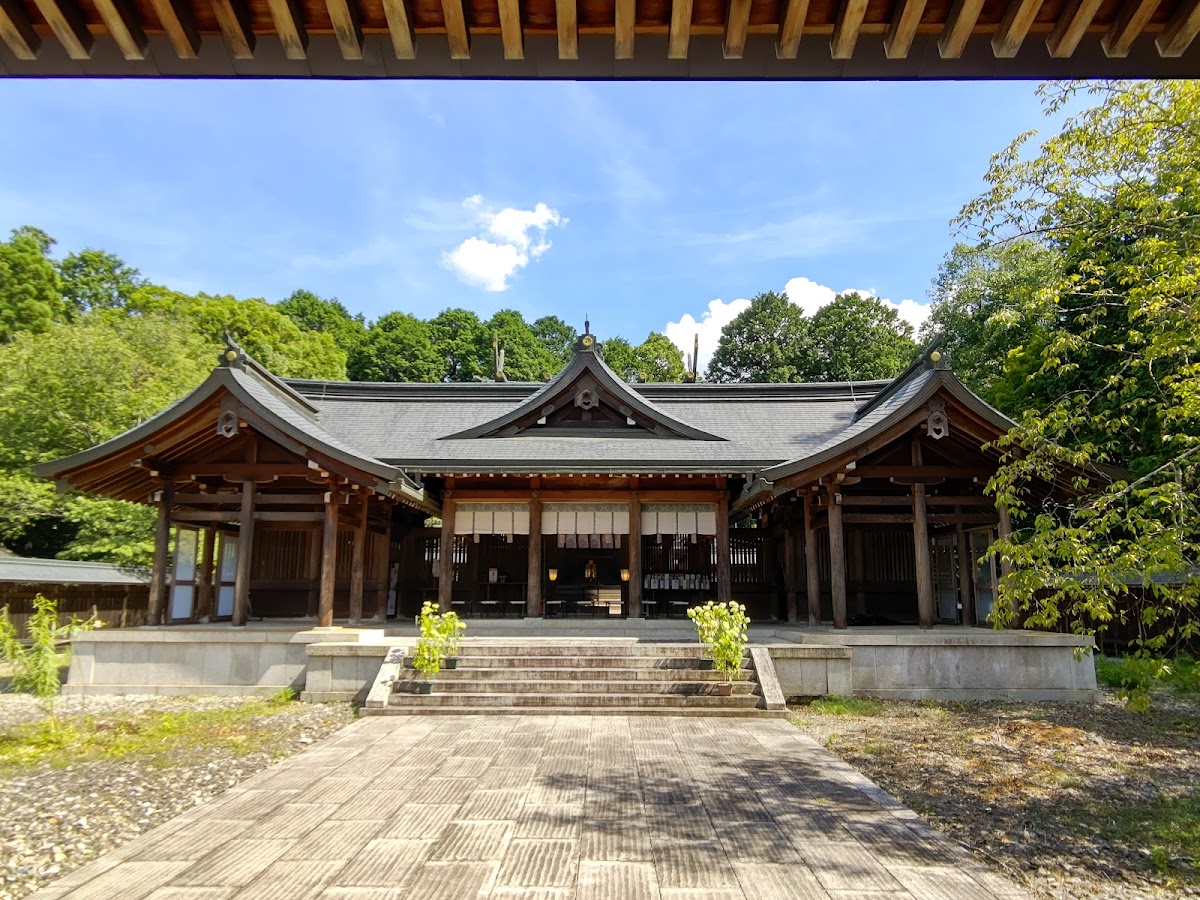
The shrine buildings of Yoshino Shrine are highly regarded as a representative example of modern shrine architecture. The current buildings were rebuilt in 1932 (Showa 7), and all structures, including the main hall and worship hall, are luxuriously constructed of cypress wood.
The Main Hall and Worship Hall Made Entirely of Cypress Wood
The main hall is a majestic building based on the Shinmei-zukuri style, a sacred space filled with the fragrance of cypress. The worship hall is similarly constructed of cypress, representing the pinnacle of shrine architecture techniques from the Meiji to Showa periods. Cypress is considered the finest wood in Japanese architecture, possessing both durability and beauty. The shrine buildings of Yoshino Shrine possess the dignity and refinement befitting its status as a Kanpei Taisha (Grand Imperial Shrine).
Layout and Architectural Style of the Shrine Grounds
The shrine grounds are located on a hill in Yoshino Mountain. As you ascend the approach, the worship hall is directly ahead, with the main shrine behind it. Surrounded by the rich natural beauty of Yoshino Mountain, the scenery changes with the seasons, welcoming visitors. While a modern shrine building, it boasts a unique architectural beauty that follows traditional shrine architectural styles while incorporating the new sensibilities of the Meiji period.
Subsidiary Shrines Dedicated to the Meritorious Retainers of the Kenmu Restoration
Within the grounds of Yoshino Shrine are three subsidiary shrines dedicated to seven meritorious retainers who contributed to the Kenmu Restoration. These subsidiary shrines were established to honor the achievements of loyal retainers who supported Emperor Go-Daigo.
The Meritorious Retainers of the Kenmu Restoration Dedicated in the Subsidiary Shrines
The “meritorious retainers of the Kenmu Restoration” refer to the important retainers who supported Emperor Go-Daigo’s Kenmu Restoration. These are figures who supported the Emperor from various positions, ranging from military commanders such as Kusunoki Masashige, Nitta Yoshisada, and Nawa Nagatoshi, to court nobles such as Kitabatake Chikafusa and Kitabatake Akiie. By enshrining these meritorious retainers, Yoshino Shrine serves not only as a place to honor Emperor Go-Daigo personally, but also as a place to commemorate the entire historical undertaking of the Kenmu Restoration.
A Precious Statue of the Emperor Moved from Yoshimizu Shrine
Yoshino Shrine houses a statue of Emperor Go-Daigo that was moved from Yoshimizu Shrine. This statue is said to have been carved by Emperor Go-Murakami, a son of Emperor Go-Daigo, and is an extremely valuable cultural asset.
The Origin of the Statue Carved by Emperor Go-Murakami
Emperor Go-Murakami (1328-1368) was the seventh son of Emperor Go-Daigo and ascended to the throne as the second emperor of the Southern Court after his father’s death. It is said that, out of deep remembrance for his father, he himself carved a statue of Emperor Go-Daigo. This statue was long enshrined at Yoshimizu Shrine, but was moved when Yoshino Jingu Shrine was founded during the Meiji era. It is a precious relic that conveys the bond between father and son and the history of the Southern Court.
Benefits and Faith of Yoshino Jingu Shrine
Yoshino Jingu Shrine is believed to offer various benefits, as it conveys the indomitable spirit of Emperor Go-Daigo and the ideals of the Kenmu Restoration.
Benefits of Good Fortune and Career Advancement
Due to Emperor Go-Daigo’s unwavering pursuit of his ideals even in the face of adversity, the shrine is believed to offer benefits such as the strength to overcome difficulties, the achievement of goals, and career advancement. It is especially revered by those starting new businesses or facing turning points in their lives.
Academic Achievement and Wisdom
Emperor Go-Daigo was the most learned emperor of his time. Seeking blessings for academic success and wisdom, visitors can also expect to benefit from the shrine’s intelligence and refinement. Many students and researchers visit the shrine.
National Security and the Realization of Justice
The ideal of the Kenmu Restoration was just politics and national security. Therefore, visitors also come to pray for the realization of social justice and national peace.
Annual Events and Festivals of Yoshino Shrine
Various rituals are held at Yoshino Shrine throughout the year.
Annual Festival on September 27th
The most important festival is the annual festival held on September 27th. On this day, a solemn ceremony is held to commemorate the virtues of Emperor Go-Daigo and to carry on the spirit of the Kenmu Restoration. After the rituals performed by the chief priest and other Shinto priests, attendees offer sacred branches.
Other Annual Events
Basic shrine rituals, such as the New Year’s Day festival and the spring and autumn harvest festivals, are carefully performed. Many worshippers visit the shrine in spring when the cherry blossoms are at their most beautiful.
Amulets and Souvenirs of Yoshino Shrine
Yoshino Shrine offers unique amulets and souvenirs lovingly crafted by the shrine priests and shrine maidens.
Special Amulets Only Available at Yoshino Shrine
Various amulets are available, including good fortune amulets and academic success amulets, all inspired by the divine virtues of Emperor Go-Daigo. These are all carefully crafted by the staff of Yoshino Shrine and are special souvenirs unavailable anywhere else.
Seasonal Souvenirs
Seasonal souvenirs are also available, such as those featuring cherry blossoms in spring and autumn leaves in autumn, allowing visitors to experience the changing seasons of Mount Yoshino. For those living far away, mail order is available; please inquire at the shrine office.
Access and Visiting Information for Yoshino Shrine
Yoshino Shrine is located near the entrance to Mount Yoshino, making it relatively easy to access.
Access by Train
The nearest station is Yoshino-Jingu Station on the Kintetsu Yoshino Line. Upon exiting the station, you will see the large torii gate directly in front of you. From there, it’s about a 1km uphill walk (approximately 20 minutes) to Yoshino Shrine. Since it’s uphill, comfortable shoes are recommended. Those with limited time or who are not confident in their physical stamina can also take a taxi from the station.
Access and Parking by Car
By private car, take National Route 169 south from the Katsuragi Interchange on the Minami-Hanna Expressway; the journey takes approximately 1 hour. While there is parking available for visitors on the shrine grounds, it is expected to be crowded during peak tourist seasons such as cherry blossom season, so visiting earlier in the day is recommended.
Visiting Hours and the Gift Shop
While entry to the shrine grounds is generally unrestricted, the gift shop is open from 9:00 AM to approximately 4:30 PM. Those wishing to receive a Goshuin (shrine stamp) or other gifts should visit within these hours. Inquiries can be made by phone (0746-32-3088).
Location
3226 Yoshinoyama, Yoshino-cho, Yoshino-gun, Nara Prefecture 639-3115
Yoshino Shrine and Surrounding Attractions
When visiting Yoshino Shrine, we recommend also visiting the surrounding historical sites.
Temples and Shrines of Yoshino Mountain, a World Heritage Site
Yoshino Mountain is a World Heritage site registered as part of the “Sacred Sites and Pilgrimage Routes in the Kii Mountain Range.” Temples and shrines that tell the history of the Southern Court and the Taiheiki (a historical chronicle) are scattered throughout the area, including Kinpusen-ji Temple, Yoshimizu Shrine, and Nyoirin-ji Temple. These sites are within walking distance of Yoshino Shrine, allowing visitors to enjoy a historical stroll. ### Historical Connections with Yoshimizu Shrine
Yoshimizu Shrine, in particular, is the actual site where Emperor Go-Daigo resided, and therefore has deep historical ties to Yoshino Jingu Shrine. The aforementioned statue of the emperor was originally enshrined at Yoshimizu Shrine. Visiting both shrines will allow you to gain a deeper understanding of the history of the Southern Court.
The Nature of Yoshino Mountain Through the Seasons
Yoshino Mountain is known as one of Japan’s leading cherry blossom viewing spots, with approximately 30,000 cherry trees covering the mountain in spring. Because the blooming period differs depending on the altitude (Shimo-senbon, Naka-senbon, and Kami-senbon), you can enjoy the cherry blossoms for an extended period. Furthermore, beautiful natural scenery unfolds in each of the four seasons: the fresh greenery of early summer, the vibrant autumn foliage, and the snowy winter landscapes.
A Sacred Site of En no Gyoja and Shugendo
Yoshino Mountain is also a place associated with En no Gyoja (En no Ozunu), the founder of Shugendo. Yoshino Shrine, centered around Kinpusen-ji Temple, has long been a sacred site for Shugendo (mountain asceticism), attracting worshippers. While Yoshino Shrine itself was founded during the Meiji period, the entire Yoshino Mountain area has a long history of being revered as a sacred site.
Etiquette and Manners for Visiting Yoshino Shrine
Yoshino Shrine is a prestigious shrine that was formerly a Kanpei Taisha (a high-ranking government-supported shrine). When visiting, please observe basic shrine etiquette.
Proper Worship Etiquette
Bow before passing through the torii gate, and walk along the path avoiding the center. Cleanse your hands and mouth at the temizuya (water basin) before proceeding to the main hall. The basic worship ritual is “two bows, two claps, one bow.” Worship quietly and respectfully, showing reverence to Emperor Go-Daigo.
Photography
Photography is generally permitted within the shrine grounds, but it may be advisable to refrain from taking pictures in sacred areas such as inside the main hall. If you have any questions, please check with the staff at the shrine office. Furthermore, consideration should be given to avoiding disturbing other worshippers.
Cultural and Historical Value of Yoshino Shrine
Yoshino Shrine is not merely a tourist destination; it is an important place that conveys Japan’s history and culture to the present day.
As One of the Fifteen Shrines of the Kenmu Restoration
The Fifteen Shrines of the Kenmu Restoration are a collective term for 15 shrines dedicated to figures involved in the Kenmu Restoration. Yoshino Shrine, as the foremost of these, was founded by the Meiji government to commemorate the spirit of the Kenmu Restoration. The Meiji government’s historical perspective, which equates the Meiji Restoration with the Kenmu Restoration, is embodied in this shrine.
A Representative Example of Modern Shrine Architecture
The shrine building, rebuilt in 1932 (Showa 7), is a masterpiece that fuses modern architectural technology and aesthetics while respecting traditional shrine architectural styles. Its luxurious construction, entirely made of cypress wood, demonstrates its status as a Kanpei Taisha (Grand Imperial Shrine) and represents the technical pinnacle of shrine architecture. It is a building highly regarded from an architectural history perspective.
A Key Center for Southern Court History Research
Yoshino Shrine houses invaluable materials related to Emperor Go-Daigo and the Southern Court. From the statue of the Emperor carved by Emperor Go-Murakami to other cultural artifacts that convey the history of the Southern Court, it is a crucial site for history researchers.
The Significance of Visiting Yoshino Shrine
Visiting Yoshino Shrine has meaning beyond mere sightseeing.
Experiencing a Turning Point in Japanese History
Emperor Go-Daigo was at the center of a major turning point in Japanese history: the overthrow of the Kamakura Shogunate, the Kenmu Restoration, and the Nanboku-cho War. Visiting Yoshino Shrine, where his spirit lives on, allows you to feel the history you learned in textbooks as a living reality.
Touching Emperor Meiji’s View of History
The fact that Emperor Meiji deeply revered Emperor Go-Daigo and founded this shrine is important for understanding the spiritual background of the Meiji Restoration. It provides an opportunity to consider how the ideal of direct imperial rule was passed down through the ages. ### Experiencing the Comprehensive Charm of Yoshino Mountain
Yoshino Shrine, located as part of the World Heritage Site of Yoshino Mountain, is situated in an area with a comprehensive charm where nature, history, and culture are fused together. Along with visiting the shrine, you can experience the charm of the entire Yoshino Mountain area, including its natural beauty such as cherry blossoms and autumn leaves, other temples and shrines, and local food culture.
Summary: Recommendations for Visiting Yoshino Shrine
Yoshino Shrine is a prestigious shrine dedicated to Emperor Go-Daigo, founded by imperial decree of Emperor Meiji. The shrine building, rebuilt in 1932 using cypress wood, is highly regarded as a representative work of modern shrine architecture. Within the grounds are subsidiary shrines dedicated to the meritorious retainers of the Kenmu Restoration, and a valuable statue of the Emperor, said to have been carved by Emperor Go-Murakami.
It holds the highest rank of shrine, formerly a Kanpei Taisha (Grand Imperial Shrine), and as the foremost of the fifteen shrines of the Kenmu Restoration, it is an important shrine that conveys Japanese history and culture to the present day. Many worshippers visit Yoshino Jingu Shrine, which is believed to bring good fortune, career advancement, and academic success.
Located at the entrance to the World Heritage site of Mount Yoshino, approximately a 20-minute walk from Kintetsu Yoshino Jingu Station, Yoshino Jingu Shrine is situated in a wonderful environment surrounded by the beauty of nature in all four seasons and historical sites. Special amulets crafted by Shinto priests and shrine maidens are available at the shrine office (approximately 9:00 AM to 4:30 PM, Tel: 0746-32-3088).
When visiting Mount Yoshino, we highly recommend visiting Yoshino Jingu Shrine and reflecting on the indomitable spirit of Emperor Go-Daigo and the ideals of the Kenmu Restoration. It will be a valuable opportunity to experience a turning point in Japanese history.