Complete Guide to Nagahama Hachimangu Shrine | History, Deities, Nagahama Hikiyama Festival, and Highlights for Visitors
Nagahama Hachimangu Shrine, located in Nagahama City, Shiga Prefecture, is a venerable shrine with a history of over a thousand years. It is the stage for the Nagahama Hikiyama Festival, known as one of Japan’s three major float festivals, and every April, the magnificent floats and children’s kabuki performances attract many tourists. This article provides a detailed introduction to Nagahama Hachimangu Shrine, including its history, enshrined deities, highlights within the grounds, cultural assets, festivals, and access information.
About Nagahama Hachimangu Shrine
Nagahama Hachimangu Shrine is a shrine located in Miyamae-cho, Nagahama City, Shiga Prefecture. Formerly a prefectural shrine, it is currently designated as a special shrine by the Association of Shinto Shrines. Founded in 1069 during the late Heian period, it has been deeply revered by local residents as the guardian deity of Nagahama City. The shrine grounds are located about a 15-minute walk from Nagahama Station, situated in the city of Nagahama on the eastern shore of Lake Biwa. It is also known as a famous spot for flowers, with cherry blossoms in full bloom in spring and hydrangeas in June.
Deities and Divine Virtues
Main Deities
Nagahama Hachimangu Shrine enshrines three deities.
Homutawake-no-Mikoto
This refers to Emperor Ojin, the 15th emperor, who is worshipped as Hachiman-sama at Hachiman shrines throughout Japan. He has long been revered by samurai as the god of military fortune and victory.
Tarashinakatsuhiko-no-Mikoto
This refers to Emperor Chuai, the 14th emperor, and the father of Emperor Ojin.
Okinagatarashihime-no-Mikoto
This refers to Empress Jingu, the mother of Emperor Ojin. The Ikinaga clan originated here and have deep ties to this region.
Benefits
Nagahama Hachimangu Shrine is known for the following benefits:
- Victory and Long-Lasting Military Fortune: Because Minamoto no Yoshiie prayed here for victory in battle, it is believed to bestow the power to win in competitions and contests.
- Protection from Misfortune: It wards off evil and helps one live life with a pure heart.
- Business Prosperity: Due to its history of being protected by Toyotomi Hideyoshi, it attracts the faith of people wishing for business success.
- Family Safety: As a guardian deity, it protects the peace of the region and the well-being of families.
- Prosperity of Descendants: As a deity who protected the imperial lineage under Emperor Ojin, it is believed to bring the benefit of prosperity of descendants.
History of Nagahama Hachimangu Shrine
Origin of Founding
The founding of Nagahama Hachimangu Shrine is deeply connected to Minamoto no Yoshiie (Hachiman Taro Yoshiie) and the Former Nine Years’ War.
In the late Heian period, Minamoto no Yoshiie led an army to defeat the Abe brothers, Sadatō and Munetō, during the Former Nine Years’ War in Mutsu Province (present-day Tohoku region). At that time, Yoshiie prayed for victory at Shin-Hōjō-ji Temple, which is said to have been founded in 814 by Kūkai (Kōbō Daishi).
After successfully defeating the Abe brothers, Yoshiie, in recognition of his prayers, received the imperial title of “Shōgunzan” (Victorious Army Mountain) from Emperor Go-Sanjō in 1069. Simultaneously, at the Emperor’s request, a divided spirit was brought from Iwashimizu Hachiman-gū Shrine in Kyoto, and a shrine was built within the grounds of Shin-Hōjō-ji Temple as a subsidiary shrine, blending Shinto and Buddhism. This marked the beginning of Nagahama Hachiman-gū Shrine.
From the Middle Ages to the Early Modern Period
Heian Period to Kamakura Period
During the Kanji era (1087-1094), the sacred territory of Iwashimizu Hachimangu Shrine is said to have existed within the area known as “Hosoe no Sho,” which spans from present-day Nagahama City to Biwa Town. This area came to be called “Hachiman no Sho.”
Nanboku-cho Period to Sengoku Period
During the Nanboku-cho period, Hachimangu Shrine was affected by the turmoil. During the Sengoku period, it fell into disrepair for a time, and maintaining the shrine buildings became difficult.
Azuchi-Momoyama Period
In 1574, when Hashiba Hideyoshi (later Toyotomi Hideyoshi) became the lord of Nagahama Castle, the situation changed dramatically. Hideyoshi provided strong protection to Nagahama Hachimangu Shrine, undertaking reconstruction and repairs of the shrine buildings. Under Hideyoshi’s patronage, Hachimangu Shrine regained its prosperity as a central shrine in the region.
In 1583, when Hideyoshi’s son (later known as Tsurumatsu) was born, he was so overjoyed that he distributed gold dust to the people of the castle town. The townspeople used this gold dust to build a float, which they paraded during the Hachiman Shrine festival. This is considered the origin of the present-day Nagahama Hikiyama Festival.
Since the Edo Period
Throughout the Edo period, Nagahama Hachiman Shrine continued to be revered by the local residents as the guardian deity of Nagahama. Following the Meiji-era separation of Shinto and Buddhism, it was separated from Shin-Hojo-ji Temple and became a purely Shinto shrine in its current form. In 1873, it was designated a prefectural shrine.
Highlights of the Shrine Grounds
Shrine Buildings
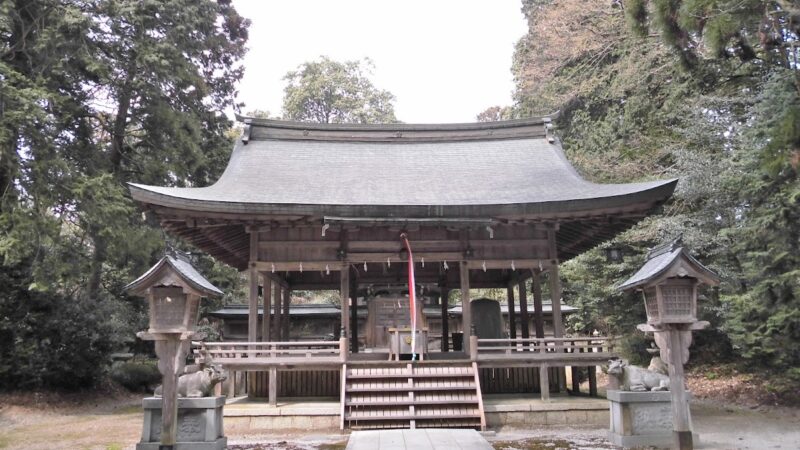
Main Hall
The current main hall was built between the Azuchi-Momoyama period and the early Edo period, and is a valuable building that conveys the history of Nagahama City. Architectural styles influenced by Hideyoshi’s reconstruction can be seen.
Haiden (Worship Hall)
The haiden, where worshippers offer their prayers, is located in front of the main shrine and exudes a solemn atmosphere.
Maiden (Dance Hall)
This is the stage where children’s kabuki performances are offered during the Nagahama Hikiyama Festival, and it is the central location of the festival.
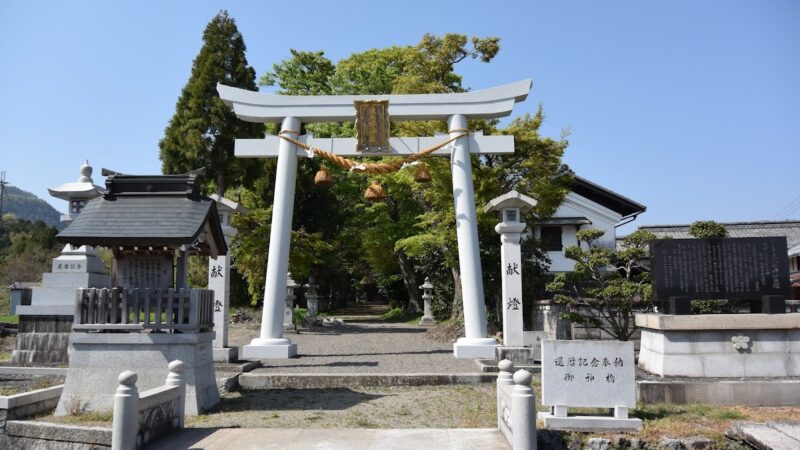
Subsidiary Shrines
In addition to the main shrine, there are several subsidiary shrines within the grounds, each enshrining a different deity. These reflect the deep faith of the local community.
Garden
Nagahama Hachimangu Shrine boasts a beautiful garden where visitors can enjoy the scenery of each season. Many worshippers visit, especially during the cherry blossom season in spring and the hydrangea season in early summer. The garden incorporates the style of a Japanese garden, offering a tranquil atmosphere where one can find peace of mind.
Stone Structures
The grounds are dotted with historical stone structures such as stone lanterns and guardian lion-dogs, evoking a long history. Many of these were donated during the Edo and Meiji periods.
Cultural Properties
Nagahama Hachimangu Shrine houses valuable cultural properties.
Plum Tree and Two Sparrows Mirror
This bronze mirror, believed to have been made between the Heian and Kamakura periods, features an elegant design of two sparrows on a plum tree. It is preserved as a valuable cultural property demonstrating the high level of craftsmanship of the time.
Noh Costumes
Several Noh costumes from the Nanboku-cho to Muromachi periods are housed here, serving as valuable historical materials that convey the performing arts culture of the time. These were donated by samurai and influential figures, demonstrating the high status of Hachimangu Shrine.
Other Cultural Properties
Numerous historical materials, including ancient documents, votive tablets, and offerings, are preserved here, playing an important role in the historical research of Nagahama.
Nagahama Hikiyama Festival
Festival Overview
The Nagahama Hikiyama Festival is the annual spring festival of Nagahama Hachimangu Shrine, held from April 14th to 16th. It is considered one of Japan’s three major float festivals and is designated as a National Important Intangible Folk Cultural Property. It is a major event attracting tens of thousands of tourists from all over Japan every year.
Origin of the Festival
As mentioned above, the festival’s origin is said to be in 1583 (Tensho 11), when Toyotomi Hideyoshi distributed gold dust to the townspeople to celebrate the birth of his eldest son. The townspeople used this gold dust to create floats, which they then paraded during the Hachimangu Shrine festival. This tradition has continued for over 400 years.
Characteristics of the Floats
Nagahama’s floats have developed uniquely, while also being influenced by the floats of Kyoto’s Gion Festival. Currently, there are 13 floats (hikiyama), and each year four of them participate in the festival as the designated floats.
The floats are mobile stages, approximately 6 meters high and weighing about 3 tons, adorned with magnificent and ornate decorations. They showcase the finest craftsmanship of the time, including gold leaf, lacquer, carving, and textile dyeing.
Children’s Kabuki
The highlight of the Nagahama Hikiyama Festival is the “Children’s Kabuki” performance on the floats. Boys aged 5 to 12 perform authentic Kabuki plays.
The children undergo rigorous training for several months beforehand, and their performances rival those of adults. Their small stature and ability to portray important roles deeply move the audience, creating a powerful and memorable experience every year.
Festival Schedule
April 14th (Yoiyama)
From evening, the floats parade through the town, creating a fantastical sight illuminated by lanterns.
April 15th (Today)
Early in the morning, the floats gather at Hachiman Shrine, where a children’s Kabuki performance is offered. Afterward, Kabuki performances are held at various locations as the floats parade through the town.
April 16th
The float parade and children’s Kabuki performances continue, marking the festival’s finale.
Other Festival Events
Gekchu-san
This monthly festival, held on the 15th of each month, is affectionately known locally as “Gekchu-san.” People visit to pray for business prosperity and family safety.
Summer Purification Ceremony
On June 30th, the Summer Purification Ceremony is held. Participants purify themselves of the impurities accumulated over the past six months by passing through a ring of reeds, and pray for good health and protection from illness for the remaining half of the year.
Autumn Grand Festival
An annual festival is also held in autumn, where prayers are offered for a bountiful harvest and the prosperity of the region.
New Year’s Visit
During the first three days of the New Year, the shrine is bustling with many visitors, filling the grounds with people praying for happiness in the new year.
Goshuin (Shrine Seal)
Nagahama Hachimangu Shrine offers Goshuin (shrine seals). They are available at the shrine office, and many visitors receive them as a memento of their visit.
In addition to the regular Goshuin, special Goshuin may be offered during the Nagahama Hikiyama Festival. You can bring your own Goshuincho (seal book) or purchase one on-site.
The offering fee is usually around 300 to 500 yen. After your visit, please visit the shrine office to request a Goshuin (shrine stamp).
Relationship with the Shinto-Buddhist Pilgrimage Association
Nagahama Hachimangu Shrine is a member of the Shinto-Buddhist Pilgrimage Association and is one of the pilgrimage sites for major shrines and temples in the Kansai region. The Shinto-Buddhist Pilgrimage Association is an organization where shrines and temples cooperate to protect and pass on Japan’s spiritual culture, and Nagahama Hachimangu Shrine plays a part in this.
Those participating in the pilgrimage can receive a Goshuin in a special Goshuincho (stamp book).
Access Information
Location
13-55 Miyamae-cho, Nagahama City, Shiga Prefecture 526-0059
Access by Train
Get off at Nagahama Station on the JR Biwako Line (Tokaido Main Line)
Approximately 15 minutes on foot from Nagahama Station. Leaving the station, head northeast, passing through Nagahama city center to reach Hachimangu Shrine. Along the way, you’ll find tourist attractions such as Nagahama Castle and Kurokabe Square, making for a pleasant stroll.
Access by Car
From Nagahama IC on the Hokuriku Expressway
Approximately 15 minutes from Nagahama IC. Take National Route 8 towards Nagahama city center.
Parking
There is parking for approximately 15 regular cars on the shrine grounds. However, during the Nagahama Hikiyama Festival, traffic restrictions are in place and the parking lot becomes crowded, so using public transportation is recommended.
During the festival, it’s best to use paid parking lots around Nagahama Station or within the city and walk to Hachimangu Shrine.
Nearby Tourist Attractions
Nagahama Castle History Museum
A museum built on the site of Nagahama Castle, where Toyotomi Hideyoshi first became lord. Approximately 10 minutes on foot.
Kurokabe Square
A glass art district utilizing buildings from the Meiji era. Approximately 10 minutes on foot.
Daitoji Temple
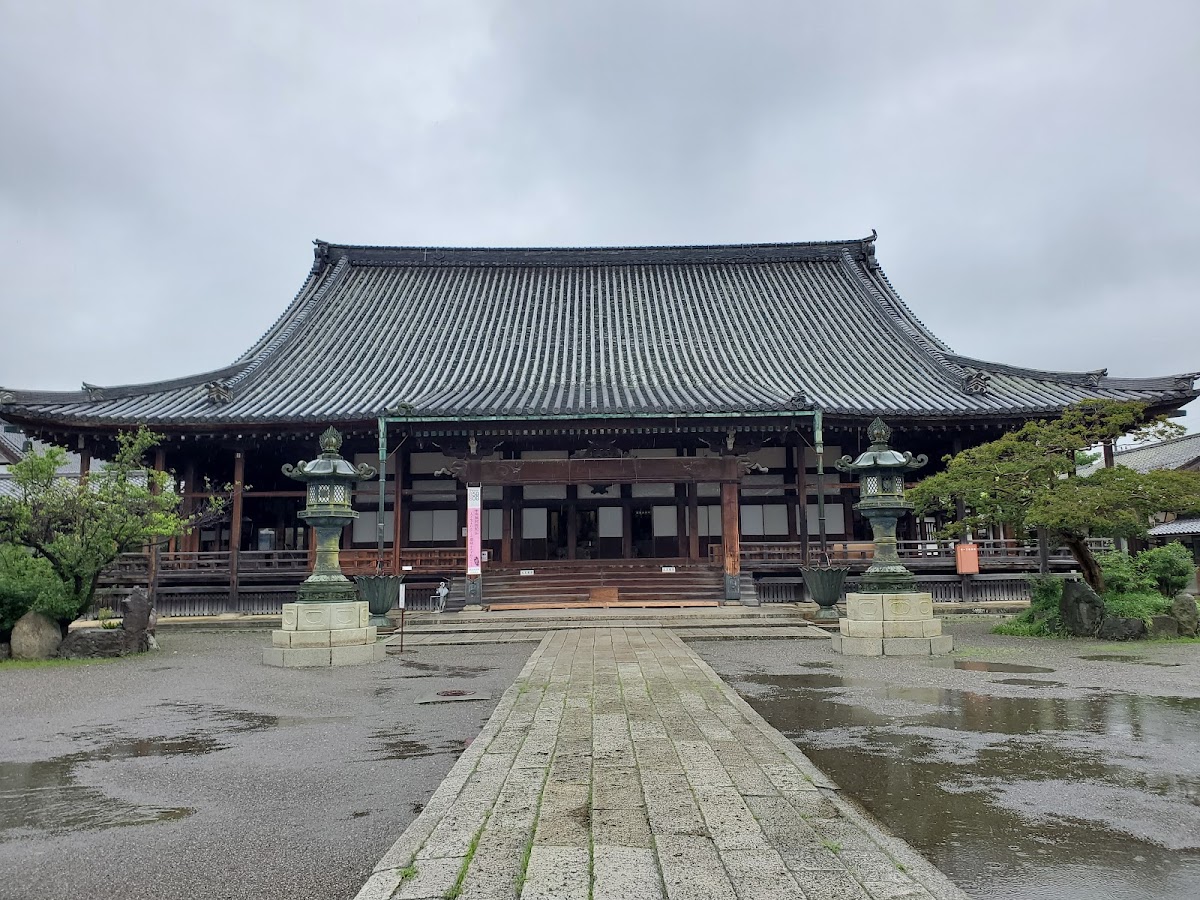
A branch temple of the Shinshu Otani sect, boasting a magnificent temple complex. Approximately 7 minutes on foot.
Keiunkan
A guesthouse built as a temporary residence for Emperor Meiji. Features a beautiful garden. Approximately 12 minutes on foot.
Manners and Precautions for Visiting a Shrine
How to Visit a Shrine
- Bow before passing through the torii gate.
- Cleanse your hands and mouth at the water basin.
- Bow twice, clap twice, and bow once in front of the main hall.
- After praying, turn around and bow before leaving the torii gate.
Photography
Photography is generally permitted within the temple grounds, but may be prohibited inside the main hall or in sacred areas. Please follow the signs. During the Nagahama Hikiyama Festival, please be considerate and avoid interfering with the children’s performances.
Attire
There are no particularly strict dress code regulations, but please dress appropriately, keeping in mind that this is a sacred place like a shrine. ### Visiting Hours
While the shrine grounds are generally open for free worship, the shrine office is usually open from 9:00 AM to around 5:00 PM. If you wish to receive a Goshuin (shrine stamp) or prayers, please visit within these hours.
The Charm of Nagahama Hachimangu Shrine
The charm of Nagahama Hachimangu Shrine lies in its deep connection to the community, while simultaneously conveying over a thousand years of history and tradition. Its profound ties to historical figures such as Minamoto no Yoshiie and Toyotomi Hideyoshi, the Nagahama Hikiyama Festival (one of Japan’s three major float festivals), the unique culture of children’s Kabuki, and its role as the local guardian deity—all of these elements combine to form the unique charm of Nagahama Hachimangu Shrine.
Beyond the spring Hikiyama Festival, you can enjoy the beautiful scenery of the grounds throughout the seasons, the tranquil atmosphere of worship, and the appreciation of historical cultural artifacts. Depending on the time of year and your purpose of visit, there are many ways to enjoy the shrine.
When you visit Nagahama, be sure to stop by Nagahama Hachimangu Shrine. In this sacred space steeped in a thousand years of history, cleanse your soul and receive blessings for victory and business prosperity. As the heart of Nagahama’s history and culture, Nagahama Hachimangu Shrine continues to provide deep inspiration and solace to its visitors.