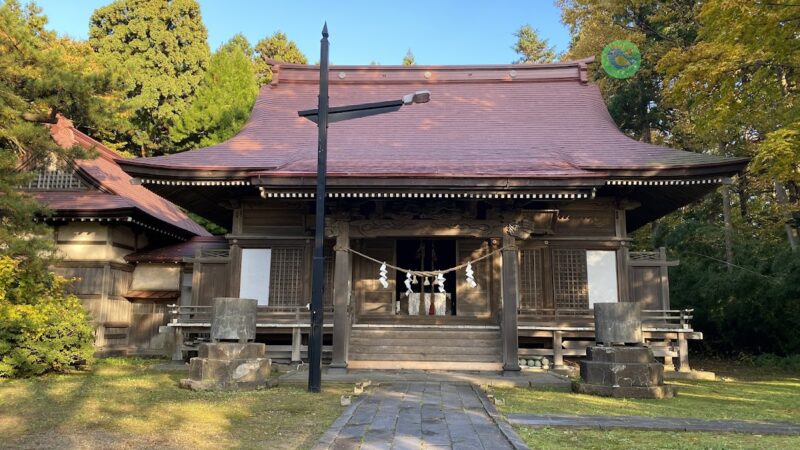
Complete Guide to Koshiō Shrine: A Thorough Explanation from Ancient Shrines in Akita to Koshiō Worship Nationwide
Koshiō Shrines are a group of shrines with a unique faith, distributed throughout Japan, primarily along the Sea of Japan coast. The Koshiō Shrine located in Terauchi, Akita City, Akita Prefecture, is particularly known as the central shrine of this faith. This article provides a detailed explanation of the history, enshrined deities, cultural properties, and the reality of Koshiō worship spread throughout Japan.
What is Koshiō Shrine?
Koshiō Shrines (Koshiō Jinja) are shrines mainly distributed in the regions along the Sea of Japan coast, and are also written as “越王神社”. The name originates from the sound “Koshiō” and is said to be related to “King of Koshi” or “Four Heavenly Kings”. The most famous is the Koshiō Shrine located in Terauchi Kozakura, Akita City, Akita Prefecture, which holds a central position in the Koshiō faith.
Characteristics of Koshiō Shrines
Koshiō Shrines have unique characteristics not found in other shrines. First, it’s noteworthy that many Koshio Shrines are built facing north. This symbolizes their role in protecting the northern Ezo region, reflecting their character as the front line of northern defense in ancient times.
Furthermore, the name Koshio is associated with “King of Echigo” and “Four Heavenly Kings,” showing syncretism with the Buddhist belief in the Four Heavenly Kings. It has a particularly strong connection to Tamonten (Bishamonten), and it’s characteristic that some Koshio Shrines enshrine statues of Tamonten.
History of Koshio Shrine in Akita City
Origin of Founding
The founding of Koshio Shrine, located in Terauchi, Akita City, is detailed in the shrine’s traditions. Its origins are closely related to the administration of the Tohoku region in ancient Japan.
During the reign of Emperor Sujin, the 10th Emperor Sujin dispatched four generals to various regions to unify the country. One of them, Ōhiko-no-Mikoto, was dispatched to the Hokuriku region and tasked with pacifying the Emishi people. It is said that Ōhiko-no-Mikoto enshrined Takemikazuchi-no-Kami as “Agitanoura-no-Kami” to protect the northern gate. This is considered the origin of Koshiō Shrine.
Later, during the reign of Empress Saimei (mid-7th century), when Abe no Hirafu, a military commander of the imperial court, visited the Akita region, it is said that he enshrined his ancestor, Ōhiko-no-Mikoto, and formally founded the shrine as “Echiō Shrine.”
Relationship with Akita Castle
Koshiō Shrine has a deep connection with Akita Castle (Dewa-no-Saku), which was established during the Nara period. Akita Castle was a fortified settlement built around 733 (Tenpyo 5) as a base for the imperial court’s administration of the Tohoku region, and Koshio Shrine served as its guardian deity.
Even today, the ruins of Akita Castle are located about 1 km north of Koshio Shrine, and the relationship between the two can be seen from their relative locations. While Akita Castle was a political and military center, Koshio Shrine is thought to have functioned as its spiritual pillar.
Relationship with the Engishiki Jinmyocho (Register of Shrines in the Engi Era)
The Engishiki Jinmyocho, a register from the Heian period, lists “Takaizumi Shrine” in Akita County, Dewa Province. Some research suggests that this Takaizumi Shrine may be Koshio Shrine, but there is no conclusive evidence, and the matter remains debated.
About the Deities
The deities enshrined at Koshio Shrine are mainly the following two:
Takemikazuchi-no-kami
Takemikazuchi-no-kami is a war god known as the principal deity of Kashima Shrine, the Ichinomiya (first-ranked shrine) of Hitachi Province. In the myth of the transfer of the land, found in the Kojiki and Nihon Shoki, he is depicted as the god who negotiated with Ōkuninushi-no-mikoto of Izumo and successfully facilitated the transfer of the land.
Possessing characteristics of a thunder god and sword god, he was a deity possessing both military strength and negotiation skills, playing a crucial role in the defense of ancient border regions. The enshrinement of Takemikazuchi-no-kami at Koshiō Shrine clearly indicates the shrine’s character as a northern defense.
Ōhiko-no-mikoto
Ōhiko-no-mikoto was a prince of Emperor Kōgen (the 8th emperor) and was dispatched to the Hokuriku region as one of the Four Generals during the reign of Emperor Sujin. He is considered the ancestor of the Abe clan, and later Abe no Hirafu also belongs to this lineage.
Ōhiko-no-Mikoto was a highly probable historical figure, an ancient warrior and politician, credited with contributing to the development and governance of the Hokuriku and Tohoku regions. The enshrinement of Ōhiko-no-Mikoto at Koshiō Shrine reflects his historical role as a pioneer in this region.
Shrine Grounds and Cultural Properties
Shrine Grounds
Koshiō Shrine in Akita City is located east of National Route 7, in the Terauchi district of Akita City. The shrine grounds are arranged diagonally to the southeast, and as you proceed along the approach, a tranquil space surrounded by ancient trees unfolds.
The shrine building is relatively small, but possesses the dignity of an ancient shrine and attracts the faith of local people. Several smaller shrines are also enshrined within the grounds, preserving its character as a center of regional faith.
The Legend of Takashimizu
Near Koshiō Shrine is a sacred spring called “Takashimizu“. According to legend, it gushed forth when Koshiō was enshrined, and has long been revered as miraculous water. This Takashimizu spring is considered one of the elements suggesting a connection to the “Takazumi Shrine” mentioned in the aforementioned Engishiki Jinmyocho (a list of shrines compiled in the Heian period).
Koshio Shrines Nationwide
Koshio Shrines exist not only in Akita City, but also in several other regions, mainly along the Sea of Japan coast. Each has its own unique history and characteristics.
Koshio Shrine in Daisen City
A Koshio Shrine is also located in Daisen City (formerly Omagari City), Akita Prefecture. This shrine is known for its main hall, which is designated as a Nationally Designated Important Cultural Property.
The enshrined deity is Ohiko-no-Mikoto. According to shrine tradition, when Emperor Sujin dispatched his four generals, Ohiko-no-Mikoto rested on a large rock in this area, and the villagers, in reverence, built a shrine, which is considered the origin of the shrine.
The main hall is said to be the work of Hida no Takumi Jinbei, and its exquisite carvings and architectural techniques are highly regarded. Located in the rural area of the Senboku Plain, the shrine grounds, surrounded by ancient trees, exude a deeply atmospheric ambiance. ### Koshio Shrine, Shibata City, Niigata Prefecture
A Koshio Shrine is also located in Ijikuno, Shibata City, Niigata Prefecture. While the details of its founding are unknown, one theory suggests that during the reign of Empress Suiko (593-628), Prince Shotoku enshrined a divided spirit of Oobiko-no-Mikoto to pray for victory during his eastern expedition against the eastern barbarians.
If this legend is true, it would represent a fascinating history of simultaneous enshrinement of three shrines by Prince Shotoku, along with those in Akita City and Kitakata City.
Koshio Shrine, Kitakata City, Fukushima Prefecture
The Koshio Shrine, located on the slopes of Kotohira Mountain in Matsumai, Keitoku-cho, Kitakata City, Fukushima Prefecture, is also an important center of Koshio worship. While the founding date is unknown, the shrine is considered to be quite ancient, as the principal image is a standing statue of Tamonten (missing both arms) estimated to be from the late Heian period.
This statue of Tamonten is designated as an Important Cultural Property and is a valuable artifact that demonstrates the syncretism of the ancient Four Kings belief and the Four Heavenly Kings belief.
Characteristics and Distribution of the Ancient Four Kings Belief
Etymology of Koshiō
There are several theories regarding the origin of the name “Koshiō.”
- King of Koshi Theory: Meaning the king of “Koshi,” the ancient name of the Hokuriku region, and derived from the fact that Ōhiko-no-Mikoto was the general of the Hokuriku region.
- Four Heavenly Kings Theory: Derived from the Four Heavenly Kings of Buddhism (Jikokuten, Zōchōten, Kōmokuten, and Tamonten), with a particularly strong connection to Tamonten (Bishamonten).
- Kōshi King Theory: A deification of the ruler of the ancient Koshi Province (Kōshi Province).
These theories are not mutually exclusive, and it is highly likely that multiple meanings became intertwined in a layered manner over time.
The Meaning of North-Facing Shrines
As mentioned earlier, most Koshio Shrines face north. This is not mere coincidence, but a deliberate arrangement.
In ancient times, the Tohoku region was considered an uncivilized land inhabited by people called “Emishi,” and was not under the control of the imperial court. Koshio Shrines functioned as guardian deities for this northern region, and the north-facing orientation of the shrines symbolically represents this role.
Distribution Characteristics
Koshio Shrines are mainly distributed along the Sea of Japan coast, including Niigata, Akita, and Fukushima prefectures. This coincides with the route of the Hokuriku Road to which Prince Ōhiko was dispatched, preserving the historical route of ancient Tohoku administration.
Interestingly, Koshio Shrines are rarely found on the Pacific side. This is thought to be related to the fact that a different general (such as Prince Takenukawawake) was dispatched to the Pacific side.
The History of Koshio Shrine and Akita
The Establishment of Dewa Province
The Akita region was part of “Dewa Province” in ancient times. Dewa Province was established in 708 (Wado 1) by separating from Echigo Province, and initially centered on the Shonai region of present-day Yamagata Prefecture.
Later, as the imperial court’s administration of the Tohoku region progressed, the territory of Dewa Province expanded northward. Around 733, with the establishment of Akita Castle (Dewa Fort), the Akita region was incorporated into Dewa Province. Koshio Shrine is thought to have functioned as a spiritual pillar during this expansion process.
Relationship with the Emishi
In ancient times, the Akita region was inhabited by people called “Emishi.” The Emishi were a group with their own culture, not subject to the control of the imperial court, and sometimes clashed with the court, while at other times engaged in trade relations.
The figures of Ōhiko-no-Mikoto and Abe-no-Hirafu, who appear in the founding legend of Koshiō Shrine, both played important roles in relations with the Emishi people. In particular, Abe-no-Hirafu, from 658 to 660, conducted three “northern expeditions,” and the Nihon Shoki (Chronicles of Japan) records his battles and negotiations with the Emishi in the region stretching from Akita to southern Hokkaido.
Koshiō Shrine functioned as a guardian deity on the front lines of these conflicts with the Emishi, and as a symbol of the authority of the imperial court.
Relationship with Shitennoji Temple
Koshiō Shrine in Akita City once had a bettoji (temple in charge of shrine affairs) called Dewa Shitennoji. A bettoji was a temple responsible for the management and rituals of a shrine during the era of syncretism of Shinto and Buddhism.
The name Shitennoji originates from the Buddhist belief in the Four Heavenly Kings. The Four Heavenly Kings are four warrior gods who protect Buddhist teachings, with Tamonten (Bishamonten) in particular being responsible for protecting the north. The fact that Koshio Shrine plays a role in guarding the northern gate, and that Shitennoji Temple was its affiliated temple, is thought to be deeply connected.
Although Shitennoji Temple was abolished due to the Meiji-era separation of Shinto and Buddhism, the historical fact of the syncretism of Koshio worship and Shitenno worship is an important element demonstrating the layered nature of the religious culture in this region.
Modern Koshio Shrine
Worship and Annual Events
Modern Koshio Shrine is cherished by local people as the guardian shrine of the region. Traditional Shinto rituals, such as the New Year’s visit and the spring and autumn festivals, are still continued.
Koshio Shrine in Akita City, along with the Akita Castle ruins, is a popular historical walking course and a place visited by people interested in ancient history.
Access
Akita City, Koshio Shrine Access is as follows:
- Approximately 5km northwest of JR Akita Station
- A few minutes’ walk from the “Terauchi Kozakura” bus stop (Akita Chuo Kotsu Bus)
- Approximately 10 minutes by car from Akita Kita IC on the Akita Expressway
- Parking: Limited space available on the shrine grounds
Daisen City, Koshio Shrine Access:
- Approximately midway between JR Omagari Station and Iizume Station on the JR Ou Main Line
- Approximately 15 minutes by car from Omagari Station
- Located in the rural area of the Senboku Plain
While Koshio Shrines in various locations are somewhat inconvenient to access by public transportation, this contributes to the peaceful environment for worship.
Cultural Value of Koshio Shrines
Historical Value
Koshio Shrines are valuable historical legacies that tell the story of ancient Japan’s administration of the Tohoku region. Much information about ancient northern policies, which can only be gleaned from fragmented historical documents, can be obtained from the history and distribution of these shrines.
In particular, the correspondence between the historical fact recorded in the *Nihon Shoki* (Chronicles of Japan) regarding the dispatch of the Four Generals and the actual distribution of the shrines suggests the historical credibility of the tradition.
Folkloric Value
The Koshiō faith embodies the characteristics of Japanese religious culture, such as the syncretism of Shinto and Buddhism, and the fusion of central political power and local beliefs.
The unique phonetic name “Koshiō,” the north-facing orientation of the shrine buildings, and the syncretism with the Four Heavenly Kings faith are features not found in other shrines, indicating the unique religious culture of this region.
Architectural Historical Value
The main hall of the Koshiō Shrine in Daisen City is designated as a National Important Cultural Property and is valued as an excellent example of early modern shrine architecture. The exquisite carving techniques by Hida craftsmen demonstrate the existence of a superior architectural culture in the region.
Summary
The Koshiō Shrine is not merely a small local shrine. There, one can find a condensed tapestry of multi-layered history and culture, including the ancient Japanese administration of Tohoku, relations with the Emishi people, the history of syncretism of Shinto and Buddhism, and the uniqueness of regional culture.
Centered around the Koshio Shrine in Akita City, the Koshio Shrines scattered throughout Daisen City, Shibata City, Kitakata City, and other areas, each possessing its own unique history and characteristics, are united by the common theme of “protecting the northern gate.”
Even today, these shrines attract the faith of local people and serve as valuable clues for history enthusiasts and researchers exploring ancient history. Visiting a Koshio Shrine will provide an opportunity to confront ancient Japanese history and reflect on the origins of this country.
When visiting Akita, be sure to visit the Koshio Shrines along with the Akita Castle ruins and reflect on the history of over 1300 years ago. Standing in the tranquil grounds, you may feel the thoughts of the ancient people who protected the north, transcending time.