Complete Guide to Suiten-gu Shrine: A Thorough Explanation of History, Benefits, Worship Methods, and Shrine Facilities
Suiten-gu Shrine, located in Kakigaracho, Nihonbashi, Chuo-ku, Tokyo, is a nationally renowned shrine for prayers for safe childbirth and fertility. This shrine, visited by many worshippers daily, boasts over 200 years of history and deep faith. This article comprehensively introduces everything you need to know before visiting, from the origins of Suiten-gu Shrine to its enshrined deities, benefits, worship methods, and shrine facilities.
What is Suiten-gu Shrine?: A Shrine for Safe Childbirth and Fertility Located in Nihonbashi
Suiten-gu Shrine attracts many worshippers for prayers for safe childbirth, fertility, shrine visits for newborns, and Shichi-Go-San (a traditional Japanese rite of passage for children). Conveniently located just a one-minute walk from Suitengumae Station on the Tokyo Metro Hanzomon Line, it is visited by many pregnant women and families even on weekdays.
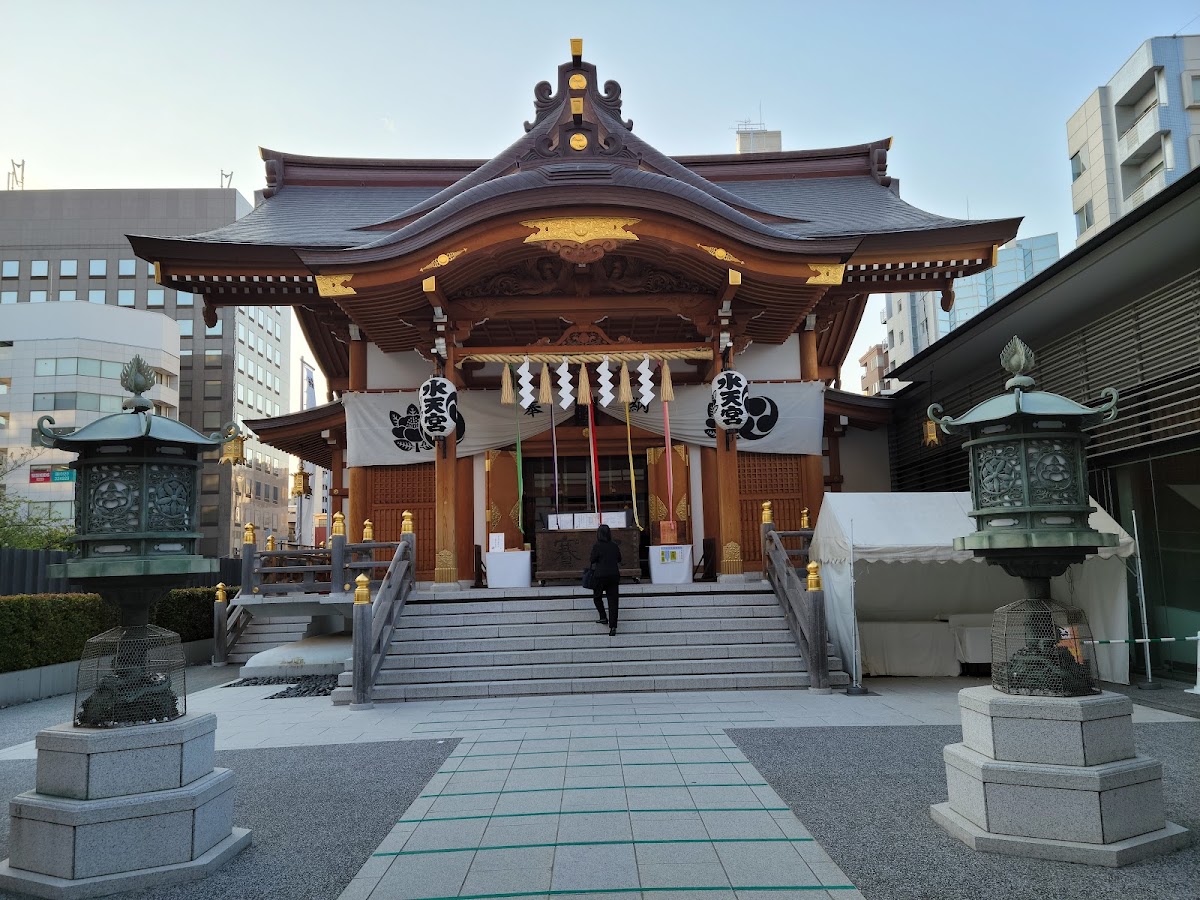
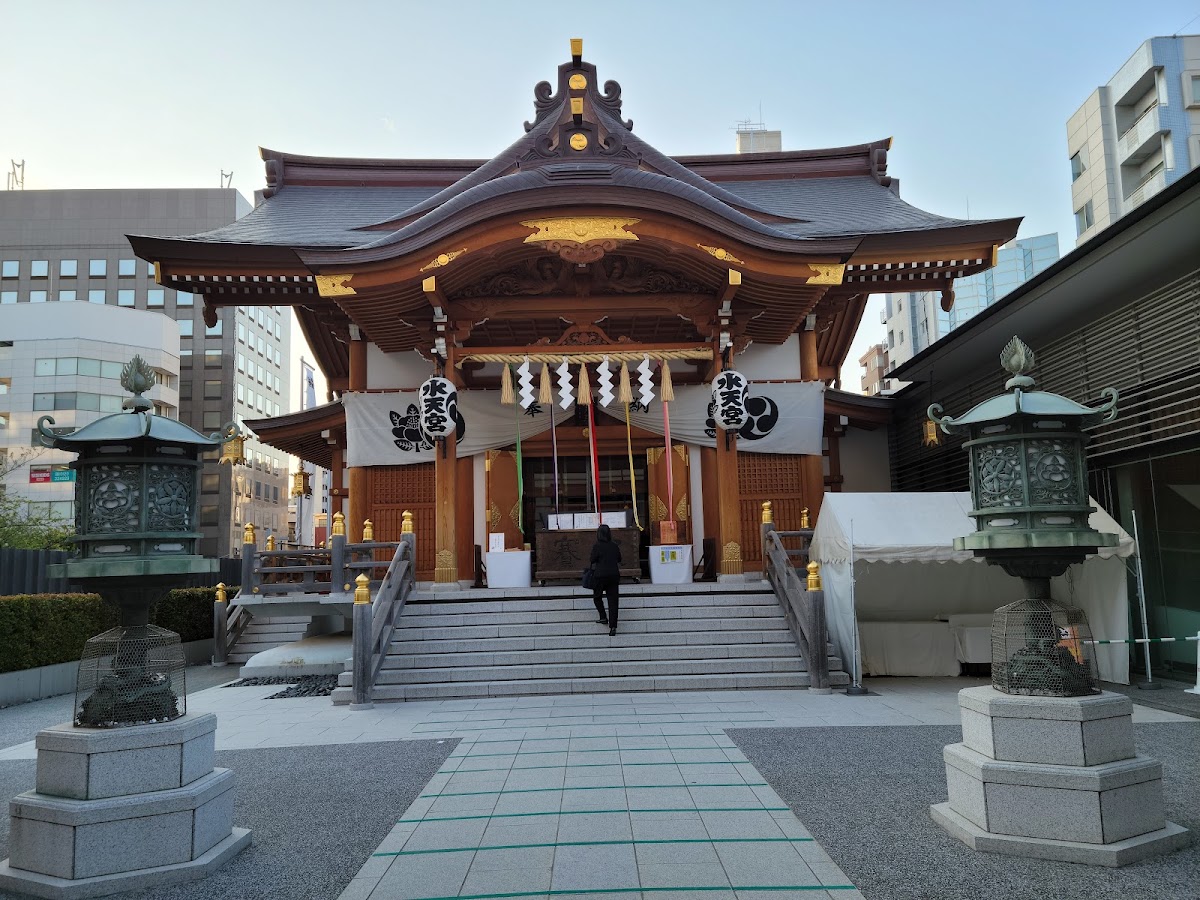
The current shrine building is a modern structure completed in 2016, featuring a highly safe design incorporating seismic isolation. Within the shrine grounds, in addition to the main hall, there are various objects of worship, including Hoshō Benzaiten and a dog statue symbolizing fertility.
History and Origin of Suiten-gū Shrine: From Kurume to Edo
The National Head Shrine is in Kurume City, Fukuoka Prefecture
Suiten-gū Shrine originated in the Kurume Domain of Kyushu (present-day Kurume City, Fukuoka Prefecture). The Suiten-gū Shrine in Kurume City serves as the national head shrine, enshrining four deities, including Amenominakanushi-no-Ōkami, and is the central location for all Suiten-gū shrines throughout Japan.
Branch Shrine in Edo in 1818
The history of Suiten-gū Shrine in Tokyo begins in 1818. The origin of Suiten-gu Shrine dates back to the 9th lord of the Kurume Domain, Arima Yorinori, who established a branch shrine of the Suiten-gu Shrine, which was worshipped in his territory of Kurume, within his Edo residence in Mita Akabane.
The Arima family had a deep faith in Suiten-gu Shrine for generations, and by having the lord himself build a branch shrine within his Edo residence, he ensured that the samurai and their families living in Edo could also receive the divine blessings of Suiten-gu Shrine.
The Arima Family Received the Divine Blessings of Amenominakanushi-no-Okami
The Arima family’s connection to Suiten-gu Shrine is ancient; their faith deepened upon their entry into the Kurume Domain. Amenominakanushi-no-Okami is considered the primordial deity of the universe, the god who presides over the beginning of all life. It is believed that through the divine blessings of this god, the Arima family prospered for generations, and the peace and well-being of their people were protected.
Relocation after the Meiji Restoration and the Shrine’s Current Location
In 1868 (Meiji 1), when the Arima residence moved to Aoyama, Suiten-gu Shrine also relocated to Aoyama. Later, in 1872 (Meiji 5), it moved to its current location in Kakigaracho, Nihonbashi, and became a shrine freely accessible to the general public.
Suiten-gu Shrine, which began as a private shrine within the Kurume Domain’s residence, became open to the common people, leading to the widespread popularity of prayers for safe childbirth and fertility among the people of Edo/Tokyo.
Reconstruction of the Shrine and Assembly Hall
From 2013 (Heisei 25) to 2016 (Heisei 28), Suiten-gu Shrine underwent a large-scale reconstruction (rebuilding) of its shrine and assembly hall. This construction resulted in a safe shrine building incorporating the latest seismic isolation technology while preserving the beauty of traditional shrine architecture.
The new shrine building has five above-ground floors and one basement floor. The main shrine is located on the first floor, while the assembly hall and shrine office are on the second floor and above. An elevator is also provided, making it barrier-free and easily accessible for pregnant women, the elderly, and those in wheelchairs.
Deities enshrined at Suiten-gu Shrine: Four deities and their respective divine virtues
Four deities are enshrined at Suiten-gu Shrine. Each deity has a deep history and divine virtues.
Amenominakanushi-no-Okami
Amenominakanushi-no-Okami is considered the first deity to appear in Japanese mythology. Located at the center of the universe, this deity is revered as the primordial deity of creation.
This deity is worshipped as the god who presides over the beginning of life and safe childbirth, and this is the main reason Suiten-gu Shrine became famous for prayers for safe childbirth. This deity watches over the birth of new life during pregnancy and childbirth, protecting the health of both mother and child.
Emperor Antoku
Emperor Antoku was the 81st Emperor of Japan during the late Heian period and the grandson of Taira no Kiyomori. He ascended to the throne at the tender age of three and drowned himself at the Battle of Dan-no-ura at the age of eight.
Emperor Antoku, who died young, is worshipped as a guardian deity of children. The presence of this enshrined deity greatly influences the large number of people who visit Suiten-gu Shrine for baby blessings and Shichi-Go-San (a traditional Japanese rite of passage for children).
Kenreimon-in (Taira no Tokuko)
Kenreimon-in was the mother of Emperor Antoku, the daughter of Taira no Kiyomori, and the Empress Consort of Emperor Takakura. Although she attempted to drown herself at the Battle of Dan-no-ura, she was rescued and spent the rest of her life at Jakko-in Temple in Kyoto.
Due to her deep maternal love, she is revered as a guardian deity of safe childbirth and child-rearing.
Ni-no-Ama (Taiyo Tokiko)
Nii-no-Ama was the wife of Taira no Kiyomori and the grandmother of Emperor Antoku. She drowned herself in the Battle of Dan-no-ura, holding Emperor Antoku.
Due to her deep love for her grandchild, she is worshipped as a guardian deity of family bonds and the prosperity of descendants.
These four deities are also famous figures from the Tale of the Heike and are historically significant. Suiten-gu Shrine is known for its blessings of safe childbirth, fertility, and child-rearing, due to the divine virtues of these deities.
Benefits of Suiten-gu Shrine: Diverse Divine Virtues Beyond Safe Childbirth
Safe Childbirth Prayer
Suiten-gu Shrine is most famous for its prayers for safe childbirth. It is customary to visit the shrine on the Day of the Dog in the fifth month of pregnancy to receive a prayer for safe childbirth. The dog (Inu) is considered a symbol of safe childbirth because of its high fertility and easy births.
At Suiten-gu Shrine, prayers for safe childbirth are accepted daily, and many pregnant women and their families visit especially on the Day of the Dog (Inu no Hi).
Prayer for Conception
Prayers for conception, wishing to be blessed with children, are one of the important blessings offered at Suiten-gu Shrine. Due to the divine power of Amenominakanushi-no-Okami, who governs the lives of children, many couples visit to pray for conception.
First Shrine Visit (Omiyamairi)
Omiyamairi (first shrine visit), a ceremony to thank the gods for the safe birth of a baby and to pray for their healthy growth, is a popular life ritual at Suiten-gu Shrine. It is generally performed around one month after birth.
Shichi-Go-San (7-5-3)
Shichi-Go-San, a celebration of children’s growth at the milestones of 3, 5, and 7 years old, is also frequently held at Suiten-gu Shrine. Because Emperor Antoku, a guardian deity of children, is enshrined there, it is considered a suitable shrine for Shichi-Go-San prayers.
Protection from Water-Related Disasters and Maritime Safety
As the name “Suitengu” suggests, the shrine offers protection from water-related disasters. Prayers for maritime safety are also offered for sailors, fishermen, and those in water-related occupations.
Protection from Misfortune
Prayers for protection from all kinds of misfortunes are also accepted. Many people visit to pray for protection from misfortune during their unlucky years at important life stages.
Shrine Grounds Guide: Highlights and Facilities of Suitengu
Main Hall
The main hall of Suitengu is a new shrine building completed in 2016. It is a beautiful building that blends traditional shrine architecture with modern architectural techniques.
Prayers are offered daily in the main hall, and various prayers, including prayers for safe childbirth, can be received.
Hōshō Benzaiten
Hōshō Benzaiten is enshrined within the grounds of Suitengu. This Benzaiten (goddess of fortune and wealth) is depicted with eight arms, holding weapons such as a bow and arrow, a sacred sword, and an axe, as well as a key and a jewel.
While typical Benzaiten are depicted elegantly holding a biwa (lute), Hōshō Benzaiten is characterized by her valiant appearance, wielding weapons. It is believed to bring blessings of wealth, performing arts, and wisdom, attracting many worshippers.
Fertility Dog
Within the shrine grounds, there is a statue of a dog called the “Fertility Dog.” The twelve zodiac animals are arranged around this dog statue, and it is believed that stroking one’s own zodiac sign brings blessings of safe childbirth and fertility.
Many worshippers stroke this Fertility Dog, so the surface of the statue is smooth and shiny.
Safe Childbirth and Child-Rearing Kappa
Suiten-gū also has a statue of a kappa (water imp). This is called the “Safe Childbirth and Child-Rearing Kappa,” symbolizing Suiten-gū’s connection to water. It is believed that pouring water on the plate on the kappa’s head while praying brings blessings for safe childbirth and successful child-rearing.
Assembly Hall
The assembly hall, used for receiving prayers and as a waiting room, is located on the upper floors of the shrine building. It is accessible by elevator, allowing you to wait for your prayer in a comfortable environment.
Gift Shop
There is a gift shop where you can receive amulets, talismans, and lucky charms. Popular amulets unique to Suiten-gu Shrine include those for safe childbirth, conception, and child-rearing.
Special amulets are also available, including those limited to the Day of the Dog and seasonal amulets.
Visiting Hours and the Day of the Dog
Visiting Hours
The visiting hours for Suitengu Shrine are as follows:
- April to September: 7:00 AM to 6:00 PM
- October to March: 8:00 AM to 5:00 PM
Prayer services are available from 8:00 AM to 3:30 PM (hours may change on busy days such as the Day of the Dog).
What is the Day of the Dog?
The Day of the Dog is the day corresponding to the “Dog” in the Chinese zodiac. It occurs once every 12 days. Because dogs are known for their fertility and easy births, the custom of praying for a safe delivery on the Day of the Dog in the fifth month of pregnancy has continued since the Edo period.
Suitengu Shrine is especially crowded on the Day of the Dog. If you wish to visit on the Day of the Dog, it is recommended to visit early in the morning. However, prayers for safe childbirth are accepted even on days other than the Day of the Dog, so please choose a day of worship that suits your physical condition and circumstances.
Procedure and Etiquette for Prayer Ceremony
How to Apply for Prayer Ceremony
- Registration: Fill out the prayer application form at the reception on the 1st or 2nd floor of the shrine building.
- Payment of Offering: Pay the prayer fee (offering).
- Waiting in the Waiting Room: Wait in the waiting room of the assembly hall until you are called.
- Prayer Ceremony: Receive a prayer ceremony by a Shinto priest in the main hall.
- Receiving of Offerings: After the prayer ceremony, receive offerings such as amulets and talismans.
Offering Fee
The offering fee for prayer ceremony varies depending on the content of the prayer. Generally:
- Prayer for Safe Childbirth: From 8,000 yen
- Shrine Visit for Newborns: From 8,000 yen
- Shichi-Go-San (7-5-3 Festival): From 10,000 yen
For specific prices, please check the Suitengu Shrine’s official website or inquire in advance.
Etiquette for Worship
The basic etiquette for worshipping at a shrine is “two bows, two claps, one bow”:
- One bow: Bow lightly.
- Two bows: Bow deeply twice.
- Two claps: Clap your hands twice.
- One bow: Bow deeply once.
- One bow: Bow lightly one last time and step back.
Also remember how to purify yourself at the water basin:
- Hold the ladle in your right hand and purify your left hand.
- Switch the ladle to your left hand and purify your right hand.
- Switch the ladle back to your right hand, receive water in your left hand, and rinse your mouth.
- Purify your left hand once more.
- Stand the ladle upright, purify the handle, and return it to its original position.
Access: How to get to Suiten-gu Shrine
Access by Train
Nearest Station:
- Tokyo Metro Hanzomon Line, Suitengumae Station: 1-minute walk from Exit 5 (most convenient)
- Tokyo Metro Hibiya Line, Ningyocho Station: 6-minute walk from Exit A1
- Toei Subway Asakusa Line, Ningyocho Station: 8-minute walk from Exit A3
- Tokyo Metro Tozai Line, Kayabacho Station: 10-minute walk from Exit 4a
Upon exiting from Exit 5 of Suitengumae Station, Suitengu Shrine is directly in front of you, so even first-time visitors won’t get lost.
Access by Bus
You can also use Toei buses and Tokyo Metropolitan Bureau of Transportation bus routes. Getting off at the “Suitengumae” bus stop is convenient.
Access by Car
Suitengu Shrine does not have its own parking lot. You will need to use nearby coin parking lots, but these are often full on busy days such as the Day of the Dog (Inu no Hi), so we recommend using public transportation.
Festivals and Annual Events at Suiten-gu Shrine
Suiten-gu Shrine holds various festivals throughout the year.
Main Annual Festivals
- January 1st: New Year’s Day Festival
- January 5th: First Suiten-gu Festival
- February (Setsubun): Setsubun Festival
- May 5th: Grand Festival (Most Important Festival)
- May 5th-7th: Anniversary of the Shrine’s Enshrinement
- November 15th: Shichi-Go-San Festival
- December 31st: Great Purification Ceremony, New Year’s Eve Festival
The Grand Festival on May 5th is the most important festival of the year at Suiten-gu Shrine, attracting many worshippers.
Amulets, Charms, and Lucky Charms
Suiten-gu Shrine offers a variety of amulets, charms, and lucky charms.
Popular Amulets
- Safe Childbirth Amulet: An amulet worn by pregnant women
- Fertility Amulet: An amulet for wishing for children
- Child-Rearing Amulet: An amulet for wishing for the healthy growth of children
- Misuzu Obi (Maternity Belt): A cloth used by pregnant women as a maternity belt
- Traffic Safety Amulet: An amulet for the safety of cars and bicycles
Items Available Only on the Day of the Dog
Special amulets and lucky charms may be available on the Day of the Dog. It is recommended to check the official website in advance.
Frequently Asked Questions
Is a Reservation Required?
Reservations for prayers are generally not required. You can apply at the reception on the day. However, on days when crowds are expected, such as the Day of the Dog, there may be a long waiting time.
Are There Any Dress Codes?
When receiving a prayer, it is preferable to wear attire that is not too casual. For men, a suit or jacket is preferred, and for women, a dress or suit is preferred. However, pregnant women should prioritize their health and wear comfortable clothing.
Is proxy worship possible?
If you are unwell or live far away, a family member can worship on your behalf. Please inform the reception desk.
Is photography allowed?
Photography is generally permitted on the shrine grounds, but photography is prohibited during prayers. Please also be considerate of other worshippers.
Can I bring my pet?
Bringing pets is generally discouraged. Assistance dogs (guide dogs, service dogs, etc.) are permitted.
Attractions around Suitengu Shrine
The Nihonbashi Ningyocho area, where Suitengu Shrine is located, has many other attractions.
Ningyocho Shopping Street
This charming shopping street is lined with long-established Japanese confectionery shops, rice cracker shops, and restaurants. A stroll around after visiting Suiten-gu Shrine is also recommended.
Amazake Yokocho (Sweet Rice Wine Alley)
Amazake Yokocho, which retains the atmosphere of the Edo period, is lined with traditional restaurants and general stores.
Koami Shrine
Koami Shrine, within walking distance, is also a popular shrine known for its blessings of good fortune and protection from evil.
Etiquette and Manners for Visiting Suiten-gu Shrine
Mindset When Visiting
Shrines are sacred places where gods are enshrined. Visit with a reverent heart.
Consideration During Crowds
On crowded days such as the Day of the Dog, remember to be considerate of other visitors. Avoid staying for extended periods and be mindful of others.
Precautions within the Shrine Grounds
- Please refrain from loud conversations.
- Please take all your trash with you.
- Please avoid eating or drinking outside of designated areas.
- Smoking is prohibited within the shrine grounds.
Summary: Praying for Safe Childbirth and Family Happiness at Suiten-gu Shrine
Suiten-gu Shrine has been a place of worship for over 200 years, since its establishment in Edo (present-day Tokyo) in 1818 (Bunsei 1). The four enshrined deities, including Amenominakanushi-no-Okami, watch over us with a variety of blessings, including safe childbirth, fertility, child-rearing, and protection from water-related disasters.
The shrine building, newly renovated in 2016 (Heisei 28), is a beautiful architectural blend of tradition and modernity, and its barrier-free design makes it easily accessible for everyone. Its convenient location, just a one-minute walk from Suitengumae Station on the Tokyo Metro Hanzomon Line, is another reason why it is chosen by so many visitors.
Visit Suitengu Shrine to receive divine protection during important life milestones such as prayers for safe childbirth, fertility, baby’s first shrine visit, and Shichi-Go-San (a traditional rite of passage for children). You can visit anytime, not just on the Day of the Dog, so please come at a time that suits your health and circumstances.
May the deities of Suitengu Shrine watch over the health and happiness of you and your family.