Complete Guide to Engyo-ji Temple | History, Highlights, and Access Information for the “Hieizan of the West”
Shoshazan Engyo-ji Temple, located on Mount Shosha in Himeji City, Hyogo Prefecture, is a historic temple boasting over a thousand years of history as a special head temple of the Tendai sect. Also known as the “Hieizan of the West,” it is the 27th temple on the Saigoku Kannon Pilgrimage, attracting many pilgrims. Spread across the 371-meter-high mountaintop, the temple grounds are dotted with historical buildings designated as Important Cultural Properties, and its landscape, harmoniously integrated with the changing seasons, is also known as a filming location for movies and dramas.
This article comprehensively explains everything you need to know before visiting Engyo-ji Temple, from its history and major highlights to annual events and access methods.
History and Overview of Engyo-ji Temple
Founding and the Monk Shoku
Engyo-ji Temple was founded in 966 (Kōhō 3) by the high-ranking Tendai Buddhist priest Shoku Shonin. According to tradition, Shoku Shonin was guided by auspicious clouds to Mount Shosha, where he built a hermitage and devoted himself to chanting the Lotus Sutra.
After training at Mount Hiei, Shoku Shonin traveled to various regions and dedicated himself to the recitation of the Lotus Sutra and spiritual practice at Mount Shosha. His high moral character was known to the imperial court, and the temple developed into one with deep ties to the imperial family, receiving the devotion of Emperor Kazan and Emperor Go-Shirakawa.
Status as the “Mount Hiei of the West”
Engyo-ji Temple has been known as the “Mount Hiei of the West” as a particularly important temple within the Tendai sect. While Enryaku-ji Temple on Mount Hiei was the center of the Tendai sect in eastern Japan, Engyo-ji Temple functioned as the base of the Tendai sect in western Japan, producing many learned monks.
During the medieval period, it reached its peak, with hundreds of monks’ quarters lining the mountaintop, forming a major religious city where ascetic monks gathered. Although it was caught in the ravages of war during the Sengoku period, it was rebuilt each time and has been preserved as a place of worship to this day.
27th Temple of the Saigoku Thirty-Three Kannon Pilgrimage
Engyo-ji Temple has long welcomed pilgrims as the 27th temple of the Saigoku Thirty-Three Kannon Pilgrimage. While the principal image is the Shakyamuni Triad, the temple also enshrines Nyoirin Kannon Bodhisattva as its principal image, attracting many worshippers seeking Kannon worship.
Main Highlights of the Temple Grounds
The entire area on Mount Shosha constitutes the grounds of Engyo-ji Temple, and historical buildings are scattered throughout its vast grounds. You can enter the mountain from the ropeway’s mountaintop station and visit each of the temple buildings.
Niomon Gate
The Niomon Gate, the entrance to the temple grounds, welcomes visitors as the gateway to Engyo-ji Temple. Kongo Rikishi statues are enshrined on either side, marking the boundary to the sacred area within the mountain. Passing through this gate, you are enveloped in a tranquil atmosphere as you walk along a path surrounded by a deep forest.
Maniden Hall
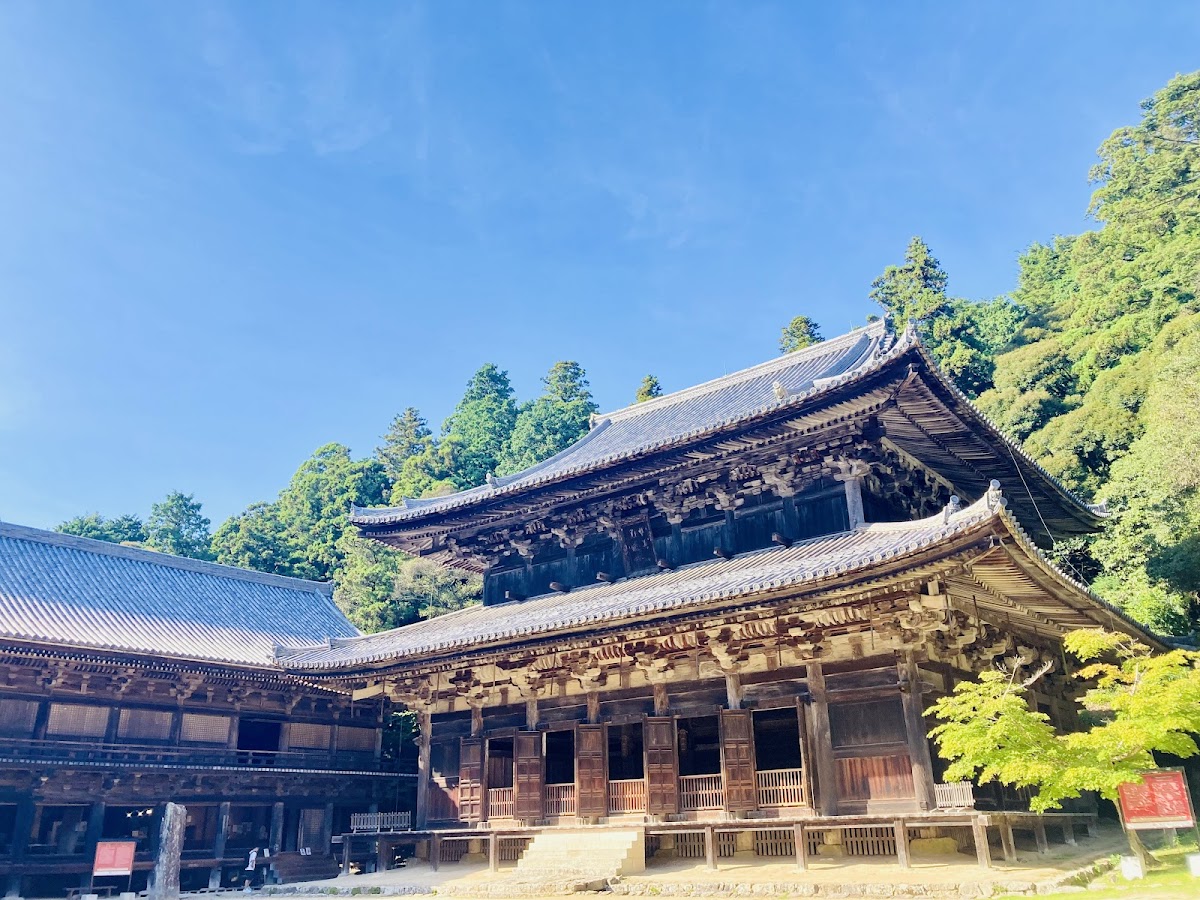
The Maniden Hall is a representative building of Engyo-ji Temple and enshrines the Nyoirin Kannon Bodhisattva, the principal image of the 33 temples of the Saigoku Kannon Pilgrimage. Built in a cantilevered style (stage-like construction) reminiscent of Kiyomizu-dera Temple in Kyoto, the stage jutting out from the cliff offers a panoramic view of the rich natural beauty of Mount Shosha.
The current Maniden Hall dates back to the Muromachi period and is designated as an Important Cultural Property. Inside the hall, in addition to the Nyoirin Kannon statue, a statue of Shōkū Shōnin is also enshrined, making it a central location visited by many worshippers. The contrast between the vermilion pillars of the Mani-den and the surrounding greenery is particularly beautiful during the seasons of fresh green leaves and autumn foliage.
Three Halls (Daikodō, Shokudō, Jōgyōdō)
Further beyond the Mani-den lies a group of important cultural properties known as the “Three Halls.” These are the core facilities of Engyō-ji Temple, each with a different role.
Daikodō
The Daikodō was used as a lecture hall for monks to study scriptures such as the Lotus Sutra. Built during the Muromachi period, it houses statues of the Shakyamuni Triad and the Four Heavenly Kings. The walls of the hall are adorned with a mandala said to have been donated by Taira no Kiyomori at the command of Emperor Go-Shirakawa, making it a culturally significant artifact of high historical value.
Dining Hall (Jikido)
The dining hall was a place for monks to eat and also served as a place for temple affairs. Currently, it is used as a treasure hall, displaying Buddhist statues, ancient documents, and crafts passed down through Engyo-ji Temple. The building itself is a designated Important Cultural Property, retaining the architectural style of the Muromachi period, and the vast interior space is breathtaking.
Among the exhibited cultural artifacts are items related to the monk Shōkū, ritual implements used by successive high-ranking monks, and materials that tell the history of Shosha-zan, allowing for a deep understanding of Engyo-ji Temple’s history.
Jōgyōdō Hall
The Jōgyōdō Hall is a hall for performing the Jōgyōzanmai ascetic practice, and is arranged in a “U” shape along with the Daikōdō (Great Lecture Hall) and the dining hall. The arrangement of these three halls is considered important in architectural history as a valuable example of the layout of a medieval Tendai Buddhist temple complex.
Kaisando and Gohodo
Kaisando is a hall dedicated to the founder, Shoku Shonin, and is cherished as a place to remember his virtues. Next to it is a small hall called Gohodo (Benkei’s Study Hall), where legend says that the young Benkei trained.
The area around Kaisando is particularly tranquil, creating a space where one can feel a deep sense of faith.
Okunoin
Further into the mountains lies Okunoin, believed to be the place where Shoku Shonin first trained. This is the birthplace of Engyo-ji Temple, and it still retains a strong atmosphere of a place of ascetic practice.
Juryoin
Juryoin is a building in the Shoin-zukuri style, and was formerly used as lodging for emperors and nobles who visited the temple. It is still available as lodging today, and offers experiences such as vegetarian cuisine, sutra copying, and Zen meditation. It is a valuable opportunity to experience Buddhist culture in a peaceful environment.
Cultural Properties of Engyo-ji Temple
Engyo-ji Temple preserves many valuable cultural properties, including nationally designated Important Cultural Properties.
Buildings
- Mani-den: Built during the Muromachi period, a cantilevered hall
- Daiko-do: Built during the Muromachi period, a representative example of lecture hall architecture
- Shokudo: Built during the Muromachi period, now a treasure hall
- Jogyo-do: Built during the Muromachi period
- Kaisan-do: Dedicated to the monk Shoku Shonin
These buildings are designated as nationally important cultural properties and are valuable legacies that convey the style of medieval Tendai sect temple architecture to the present day.
Buddhist Statues and Crafts
The treasure hall inside the Shokudo displays Buddhist statues, mandalas, scriptures, and ritual implements from the Heian to Muromachi periods. In particular, the mandala said to have been dedicated by Taira no Kiyomori and the items associated with the monk Shōkū are of high historical value, and through the exhibits, you can learn about the history and depth of faith of Engyōji Temple.
Annual Events
Engyōji Temple holds various Buddhist services and events throughout the year.
Major Annual Events
Shūshōe (New Year’s Ceremony): A Buddhist service held to welcome the new year, praying for national peace and a bountiful harvest. It is held over several days starting from New Year’s Day.
Shinshun Goma-ku (New Year’s Fire Ritual): A Buddhist service held at the beginning of the new year, in which a goma (fire ritual) is performed and prayers are offered. Visitors can also offer goma sticks and pray.
Uga Benzaiten Yokushu-ku (Uga Benzaiten Bathing Sake Offering): A special memorial service for Benzaiten held on the day of the Earth Snake (Kinoe-Mi). Yokushu-ku is a unique ritual in which sake is offered to Benzaiten, and visitors come to pray for good fortune and prosperity.
Nyoirin-ko-shiki: A Buddhist service praising Nyoirin Kannon, an important event that continues the tradition of Kannon worship.
Shimanrokusen-e: A Kannon memorial service held on the 18th of every month. It is believed that attending on this day brings the merit of 46,000 days.
Hokke-kyo Fudan Dokko-e: A practice of continuously reciting the Lotus Sutra, which is a fundamental faith practice of Engyo-ji Temple.
Kangaku-kai: A Buddhist service praying for academic success, attended by many students and those preparing for exams.
Sange-e: A memorial service commemorating the death anniversary of Saicho (Dengyo Daishi), the founder of the Tendai sect.
Komyo-ku Segaki Hōyō: A Segaki Hōyō held during the Obon period, where prayers are offered for ancestors and those without relatives. **Unveiling of the Hidden Buddha Statue: There are special occasions when the normally private Buddha statue is unveiled, attracting many visitors. The timing of the unveiling varies each year, so prior confirmation is necessary.
These events range from regularly held monthly ceremonies to special annual services, reflecting the deep faith of Engyo-ji Temple.
Engyo-ji Temple as a Filming Location
Engyo-ji Temple’s magnificent buildings and surrounding natural landscape have been used as a filming location for numerous movies and television dramas.
Particularly famous are its use in the NHK Taiga drama “Gunshi Kanbei” and the movie “The Last Samurai.” The historical atmosphere of the three halls and the stage-like construction of the Mani-den hall provide an ideal setting for period dramas.
Furthermore, the grounds of Engyo-ji Temple have been used in many period dramas, such as “Sekigahara” and “Kakekomi Onna to Kakedashi Otoko,” offering visitors the fun of trying to spot “the place seen in that scene.”
Access and Visiting Information
Access by Ropeway
The most common way to reach Engyo-ji Temple is by using the Shosha-zan Ropeway.
- Base Station: Approximately 30 minutes by bus from JR Himeji Station or Sanyo Electric Railway Himeji Station
- Operating Hours: Varies depending on the season; please check the official website.
- Travel Time: Approximately 4 minutes from the base station to the mountaintop station
- Closed Days: May be closed for regular maintenance, etc.
From the ropeway’s mountaintop station, it’s about a 20-minute walk to the Mani-den Hall, and another 15 minutes to the Three Halls. The temple grounds are vast and hilly, so comfortable walking shoes are recommended.
Hiking
It is also possible to visit the temple by hiking the mountain trail instead of using the ropeway. The hike from the base to the Mani-den Hall takes about an hour, allowing you to enjoy nature during your visit. However, it is important to plan with sufficient physical strength and time.
Visiting Hours and Admission Fees
- Visiting Hours: 8:30 AM – 5:00 PM (may vary depending on the season)
- Donation: A donation is required to enter the temple grounds (approximately 500 yen for adults)
- Treasure Hall: A separate admission fee may be required
Location
Address: 2968 Shosha, Himeji City, Hyogo Prefecture 671-2201
Inquiries: Shoshazan Engyo-ji Temple Office
How to Enjoy Your Visit
Sutra Copying and Zen Meditation Experience
At Juryo-in Temple, you can experience sutra copying and Zen meditation. In a tranquil environment, you can calm your mind and experience Buddhist practice, spending a special time away from everyday life. Advance reservations may be required, so it is recommended to inquire beforehand if you wish to participate.
Shojin Ryori (Vegetarian Buddhist Cuisine)
Shojin Ryori is available for those staying at the temple lodging or with advance reservations. Shojin ryori (vegetarian Buddhist cuisine) using seasonal vegetables and wild plants instead of meat and fish offers a precious opportunity to experience the history and traditions of Engyo-ji Temple.
Nature in Every Season
Shosha-zan Mountain displays beautiful scenery in each of the four seasons.
- Spring: Cherry blossoms and fresh greenery adorn the temple grounds.
- Summer: Surrounded by deep greenery, the cool air is refreshing.
- Autumn: Known as a famous spot for autumn leaves, the foliage around the Mani-den Hall is particularly magnificent.
- Winter: The snow-covered temple grounds are enveloped in a fantastical atmosphere.
Especially during the autumn foliage season (mid-to-late November), many visitors come, so it is recommended to visit earlier in the day.
Goshuin (Temple Seal)
As one of the 33 temples of the Saigoku Kannon Pilgrimage, you can receive a Goshuin at Engyo-ji Temple. At the Mani-den hall’s sutra copying office, you can receive a special goshuincho (stamp book) for the Saigoku Thirty-Three Kannon Pilgrimage, as well as an original goshuincho from Engyo-ji Temple.
The temple’s hymn, “If you prostrate yourself at the foot of Mount Shosha, you can see the true color of the flowers,” is also inscribed along with the goshuin.
Nearby Tourist Attractions
Himeji Castle
Alongside Engyo-ji Temple, Himeji’s most representative tourist attraction is the World Heritage Site and National Treasure, Himeji Castle. The beautiful castle tower, also known as the White Heron Castle, is a representative example of Japanese castle architecture, attracting many tourists from both Japan and abroad. Visiting both Engyo-ji Temple and Himeji Castle allows you to deeply experience Himeji’s history and culture.
Kokoen Garden
Located west of Himeji Castle, Kokoen Garden is a Japanese garden with a pond and strolling paths, offering beautiful scenery throughout the seasons. Especially during the autumn foliage season, the garden is illuminated, creating a magical atmosphere.
Summary
Shoshazan Engyo-ji Temple, a special head temple of the Tendai sect with a history of over a thousand years, continues to attract the faith of many people. Its history as the “Hieizan of the West,” its magnificent buildings designated as Important Cultural Properties, its beautiful nature throughout the seasons, and its ongoing traditional annual events—there are countless sights to see.
While easily accessible by ropeway, exploring the vast grounds requires time and stamina. Beyond visiting the Mani-den Hall, venturing to the three main halls, the Founder’s Hall, and the Inner Sanctuary will allow you to experience the true charm of Engyo-ji Temple.
You can also spend time in tranquility away from everyday life through experiences such as sutra copying, Zen meditation, and vegetarian cuisine. Whether as a pilgrimage site for the 33 temples of Saigoku, or as a tourist destination to enjoy history and nature, Engyo-ji Temple is a special place that offers different values to each visitor.
When you visit Himeji, be sure to include a visit to Shoshazan Engyo-ji Temple in your itinerary, along with Himeji Castle. You’re sure to spend a peaceful time at this sacred mountaintop site steeped in a thousand years of history.