Complete Guide to Rokuharamitsu-ji Temple | History and Highlights of the 17th Temple of the Saigoku Thirty-Three Kannon Pilgrimage Founded by Kūya Shōnin
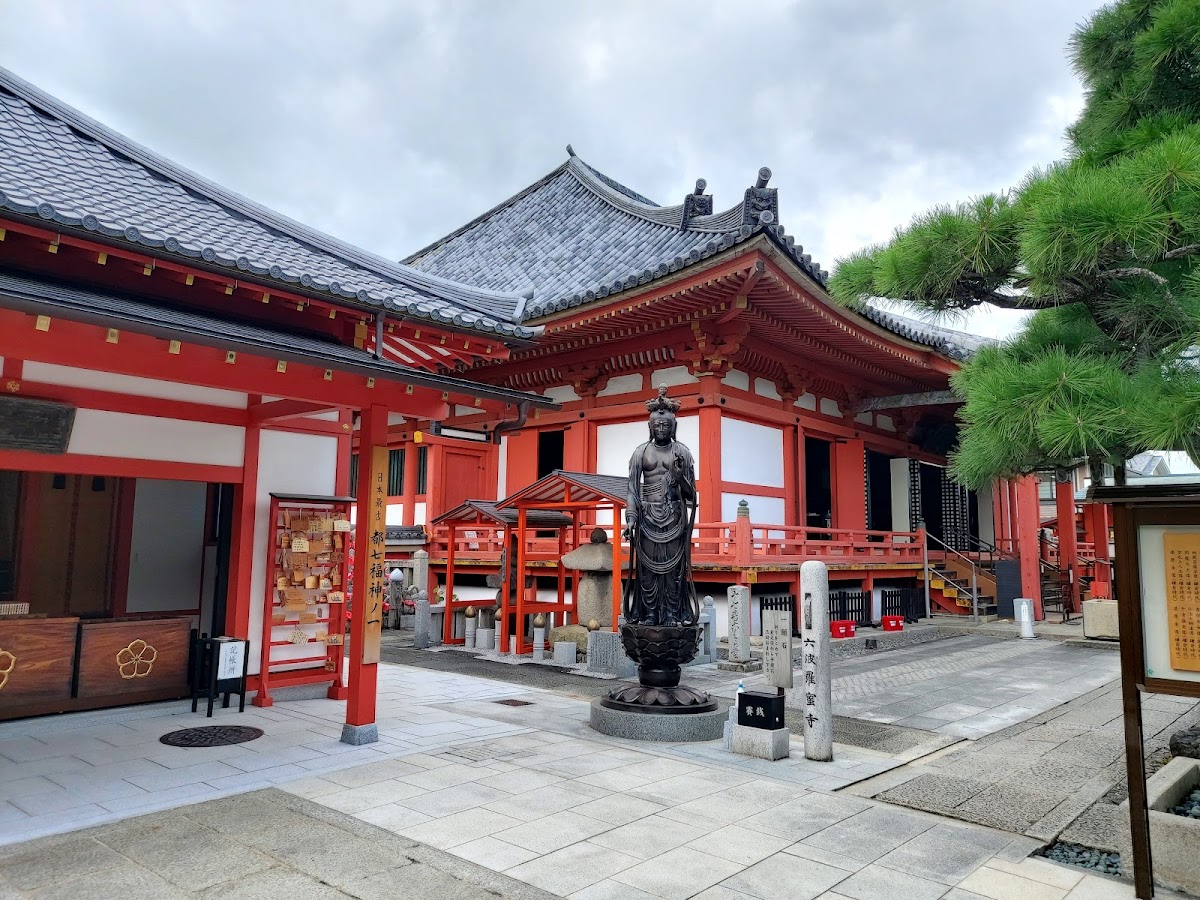
Located in Higashiyama Ward, Kyoto City, Rokuharamitsu-ji Temple is a historic temple founded in the mid-Heian period by Kūya Shōnin. It is the 17th temple of the Saigoku Thirty-Three Kannon Pilgrimage and is also known for enshrining Mi-nari-Kin Benzaiten, one of the Seven Lucky Gods of Kyoto. This article provides a detailed introduction to Rokuharamitsu-ji Temple, including its history, cultural assets, highlights within the temple grounds, and access information.
Overview and Basic Information of Rokuharamitsu-ji Temple
Rokuharamitsu-ji Temple belongs to the Chizan branch of the Shingon sect, and its mountain name is Fudarakusan. The principal image is the Eleven-Faced Kannon Bodhisattva, and it is a sacred site that has been visited by many pilgrims since ancient times, as the 17th temple of the Saigoku Thirty-Three Kannon Pilgrimage and the 15th temple of the Rakuyo Thirty-Three Kannon Pilgrimage.
The temple’s name, “Rokuharamitsu,” refers to the six practices for attaining enlightenment in Buddhism (generosity, morality, patience, diligence, meditation, and wisdom), and the temple was named to spread this teaching.
Basic Data
- Official Name: Fudarakusan Rokuharamitsu-ji Temple
- Sect: Shingon-shu Chizan-ha
- Principal Image: Eleven-faced Kannon Bodhisattva
- Founder: Kūya Shōnin
- Established: Tenryaku 5 (951)
- Location: Rokuro-chō, Higashiyama-ku, Kyoto City, Kyoto Prefecture
- Pilgrimage Site: 17th of the Saigoku Thirty-Three Kannon Pilgrimage, 15th of the Rakuyō Thirty-Three Kannon Pilgrimage, Kyoto Seven Lucky Gods (Benzaiten)
History of Rokuharamitsu-ji Temple
Founded by Kūya Shōnin
The history of Rokuharamitsu-ji Temple begins in Tenryaku 5 (951) when it was founded by Kōshō Kūya Shōnin, the second son of Emperor Daigo. Initially, it was called Saikō-ji Temple.
Kūya Shōnin was a Buddhist monk in the mid-Heian period, known as “Ichino Hijiri” (the Market Saint) and “Amida Hijiri” (the Amida Saint), and is famous for spreading the practice of chanting the Nembutsu (Buddhist invocation) among the common people. At that time, an epidemic was raging in Kyoto, causing great suffering to many. It is said that Kūya Shōnin himself carved an eleven-faced Kannon statue, placed it on a cart, and traveled through the city, chanting the Nembutsu and providing relief to the sick.
In 963 (Ōwa 3), Kūya Shōnin established a crematorium on the banks of the Kamo River, where he cremated and commemorated the bodies that had been left unattended. There are also anecdotes of him digging wells while chanting the Nembutsu and offering tea to the common people. Saikōji Temple served as the base for these charitable activities.
Renaming and Development to Rokuharamitsu-ji Temple
In 977 (Jōgen 2), Chūshin Shōnin, a monk of Enryaku-ji Temple, restored Saikōji Temple and changed its name to Rokuharamitsu-ji Temple. From this period onward, it developed as a branch temple of the Tendai sect.
In the late Heian period, this entire area came to be known as “Rokuhara,” becoming a political center with numerous residences of the Taira clan. The Taira clan, including Taira no Kiyomori, were devout followers of Rokuharamitsu-ji Temple, and the temple grounds expanded significantly. It is said that at that time, Rokuharamitsu-ji Temple was a large temple with vast grounds and many halls and pagodas.
Changes from the Kamakura Period Onward
In 1183 (Juei 2), when the Taira clan fled the capital, many residences and halls in Rokuhara were destroyed by fire. However, the main hall escaped destruction and continued to exist as a center of faith.
During the Kamakura period, the Kamakura Shogunate established the Rokuhara Tandai to maintain order in Kyoto and monitor the imperial court, and this area once again became a politically important location.
In 1363 (Joji 2), the main hall was destroyed by fire, but it was quickly rebuilt. The current main hall was built during this period and is a valuable historical structure that preserves the Kamakura-style architecture.
Even after the Muromachi period, Rokuharamitsu-ji Temple was maintained as one of the 33 temples of the Saigoku Kannon Pilgrimage and as an important temple in the capital. During the Edo period, it converted from the Tendai sect to the Shingon Chizan sect, and remains so to this day.
In 1969, the main hall was designated a National Important Cultural Property, officially recognizing its historical value.
Highlights of the Temple Grounds
Main Hall
The main hall of Rokuharamitsu-ji Temple is a building rebuilt in 1363 and is a valuable historical structure that strongly retains the architectural style of the Kamakura period. It is designated a National Important Cultural Property.
Inside the main hall is enshrined the principal image, a standing statue of the Eleven-Headed Kannon Bodhisattva. This Kannon statue is considered a hidden Buddha and is not usually on public display, but it is sometimes unveiled on special occasions. The principal image is a statue said to have been carved by Kūya Shōnin himself, and it attracts deep devotion.
The main hall is built in the irimoya style with a tiled roof, and is a magnificent structure with five bays on the front and six bays on the sides. The interior pillars and beams exhibit the powerful structure characteristic of the Kamakura period.
Treasure Hall
The Rokuharamitsu-ji Temple Treasure Hall houses and displays numerous valuable cultural artifacts, including national treasures and important cultural properties. In particular, it boasts a rich collection of excellent Buddhist sculptures from the Heian to Kamakura periods, making it an important facility for studying the history of Japanese sculpture.
Main Collections:
- Standing Statue of Kūya Shōnin (Important Cultural Property): Created by Kōshō, the fourth son of Unkei, a Buddhist sculptor of the Kamakura period. It is a masterpiece known for its unique depiction of Kūya Shōnin chanting the Nembutsu, with six Amida Buddhas emerging from his mouth.
- Standing Jizo Bodhisattva Statue (Important Cultural Property): This statue, attributed to Unkei, is a masterpiece possessing the power and realism characteristic of Kamakura period sculpture.
- Seated Statue of Taira no Kiyomori (Important Cultural Property): A portrait sculpture believed to have been created shortly after the death of Taira no Kiyomori. Depicted holding a sutra scroll, it is a valuable historical document conveying the appearance of a nobleman of that time.
- Seated Statue of Yakushi Nyorai (Important Cultural Property): A work from the late Heian period, exhibiting the elegant style of Jocho.
- Standing Statues of the Four Heavenly Kings (Important Cultural Property): Statues guarding the four corners of the main hall, dating from the Heian period.
These cultural properties can be viewed in the treasure hall after paying an admission fee.
Kyoto’s Seven Lucky Gods – Mi-nari-Kin Benzaiten
Rokuharamitsu-ji Temple is known as a temple that enshrines Benzaiten, one of Kyoto’s Seven Lucky Gods. This Benzaiten is called “Minarukane Benzaiten” and is believed to bring good fortune and wealth.
The Benzaiten Hall is located in a corner of the temple grounds and attracts many visitors. It is especially crowded during the New Year’s Seven Lucky Gods pilgrimage.
The name Minarukane Benzaiten comes from the belief that visiting on the Day of the Snake brings good fortune, and the temple is particularly busy on these days.
Money-Washing Benzaiten
Within the temple grounds is also the Money-Washing Benzaiten, where it is believed that washing money will increase one’s financial luck. Be sure to visit this shrine as well.
Fortune-Telling Omikuji (Fortune Slip)
At Rokuharamitsu-ji Temple, the “Fortune-Telling Omikuji” (fortune slip) is popular. Visitors fill in their birth date and draw a detailed fortune slip predicting their luck for the year, making it a favorite among many visitors.
Cultural Properties of Rokuharamitsu-ji Temple
Rokuharamitsu-ji Temple houses numerous valuable cultural properties designated as National Treasures and Important Cultural Properties.
National Important Cultural Properties
Buildings:
- Main Hall (Rebuilt in 1363)
Sculptures:
- Wooden Standing Statue of Kūya Shōnin (by Kōshō, Kamakura period)
- Wooden Standing Statue of Jizō Bodhisattva (attributed to Unkei, Kamakura period)
- Wooden Seated Statue of Taira no Kiyomori (Kamakura period)
- Wooden Seated Statue of Yakushi Nyorai (Heian period)
- Wooden Standing Statues of the Four Heavenly Kings (Heian period)
- Numerous other Buddhist statues
These cultural properties occupy an important position in the history of Japanese Buddhist art and are highly valued by researchers and art lovers alike.
The Tradition of Oubuku-cha (Imperial Tea)
At Rokuharamitsu-ji Temple, Oubuku-cha is served to visitors for several days starting from New Year’s Day each year. This is a traditional event stemming from the story of Kūya Shōnin offering tea to the common people to ward off disease.
Oubuku-cha is an auspicious tea containing pickled plums and knotted kelp, and is drunk to pray for good health throughout the year. The name “Oubuku” comes from the legend that Emperor Murakami was cured of illness after drinking this tea.
When visiting Rokuharamitsu-ji Temple during the New Year, be sure to try this traditional Oubuku-cha.
Annual Events
Rokuharamitsu-ji Temple holds various events throughout the year.
- January 1st-3rd: Imperial Tea Ceremony
- February Setsubun: Setsubun Festival
- August 8th-10th, 16th: Mantokai (Lantern Festival)
- December 13th-31st: Kuya Odoriyaku Nenbutsu Ritual (Important Intangible Folk Cultural Property)
In particular, the Kuya Odoriyaku Nenbutsu in December is a Nenbutsu dance said to have been started by Saint Kuya, and is designated as an Important Intangible Folk Cultural Property of Japan. In this event, monks dance while chanting Nenbutsu, passing on the teachings of Saint Kuya to the present day.
As the 17th Temple of the Saigoku Thirty-Three Kannon Pilgrimage
Rokuharamitsu-ji Temple is the 17th temple of the Saigoku Thirty-Three Kannon Pilgrimage, and is visited by many pilgrims. The Saigoku Thirty-Three Kannon Pilgrimage is a pilgrimage route of Kannon temples mainly in the Kinki region, and is known as the oldest pilgrimage route in Japan. ### Waka Poem
“Even though they are heavy, the five sins will surely be erased, for I am a pilgrim visiting Rokuharamitsu-ji Temple.”
This waka poem conveys the meaning that even the five heavy sins will be erased through the teachings of the Six Paramitas.
Preceding and Following Temples
- Temple No. 16: Kiyomizu-dera Temple (Higashiyama Ward, Kyoto City)
- Temple No. 17: Rokuharamitsu-ji Temple (This Temple)
- Temple No. 18: Choho-ji Temple (Rokkakudo, Nakagyo Ward, Kyoto City)
Rokuharamitsu-ji Temple is within walking distance of Kiyomizu-dera Temple, and pilgrims visit it by walking up the slopes of Higashiyama.
Access Method
Using public transportation is the most convenient way to access Rokuharamitsu-ji Temple.
Access by Train and Bus
If using Keihan Railway:
- Get off at Kiyomizu-Gojo Station on the Keihan Main Line, approximately 7 minutes on foot.
If using City Bus:
- Get off at Kiyomizu-do bus stop on the Kyoto City Bus, approximately 7 minutes on foot.
- Get off at Gojo-zaka bus stop on the Kyoto City Bus, approximately 10 minutes on foot.
If using JR:
- From JR Kyoto Station, take City Bus Route 206 or 100 and get off at Kiyomizu-do, approximately 7 minutes on foot.
Access by Car
Approximately 20 minutes from Kyoto East IC on the Meishin Expressway, or approximately 25 minutes from Kyoto South IC. However, there is no dedicated parking lot at the temple, so you will need to use nearby coin-operated parking lots. Especially during peak tourist season and on weekends, surrounding roads can be congested, so using public transportation is recommended.
Access from Nearby Tourist Attractions
- From Kiyomizu-dera Temple: Approximately 15 minutes on foot
- From Yasaka Shrine: Approximately 10 minutes on foot
- From Kennin-ji Temple: Approximately 5 minutes on foot
Located within walking distance of major tourist attractions in the Higashiyama area, making it easy to incorporate into your sightseeing route.
Visiting Information
Visiting Hours
- Regular Season: 8:00 AM – 5:00 PM (Last entry at 4:30 PM)
- Open Year-Round
Admission Fee
- Main Hall: Free
- Treasure Hall: Adults 600 yen, Junior/Senior High School Students 500 yen, Elementary School Students 400 yen
At the Treasure Hall, you can view valuable cultural artifacts, including the standing statue of Kūya Shōnin.
Contact Us
- Phone: 075-561-6980
- Address: 81-1 Rokuro-cho, Higashiyama-ku, Kyoto City, Kyoto Prefecture 605-0813
Nearby Attractions
Many of Kyoto’s most famous tourist spots are located around Rokuharamitsu-ji Temple.
Kiyomizu-dera Temple
A representative Kyoto temple registered as a World Heritage Site. Located about a 15-minute walk from Rokuharamitsu-ji Temple, it is a popular destination for tourists visiting both.
Kennin-ji Temple
Kyoto’s oldest Zen temple, famous for its “Fujin Raijin-zu Byobu” (Folding Screen of the Wind and Thunder Gods) by Tawaraya Sōtatsu (a replica). Located about a 5-minute walk from Rokuharamitsu-ji Temple.
Yasaka Shrine
A representative Kyoto shrine known for the Gion Festival. Located about a 10-minute walk from Rokuharamitsu-ji Temple.
Kodai-ji Temple
A temple founded by Kita-no-Mandokoro Nene, the principal wife of Toyotomi Hideyoshi. Popular for its beautiful gardens and nighttime illuminations.
Gion Area
Gion, known as Kyoto’s geisha district, is within walking distance of Rokuharamitsu-ji Temple. Enjoy traditional streetscapes and Kyoto cuisine.
The Charm and Points to Note When Visiting Rokuharamitsu-ji Temple
The greatest charm of Rokuharamitsu-ji Temple lies in the fact that the spirit of the extraordinary religious figure, Kūya Shōnin, still lives on today. Kūya Shōnin’s compassionate heart, prioritizing the salvation of ordinary people rather than the nobility or those in power, continues to touch the hearts of many people today.
The standing statue of Kūya Shōnin in the treasure hall is a masterpiece that visually expresses this spirit, and is well worth seeing in person. The six Amida Buddhas emerging from its mouth are said to represent the six characters of the Buddhist chant “Namu Amida Butsu,” and its unique method of expression is unparalleled worldwide.
Furthermore, this area was a stage for history from the Heian period to the Kamakura period, and has deep connections to historical figures such as Taira no Kiyomori, making it a fascinating place for history buffs.
For pilgrims of the Saigoku Thirty-Three Kannon Pilgrimage, its convenient location, within walking distance of Kiyomizu-dera Temple, is also appealing. It’s easy to incorporate into sightseeing routes in the Higashiyama area, making it a temple you should definitely visit when sightseeing in Kyoto.
Manners and Precautions for Visiting
When visiting Rokuharamitsu-ji Temple, please note the following:
- Photography: Photography is prohibited inside the main hall and the treasure hall. While photography of the temple grounds is permitted, please be considerate of other visitors.
- Dress Code: There are no specific dress code regulations, but as a basic courtesy when visiting a temple, please avoid revealing clothing.
- Quietness: Please pray quietly inside the main hall and avoid disturbing other visitors.
- Goshuin (Temple Stamp): You can obtain the Goshuin for the 33 Kannon Pilgrimage of Saigoku at the main hall, and the Goshuin for the Seven Lucky Gods of Kyoto at the Benzaiten Hall. Don’t forget to bring your Goshuincho (stamp book).
- Visiting Hours: The Treasure Hall reception closes at 4:30 PM, so please allow ample time for your visit.
Summary
Rokuharamitsu-ji Temple is a representative ancient temple of Kyoto’s Higashiyama district, where the compassionate spirit of Kūya Shōnin still lives on. As the 17th temple of the 33 Kannon Pilgrimage of Saigoku, and as a temple enshrining Benzaiten, one of the Seven Lucky Gods of Kyoto, it is beloved by many visitors.
With its long history dating back to the Heian period, precious cultural assets of national treasure class, and traditional events that convey the teachings of Kūya Shōnin, there are countless sights to see. Visiting it along with other nearby tourist spots such as Kiyomizu-dera Temple and Yasaka Shrine will allow you to gain a deeper understanding of Kyoto’s history and culture.
Rokuharamitsu-ji Temple is a representative ancient temple of Kyoto’s Higashiyama district, where the compassionate spirit of Kūya Shōnin still lives on. When you visit Kyoto, be sure to stop by Rokuharamitsu-ji Temple to experience the spirit of Kūya Shōnin, admire its precious cultural treasures, and pay your respects to Benzaiten, one of the Seven Lucky Gods of Kyoto, and enjoy a truly enriching experience.