Complete Guide to Chotokuji Temple: A Thorough Explanation of the History, Characteristics, and Visiting Information of Chotokuji Temples Nationwide
There are several temples named “Chotokuji” throughout Japan, each with its own unique history and characteristics. This article comprehensively explains the history of Chotokuji temples in various locations, from their origins to the present day, differences in sects, and visiting information.
What is Chotokuji Temple?: Origin of the Name and Nationwide Distribution
The temple name “Chotokuji” often originates from the Chotoku era (995-999) in the mid-Heian period. It is an auspicious name with a Buddhist meaning of “accumulating virtue for a long time,” and has been adopted throughout Japan.
Currently, the following temples are known as major Chotokuji temples in Japan:
- Chotokuji Temple in Ichinoseki City, Iwate Prefecture (Jishu sect)
- Chotokuji Temple in Sakyo-ku, Kyoto City, Kyoto Prefecture (Jodo sect)
- Chotokuji Temple in Fussa City, Tokyo (Rinzai sect, Kenchoji branch)
- Chotokuji Temple in Shibata City, Niigata Prefecture (Shinshu Otani branch)
- Chotokuji Temple in Setagaya-ku, Tokyo (Jodo Shinshu Honganji branch)
- Chotokuji Temple in Tsuruoka City, Yamagata Prefecture (Jodo sect)
Each belongs to a different sect and possesses unique characteristics deeply intertwined with the history of its region.
Chotokuji Temple, Futaizan, Ichinoseki City, Iwate Prefecture (Jishu sect)
About Chotokuji Temple, Futaizan, Ichinoseki City, Iwate Prefecture
Located in Horoha, Fujisawa-cho, Ichinoseki City, Iwate Prefecture, Chotokuji Temple is a historically important temple belonging to the Jishu sect. Its official name is “Futaizan Chotokuji,” and it is known as a valuable temple that preserves the teachings of the Jishu sect.
The Jishu sect was founded by Ippen Shonin during the Kamakura period and is characterized by its “Odori Nenbutsu” (dancing nenbutsu), teaching that anyone can attain rebirth in paradise by chanting “Namu Amida Butsu.”
History as a Temple with Christian Connections
The most noteworthy historical feature of Chotokuji is its connection to hidden Christians during the early Edo period’s ban on Christianity.
In the former Sendai domain (Ogome, Yonekawa, and Magome), many Christians were martyred due to the shogunate’s harsh persecution. During such a harsh era, Chotokuji accepted and protected hidden Christians as parishioners, knowing they were hidden Christians.
This fact is still attracting attention from researchers and history enthusiasts today as a valuable historical example demonstrating religious tolerance and humanitarian spirit. Chotokuji Temple is a temple with an important legacy indispensable to understanding the history of Christianity in Japan.
Chotokuji Somin Festival and Annual Events
Every year, Chotokuji Temple holds the “Chotokuji Somin Festival,” a traditional local event. The Somin Festival is a traditional festival passed down in the Tohoku region, a folk event praying for good health and a bountiful harvest.
A promotional video was even produced on March 3, 2024, demonstrating a proactive approach to modern information dissemination while preserving tradition. This festival has become an important cultural event that strengthens the bonds of the local community.
Information on the Sanja Matsuri Festival
Chotokuji Temple also holds the Sanja Matsuri Festival. The Sanja Matsuri is an event that strongly retains the tradition of syncretism of Shinto and Buddhism, and is a unique form of festival that has developed in connection with local shrines.
About Doll Memorial Services
Chotokuji Temple also accepts doll memorial services. By offering a memorial service for cherished dolls and stuffed animals, this provides an opportunity to cultivate a sense of respect for possessions. Doll memorial services can be booked in advance, and a respectful service will be conducted.
Information on Goshuin (Temple Seals)
Goshuin are available to visitors. Reflecting the characteristics of the Jishu sect, these goshuin are popular as a memento of the visit. You can request a goshuin at the main hall after your visit.
Access Information
Address: 18 Uwada, Horoha, Fujisawa-cho, Ichinoseki City, Iwate Prefecture 029-3521
Phone: 0191-63-3988
Transportation Access:
- Approximately 40 minutes by taxi from Ichinoseki Station on the Tohoku Shinkansen
- Approximately 50 minutes by taxi from Kurikoma-Kogen Station on the Tohoku Shinkansen
Public transportation access is somewhat inconvenient, so using a private car or taxi is recommended.
Keijuan
Within the grounds of Chotoku-ji Temple is Keijuan, a facility used as a peaceful space to calm the mind.
Chotoku-ji Temple, Sakyo-ku, Kyoto City – Jodo Sect
Chotoku-ji Temple, Kyoto, Famous for its Okame Cherry Blossoms
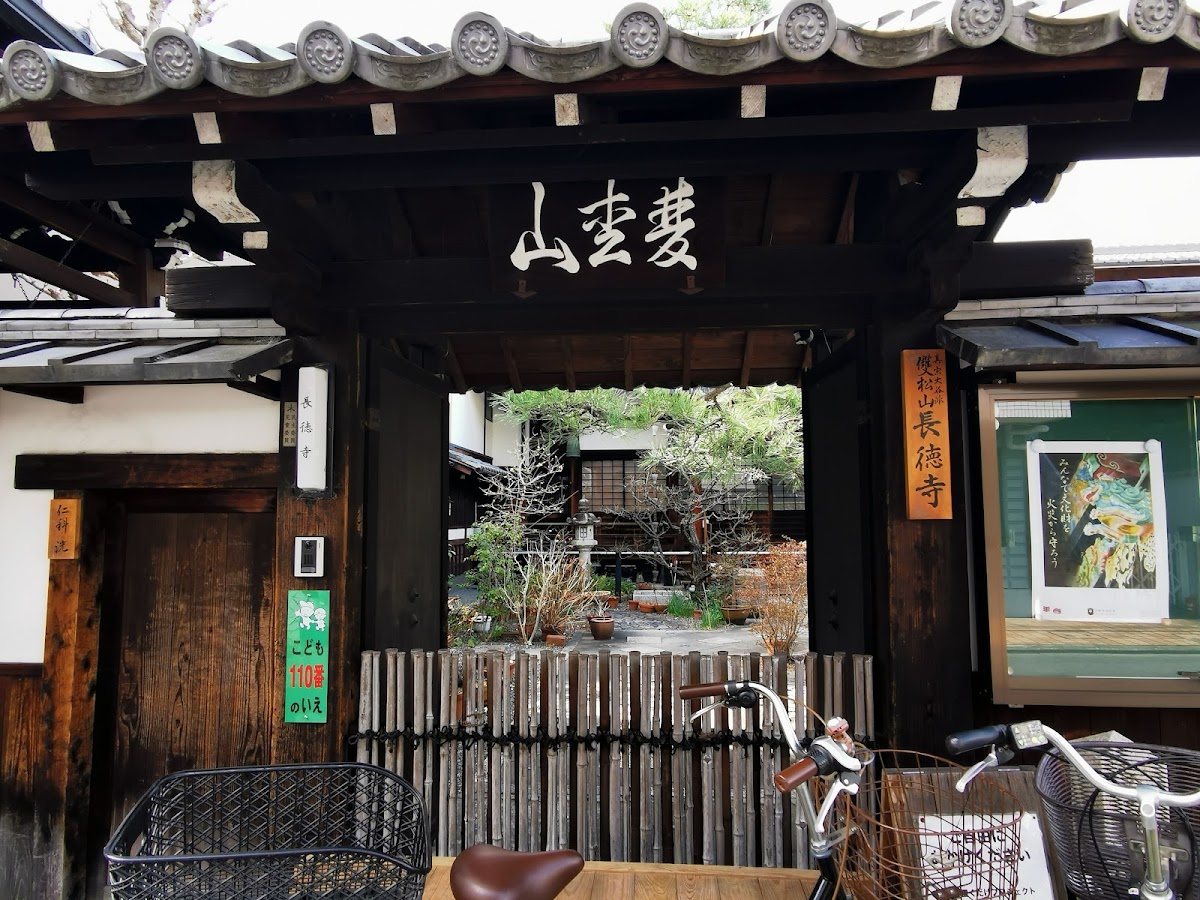
Located in Demachiyanagi, Sakyo-ku, Kyoto City, Chotoku-ji Temple is a Jodo sect temple nationally known for its “Okame Cherry Blossoms.” Its convenient location near Demachiyanagi Station is one of its attractions.
One of the Three Temples of Sunagawa
Chotoku-ji Temple is one of three temples known as the “Three Temples of Sunagawa,” due to the Sunagawa stream that once flowed behind it and emptied into the Kamo River. The other two are Shōjō-in and Jōrin-ji, which have supported the Buddhist culture of this region.
History and Characteristics of Okame Cherry Blossoms
The Okame cherry blossoms in front of the main gate of Chotoku-ji Temple are special, as they herald the arrival of spring in Kyoto.
Okame cherry blossoms are a cultivated variety created in 1948 by British cherry blossom researcher Mr. Ingram, through crossbreeding the Taiwan cherry (Prunus campanulata) and the Mamezakura cherry (Prunus incisa). The most distinctive feature of this cherry blossom is that it blooms earlier than other cherry blossoms in Kyoto City, in early March.
The sight of its branches covered in deep pink blossoms is breathtaking, attracting many visitors every year. Because it reaches full bloom before the Somei Yoshino cherry blossoms, it is cherished by locals as “the harbinger of spring in Kyoto.”
Visiting Information and Access
Location: Demachiyanagi, Sakyo-ku, Kyoto City
Nearest Station: A short walk from Demachiyanagi Station on the Keihan Railway
Admission: Free entry to the grounds (Okame cherry blossoms are in full bloom in early March)
A visit along the Kamo River is highly recommended.
Chotoku-ji Temple, Rinzai Zen Kencho-ji School, Fussa City, Tokyo
A historic temple in Fussa with over 1000 years of history
Located in Fussa City, Tokyo, Chotoku-ji Temple belongs to the Rinzai Zen Kencho-ji School and its official name is “Gyokuunzan Chotoku-ji.” As a historic temple boasting over 1000 years of history, it has been a center of faith in the region.
Beautiful gardens and seasonal flowers
One of Chotoku-ji Temple’s greatest attractions is its beautifully maintained Japanese garden. The garden, where you can enjoy seasonal flowers, is open to the public as a relaxing space where you can stroll to your heart’s content.
From cherry blossoms and plum blossoms in spring, to fresh greenery in summer, autumn leaves in fall, and camellias in winter, the garden displays different expressions with each season, providing tranquility to visitors.
A temple you can easily drop by
Chotoku-ji Temple operates with the concept of being a “temple rich in nature that you can easily drop by,” and is open to the local community. Visitors are welcome to attend not only the temple but also the annual events and activities.
Regular Zen meditation sessions and sutra copying sessions are held, offering opportunities for Buddhist experiences even for beginners.
Access and Visiting Information
Location: Fussa City, Tokyo
Sect: Rinzai Zen Kenchoji School
Detailed access information and event schedules can be found on the official website.
Niigata Prefecture, Shibata City – Shinshu Otani School, Chotokuji Temple
Temple Associated with Horibe Yasubei
Chotokuji Temple, located in Shibata City, Niigata Prefecture, is a Jodo Shinshu (Shinshu Otani School) temple. A notable feature of this temple is its connection to Horibe Yasubei, one of the 47 Ronin of Ako, famous from the Chushingura story.
Horibe Yasubei is known as a swordsman from Shibata and is still remembered as a historical hero of the region. Chotokuji Temple is a popular destination for history buffs due to its connection to Yasubei.
The Teachings of the Shinshu Otani School
The Shinshu Otani School (Higashi Honganji) is a branch of Jodo Shinshu Buddhism that carries on the teachings of Shinran Shonin. It teaches that through the recitation of “Namu Amida Butsu,” one can believe in the original vow of Amida Buddha and that all people will be equally saved.
At Chotokuji Temple, sermons and Buddhist services are held to convey the teachings of Shinran Shonin to the present day.
Visiting and Access
Location: Shibata City, Niigata Prefecture
Sect: Shinshu Otani School (Jodo Shinshu)
Information is also available on their Facebook page, where you can find information about events and memorial services.
Chotoku-ji Temple, Setagaya Ward, Tokyo (Jodo Shinshu Honganji School)
An Ancient Temple Associated with the Lord of Setagaya Castle
Located in Kamikitazawa, Setagaya Ward, Chotoku-ji Temple is a temple of the Jodo Shinshu Honganji School (Nishi Honganji). Its history dates back to the Muromachi period.
In 1488 (Chokyo 2), Kira Naritaka, the lord of Setagaya Castle, founded the temple in Tsurumaki, Setagaya, Ebara District. Later, it moved to its current location in Kamikitazawa and has served as the local family temple for over 500 years.
Cemetery and Perpetual Memorial Services
Currently, Chotoku-ji Temple manages its cemetery and provides perpetual memorial services. Despite being in the heart of Tokyo, it is chosen as a temple where people can perform ancestral memorial services in a peaceful environment.
For information on cemetery availability and fees, please contact the temple directly. Its convenient access is also highly regarded among temple cemeteries in Tokyo.
Access Information
Location: Kamikitazawa, Setagaya-ku, Tokyo
Nearest Station: Within walking distance from Kamikitazawa Station on the Keio Line
Sect: Jodo Shinshu Honganji-ha
Chotoku-ji Temple, Tsuruoka City, Yamagata Prefecture (Jodo Sect)
Legend of the Amida Buddha Statue
Chotoku-ji Temple in Tsuruoka City, Yamagata Prefecture, has a mystical founding legend.
During the Jowa era (1345-1349), a man named Gon’nai Masasada, a resident of Gokusawa in Dewa Province, was out playing in the mountains when he discovered a tree with a glowing base on the mountain south of the river. Intrigued, he approached it and discovered it was a statue of Amida Buddha.
Masada was deeply moved by this miraculous event, moved his residence to that location, and began to enshrine the statue. Later, he settled in the present location and named the temple Chotoku-ji.
Chotoku-ji Temple as a Tourist Spot
Chotoku-ji Temple, featured on Yamagata Prefecture’s official tourism website, welcomes tourists as a historical temple in the Shonai region.
As a valuable cultural asset that conveys the region’s history and faith, it is part of Tsuruoka City’s tourist route.
Etiquette and Manners for Visiting Chotoku-ji Temple
Basic Temple Visiting Etiquette
Regardless of which Chotoku-ji temple you visit, it is important to observe basic temple visiting etiquette:
- Bow at the Temple Gate: Bow before entering the temple grounds.
- Purification at the Water Basin: Purify your hands and mouth before praying.
- Praying at the Main Hall: Join your hands in prayer and pray quietly.
- Refrain from Talking: Be quiet on the temple grounds.
- Photography: Take photographs only in permitted areas.
Differences by Sect
Since Chotoku-ji temples belong to different sects, there are slight differences in temple visiting etiquette:
- Jodo-shu/Jodo Shinshu: Chant the Nembutsu “Namu Amida Butsu”.
- Ji-shu: Chant the Nembutsu while praying.
- Rinzai-shu: Visiting with a meditative or Zen-like mindset is recommended.
However, for general visitors, the most important thing is to sincerely put your hands together in prayer.
Goshuin Pilgrimage and Chotoku-ji Temple
The Meaning of Goshuin
Goshuin are seals and calligraphic inscriptions given as proof of visiting a temple. They are not merely stamp rallies, but should be treated as cherished records of your visit.
Goshuin at Chotoku-ji Temple
Many Chotoku-ji temples offer goshuin. When receiving a goshuin:
- First, complete your prayers at the main hall.
- Request a goshuin at the goshuin office or temple office.
- Open your goshuin book and hand it over.
- Pay the goshuin fee (usually 300-500 yen).
- Receive it respectfully and express your gratitude.
Each Chotoku-ji temple’s goshuin reflects the unique characteristics of the temple, making it one of the joys of goshuin pilgrimage.
Annual Events at Chotokuji Temple
Main Buddhist Events
Each Chotokuji temple holds annual events according to its sect:
Spring Events:
- Spring Equinox Ceremony (March)
- Flower Festival (Buddha’s Birthday Ceremony, April 8th)
- Blooming of Okame Cherry Blossoms (Kyoto, early March)
Summer Events:
- Obon Festival (August)
- Segaki Memorial Service
Autumn Events:
- Autumn Equinox Ceremony (September)
- Ten Nights Memorial Service (Jodo Sect)
Winter Events:
- New Year’s Eve Bell Ringing (December 31st)
- Shusho-e Ceremony (January)
Special Events
- Chotokuji Somin Festival (Iwate, March)
- Sanja Festival (Iwate)
- Doll Memorial Service (Accepting applications at any time)
The event schedule may vary from year to year, so it is recommended to check with each temple in advance if you wish to participate.
Chotoku-ji Temple Today: Engagement with the Community
As a Community Center
Currently, Chotoku-ji temples in various locations serve not only as religious facilities but also as centers of local communities.
In addition to traditional roles such as memorial services and funerals, the following activities are also carried out:
- Buddhist classes for children
- Experiential events such as Zen meditation and sutra copying sessions
- Providing a venue for local cultural activities
- A place of relaxation for the elderly
- Opening the temple as a tourist resource
Temple Management in the Digital Age
Modern Chotoku-ji temples are disseminating information in line with the times while preserving tradition:
- Information provision on the official website
- Event announcements on social media (Facebook, etc.)
- Implementation of online memorial services
- Production of promotional videos
Through these efforts, efforts are being made to convey the teachings of Buddhism and the charm of the temple to younger generations.
Access to Chotoku-ji Temple and Planning Your Visit
Efficient Visiting Route
If you wish to visit multiple Chotoku-ji temples, it is most efficient to visit them by region:
Kanto Area:
- Chotoku-ji Temple, Fussa City, Tokyo
- Chotoku-ji Temple, Setagaya Ward, Tokyo
Kyoto Area:
- Chotoku-ji Temple, Sakyo Ward, Kyoto City (Recommended during the Okame cherry blossom season)
Tohoku Area:
- Chotoku-ji Temple, Ichinoseki City, Iwate Prefecture
- Chotoku-ji Temple, Tsuruoka City, Yamagata Prefecture
Best Time to Visit
Spring (March-May): Okame cherry blossoms in bloom (Kyoto), spring events
Summer (June-August): Fresh green gardens, Obon festival
Autumn (September-November): Autumn leaves, autumn events
Winter (December-February): Tranquil temple grounds, New Year’s Eve bell ringing
Each season has its own unique charm, so choose your visiting time according to your purpose.
Buddhist Teachings Learned at Chotoku-ji Temple
Characteristics of Each Buddhist Sect
Through Chotoku-ji Temple, you can learn about the diversity of Japanese Buddhism:
Jodo-shu/Jodo Shinshu: A teaching based on belief in Amida Buddha’s original vow, believing that one can attain rebirth in the Pure Land through chanting the Buddha’s name.
Ji-shu: Characterized by the practice of “Odori Nenbutsu” (dancing chanting), emphasizing chanting the Buddha’s name at all times.
Rinzai-shu: A branch of Zen Buddhism that seeks to discern one’s true nature through seated meditation.
Each sect pursues the truth of Buddhism through different approaches, and Chotoku-ji Temple offers a valuable opportunity to experience this diversity.
The Significance of Buddhism in Modern Society
Chōtoku-ji Temple remains cherished in the community because Buddhist teachings continue to hold significance in modern society:
- Peace of Mind: A spiritual pillar in a stressful society
- View of Life and Death: The meaning of life and how to confront death
- Ethical Values: Compassion and kindness
- Community: A place for people to connect
These values are universal and transcend time, and Chōtoku-ji Temple serves as a place of practice.
Summary: The Diversity and Universality of Chōtoku-ji Temples
Chōtoku-ji temples throughout Japan, each with its own unique history and characteristics, share the common mission of transmitting Buddhist teachings to the modern age.
From its connection to the Christian history of Iwate, to the Okame cherry blossoms of Kyoto, the beautiful gardens of Tokyo, its ties to Horibe Yasubei of Niigata, its history dating back to the Muromachi period in Setagaya, and the legend of Amida Buddha in Yamagata, each Chōtoku-ji temple embodies the history and culture of its region.
Visiting a temple is more than just sightseeing; it’s a valuable experience that allows you to connect with Japan’s history, culture, and people’s faith. Through a visit to Chotoku-ji Temple, we, living in the modern age, can learn from the wisdom and spirituality of our ancestors.
We encourage you to visit a Chotoku-ji Temple near you, or one you’re traveling to, and experience its history and atmosphere firsthand. The time spent praying in the tranquil temple grounds will be a precious moment to escape the hustle and bustle of everyday life and find peace of mind.