
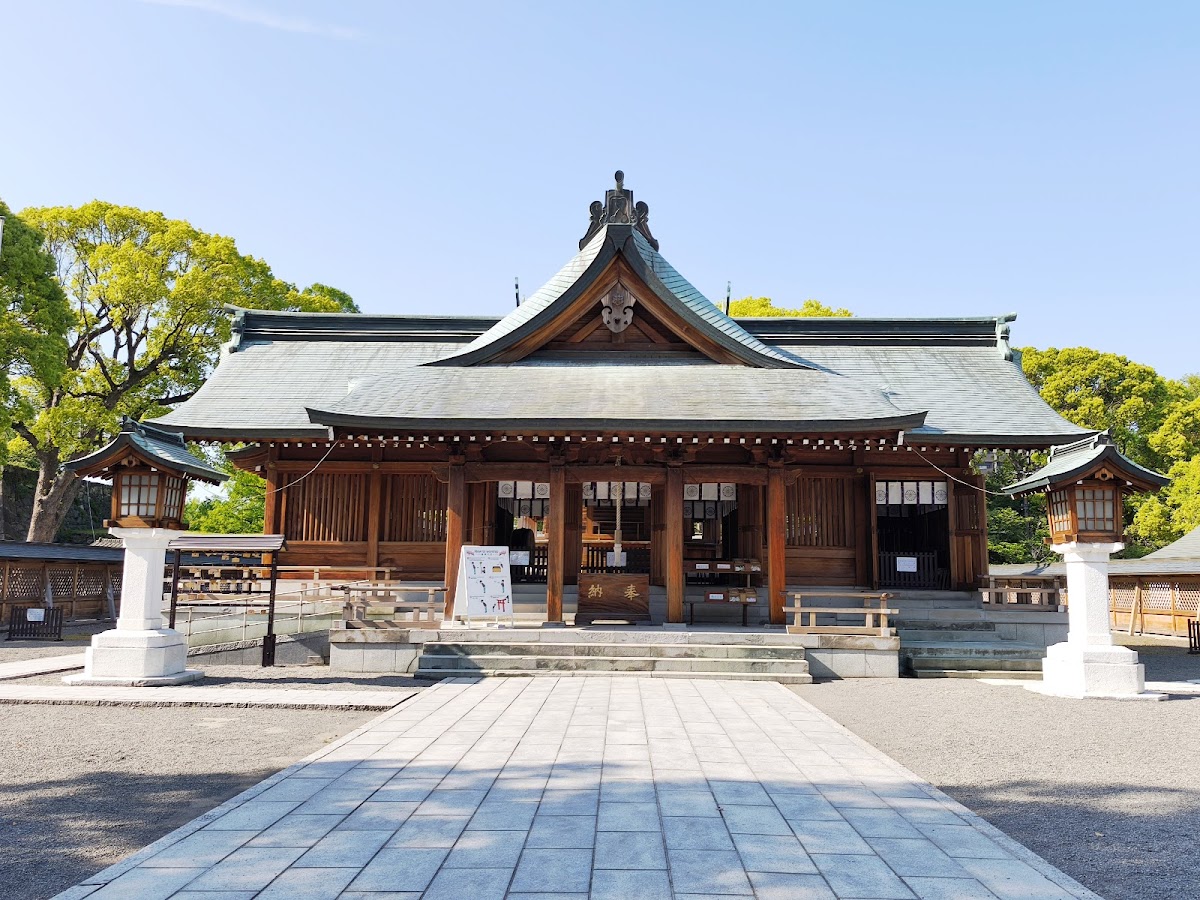
Complete Guide to Yatsushiro Shrine: History and Visiting Information for the Fifteen Shrines of the Kenmu Restoration, Dedicated to Prince Kanenaga, the Seisei Chushin (Commander-in-Chief of the Western Expedition)
What is Yatsushiro Shrine?
Yatsushiro Shrine is a Shinto shrine located in Nishimatsuejo-cho, Yatsushiro City, Kumamoto Prefecture. Its former shrine rank was Kanpei Chusha (a medium-ranking government-supported shrine). The main deity is Prince Kanenaga, a son of Emperor Go-Daigo, who served as Seisei Chushin and contributed greatly to the expansion of the Southern Court’s power in Kyushu. Prince Ryōsei, who succeeded Prince Kanenaga as Seisei Chushin after his death, is also enshrined there.
Affectionately known as “Shogun-san” (General) by locals, it is an important shrine that conveys the history of the Nanboku-chō period (Northern and Southern Courts period) as one of the Fifteen Shrines of the Kenmu Restoration. Built on the site of the main keep of Yatsushiro Castle, this shrine is a symbolic presence in Yatsushiro City, welcoming many worshippers and tourists.
Main Deity and Enshrined Deities
Prince Kaneyoshi (Main Deity)
Prince Kaneyoshi was born as the eighth son of Emperor Go-Daigo and was a member of the imperial family who descended to Kyushu as the Seisei Shogun (Commander-in-Chief of the Western Expedition) during the Nanboku-cho period (Northern and Southern Courts period). He began his activities in Kyushu around 1348 and fought fiercely against the Ashikaga army of the Northern Court led by Ashikaga Takauji.
With his exceptional military talent and political acumen, the prince succeeded in bringing most of Kyushu under the control of the Southern Court at one point. His achievements in establishing the Southern Court’s golden age, particularly in Higo Province (present-day Kumamoto Prefecture), are noteworthy in Japanese history.
Prince Kaneyoshi also established diplomatic relations with the Ming Dynasty (China) and received investiture from the Ming as “King Kaneyoshi of Japan,” demonstrating his international activities. These diplomatic relations laid the foundation for trade between Japan and the Ming Dynasty.
Prince Yoshinari (Enshrined Deity)
Prince Yoshinari was a son of Emperor Go-Murakami and a nephew of Prince Kaneyoshi. After Prince Kaneyoshi’s death in 1371, he inherited the position of Seisei Shogun (Commander-in-Chief of the Western Expedition) and worked to maintain the Southern Court’s influence in Kyushu.
By Prince Yoshinari’s time, the Southern Court’s power was already in decline, but the prince remained loyal to the Southern Court to the end, continuing to protect its strongholds in Kyushu. The achievements of both princes were highly praised again after the Meiji Restoration, when a historical view that recognized the Southern Court as legitimate was established.
History of Yatsushiro Shrine
Circumstances Leading to its Founding
The founding of Yatsushiro Shrine is deeply connected to the movement to honor the Southern Court after the Meiji Restoration. The Meiji government adopted the position that the Southern Court was legitimate and promoted the creation of shrines throughout the country to enshrine those who had served the Southern Court during the Nanboku-cho period.
Because Prince Kaneyoshi’s tomb was located at the foot of Yokodake Mountain in Yatsushiro City, the residents of Yatsushiro had long desired the establishment of a shrine dedicated to him since the early Meiji period. Local volunteers and former samurai of the Yatsushiro domain repeatedly petitioned the Meiji government for the establishment of a shrine designated as a government-supported shrine.
Establishment in the Meiji Era
In 1880 (Meiji 13), the establishment of Yatsushiro Shrine was finally officially approved. The following year, 1881 (Meiji 14), it was ranked as a government-supported shrine of the second rank, and the enshrinement ceremony was held that same year. The chosen site for the shrine was the former main keep of Yatsushiro Castle, which had been demolished due to the castle demolition decree.
Yatsushiro Castle was a flatland castle built during the time of Kato Kiyomasa and functioned as a strategic point in southern Higo Province throughout the Edo period. However, it lost its function as a fortress after the Meiji Restoration’s castle demolition decree. The establishment of Yatsushiro Shrine on this historically significant castle site held great significance for the region.
Positioning as one of the Fifteen Shrines of the Kenmu Restoration
Yashiro-no-miya Shrine is one of the Fifteen Shrines of the Kenmu Restoration, counted among a group of shrines commemorating Emperor Go-Daigo’s Kenmu Restoration and the Southern Court’s activities. The Fifteen Shrines of the Kenmu Restoration refer to 15 particularly important shrines related to the Southern Court that were established after the Meiji Restoration.
These shrines consist of shrines dedicated to emperors and loyal retainers of the Southern Court, including Yoshino-jingu Shrine (dedicated to Emperor Go-Daigo), Minatogawa Shrine (dedicated to Kusunoki Masashige), and Fujishima Shrine (dedicated to Nitta Yoshisada). Within this group, Yashiro-no-miya Shrine holds a significant position as a shrine dedicated to Prince Kaneyoshi, a central figure of the Southern Court’s influence in Kyushu.
Development Since the Modern Era
After the end of World War II in 1945, the system of government-supported shrines was abolished due to reforms in the shrine system. However, Yatsushiro Shrine continues to be revered by the local community as a special shrine of the Association of Shinto Shrines.
Even after the war, Yatsushiro Shrine has continued to play an important role as a spiritual center for the citizens of Yatsushiro and as the core of the historical space of the Yatsushiro Castle ruins. Currently, it is a place visited not only by local residents but also by many history enthusiasts and tourists.
Highlights of the Shrine Grounds
Shrine Architecture
The shrine buildings of Yatsushiro Shrine are valuable structures that retain the characteristics of shrine architecture from the Meiji era. The main hall, while based on the Shinmei-zukuri style, exhibits a majestic appearance that reflects the architectural techniques of the Meiji period.
The worship hall is the building that welcomes worshippers, and its cypress bark roof forms a beautiful curve. The overall layout of the shrine buildings takes advantage of the topography of the former Yatsushiro Castle keep, skillfully incorporating the unique characteristics of its castle ruins.
Integration with Yatsushiro Castle Ruins
The Yatsushiro Castle ruins, where Yatsushiro Shrine is located, are an important historical site designated by Kumamoto Prefecture. Parts of the castle’s stone walls and moats still remain, forming a unique landscape integrated with the shrine grounds.
Of particular note is the fact that a portion of Yatsushiro Castle’s outer wall still remains in front of the Starbucks Yatsushiro store. This stone wall is a valuable relic that conveys the atmosphere of the castle era, and visiting it together with Yatsushiro Shrine allows one to experience the continuity of history from the Edo period to the Meiji period.
Nature within the Shrine Grounds
The grounds of Yatsushiro Shrine are lush with ancient trees, creating a tranquil atmosphere despite its urban location. Many visitors come, especially during the cherry blossom season in spring, the fresh greenery in early summer, and the autumn foliage season.
The shaded areas within the shrine grounds are a popular place for citizens to relax, and people can be seen enjoying walks and jogs. A key characteristic of Yatsushiro Shrine is that, while being a historical space, it also functions as a center of the modern local community.
Annual Festival and Events
Annual Festival
The annual festival of Yatsushiro Shrine is held every year on October 11th. This day is the most important festival, commemorating the virtues of Prince Kaneyoshi and celebrating his achievements. During the festival, solemn rituals are performed by Shinto priests, and local officials and devotees attend.
On the day of the festival, in addition to traditional Shinto rituals, performances by local cultural groups are sometimes held, making it both a religious event and a platform for showcasing local culture.
New Year’s Visit
Many Yatsushiro citizens visit Yatsushiro Shrine for their first shrine visit of the new year. The New Year’s visit to Yatsushiro Shrine, affectionately known as “Shogun-san,” is a traditional local event, and the shrine grounds are bustling with families and young people.
From New Year’s Day to the third day, the shrine grounds are lively with worshippers seeking special amulets and Goshuin (shrine stamps). The sight of people praying for peace in the new year and prosperity in the region demonstrates that Yatsushiro Shrine remains a spiritual pillar of the community even today.
Shichi-Go-San
In autumn, many families visit the shrine for Shichi-Go-San (a traditional Japanese rite of passage for children). Shichi-Go-San, a celebration praying for the healthy growth of children, is an important annual event at Yatsushiro Shrine.
Commemorative photos taken on the shrine grounds and the smiles of children in their festive attire breathe new life into this historic shrine. Shichi-Go-San at the shrine grounds, with its historical background as the site of Yatsushiro Castle, will surely create special memories for families.
Differences between Yatsushiro-gu Shrine and Yatsushiro Shrine (Myoken-gu Shrine)
Visitors to Yatsushiro City often confuse Yatsushiro-gu Shrine and Yatsushiro Shrine (Myoken-gu Shrine). These two are completely separate shrines, each with distinct histories and characteristics.
About Yatsushiro Shrine (Myoken-gu Shrine)
Yatsushiro Shrine, commonly known as “Myoken-gu Shrine,” has a much older history than Yatsushiro-gu Shrine, dating back to 680 AD during the Asuka period when it was established at Takehara no Tsu. It is the largest shrine in Yatsushiro, boasting a history of over 1300 years.
Every November, Yatsushiro Shrine holds the “Myoken Festival,” a grand festival considered one of Kyushu’s three major festivals. This festival is a nationally designated Important Intangible Folk Cultural Property and is also registered as a UNESCO Intangible Cultural Heritage under the “Mountain, Float, and Procession Festivals.”
Relationship between the two shrines
While Yatsushiro-gu Shrine is a relatively new shrine, founded during the Meiji era, Yatsushiro Shrine (Myoken-gu) is a historical shrine with a history dating back to ancient times. Yatsushiro-gu Shrine has a strong character as a sacred shrine dedicated to members of the Southern Court’s imperial family, while Yatsushiro Shrine has been widely revered as the local tutelary deity.
Both shrines are important representative shrines of Yatsushiro City, but their origins, enshrined deities, and historical backgrounds differ significantly. Visiting both shrines when you come to Yatsushiro will allow you to understand the multifaceted history of Yatsushiro from ancient times to the modern era.
Transportation Access
Access by Public Transportation
Using JR Kyushu:
- Approximately 15 minutes on foot from JR Kagoshima Main Line “Yatsushiro Station”
- If using Sanko Bus from Yatsushiro Station, get off at “Yatsushiro-Miya-mae” bus stop and it’s a short walk.
Using the Shinkansen:
- Transfer to the JR Kagoshima Main Line from Kyushu Shinkansen “Shin-Yatsushiro Station” and get off at “Yatsushiro Station”
- Approximately 15 minutes by taxi from Shin-Yatsushiro Station
Access by Car
Using the Expressway:
- Approximately 10 minutes from Kyushu Expressway “Yatsushiro Interchange”
- Approximately 15 minutes from Minami-Kyushu West Bypass Expressway “Yatsushiro-Minami Interchange”
Parking:
There are public parking lots around the Yatsushiro Castle ruins. Since parking for Yatsushiro Shrine is limited, we recommend using the surrounding municipal parking lots. Especially during busy times such as New Year’s visits and festivals, using public transportation is convenient.
Nearby Tourist Attractions
The following tourist attractions are located near Yatsushiro Shrine:
- Yatsushiro Castle Ruins: You can stroll around the entire castle ruins where Yatsushiro Shrine is located.
- Yatsushiro City Museum of the Future: A facility where you can learn about the history and culture of Yatsushiro.
- Yatsushiro Shrine (Myoken-gu): Approximately 10 minutes by car from Yatsushiro Shrine.
- Kuma River: Enjoy river rafting on one of Japan’s three major rapids.
Visiting these spots in conjunction with the shrine will allow you to gain a deeper understanding of Yatsushiro’s history and culture.
Points to Note When Visiting
Visiting Hours
The grounds of Yatsushiro Shrine are generally open all day, but the shrine office is usually open from 9:00 AM to 5:00 PM. If you wish to receive a Goshuin (shrine stamp) or amulet, it is recommended to visit during these hours.
Goshuin (Shrine Stamp)
Yatsushiro Shrine offers Goshuin. The goshuin (temple/shrine seal) of this shrine, one of the fifteen shrines of the Kenmu Restoration, is popular among history enthusiasts and goshuin collectors. The offering fee is usually around 300 yen.
If you bring your goshuincho (stamp book), the seal will be written on the spot. Limited edition goshuin may also be given out on special festival days.
Etiquette for Visiting the Shrine
Yatsushiro Shrine is a historically important shrine and is located within the historical site of Yatsushiro Castle. Please observe the following manners when visiting the shrine:
- Bow before passing through the torii gate.
- Avoid walking in the center of the path (the center is considered the path of the gods).
- Cleanse your hands and mouth at the purification fountain.
- At the main hall, pray using the “two bows, two claps, one bow” ritual.
- Maintain silence within the shrine grounds and be considerate of other visitors.
The Mausoleum of Prince Kaneyoshi
The mausoleum of Prince Kaneyoshi, the principal deity of Yatsushiro Shrine, is located at the foot of Yokodake Mountain, approximately 4.3 km east-southeast of Yatsushiro Shrine. This mausoleum is situated near Yatsushiro Myoken Chugu Shrine and is still carefully preserved by local people.
Located at the foot of a quiet mountain, the mausoleum is historically significant as the final resting place of the prince who traversed Kyushu as the Seisei Shogun (Commander-in-Chief of the Western Expedition). If you have time during your visit to Yatsushiro Shrine, visiting this mausoleum will allow you to reflect more deeply on the life of Prince Kaneyoshi.
The Nanboku-chō Period and the Achievements of Prince Kaneyoshi
Background of the Nanboku-chō Period
The Nanboku-chō period (1336-1392) was a time of conflict between the Southern Court, based in Yoshino (Nara Prefecture), and the Northern Court, based in Kyoto, following the failure of Emperor Go-Daigo’s Kenmu Restoration. Ashikaga Takauji’s support of the Northern Court resulted in the unprecedented situation of two imperial courts coexisting in Japan.
Prince Kaneyoshi’s Administration of Kyushu
Prince Kaneyoshi began his activities in Kyushu around 1348, striving to expand the Southern Court’s influence, primarily in Higo Province. Through the prince’s military talent and political acumen, the Southern Court succeeded in controlling almost all of Kyushu for a period.
In particular, the Battle of Chikugo River (1359) saw the defeat of Shōni Yorihisa of the Northern Court, establishing the Southern Court’s dominance in Kyushu. This victory made Prince Kaneyoshi the supreme leader of the Southern Court in Kyushu, earning him the title of “General of the Western Expedition.”
Development of Japan-Ming Diplomacy
A particularly noteworthy achievement of Prince Kaneyoshi is the establishment of diplomatic relations with the Ming Dynasty (China). In response to a letter from Emperor Hongwu, the founder of the Ming Dynasty, Prince Kaneyoshi, as “King Kaneyoshi of Japan,” sent a reply and received investiture from the Ming court.
This diplomatic relationship laid the foundation for Japan-Ming trade, which later led to the tally trade conducted by the Muromachi Shogunate. Prince Kaneyoshi’s skill in conducting international diplomacy from a base in Kyushu is highly regarded by historians.
Cultural Significance of Prince Yatsushiro
Southern Court Legitimacy Theory and the Meiji Restoration
After the Meiji Restoration, the Meiji government adopted a historical view that considered the Southern Court to be legitimate. This is related to the important role that the ideology of reverence for the emperor played in the movement to overthrow the shogunate. A movement arose throughout Japan to idealize Emperor Go-Daigo’s Kenmu Restoration and honor those who pledged loyalty to the Southern Court.
The founding of Yatsushiro Shrine was realized within this context, and Prince Kaneyoshi’s achievements were re-evaluated, leading to the shrine being granted the high rank of Kanpei Chusha (a government-supported shrine of the second rank). This was not merely the creation of a local shrine, but part of a project embodying the historical perspective of the Meiji state.
Core of Regional Identity
Since its founding, Yatsushiro Shrine has been the core of the identity of the citizens of Yatsushiro. The affectionate nickname “Shogun-san” (Shogun-san) demonstrates that this shrine is not merely a historical building, but a presence deeply rooted in the hearts of the local people.
Located at the heart of the historical space of the Yatsushiro Castle ruins, Yatsushiro Shrine also symbolizes the history of Yatsushiro, from an Edo-period castle town to a modern city after the Meiji Restoration. Even today, visiting Yatsushiro Shrine at important life events such as New Year’s visits, Shichi-Go-San (a traditional rite of passage for children), and weddings is a natural practice for many Yatsushiro citizens.
As a Place for History Education
Yatsushiro Shrine is a valuable educational site for learning about the complex history of the Nanboku-cho period (Northern and Southern Courts period). Visiting Yatsushiro Shrine allows visitors to gain a concrete understanding of the Nanboku-cho period, which is often not adequately covered in school education.
In particular, the activities of the Southern Court in Kyushu developed uniquely, distinct from the history of the central government (Kyoto and Nara), making Yatsushiro Shrine an important historical site for understanding the importance of regional history.
Summary
Yatsushiro Shrine is a historically significant shrine dedicated to Prince Kaneyoshi, who served as the Seisei Shogun (Commander-in-Chief of the Western Expedition) in Kyushu during the Nanboku-cho period. Since its founding in 1881 (Meiji 14) as a Kanpei Chusha (a government-supported shrine), it has been affectionately known as “Shogun-san” (the General) by the local people.
Located on the site of the former main keep of Yatsushiro Castle, Yatsushiro Shrine, one of the fifteen shrines of the Kenmu Restoration, conveys the achievements of the Southern Court to the present day. It also plays an important role in modern times as a spiritual pillar for the citizens of Yatsushiro and as a place for history education.
When you visit Yatsushiro, why not take some time to reflect on the history of the Nanboku-cho period and commemorate the achievements of Prince Kaneyoshi by visiting Yatsushiro Shrine? In the tranquil atmosphere of the historic shrine grounds, you can have a valuable experience of touching upon a part of Japanese history.


