Complete Guide to Ikonahime-no-Mikoto Shrine (Shirahama Shrine) | Izu’s Oldest Sacred Site with 2400 Years of History
Ikonahime-no-Mikoto Shrine, located on Shirahama Beach in Shimoda City, Shizuoka Prefecture, is affectionately known as “Shirahama Shrine” or “Shirahama Jinja” and is the oldest shrine in Izu with a history of over 2400 years. The mystical scenery created by the shrine grounds surrounded by lush greenery and the crimson torii gate standing on Shirahama Beach continues to captivate many visitors.
This article will introduce the charm of this ancient shrine in its entirety, from its history, enshrined deities, highlights of the grounds, the annual festivals (Hitachi-sai and Gohei-ryu-sai), and access information.
Overview and Name of Ikonahime-no-Mikoto Shrine
Official Name and Common Name
The official name is “Ikonahime-no-Mikoto Shrine,” but it is widely known locally as “Shirahama Shrine” or “Shirahama Jinja.” It was also formerly called “Gosha Myojin.” This shrine is a Shikinaisha (a shrine listed in the Engishiki Jinmyocho, a historical record of shrines) and is a prestigious ancient shrine ranked as a Myojin Taisha (a major shrine).
Location and Setting
Ikonahime-no-Mikoto Shrine is located in Shirahama, Shimoda City, Shizuoka Prefecture, and is situated on the hill “Hitachiyama (or Hitatsuyama)” facing Shirahama Beach. Hitachiyama has been known since ancient times as a ritual site for worshipping the Izu Islands, and these rituals have been passed down to the present day as the religious rites of Ikonahime-no-Mikoto Shrine.
From the shrine grounds, you can enjoy a panoramic view of Shirahama Beach and the Izu Islands, with the view of Oshima Island being particularly spectacular. Despite being right next to Shirahama Beach, known for its beautiful white sand and crystal-clear waters, the shrine grounds are enveloped in tranquility, exuding a sacred atmosphere.
Deities and History
Main Deity: Ikonahime-no-Mikoto
The main deity of Ikonahime-no-Mikoto Shrine is, as the name suggests, Ikonahime-no-Mikoto. This goddess is revered as the goddess of love, wisdom, and beauty, and is believed to grant blessings for matchmaking and good relationships.
According to legend, Ikonahime-no-Mikoto was the beloved consort of Mishima Daimyojin (Mishima-no-Kami), the pioneering deity of the Izu Islands, and is said to have nurtured her love with Mishima Daimyojin, who came from the southern seas, in this Shirahama area. This mythical story makes Ikonahime-no-Mikoto Shrine a popular power spot for matchmaking.
Enshrined Deities
Besides the main deity, Ikonahime-no-Mikoto, the following deities are enshrined at Ikonahime-no-Mikoto Shrine:
- Mishima Daimyojin (Mishima-no-Kami): God of courage, prosperity, and development. This is the same deity enshrined at Mishima Taisha (Mishima City, Shizuoka Prefecture), the Ichinomiya (first-ranked shrine) of Izu Province.
- Mime-no-Kami
- Wakamiya-no-Kami
- Tsurugi-no-Mikoto-no-Kami
Because these deities are enshrined together, the shrine was formerly known as “Gosha Myojin” (Five Shrine Deities).
The Story of Mishima-no-Kami and Ikonahime-no-Mikoto
Understanding the history of Ikonahime-no-Mikoto Shrine requires understanding the legend of Mishima Daimyojin and Ikonahime-no-Mikoto.
According to tradition, Mishima-no-kami was originally a deity enshrined on Miyakejima Island in the Izu Islands, and is considered the god who pioneered the Izu Islands. It is said that Mishima-no-kami, along with his beloved consort Ikonahime-no-mikoto, moved from Miyakejima Island to Shirahama (this area), and finally to Mishima Taisha (Mishima City, Shizuoka Prefecture), the Ichinomiya (first-ranked shrine) of Izu Province.
This legend of relocation demonstrates the deep historical connection between the Izu Islands and the Izu Peninsula, and tells of the fusion of ancient maritime and volcanic worship.
Records of the Heian Period and Natural Disasters
The *Nihon Kōki* (Later Chronicles of Japan) contains interesting records concerning Ikonahime-no-mikoto. In the early Heian period, in the 9th year of the Jōwa era (832 AD), it is believed that the wrathful Ikonahime-no-Mikoto caused natural disasters. To appease the goddess’s anger, the imperial court designated Ikonahime-no-Mikoto, along with Mishima-no-Kami, as a “Myōjin” (a shrine of exceptional status worshipped by the state) to be enshrined at a special shrine.
This natural disaster is interpreted as the volcanic eruption on Miyakejima Island in 832 AD. This record offers a glimpse into the ancient worldview that linked volcanic activity in the Izu Islands with the wrath of a god. As a result of this event, Ikonahime-no-Mikoto Shrine became a Myōjin Taisha (a major shrine) receiving special reverence from the imperial court.
History of Ikonahime-no-Mikoto Shrine
The Oldest Shrine in Izu with a 2400-Year History
Ikonahime-no-Mikoto Shrine boasts a history of over 2400 years since its founding, and is considered the “oldest shrine in Izu Province.” Throughout this long history, the shrine has played a crucial role as the center of faith in the Izu region. The rituals at Hitatsuyama have continued since ancient times, and its value as an ancient ritual site is recognized archaeologically. This place, which functioned as a site for worshipping the Izu Islands from afar, is thought to have been deeply connected to the beliefs of seafaring peoples.
Status as a Myojin Taisha (Great Shrine) in the Engishiki Jinmyocho (Register of Shrines in the Engi Era), completed in 927 AD, lists Ikonahime-no-Mikoto Shrine as “Ikonahime-no-Mikoto Shrine, Kamo District, Izu Province, Myojin Taisha.” Myojin Taisha are shrines that received special rituals from the state due to their particularly powerful spiritual efficacy, and there are only a limited number of them throughout the country.
This high status indicates that Ikonahime-no-Mikoto Shrine was considered important at the national level from ancient times.
Shrine Rank in the Modern Era
Under the modern shrine ranking system of the Meiji era, Ikonahime-no-Mikoto Shrine was ranked as a prefectural shrine. As a former prefectural shrine, it has been revered to this day as a center of local faith.
Highlights of the Shrine Grounds
Crimson Torii Gate on the Coast
One of the most striking features of Ikonahime-no-Mikoto Shrine is the crimson torii gate standing on Shirahama Beach. The contrast between the white sand, the blue sea, and the crimson torii gate creates a breathtaking view that captivates visitors.
The sight of the waves washing over the base of the torii gate is mystical and photogenic, attracting many worshippers and tourists. Especially at sunrise and sunset, the torii gate casts a beautiful silhouette against the backdrop of Oshima Island, creating a fantastical atmosphere.
This coastal torii gate symbolizes its role in welcoming the gods who arrive from the sea, and functions as a bridge of faith connecting the Izu Islands and the mainland.
Worship Hall and Main Shrine
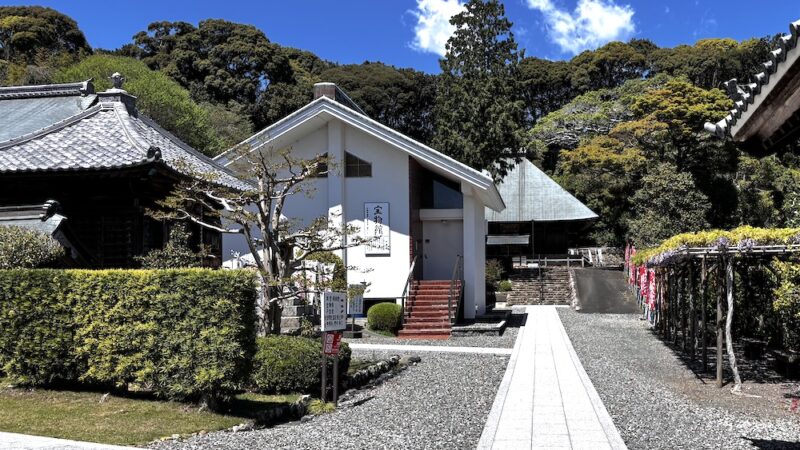
The worship hall, nestled in the lush green grounds of Mt. Hitatsuyama, is enveloped in a serene atmosphere. Surrounded by lush greenery, the shrine exudes a sacred atmosphere, a stark contrast to the bustling coastline.
At the main hall, various prayers are offered for matchmaking, good relationships, family safety, business prosperity, and more. Many visitors, especially those seeking blessings for matchmaking, appreciate the continued strong devotion to Ikonahime-no-Mikoto, the goddess of love and beauty.
Nature of Mt. Hitatsuyama
Mt. Hitatsuyama, where the shrine grounds are located, is blessed with abundant nature. Walking along the path lined with ancient trees, one can forget the hustle and bustle of the city and feel a refreshing sense of peace.
From Mt. Hitatsuyama, one can enjoy a panoramic view of Shirahama Beach and the Izu Islands, and on clear days, Oshima Island is clearly visible. This view evokes a sense of the shrine’s history as a place of worship for the Izu Islands since ancient times.
Subsidiary Shrines and Auxiliary Shrines
Several subsidiary shrines and auxiliary shrines are enshrined within the grounds of Ikonahime-no-Mikoto Shrine. These small shrines are imbued with their own history and beliefs, and we recommend visiting them along with the main shrine during your visit.
Annual Festivals and Rituals
Hitachisai Festival
The most important annual festival of Ikonahime-no-Mikoto Shrine is the “Hitachisai Festival,” held every year on October 30th and 31st. This festival is a traditional fire festival unique to a shrine named after Mount Hitachi, and is a valuable ritual that preserves ancient forms of worship.
During the Hitachisai Festival, sacred rituals using fire are performed, and prayers are offered for a bountiful harvest, maritime safety, and regional prosperity. The origin of the festival is thought to date back to ancient volcanic and sun worship, offering a glimpse into a form of faith deeply connected to the volcanic activity of the Izu Islands.
Gohei-nagashi Festival
Another important annual festival is the “Gohei-nagashi Festival.” This Shinto ritual involves floating sacred paper streamers (gohei) out to sea. It is a festival that strongly reflects the tradition of maritime worship, expressing gratitude to the gods who came from the sea and praying for maritime safety and a bountiful catch.
The Gohei-ryu Festival is a unique Shinto ritual that takes advantage of its location on Shirahama Beach, and is cherished and preserved by the local people as a ceremony symbolizing the deep connection with the Izu Islands.
Mikama Festival
Festivals related to Mikama are also traditionally held. Mikama is said to refer to the three islands of the Izu Islands (Miyakejima, Kozushima, and Niijima), and this ritual confirms the religious ties connecting these islands to the mainland.
Benefits and the Charm of a Power Spot
Matchmaking and Prayer for Good Relationships
Ikonahime-no-Mikoto is known as the goddess of love and beauty, and is believed to bring benefits in matchmaking and prayers for good relationships. This shrine, which tells a love story with Mishima Daimyojin, is a power spot visited by many worshippers praying for success in love and marital harmony.
Courage and Prosperity
Mishima Daimyojin, enshrined here, is revered as the god of courage and prosperity. Many worshippers visit to pray for the courage to take on new challenges and for the development of their businesses.
One of Japan’s Leading Power Spots
With its 2400-year history, sacred location surrounded by the sea and mountains, and role as a place of worship for the Izu Islands, Ikonahime-no-Mikoto Shrine is attracting attention as one of Japan’s leading power spots.
The pure air of the shrine grounds, the mystical scenery of the coastal torii gate, and the energy of this ancient place of worship provide visitors with deep emotion and healing.
Connections with Famous People
Hideki Saijo and Ikonahime-no-Mikoto Shrine
Legendary singer Hideki Saijo is known to have had a deep connection with Ikonahime-no-Mikoto Shrine. It is said that Saijo loved Shirahama and frequently visited this shrine.
He also interacted with the shrine’s priest and local people, and memories of Saijo are still passed down at the shrine and in Shirahama. Some fans visit Ikonahime-no-Mikoto Shrine as a place associated with Hideki Saijo.
Access and Visiting Information
Access Methods
Access by Train and Bus
- Approximately 15 minutes by Tokai Bus bound for Shirahama from Izukyu Shimoda Station on the Izukyu Line, get off at the Shirahama Shrine bus stop, and it’s a short walk from there.
Access by Car
- Approximately 2 hours from Numazu IC on the Tomei Expressway via National Routes 414 and 136.
- Parking available (parking lot for visitors is available on the shrine grounds).
Visiting Hours and Amulet Distribution
- Visiting Hours: The shrine grounds are generally open for free worship.
- Amulet Distribution Hours: 9:00 AM to 4:00 PM
- Location: 2740 Shirahama, Shimoda City, Shizuoka Prefecture
Visiting Etiquette
Ikonahime-no-Mikoto Shrine is a sacred place with a 2400-year history. Please observe the following etiquette when visiting.
- Bow before passing through the torii gate.
- Walk along the edge of the path (the center is the path for the gods).
- Purify your body and mind at the water basin.
- At the main hall, worship using the two bows, two claps, and one bow ritual.
- Respect the nature and facilities within the shrine grounds.
- When taking photos around the coastal torii gate, be considerate of other worshippers.
Nearby Tourist Spots
Shirahama Beach
Shirahama Beach, located right next to Ikonahime-no-Mikoto Shrine, is one of Izu’s most beautiful beaches, known for its white sand and crystal-clear waters. It’s bustling with swimmers in the summer and attracts surfers and marine sports enthusiasts throughout the year.
Enjoying a stroll along the beautiful coastline in conjunction with a visit to the shrine is highly recommended.
Shirahama Ohama Beach
Ohama Beach, adjacent to Shirahama Beach, is also a popular spot for its beautiful scenery. It’s also a certified geosite of the Izu Peninsula Geopark, where you can observe landforms created by volcanic activity.
Tourist Attractions in Shimoda City
Shimoda City boasts numerous tourist attractions, including historical sites commemorating Commodore Perry’s arrival, the daffodils of Tsumekizaki, and the scenic views from Negatayama. Combined with a visit to Ikonahime-no-Mikoto Shrine, you can fully enjoy Shimoda’s history and nature.
Relationship with the Izu Peninsula Geopark
The Shirahama area, where Ikonahime-no-Mikoto Shrine is located, is recognized as one of the geosites of the Izu Peninsula Geopark. Under the theme of “A Gift from the Volcanoes of the South,” you can learn about the formation of the Izu Peninsula and the history of volcanic activity.
Mount Hitatsuyama itself is a geographical feature deeply connected to volcanic activity, and its value as a place where ancient people revered volcanoes and performed rituals is recognized. By learning about the geological charm of the Izu Peninsula in conjunction with a visit to the shrine, you can gain a deeper understanding and appreciation.
Summary
Ikonahime-no-Mikoto Shrine (Shirahama Shrine), with its 2400-year history, is the oldest shrine in Izu and continues to attract the faith of many people. The love story of Mishima Daimyojin and Ikonahime-no-Mikoto, the crimson torii gate standing on the coast, traditional Shinto rituals such as the Hi-tatsu Festival and Gohei-nagare Festival, and its appeal as one of Japan’s leading power spots—all of these things make this shrine special.
Combined with the beautiful scenery of Shirahama Beach, Ikonahime-no-Mikoto Shrine exudes a deep history and a sacred atmosphere. It’s a memorable sacred place that you should definitely visit when you come to Izu. Whether you’re seeking blessings for love or are interested in history and nature, you’re sure to have a soul-cleansing experience.
Praying in the tranquil shrine grounds and listening to the sound of the waves in front of the coastal torii gate—such moments will be a special time away from the hustle and bustle of everyday life. Experience the breath of ancient faith at Ikonahime-no-Mikoto Shrine.