Haruna Shrine Complete Guide | A Thorough Explanation of 1400 Years of History and the Charm of a Power Spot
Haruna Shrine, located on the slopes of Mount Haruna in Takasaki City, Gunma Prefecture, is an ancient shrine boasting a history of over 1400 years, said to have been founded in the first year of Emperor Yomei’s reign (586 AD). Unique and unusual rock formations are scattered throughout the grounds, and a sacred atmosphere permeates the area surrounded by a deep forest. In recent years, it has become one of the leading power spots in the Kanto region, attracting many visitors.
This article comprehensively explains everything you need to know before visiting Haruna Shrine, including its history, highlights, blessings, access methods, and annual festivals.
History and Origins of Haruna Shrine
From Founding to the Present
Haruna Shrine is said to have been founded in the first year of Emperor Yomei’s reign (586 AD), and will celebrate its 1440th anniversary in 2026. The “Engishiki Jinmyocho” (completed in 927), compiled during the Heian period, lists Haruna Shrine as one of the “Twelve Shrines of Kōzuke Province,” indicating its long history as a prestigious shrine that has attracted worshippers.
Mount Haruna, along with Mount Akagi and Mount Myōgi, is counted as one of the three famous mountains of Jōmō (present-day Gunma Prefecture), and has been an object of mountain worship since ancient times. Haruna Shrine, dedicated to the deity of Mount Haruna, has become a central figure in local faith.
Development of the Haruna-kō (Haruna Association)
During the Edo period, a religious organization called “Haruna-kō” spread throughout the Kanto region. Haruna-kō involved believers in each region forming organizations, with representatives visiting Haruna Shrine. This spread the worship of Haruna Shrine widely, attracting the reverence of many people.
Even today, a special grand festival is held every 60 years in the year of the Fire Horse (Hinoeuma), continuing the traditions cultivated over its long history.
Deities and Benefits
Main Deities
The main deities of Haruna Shrine are the following two:
Homusubi-no-kami
A deity who governs fire, believed to have the divine power to extinguish and prevent fires.
Haniyama-hime-no-kami
A deity who governs earth, believed to have the divine power related to agriculture, construction, and the blessings of the earth.
Enshrined Deities
In addition to these main deities, the following deities are also enshrined.
- Mikumari-no-kami
- Takaokami-no-kami
- Kuraokami-no-kami
- Oyamatsumi-no-kami
- Omononushi-no-kami
- Konohanasakuya-hime-no-kami
Main Benefits
Haruna Shrine has been believed to offer the following benefits since ancient times.
- Fire Extinguishing and Prevention: Due to the worship of the god of fire
- Good Fortune and Prosperity: Powerful energy as a power spot
- Abundant Harvest: Protection of agriculture by the gods of earth and water
- Business Prosperity: Due to the divine blessings of good fortune
- Family Safety: Protection of all aspects of life by the gods of fire and earth
- Matchmaking: Due to the sacred atmosphere of the shrine grounds
Highlights of the Shrine Grounds
Haruna Shrine boasts a vast area of approximately 150,000 square meters (about the size of three Tokyo Domes), with many points of interest from the approach to the main hall.
Approach and Zuishinmon Gate
The approach to Haruna Shrine is approximately 700 meters long, leading through a deep forest from the torii gate to the Zuishinmon gate. The Haruna River flows along the approach, and the soothing sound of the water calms the mind.
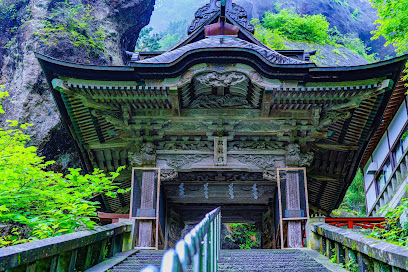
The Zuishinmon Gate is an important entrance to the shrine grounds, and beyond it, the atmosphere of a sacred area intensifies. Passing through the Zuishinmon Gate, massive and unusual rock formations appear one after another, overwhelming you with the beauty of natural formations.
Unusual Rock Formations and Giant Rocks
The most distinctive feature of Haruna Shrine is the unique group of unusual rock formations scattered throughout the grounds. These rocks were formed by the volcanic activity of Mount Haruna, and have weathered over long periods of time to reach their current form.
Main Unusual Rock Formations
- Rocks near Misogi Bridge: Huge rocks catch the eye from the beginning of the approach to the shrine.
- Kurakake-iwa: A rock shaped like a horse’s saddle.
- Yatate-sugi: A sacred tree over 600 years old and the surrounding rocks.
- Heishi-no-taki Waterfall: A beautiful waterfall flowing from between the rocks.
These unusual rock formations have long been revered as sacred places where gods reside.
Twin Dragon Gate
After passing the Zuishinmon Gate, you’ll come across the Twin Dragon Gate, a beautiful gate adorned with dragon carvings, as its name suggests. The intricate carvings of dragons on either side give it a guardian-like presence, welcoming visitors.
Kagura Hall
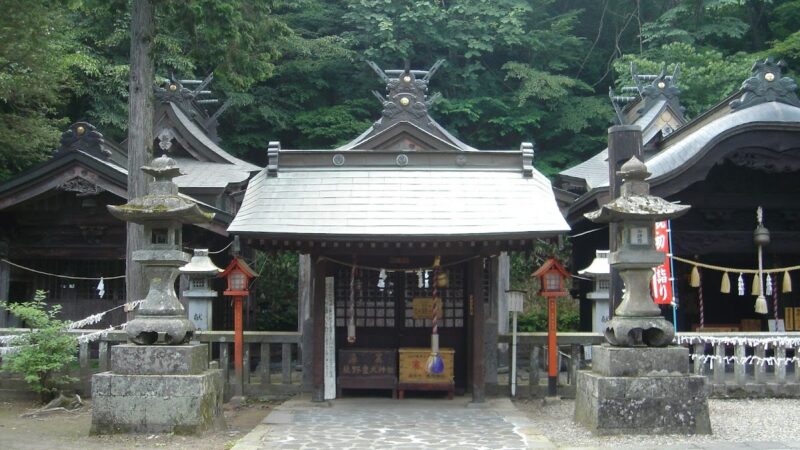
The Kagura Hall is where Kagura (sacred dance and music) are performed during festivals, and is characterized by its imposing construction. Currently, due to the restoration work on the main shrine, it also plays a central role in worship.
Main Shrine and Misugata-iwa Rock
The main shrine of Haruna Shrine is built adjacent to the massive rock “Misugata-iwa Rock,” approximately 200 meters high. This Misugata-iwa Rock is the most sacred site of Haruna Shrine and can be considered the source of its power.
The main shrine is designated a National Important Cultural Property and is a valuable structure that preserves the architectural style of the Edo period. Its appearance, integrated with Misugata-iwa Rock, embodies the harmony of nature and man-made structures, leaving a deep impression on those who see it.
Note: Due to restoration work on the main shrine and Kagura hall until December 2025, worshippers will be visiting the Kokusosha shrine located next to the main shrine. However, the sacred rock formation (Gosugata-iwa) can still be seen.
Kokusosha Shrine and Gakuden Hall
Located next to the main shrine, the Kokusosha shrine serves as a temporary worship area during the construction period. The Gakuden hall houses numerous votive plaques, offering a glimpse into the long history of faith.
Cultural Properties
Haruna Shrine possesses many valuable cultural properties.
Nationally Designated Important Cultural Properties
- Main Shrine: An Edo period Gongen-zukuri style building
- Kagura Hall: A building from the same period as the main shrine
- Kokusosha Shrine: Historical value as a subsidiary shrine
- Gakuden Hall: A building housing votive plaques
These buildings strongly retain the characteristics of Edo period shrine architecture and possess high architectural historical value.
Other Cultural Assets
The shrine grounds also house many other cultural assets, including stone sculptures, offerings, and ancient documents. These are valuable historical materials that tell the story of Haruna Shrine’s long history and the deep faith of its people.
Annual Rituals
Various rituals are held at Haruna Shrine throughout the year.
Main Rituals
January
- New Year’s Day Festival (January 1st): A ritual celebrating the New Year
- Saitansai: The first major festival of the year
February
- Setsubun Festival: Events such as bean-throwing
- Kinensai: A major spring festival praying for a bountiful harvest
May
- Spring Grand Festival: An important spring festival
October
- Autumn Grand Festival: A festival giving thanks for the autumn harvest
December
- Niinamesai: A ritual offering the new harvest to the gods
- Oharai: A Shinto ritual to purify oneself of sins and impurities at the end of the year
Special Grand Festivals
A special grand festival is held every 60 years in the year of the Fire Horse (丙午). The next one will be in 2026, a momentous year coinciding with the 1440th anniversary of the shrine’s founding.
Access Methods
Public Transportation
By Train and Bus
From the west exit of JR Takasaki Station, take the Gunma Bus bound for Lake Haruna via Hongō, get off at the “Haruna Shrine” bus stop, and walk for approximately 15 minutes.
- Bus Schedule: Starting at 8:30 AM, approximately one bus per hour.
- Travel Time: Approximately 70 minutes from Takasaki Station (If departing at 8:30 AM, arriving at 9:40 AM)
- Fare: Approximately 1,190 yen one way
Notes
- Due to the limited number of buses, it is recommended to check the timetable in advance.
- Additional buses may be provided on weekends and holidays.
- Bus schedules may change during the winter season.
By Car
From the Kan-Etsu Expressway
- Approximately 60 minutes from Takasaki IC
- Approximately 50 minutes from Shibukawa-Ikaho IC
Parking
There are several parking lots around Haruna Shrine.
- Municipal free parking: Approximately 15 minutes on foot from the shrine
- Paid parking: Several parking lots are available near the shrine (around 500 yen)
During peak seasons (New Year’s, autumn foliage season, Golden Week, etc.), it can get crowded, so early arrival is recommended.
Location
Address: 849 Harunasan-machi, Takasaki City, Gunma Prefecture 370-3341
Points to Note When Visiting
Visiting Hours
While you can generally visit the shrine grounds freely, the shrine office hours are as follows:
- Normal season: Approximately 9:00 AM to 4:00 PM
- Varies depending on the season
Estimated Time Required
- From the entrance of the approach to the main shrine: Approximately 30-40 minutes one way
- Visiting including a stroll around the grounds: Approximately 1.5-2 hours
We recommend taking your time to stroll around the grounds and enjoy the unique rock formations and nature while you visit.
Clothing and Items to Bring
- Clothing: The approach to the shrine is a mountain path, so comfortable shoes and clothing that allows for easy movement are essential.
- Seasonal Attire: Because it’s in the mountains, temperatures are lower than in urban areas. Bring a jacket in spring and autumn, and warm clothing in winter.
- Items to Bring: Drinks, towel, camera (there are many photo opportunities).
- Rain Gear: The weather can change quickly, so a folding umbrella is recommended.
Photography
Photography is generally permitted within the shrine grounds, but please note the following:
- Photography inside the main hall is prohibited.
- Refrain from taking photos during rituals.
- Be considerate of other worshippers.
- Avoid using tripods during crowded times.
The Appeal of a Power Spot
A Powerful Energy Spot
Haruna Shrine is known as one of the leading power spots in the Kanto region. The following factors are thought to be working in combination for this reason.
Geographical Factors
- Volcanic energy from Mt. Haruna
- Abundant spring water and clear streams
- Purification effect from deep forests
- Changes in magnetic field due to unique rock formations
Historical Factors
- Over 1400 years of accumulated faith
- Energy of prayers from many worshippers
- Continuation of sacred rituals
Places considered to have particularly strong power
- Gosugata-iwa: The place that emits the most powerful energy
- Around the Main Shrine: The space where Gosugata-iwa and the main shrine are integrated
- Heishi Falls: Purification by the energy of water
- Soryumon: Protection by the energy of dragons
- Yatate-sugi: Energy of a sacred tree 600 years old
Voices of Worshippers
Many worshippers have reported the following experiences:
- Upon entering the shrine grounds, I felt a change in the air.
- I felt a mysterious power in front of the sacred rock.
- My luck improved after praying.
- I felt a refreshing sense of cleansing.
- My wish came true.
Haruna Shrine in Every Season
Spring (March-May)
This is a beautiful season of fresh greenery. The trees along the approach to the shrine bud, creating a vibrant landscape.
- Best time to visit: Late April to mid-May
- Features: The contrast between the refreshing air and the fresh greenery
- Recommendation: Visiting during the Spring Grand Festival allows you to witness the rituals.
Summer (June-August)
The shrine grounds, enveloped in deep green, are cooler than the city and are a popular summer retreat.
- Best time to visit: July to August
- Features: The water volume of Heishi Falls increases, allowing you to enjoy the refreshing sound of the waterfall.
- Recommendation: Experience the mystical atmosphere enveloped in morning mist by visiting early in the morning.
Autumn (September to November)
The autumn foliage season is one of the most beautiful times to visit Haruna Shrine.
- Best time to visit: Late October to early November
- Features: The contrast between the unique rock formations and the autumn leaves is breathtaking.
- Note: This is the busiest time, so early morning visits are recommended.
Winter (December to February)
The shrine grounds, covered in snow, possess a fantastical beauty.
- Best time to visit: January to February
- Features: A sacred atmosphere enveloped in tranquility
- Note: The approach to the shrine may freeze, so non-slip shoes are essential.
- Recommendation: Visiting on New Year’s Day is a special experience.
Nearby Tourist Attractions
Lake Haruna
Lake Haruna, located about 15 minutes by car from Haruna Shrine, is a crater lake of Mount Haruna. There are walking paths and boat docks along the lakeshore, allowing visitors to enjoy the scenery of each season.
Haruna Mountain Ropeway
This ropeway takes you to the summit of Mount Haruna Fuji, offering panoramic views of the Kanto Plain.
Ikaho Onsen
Located about 30 minutes by car from Haruna Shrine, this is a representative hot spring resort in Gunma Prefecture. It is famous for its stone steps, and a hot spring bath after visiting the shrine is a popular activity.
Sightseeing in Takasaki City
Around Takasaki Station, there are many other sights to see, including the Takasaki Byakue Daikannon and Shorinzan Daruma-ji Temple.
Other Haruna Shrines
Actually, there are several shrines named “Haruna Shrine” in Gunma Prefecture.
Haruna Shrine (Numata City)
This is another Haruna Shrine located in Haruna-cho, Numata City, Gunma Prefecture. It is revered as the guardian shrine of Tone-Numata.
- Address: 2851 Haruna-cho, Numata City, Gunma Prefecture 378-0041
- Main Deities: Haniyama-hime no Mikoto (Haruna Okami), Yamato Takeru no Mikoto (Hotaka Okami), Sugawara no Michizane no Mikoto (Tenman Okami), Takeminakata no Mikoto (Suwa Okami)
This is a different shrine from the Haruna Shrine in Takasaki City, so please check the address before visiting.
Precautions When Visiting the Shrine
Manners
- Walk on either the left or right side of the path (the center is the path for the gods)
- Refrain from loud conversations
- Always take your trash with you
- Do not harm plants or animals
- Refrain from eating or drinking outside of designated areas
Safety
- The path is a mountain trail, so watch your step
- Be especially careful when it rains, as it can be slippery
- Be careful of falling rocks when passing under the unusual rock formations
- Do not push yourself if you are feeling unwell
- Remember to take precautions against heatstroke during the summer months
Construction Information
The main shrine and Kagura hall are under restoration until December 2025. Worship will be conducted at the Kokusosha shrine, but the sacred rock formation can be viewed. Please check the official website for the latest information.
Summary
Haruna Shrine is a venerable shrine with a history of over 1400 years. Its mystical landscape, featuring uniquely shaped rocks and the sacred rock formation, has made it one of the most powerful spiritual spots in the Kanto region, attracting many visitors.
The main deities enshrined here are Homusubi-no-kami and Haniyama-hime-no-kami, and the shrine is believed to offer blessings for fire prevention, good fortune, abundant harvests, and business prosperity. Even today, it attracts many worshippers. The approximately 700-meter path from the approach to the main hall is a sacred space surrounded by deep forests, clear streams, and distinctive rock formations, offering a truly refreshing experience.
While access by public transport is somewhat inconvenient, this allows for a quiet and peaceful visit. The shrine grounds, which display different expressions with each season, offer new discoveries with every visit.
When visiting Takasaki City, Gunma Prefecture, be sure to visit Haruna Shrine and experience the sacred energy nurtured by 1400 years of history. Surrounded by deep forests and unique rock formations, the temple grounds offer a special time away from everyday life.