
Rakanji Temple Complete Guide: A Thorough Explanation of Japan’s Oldest Five Hundred Arhats and the Ancient Temple on a Cliffside
What is Rakanji Temple?
Rakanji Temple is a Soto Zen Buddhist temple located in Hon-Yabakei-machi, Nakatsu City, Oita Prefecture. Its mountain name is Gijakussen, and its principal image is Shakyamuni Buddha. It is known as the head temple of all Rakanji temples in Japan.
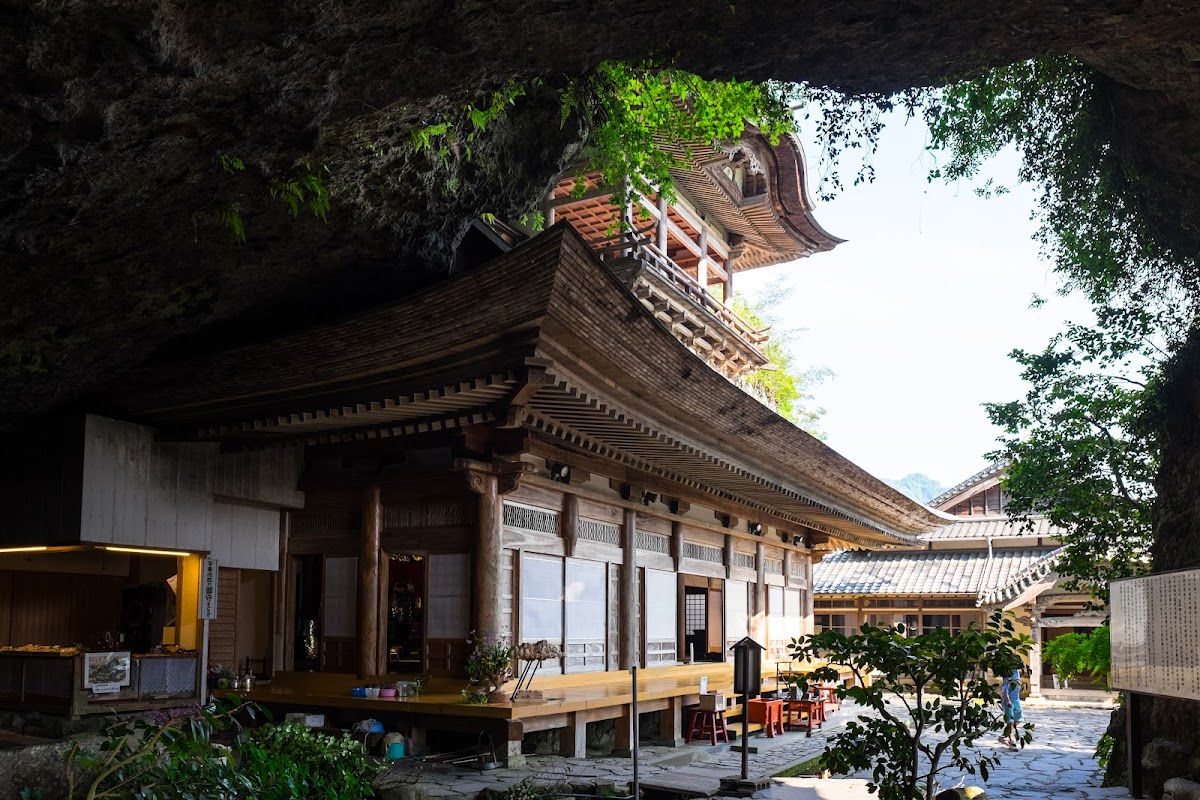
Located on the mountainside of Mount Rakan, on a cliff approximately 300 meters above sea level, the temple is built into the numerous caves within the rock face, with both the main gate and the main hall seemingly embedded within them. This unique landscape, a rare example of the fusion of nature and Buddhist architecture, continues to fascinate many worshippers and tourists.
The temple houses over 3,770 stone Buddha statues, and among them, the Five Hundred Arhats statues enshrined in Murokutsu (also known as Murokudo) are considered the oldest Five Hundred Arhats in Japan. On August 21, 2014, the Shakyamuni Triad statue and the Five Hundred Arhats statues in Murokutsu were designated as Important Cultural Properties of Japan.
It is one of the representative scenic spots of Yabakei, and the landscape, in which massive rock faces and temple buildings are fused together, creates a unique atmosphere in each of the four seasons. As a valuable sacred site that conveys the history of the transmission of Buddhist teachings, it plays an important role in both faith and tourism.
History and Origin of Rakanji Temple
Founding Legend and Ancient History
Regarding the founding of Rakanji Temple, legend says that it was opened in the first year of the Taika era (645 AD) by the hermit Hodo. Hōdō Sennin is said to have been a high-ranking monk who came from India and founded many temples throughout Japan. However, there is no historical evidence to support this, and it remains largely a legend.
Restoration in the Middle Ages
The only reliable record is that the temple was restored in 1337 (Engen 2) or 1338 (Ryakuō 1, Northern Court era) by Razan Zenji, a Sōtō Zen monk. During this period, Razan Zenji secluded himself in a cave on Mount Rakan for ascetic training and then rebuilt the temple in this location.
Razan Zenji had experience training on Mount Wutai in China, and it is believed that he incorporated the style of the cave temples he saw there into the architecture of Rakanji Temple. This is the origin of the unique layout of the temple buildings embedded in the rock face that can be seen today.
Construction of the Five Hundred Arhats
The Five Hundred Arhats, the most distinctive feature of Rakanji Temple, were constructed sequentially from the Muromachi period to the early Edo period. The Five Hundred Arhats, enshrined in the Murokutsu cave, are known as the oldest stone statues of Five Hundred Arhats in Japan. Each statue has a different expression, representing the saints who reached the highest stage of Buddhist practice.
These stone Buddhas represent the pinnacle of stonemasonry techniques of the time and were created not only through local faith but also through donations from all over Kyushu.
Development during the Edo Period
During the Edo period, the temple flourished greatly under the patronage of the Okudaira family, the lords of the Nakatsu domain. During this period, the Fusai-ro hall was built, and the Thousand Jizo statues were enshrined, among other improvements to the temple grounds.
Thousands of stone Buddhas were enshrined in the cave, creating a unique space that depicts the Buddhist worldview like a pictorial illustration. The approach to the temple and the stone steps were improved, and it became known as a sacred site visited by many pilgrims.
Preservation and Cultural Property Designation in Modern Times
Despite being affected by the anti-Buddhist movement of the Meiji era, it has survived, supported by the faith of the local people. During the Showa period, the temple grounds were improved, and in 1967, a lift was installed, improving convenience for visitors.
In 2014, the stone Buddha statues in Murokutsu were designated as a National Important Cultural Property, officially recognizing their historical and artistic value. Currently, appropriate management is carried out while balancing cultural property protection and tourism promotion.
Highlights of Rakanji Temple
Murokutsu Cave and Japan’s Oldest Five Hundred Arhats
The greatest highlight of Rakanji Temple is the oldest stone statues of Five Hundred Arhats in Japan, housed in Murokutsu Cave. Murokutsu means “a state in which worldly desires do not leak out,” representing the world of enlightenment.
Inside the cave, five hundred Arhat statues are neatly arranged around a central Shakyamuni Triad. Each statue has a different expression and posture, expressing a variety of human emotions, from smiles and meditative faces to stern expressions. There is a legend that “you will surely find an Arhat resembling your parent,” and many visitors come searching for the likeness of deceased family members.
The Arhat statues are made of stone, ranging in height from 30 to 50 centimeters, and were created from the Muromachi period to the early Edo period. While some parts have weathered over the long years, their simple expressions and exquisite carving techniques convey the high level of skill of the stonemasons of that time.
Fusai-ro and the Thousand Jizo Statues
Fusai-ro is a building constructed during the Edo period, housing the Thousand Jizo Statues. Jizo Bodhisattva is worshipped as the guardian deity of children and travelers, and has particularly attracted the faith of parents praying for the healthy growth of their children.
The sight of thousands of Jizo statues lined up in an orderly fashion is breathtaking, each one imbued with the wishes of its donor. The neat arrangement of these small stone Buddhas visually expresses a Buddhist worldview, leaving a profound impression on visitors.
Main Hall and Shakyamuni Buddha Statue
The main hall is built within a cave, housing the principal image of Shakyamuni Buddha. The architectural style, with the rock face as the backdrop, creates a unique space where nature and artificiality are seamlessly integrated.
The dimly lit interior, illuminated by candlelight, creates a mystical atmosphere. The sound of water dripping from the rock face enhances the tranquility, making it an ideal environment for meditation and prayer.
View from the Lift
To reach Rakanji Temple, you can enjoy a three-minute aerial ride on the lift from the foot of the mountain. From the lift, you can enjoy a panoramic view of the magnificent Yabakei Gorge, appreciating the beauty of nature throughout the seasons.
The natural beauty of Yabakei, which displays different expressions with each season—fresh greenery in spring, deep green in summer, vibrant autumn leaves, and snowscapes in winter—provides a soothing presence before and after your visit. Especially during the autumn foliage season, the contrast between the mountains and rock faces, dyed in red and yellow, is stunning, attracting many tourists.
Over 3,770 Stone Buddha Statues
The temple grounds are home to over 3,770 stone Buddha statues, their diversity and sheer number overwhelming. In addition to the Five Hundred Arhats and the Thousand Jizo Statues, various other Buddhist statues, including Kannon, Fudo Myoo, and the Ten Kings, are enshrined in the caves.
These stone Buddha statues were donated mainly during the Edo period by local people and pilgrims from all over the country, each imbued with the wishes and prayers of its donors. Strolling through the temple grounds while viewing the stone Buddha statues allows you to experience and learn about Buddhist teachings firsthand.
Fusion of Rock Face and Natural Landscape
The most distinctive feature of Rakanji Temple is its unique landscape, where the massive rock face and temple buildings are seamlessly integrated. The architectural style, which utilizes the natural rock caves as they are, is a rare example among Japanese temple architecture, expressing a uniquely Japanese religious view that blends nature worship and Buddhist faith.
The rock face contains countless caves, each housing a stone Buddha. The texture of the rock surface, the moss-covered stone steps, and the lush greenery create a landscape that offers visitors deep spiritual peace.
Cultural Properties of Rakanji Temple
Nationally Designated Important Cultural Property
On August 21, 2014, the group of stone Buddha statues, including the Shakyamuni Triad and the Five Hundred Arhats in the Murokutsu cave, were designated as a National Important Cultural Property. This recognizes their historical and artistic value as the oldest stone statues of the Five Hundred Arhats in Japan.
The designated stone Buddha statues are valuable historical materials illustrating the evolution of stone sculpture from the Muromachi period to the early Edo period, and are considered important cultural assets for understanding the religious practices and stonemasonry techniques of the time.
Oita Prefecture Designated Cultural Property
Some of the buildings and Buddha statues within the temple grounds are designated as tangible cultural properties of Oita Prefecture. Edo period buildings, including the Pusai-ro (a type of pavilion), are protected as valuable historical remains that convey the architectural techniques of the time.
Nakatsu City Designated Cultural Property
Materials and Buddhist artifacts that convey the history of the region are also designated as cultural properties of Nakatsu City and are appropriately preserved and managed.
Rakanji Temple’s Annual Events
Spring Grand Festival
Every spring, the Spring Grand Festival is held, attracting many worshippers. This religious service, held during the season of fresh greenery, prays for a bountiful harvest and family safety, and is an important annual event for the local people.
Autumn Grand Festival
In autumn, the Autumn Grand Festival is held, attracting many worshippers during the beautiful autumn foliage season. Buddhist services are held to pray for ancestral remembrance and family safety, conducted in a solemn atmosphere.
New Year’s Eve Bell Ringing
On New Year’s Eve, the New Year’s Eve bell is rung, and the temple is bustling with worshippers welcoming the new year. The sound of the bell, said to dispel the 108 worldly desires, resonates through the quiet mountains, as people pray for happiness in the new year.
Access to Rakanji Temple
Access by Car
From the Higashi-Kyushu Expressway
- Approximately 40 minutes from Nakatsu IC
- Proceed along National Route 212 towards Yabakei and follow the signs
- Parking: Free parking available (approximately 50 spaces)
From Kitakyushu
- Approximately 1 hour 30 minutes via National Route 10 and National Route 212
From Oita
- Approximately 1 hour via National Route 10 and National Route 212
Access by Public Transportation
If using JR
- Get off at Nakatsu Station on the JR Nippo Main Line
- Take the Oita Kotsu bus bound for Kakisaka, Morizumi Onsen, or Yabakei from Nakatsu Station
- Get off at the Rakanji-guchi bus stop (approximately 40 minutes)
- Approximately 5 minutes walk from the bus stop to the Rakanji lift station
Regarding Bus Schedule
- Since bus services are limited, we recommend checking the timetable in advance.
- You can also get information at the tourist information center in front of Nakatsu Station.
About the Lift
You can comfortably access Rakanji Temple at the top of the mountain in about 3 minutes by lift from the parking lot at the foot of the mountain.
Lift Operation Information
- Operating Hours: 9:00 AM – 5:00 PM (Subject to change depending on the season)
- Fare: Round trip: Adults 800 yen, Children (Elementary school students) 400 yen (As of 2025, prices may change)
- Time Required: Approximately 3 minutes one way
Visiting on Foot
- It is also possible to visit on foot without using the lift.
- Climbing the stone steps takes approximately 20-30 minutes.
- Suitable for those confident in their physical abilities or those wishing to experience a spiritual retreat.
Nearby Tourist Spots
Aonodomon (Blue Grotto)
- Approximately 5 minutes by car from Rakanji Temple
- Famous as a tunnel dug by Zenkai Osho over 30 years
- A representative tourist spot in Yabakei
Kyoshuho Peak
- A central scenic spot in Hon-Yabakei
- A spectacular viewpoint with a series of strangely shaped rocks
Yabakei Dam Memorial Park
- A park where you can enjoy nature in all four seasons
- Famous for cherry blossoms and autumn leaves
Guidelines and Precautions for Visiting the Shrine
Requests Regarding Your Visit
Regarding Attire
- As there are many rocky areas and stone steps, we recommend wearing comfortable shoes.
- The shrine grounds are a sacred place, so please dress appropriately.
Regarding Photography
- Photography is generally permitted on the shrine grounds, but please refrain from using flash.
- Please be considerate of other visitors.
- There are some areas where photography is prohibited; please follow the signs.
Other Precautions
- Smoking is prohibited on the shrine grounds.
- Please refrain from bringing pets.
- Please refrain from touching the stone Buddha statues.
- Please take your trash with you.
Visiting Hours and Admission Fees
Visiting Hours
- 9:00 AM – 5:00 PM (Last entry 4:30 PM)
- May vary depending on the season.
Admission Fees
- Adults: 500 yen
- Junior and Senior High School Students: 300 yen
- Elementary school students: 200 yen
- Group discount available (20 or more people)
*Information as of 2025. Please check the official website for the latest information.
Estimated time required
- Lift ride time: Approximately 6 minutes round trip
- Temple grounds visit time: Approximately 60-90 minutes
- Total: Approximately 1 hour 30 minutes to 2 hours
If you wish to take your time to appreciate the stone Buddhas, we recommend allowing at least 2 hours.
Deepening your understanding of Rakanji Temple’s charm
Value as Buddhist art
The stone Buddha statues of Rakanji Temple occupy an important position not only as objects of worship but also in the history of Japanese Buddhist art. The oldest stone statues of 500 Arhat in Japan are valuable historical materials showing the evolution of stone sculpture from the medieval to the early modern period, and are highly regarded by researchers.
You can see the changes in style from each era in the expressions, postures, and drapery of each statue, tracing the development of stonemasonry techniques. Furthermore, it is an important cultural heritage for understanding regional beliefs and the religious views of the people. ### Fusion of Nature and Faith
The most distinctive feature of Rakanji Temple lies in its architectural style, which utilizes the natural rock face as is. This expresses a unique religious view that fuses ancient Japanese nature worship with Buddhist faith.
By viewing the natural formation of the rock cave as a sacred space and enshrining Buddhist statues within it, the idea that nature itself is the world of Buddha is expressed. This way of thinking can be said to symbolize the fusion of nature worship and Buddhism that underlies Japanese religious culture.
A Place for Mindfulness
Rakanji Temple is cherished by many as a place where one can “open and calm their mind and realize their true self.” By facing the stone Buddhas in the tranquil rock cave, one can escape the hustle and bustle of everyday life and have time to confront oneself.
In modern society, such a place of spiritual peace is precious, and many visitors come seeking inner peace. It is also used as a place for meditation and Zen practice, functioning as a place for spiritual training.
A Place for Mindfulness
Rakanji Temple is cherished by many as a place where one can “open and calm their mind and realize their true self.” By facing the stone Buddhas in the tranquil rock cave, one can escape the hustle and bustle of everyday life and have time to confront oneself.
In modern society, such a place where one can find spiritual peace is precious, and many visitors come seeking inner peace. It is also used as a place for meditation and Zen practice, functioning as a place for spiritual training. ## A Hub for Yabakei Tourism
Rakanji Temple is one of the most representative scenic spots in Yabakei and serves as an important hub for Yabakei tourism. Many tourists visit it in conjunction with other Yabakei tourist spots such as Kyoshuho and Aonodomon, significantly contributing to the region’s tourism development.
Yabakei is a representative scenic spot in Japan, known for its unique rock formations and beautiful gorges, where visitors can enjoy beautiful natural scenery throughout the seasons. Visiting Rakanji Temple allows for a fulfilling tourist experience, appreciating both natural beauty and cultural heritage.
Summary
Rakanji Temple is an ancient Soto Zen temple possessing the oldest stone statues of 500 Arhat figures in Japan, and is known for its unique landscape built on a cliff. Located in Hon-Yabakei-machi, Nakatsu City, Oita Prefecture, and bearing the mountain name of Gijakutsu-san, this temple plays an important role as the head temple of all Rakanji temples in Japan.
Rakanji Temple With over 3,770 stone Buddha statues enshrined in the caves, Rakanji Temple boasts numerous attractions, including the Five Hundred Arhats in Murokutsu Cave and the Thousand Jizo Statues in Fusairou Pavilion. In 2014, it was designated a National Important Cultural Property, officially recognizing its historical and artistic value.
This unique space, where nature and faith merge, offers visitors deep spiritual peace and is cherished as a place to find inner tranquility. Combined with the magnificent natural scenery of Yabakei, Rakanji Temple displays different expressions with each season, making it a captivating sacred site where new discoveries can be made with each visit.
Approximately 40 minutes from Nakatsu Interchange, and accessible by bus from JR Nakatsu Station, Rakanji Temple offers comfortable access via a lift. Offering a simultaneous experience of history, culture, and nature, Rakanji Temple continues to be a beloved tourist spot representing Oita Prefecture.


