Complete Guide to Chikatsu Shrine | History, Deities, and Goshuin Information of this Ancient Shrine in Daigo Town, Ibaraki Prefecture
Chikatsu Shrine, located in Shimonomiya, Daigo Town, Kuji District, Ibaraki Prefecture, is a venerable shrine boasting a history of over 1300 years. Known as a candidate for a minor shrine listed in the Engishiki (ancient Japanese legal code), and with a founding legend attributed to Yamato Takeru, this ancient shrine has been revered as a center of local faith to this day. This article comprehensively introduces information you should know before visiting Chikatsu Shrine, including its history, enshrined deities, divine virtues, highlights within the grounds, and access methods.
Basic Information about Chikatsu Shrine
Shrine Name: Chikatsu Shrine
Location: 1626 Shimonomiya, Daigo-machi, Kuji-gun, Ibaraki Prefecture
Former Shrine Rank: Gosha (Village Shrine)
Shrine Rank: Shikinaisha (Shrine listed in the Engishiki)
Chief Priest: Yatabe Takaoki
Telephone/Fax: 0295-72-8329
Common Name: Shimonomiya Chikatsu Shrine
Chikatsu Shrine is located in Daigo-machi, in the northern part of Ibaraki Prefecture, and is easily accessible, just a 5-minute walk from Shimonomiya Station on the JR Suigun Line. It preserves a history of faith that has continued since ancient times, nestled in the rich natural environment of the Kuji River basin.
Deities Enshrined at Chikatsu Shrine
Three deities are enshrined at Chikatsu Shrine.
Shinatsuhiko-no-Mikoto
The principal deity, Shinatsuhiko-no-Mikoto, is known as the god who controls the wind. He is an ancient god appearing in the Kojiki and Kogo Shūi, and is said to be the wind god born when Izanagi-no-Mikoto blew away the morning mist. As the god who controls the wind essential for crop growth, he is deeply connected to the belief in abundant harvests.
Omodaru-no-Mikoto
Omodaru-no-Mikoto is an ancient god existing since the creation of heaven and earth, as one of the seven generations of gods. The name “Omodaru” means “perfectly formed face,” and he is considered a god symbolizing the completion of all things.
Kashikone-no-Mikoto
Kashikone-no-Mikoto is also a god counted among the seven generations of gods, together with Omodaru-no-Mikoto, and they form a pair as a married couple. This deity embodies reverence and humility, and is worshipped as a protector of people’s morality and integrity.
Divine Virtues of Chikatsu Shrine
The divine virtues bestowed by the deity enshrined at Chikatsu Shrine are diverse.
Abundant Harvest
As the principal deity is Shinatsuhiko-no-Mikoto, the god of wind, the shrine has been revered since ancient times as a guardian deity of agriculture. Appropriate winds aid in crop pollination, prevent pests and diseases, and bring about abundant harvests. Since the time when agriculture was the foundation of people’s lives, local people have visited the shrine to pray for bountiful harvests.
Protection from Agricultural Diseases
The shrine is believed to have the divine virtue of preventing diseases affecting crops, and is particularly revered by farmers. This is based on the belief that wind dispels dampness, which causes disease, and creates a healthy growing environment.
Good Health
Based on the belief that pure winds dispel evil spirits and purify the mind and body, the shrine is believed to have the divine virtue of good health. It is especially known as a deity that protects respiratory health.
Protection from Misfortune
Based on the founding legend that the deity vanquished evil spirits of Mount Yamizo, it is worshipped as a powerful guardian deity that wards off all kinds of calamities. Many worshippers visit to pray for protection from misfortune at important life events and for protection from disasters in daily life.
The History and Origins of Chikatsu Shrine
Founding Legend and Yamato Takeru
According to the shrine’s traditions, it was founded by Yamato Takeru no Mikoto. Yamato Takeru was a prince of Emperor Keiko, the 12th emperor, and it is said that he visited this area during his conquest of eastern Japan and enshrined the gods. This legend is thought to be deeply connected to the ancient imperial court’s administration of eastern Japan.
Construction of the Shrine Building in 707 AD
It is said that the formal shrine building was constructed in 707 AD, during the reign of Emperor Monmu. According to shrine tradition, a god appeared in a dream to a man named Fujiwara no Tomitoku, bestowing upon him a white-feathered arrow and declaring, “I am Chikatsu Myojin. I have obtained the power to eliminate the evil spirits of Mount Yamizo.” This oracle was presented to the imperial court, and as a result, the shrine was constructed by imperial decree.
Mount Yamizo, located on the border of Ibaraki and Fukushima prefectures, is a 1,022-meter-high mountain that has been revered as a sacred mountain since ancient times. The legend of defeating the “evil spirits” residing on this mountain is thought to be a mythological representation of the history of pioneering and bringing culture to this region.
Donations by Minamoto no Yoshiie and the Prosperity of the Medieval Period
During the Kohei era (1058-1065), Minamoto no Yoshiie (Hachiman Taro Yoshiie), on his way to pacify Oshu, stopped at Chikatsu Shrine and made a massive donation of 3,000 kanmon. This donation led to the repair and expansion of the shrine buildings, enhancing its grandeur.
Minamoto no Yoshiie was a military commander of the late Heian period who distinguished himself in the Former Nine Years’ War and the Later Three Years’ War. As a leader of the warriors of eastern Japan, he showed reverence to many shrines. His donation to Chikatsu Shrine is thought to have been intended not only to pray for military success but also to solidify the Minamoto clan’s power base in eastern Japan.
As one of the three Chikatsu shrines
Chikatsu Shrine, along with the Tsutsukowake Shrines in Baba and Yatsuki in Tanagura Town, Fukushima Prefecture, is known as one of the “three Chikatsu shrines.” Until the early modern period, all three shrines were called “Chikatsu Daimyojin” or “Chikatsu-gu,” and were distinguished as Upper Shrine, Middle Shrine, and Lower Shrine from upstream to downstream along the Kuji River.
Chikatsu Shrine in Daigo Town is the Lower Shrine, located furthest downstream of the three. These three shrines form a single sphere of worship dedicated to the same deity and have served as a spiritual pillar for the people of the Kuji River basin.
Positioning as a Shikinaisha (Shrine Listed in the Engishiki)
Chikatsu Shrine is considered one of the candidate shrines for the “Chikatsu Shrine in Kuji District, Hitachi Province” listed in the *Engishiki Jinmyocho* (compiled in 927). A Shikinaisha is a historically significant shrine officially recognized by the state during the Heian period, demonstrating the importance of Chikatsu Shrine from ancient times.
Changes Since the Meiji Era
With the Meiji-era separation of Shinto and Buddhism, the previously syncretic elements of Shinto and Buddhism were streamlined, and the shrine’s form became clearer. In 1873 (Meiji 6), it was ranked as a Gosha (village shrine), establishing its position as a central shrine in the region.
Even as times changed through the Showa and Heisei eras, Chikatsu Shrine has remained a center of faith for the local residents. Currently, various festivals are held throughout the year, attracting many worshippers.
Chikatsu Shrine Grounds and Highlights
Shrine Buildings
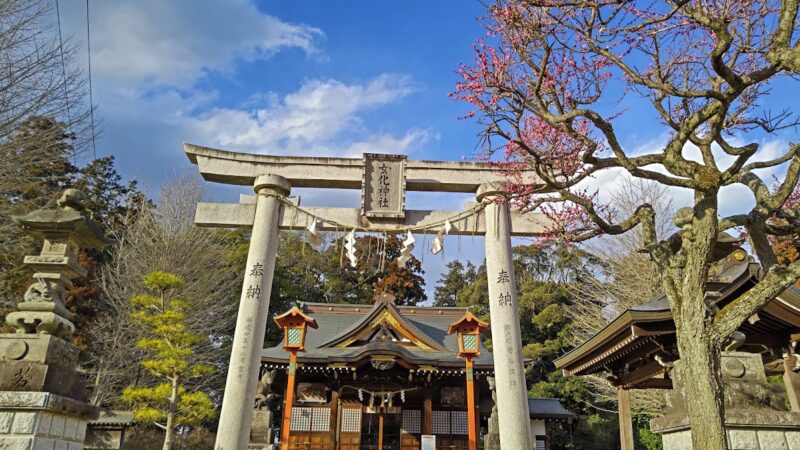
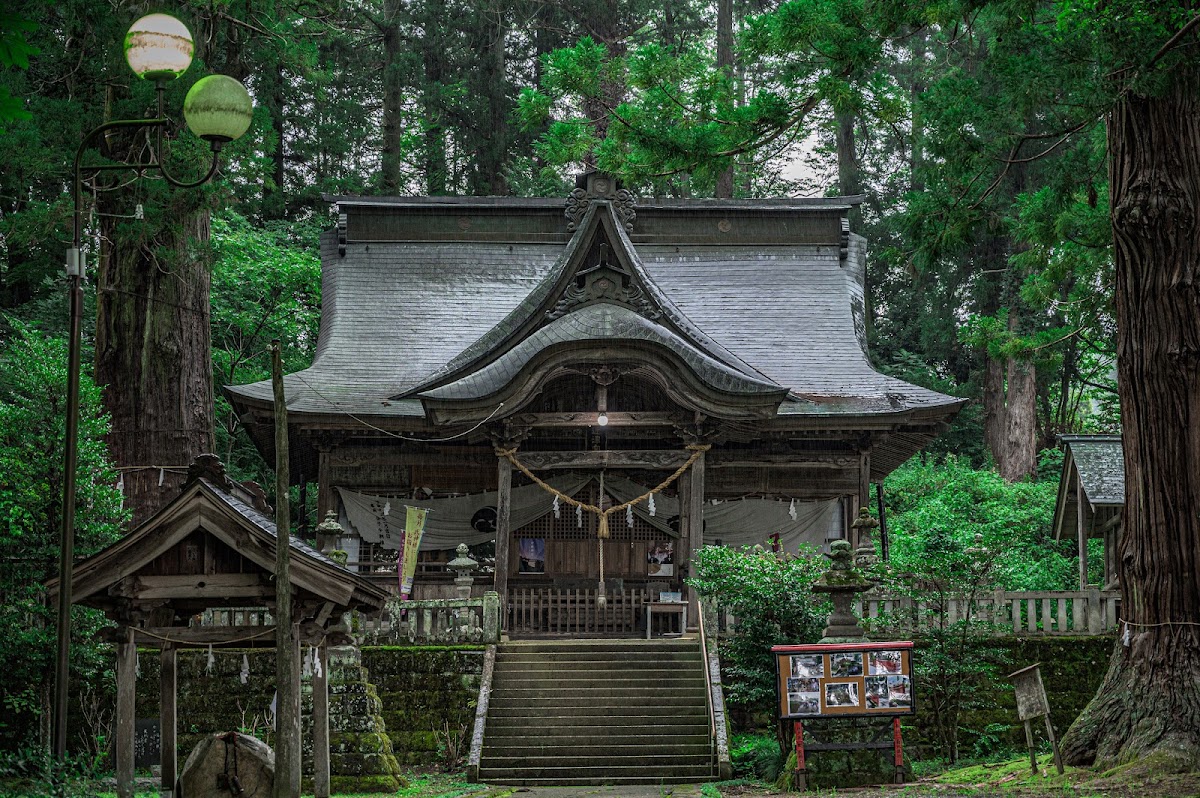
The current shrine buildings were constructed after the Edo period and preserve the traditional style of shrine architecture. The main hall is protected by a protective structure, allowing visitors to admire the exquisite architectural beauty of its carvings. The worship hall has a majestic presence welcoming worshippers, and is characterized by its charming thatched roof.
Sacred Trees and Nature of the Shrine Grounds
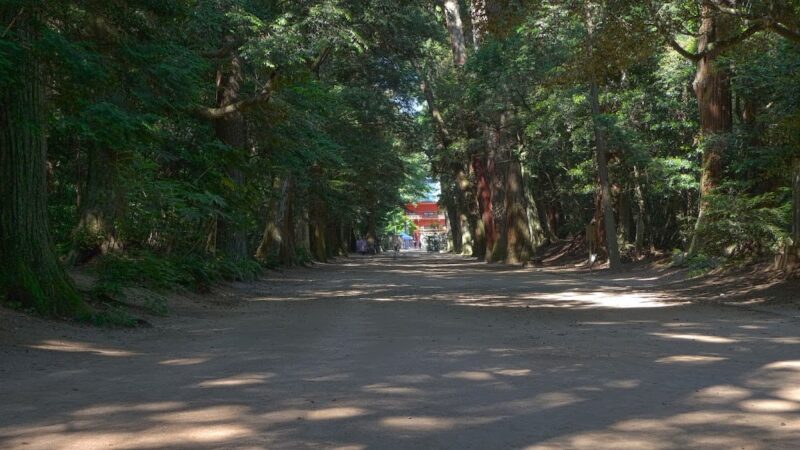
Several giant trees, estimated to be several hundred years old, stand on the shrine grounds, telling the story of its long history. In particular, the towering cedar tree beside the worship hall is magnificent, exceeding 30 meters in height, and its majestic presence leaves a deep impression on worshippers.
The entire shrine grounds are protected as a “guardian forest,” maintaining a rich natural environment. Cherry blossoms bloom in spring, the area is enveloped in lush greenery in summer, the autumn leaves are beautiful, and the snowy landscape in winter creates a fantastical atmosphere. One of the charms of Chikatsu Shrine is being able to enjoy the beauty of nature in every season.
Subsidiary Shrines
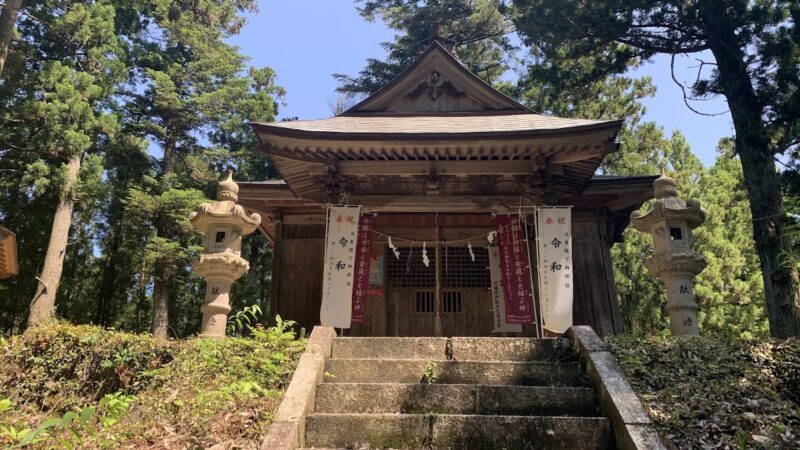
Several subsidiary shrines are enshrined around the main hall, each with its own unique beliefs. These subsidiary shrines also have a long history and have received the diverse wishes of the local people.
Water Basin and Approach
After passing through the torii gate, you will find a water basin where pure water springs forth. The ritual of purifying your hands and mouth before worship is an important ceremony for purifying your mind and body before approaching the shrine. The approach is paved with pebbles, and you feel as if your heart is being purified with each step.
Festivals and Annual Events of Chikatsu Shrine
Annual Grand Festival
The annual grand festival of Chikatsu Shrine is held grandly every year and is an important event in which the entire local community participates. A portable shrine procession and Kagura (sacred dance) performances are held, and prayers are offered for a bountiful harvest and the peace and prosperity of the region.
Nakataue Festival
This festival retains strong characteristics of the shrine as an agricultural deity, and is a traditional event held during the rice planting season to pray for a bountiful harvest. The name “Nakataue” (Middle Rice Planting) comes from the fact that it is held in the middle of the rice planting season. During this festival, Shinto rituals are performed according to ancient customs, preserving the region’s agricultural culture.
Monthly Festival
This is a regular monthly ritual to express gratitude for daily blessings and pray for continued protection. Local parishioners attend, providing an opportunity to reaffirm the bond between the shrine and the community.
New Year’s Visit, Setsubun Festival, and Shichi-Go-San Festival
Throughout the year, various festivals are held to mark milestones in life and seasonal changes. New Year’s visits are for praying for good health in the new year, Setsubun festivals are for warding off evil, and Shichi-Go-San festivals are for praying for the healthy growth of children.
Goshuin (Shrine Seal) Information at Chikatsu Shrine
Goshuin (shrine seals) can be obtained at Chikatsu Shrine. A Goshuin (temple/shrine stamp) is proof of your visit and a tangible record of your connection with the shrine. The Goshuin, with its calligraphic inscription of “Chikatsu Shrine” and the stamped red seal, is simple yet dignified.
To receive a Goshuin, please speak to someone at the shrine office. However, the chief priest may be absent, so if you want to be sure to receive a Goshuin, it is recommended to call ahead to confirm.
The offering fee is a general guideline (around 300-500 yen), but please offer what you feel is appropriate. Bringing your Goshuincho (stamp book) is preferable, but pre-printed Goshuin may also be available.
How to access Chikatsu Shrine
Access by train
Get off at Shimonomiya Station on the JR Suigun Line, approximately 5 minutes on foot.
The Suigun Line connects Mito Station to Koriyama Station in Fukushima Prefecture, offering beautiful scenery along the Kuji River. Shimonomiya Station is an unmanned station, but the route from the station to Chikatsu Shrine is easy to follow, and there are guide signs.
From Tokyo, the most common route is to take the Joban Line to Mito Station and then transfer to the Suigun Line. The journey takes approximately 3 hours.
Access by Car
Approximately 50 minutes from the Naka IC on the Joban Expressway via National Route 118
After exiting the Naka IC, head north on National Route 118 towards Daigo Town. The road is relatively well-maintained, but since it passes through mountainous areas, caution is needed regarding icy roads in winter.
The shrine has a parking lot for visitors, with space for several regular cars. If you are planning to visit by large bus, it is recommended to contact the shrine in advance to confirm parking availability.
Nearby Tourist Attractions
Daigo Town has many other attractive tourist spots besides Chikatsu Shrine.
- Fukuroda Falls: A magnificent waterfall, considered one of Japan’s three most famous waterfalls, standing 120 meters high and 73 meters wide. Its beauty changes with the seasons, and the winter icefall is particularly breathtaking.
- Kuji River: Known for its clear waters, it’s also famous as a mecca for ayu (sweetfish) fishing.
- Daigo Onsen: Several hot spring facilities are available to soothe tired bodies.
- Apple Orchards: Daigo Town is one of Ibaraki Prefecture’s leading apple-producing areas, and apple picking is available in the autumn.
Visiting these tourist spots in conjunction with a visit to Chikatsu Shrine is highly recommended.
Etiquette and Manners for Visiting Chikatsu Shrine
Basic Etiquette for Visiting Shrine
- Bow Before the Torii Gate: Before entering the sacred area, bow before the torii gate. The center of the approach to the shrine is considered the path of the gods, so it is considered best to walk along the sides.
- Purifying at the Water Basin: Purify your left hand, then your right hand, then take water in your left hand and rinse your mouth. Finally, purify the handle of the ladle.
- Worship at the Main Hall: Quietly place your offering in the offering box, and ring the bell if there is one. Worship using the two bows, two claps, one bow (two bows, two claps, one bow) method.
- Departure: After finishing your worship, turn around and bow before leaving through the torii gate.
Attire for Worship
There are no particularly strict dress code regulations, but it is desirable to dress appropriately for a sacred place. Avoid revealing or overly flashy clothing, and aim for clean and presentable attire.
Photography
Photography is generally permitted on the shrine grounds, but there may be restrictions, such as inside the main hall or during Shinto rituals. Please inquire at the shrine office if you have any questions. Also, please be considerate of other visitors.
Cultural Properties and Characteristics of Chikatsu Shrine
Historical Buildings
The main hall of Chikatsu Shrine is a valuable building that preserves the architectural style of the Edo period. The intricate carvings demonstrate the high level of craftsmanship of the time and are of architectural historical value.
Ancient Documents and Records
The shrine houses valuable historical materials, including ancient documents detailing its history since its founding and records concerning donations by Minamoto no Yoshiie. These are important resources for understanding the history of the region.
Festival Equipment
The portable shrines and festival equipment, passed down through generations, also possess cultural value. Older portable shrines, in particular, are valuable for understanding the craftsmanship of the time.
Chikatsu Shrine and the Local Community
Chikatsu Shrine is not merely a place of worship, but has played a central role in the local community. Festivals are opportunities for local residents to gather together, strengthening community bonds.
The parishioners’ organization plays a crucial role not only in the maintenance and management of the shrine but also in the preservation of local traditional culture. Through various activities such as passing on traditions to younger generations, cleaning the shrine grounds, and managing festivals, they strengthen community bonds.
In recent years, the number of worshippers and tourists from urban areas has increased, and the shrine is attracting attention as a force contributing to regional revitalization.
Guidelines for Visiting Chikatsu Shrine
When visiting Chikatsu Shrine, it is important to respect its history and traditions, which have continued for over 1300 years. A shrine is a place of prayer; please pray with a calm mind in a tranquil atmosphere.
Chikatsu Shrine offers various divine blessings, including abundant harvests, protection from misfortune, and good health. However, it is important not only to make wishes but also to express gratitude for daily blessings. By visiting with gratitude and respect for the deities, you will gain a deeper sense of spiritual fulfillment.
Summary
Chikatsu Shrine is a historical and traditional shrine located in Daigo-machi, Kuji-gun, Ibaraki Prefecture. With numerous historical anecdotes, including the legend of its founding by Yamato Takeru, the construction of the shrine buildings in 707 AD, and donations from Minamoto no Yoshiie, this shrine is known as a prestigious shrine listed in the Engishiki (ancient Japanese legal code).
The three deities enshrined here are Shinatsuhiko-no-Mikoto, Omotari-no-Mikoto, and Kashikone-no-Mikoto, and are believed to bestow blessings for abundant harvests, protection from agricultural diseases, good health, and warding off misfortune. It holds an important position as one of the three major shrines of Chikatsu and has been revered as a center of faith in the Kuji River basin to this day.
Its convenient location, just a 5-minute walk from Shimonomiya Station on the JR Suigun Line, is also a major draw, and there are many tourist attractions nearby, such as Fukuroda Falls. The shrine grounds, surrounded by abundant nature, showcase the beauty of each season, soothing the hearts of visitors.
Why not visit the historic Chikatsu Shrine and experience Japanese traditional culture and spirituality? It will surely be a memorable pilgrimage.