Complete Guide to Ryukoji Temple | A Thorough Explanation of the History, Grounds, and Cultural Assets of the Ancient Temple Associated with Ganjin
What is Ryukoji Temple?
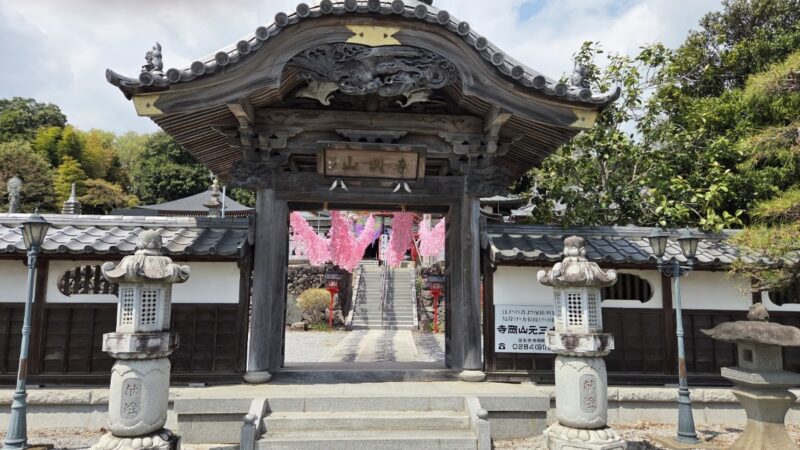
Ryukoji Temple is a Shingon sect Chizan school temple located in Yakushiji, Shimotsuke City, Tochigi Prefecture. Positioned as a branch temple of Shimotsuke Yakushiji Temple, it is known as an ancient temple with a long history dating back to the Nara period.
Its official name is “Ikumozan Ryukoji,” and it is a sacred site said to have been founded by Ganjin, the founder of Toshodaiji Temple. Even today, many worshippers visit, making it a valuable temple where one can feel the breath of history in its tranquil grounds.
History and Origin of Ryukoji Temple
Founded by Ganjin
According to temple tradition, the founding of Ryukoji Temple dates back to the 5th year of Tenpyo Hoji (761 AD). It is said that the monk Ganjin (688-763), who came to Japan from Tang China after enduring many hardships, transferred the teachings of the Shanaden altar from Longxing Temple in Yangzhou, Tang China, to this location and founded “Seigunzan Longxing Temple.”
Ganjin was a high-ranking monk who, at the request of Emperor Shomu, established the ordination platform at Shimotsuke Yakushi-ji Temple and played an extremely important role in the history of Japanese Buddhism. Longxing Temple, as a temple directly associated with Ganjin, is a valuable example of Nara period Buddhist culture that is still preserved today.
Relationship with Shimotsuke Yakushi-ji Temple
Longxing Temple was established as a branch temple of Shimotsuke Yakushi-ji Temple. Shimotsuke Yakushi-ji Temple is an imperial temple established in 680 (Hakuhō 8) by the monk Soren, at the request of Emperor Tenmu, who prayed for the recovery of his empress from illness. Along with Todai-ji Temple in Nara and Kanzeon-ji Temple in Chikushi, Ryuko-ji Temple played an important role as one of the “Three Great Ordination Platforms of Japan,” bestowing the precepts upon monks.
Ryuko-ji Temple is located south of Shimotsuke Yakushi-ji Temple and has played a complementary role to Yakushi-ji Temple’s religious functions. Even today, the two temples maintain a close relationship and function as a center of Buddhist culture in the Shimotsuke region.
From the Six Schools of Nanto to Shingon Buddhism
At its founding, Ryuko-ji Temple belonged to the Six Schools of Nanto (Hosso, Kusha, Sanron, Jojitsu, Kegon, and Ritsu). The Six Schools of Nanto are a collective term for the various Buddhist sects that flourished around Heijo-kyo during the Nara period, and Ryuko-ji Temple strongly reflected the Buddhist culture of this era.
Subsequently, with the changing times, the sect also changed, and it currently operates as a temple of the Shingon Chizan sect. Shingon Buddhism is a sect of esoteric Buddhism founded by Kukai (Kobo Daishi), and the Chizan branch is a powerful branch within it, with Chishaku-in Temple in Kyoto as its head temple.
Connection with Dokyo
An essential part of discussing the history of Ryukoji Temple is its connection with Dokyo, a high-ranking priest of the Nara period. Dokyo rose to the position of Grand Minister of State and Zen Master, gaining the trust of Empress Shotoku, but after the Empress’s death, he was demoted and exiled to the position of head priest of Shimotsuke Yakushi-ji Temple.
Within the grounds of Ryukoji Temple is a mound called “Dokyo-zuka,” which is said to be Dokyo’s grave. While there are various theories regarding the veracity of this legend, it is a historical fact that Dokyo spent his later years in this area, making it an important historical site that demonstrates Ryukoji Temple’s location at the crossroads of politics and religion during the Nara period.
Highlights of the Temple Grounds
Main Hall and Principal Image
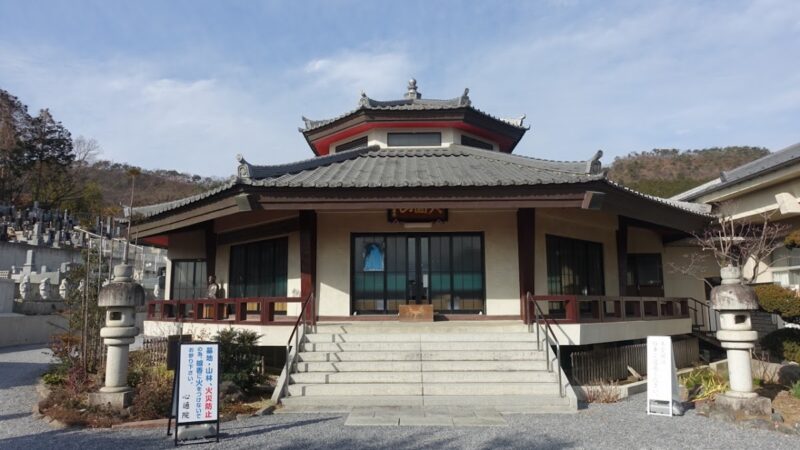
The main hall of Ryukoji Temple is an architectural masterpiece that exudes solemnity amidst a tranquil atmosphere. The principal image is said to be Dainichi Nyorai, the central Buddha of Shingon Buddhism.
Regular religious services are held in the main hall, and many believers gather for important events, especially the New Year’s Grand Goma Fire Ritual. The Goma ritual is one of the important practices of Shingon Esoteric Buddhism, believed to burn away worldly desires and grant wishes through the power of fire.
Dokyo Mound
One of the most historically valuable sites on the temple grounds is the Dokyo Mound. This mound is said to be the tomb of Dokyo, a high-ranking priest of the Nara period, and retains its circular shape.
Dokyo became a central figure in the turmoil surrounding the imperial succession due to the Usa Hachimangu Oracle Incident, and after the death of Empress Shotoku, he was exiled as the head priest of Shimotsuke Yakushi-ji Temple. He is believed to have died in this area in 772, and the area around Ryukoji Temple is thought to be his final resting place.
The Dokyo Mound is a designated cultural property of Shimotsuke City and is protected as a valuable historical site that tells the story of the political history of the Nara period.
Ganjin Yamato-son Monument
Within the temple grounds stands the “Ganjin Yamato-son Monument,” which honors the monk Ganjin. This monument was erected to pass on the achievements of monk Ganjin to future generations and is an important monument that shows the history of the temple.
Monk Ganjin was a man of indomitable spirit who, after five failed attempts to sail to Japan and losing his sight, finally arrived in Japan on his sixth voyage. Standing before this monument, one can feel the passion of this high-ranking monk who dedicated his life to the development of Japanese Buddhism.
Bodhi Tree
A magnificent Bodhi tree is planted on the temple grounds. The Bodhi tree is a sacred tree under which Shakyamuni Buddha is said to have attained enlightenment, and it holds great significance in Buddhist temples.
The Bodhi tree at Ryukoji Temple is a magnificent tree with a long lifespan, and it blooms with pale yellow flowers in early summer. The sight of monks meditating and chanting beneath this tree truly evokes the very essence of Buddhism.
Remains of the Shanaden-dan
The most important historical legacy of Ryukoji Temple is the Shanaden-dan ritual, which was brought from Tang China by the monk Ganjin. The Shanaden-dan is a platform for bestowing precepts, and the place where the necessary ceremonies for monks formally becoming nuns are performed.
Although the original structure no longer exists, its miraculous tradition continues to this day. Ryukoji Temple’s continued emphasis on the importance of precepts as a temple that inherits the Shanaden-dan ritual holds great significance in modern Buddhism.
Cultural Properties and Treasures
Tochigi Prefecture Designated Cultural Properties
Ryukoji Temple possesses several cultural properties designated by Tochigi Prefecture. These are valuable historical materials that tell the story of the temple’s history, which dates back to the Nara period, and are recognized for their high academic value.
In particular, ancient documents and Buddhist artifacts are indispensable resources for understanding the changes in Buddhist culture in the Shimotsuke region. These cultural properties are properly preserved, and research by scholars is continuously conducted.
Shimotsuke City Designated Cultural Properties
Among the cultural properties designated by Shimotsuke City, the aforementioned Dokyo Mound is the most famous. In addition, several other artifacts that convey the region’s history, such as stone structures within the temple grounds and old tombstones, have also been designated.
These cultural properties, along with the Shimotsuke Yakushiji Temple ruins, are exhibited and explained at the “Shimotsuke Yakushiji Historical Museum,” and are also used in local history education.
Temple Treasures and Ancient Documents
Ryukoji Temple possesses numerous temple treasures and ancient documents that are not open to the public. These include the temple’s history, records of successive chief priests, and Edo period parishioner registers.
These materials are valuable primary sources for studying the social and religious history of the Shimotsuke region, and the temple receives requests for research from universities and research institutions.
Annual Events and Memorial Services
New Year’s Grand Goma Ritual
The most important of Ryukoji Temple’s annual events is the “New Year’s Grand Goma Ritual,” held at the beginning of the year. The Goma ritual is one of the fundamental practices of Shingon Esoteric Buddhism, where a fire is lit on a Goma altar, and prayer sticks are thrown while inviting various deities and offering prayers.
During the New Year’s Grand Goma Ritual, prayer sticks imbued with the wishes of parishioners for family safety, business prosperity, protection from evil, and academic success are burned, praying for a year of peace and prosperity. The sight of the flames rising towards the heavens is magnificent, attracting many worshippers.
Nigatsudo Shuni-e Ceremony
Ryukoji Temple also holds a memorial service modeled after the Shuni-e ceremony, known as the “Omizutori” (water-drawing) ceremony at Todaiji Temple in Nara. The Shuni-e ceremony is a traditional Buddhist ritual in which people confess their sins and impurities and pray for peace and a bountiful harvest.
This ceremony also demonstrates the relationship with Shimotsuke Yakushi-ji Temple and is a valuable opportunity to carry on the tradition of Buddhist rituals that have continued since the Nara period.
4.3 TAISHI “Spreading the Spirit of Harmony to the World” Dedicatory Calligraphy
In recent years, Ryukoji Temple has held a dedicatory calligraphy event on April 3rd, the anniversary of Prince Shotoku’s death, with the theme “Spreading the Spirit of Harmony to the World.” This is a modern attempt to disseminate Buddhist teachings and the spirituality of Japanese culture through the creation of large-scale works by calligraphers.
Prince Shotoku is known for the spirit of the Seventeen-Article Constitution, “Harmony is to be valued,” and is a figure who greatly contributed to the development of Japanese Buddhism. This event is attracting attention as a new form of religious and cultural activity that connects tradition and modernity.
Regular Memorial Services
Monthly memorial services, including monthly Goma fire rituals and ancestral memorial services, are held. Members are free to participate, providing an opportunity to engage with Buddhist teachings in their daily lives.
Furthermore, spring and autumn equinox services and Obon services are observed according to tradition, serving as a spiritual anchor for the local community.
Access and Visiting Information for Ryukoji Temple
Transportation Access
Access by Train
- Approximately 30 minutes on foot from JR Utsunomiya Line “Jichi Medical University Station”
- Approximately 5 minutes by taxi from Jichi Medical University Station
Access by Car
- Approximately 15 minutes from Kita-Kanto Expressway “Mibu IC”
- Approximately 20 minutes from Tohoku Expressway “Tochigi IC”
- Parking: Parking space for visitors is available on the temple grounds (limited spaces; public transportation is recommended during large events)
Location
〒329-0431 Yakushiji, Shimotsuke City, Tochigi Prefecture
Ryukoji Temple is located south of the Shimotsuke Yakushiji Temple ruins and is within walking distance of the Shimotsuke Yakushiji Historical Museum. The surrounding area is dotted with Nara period ruins, making it an ideal location for a historical walk.
Visiting Hours and Admission Fee
- Visiting Hours: Anytime during the day (excluding times of religious services)
- Admission Fee: Free entry to the temple grounds (advance notice is recommended for viewing the main hall)
- Goshuin (temple stamp): Available (advance notice is recommended as staff may be absent)
Precautions for Visiting
Ryukoji Temple is a temple that still conducts religious activities. Please note the following points when visiting:
- Please visit the temple grounds in silence
- Photography is permitted only within the temple grounds, but please refrain from taking photos inside the main hall or during religious services
- Please do not enter historical sites such as the Dokyo Mound
- Please take all your trash with you
- Parking is limited, so please use public transportation whenever possible
Nearby Tourist Attractions
Shimotsuke Yakushiji Temple Ruins
The Shimotsuke Yakushiji Temple Ruins, located a few minutes’ walk from Ryukoji Temple, are an important historical site designated as a national historic site. Archaeological excavations have revealed the layout of the temple complex during the Nara period, and visitors can see the remains of the main hall, lecture hall, and cloisters.
Currently, the site is maintained as a historical park, and there are facilities exhibiting reconstructed parts of the buildings and excavated artifacts. Visiting it in conjunction with Ryukoji Temple will allow you to gain a deeper understanding of the Buddhist culture of the Shimotsuke region during the Nara period.
Shimotsuke Yakushiji Historical Museum
Adjacent to the Shimotsuke Yakushiji Temple ruins, the historical museum displays roof tiles, Buddhist implements, and ancient documents excavated during the excavations. Detailed explanations of the history of Shimotsuke Yakushiji Temple, as well as information on the monk Ganjin and the monk Dokyo, are also available. Visiting before or after a visit to Ryukoji Temple will provide a deeper understanding.
Tenpyo-no-Oka Park
The area around the Shimotsuke Yakushiji Temple ruins has been developed as “Tenpyo-no-Oka Park,” featuring a vast lawn and walking paths. Beautiful cherry blossoms in spring and autumn foliage in fall, it’s a place where you can enjoy both historical exploration and nature walks.
Shimotsuke Roadside Station
If you’re visiting by car, we recommend stopping by Shimotsuke Roadside Station. You can purchase fresh local produce and specialty products, and enjoy local cuisine from Shimotsuke City at the restaurant.
The Charm and Points of Interest of Ryukoji Temple
Experiencing the History of the Nara Period
The greatest charm of Ryukoji Temple is the opportunity to directly experience its history, which dates back to the Nara period, over 1200 years ago. The fact that it was founded by the great Buddhist monk Ganjin and is also the final resting place of the historically important figure Dokyo speaks volumes about the significance of this temple.
Walking through the temple grounds, you can feel the faith of ancient people and the spirit of the era in a tranquil space far removed from the hustle and bustle of modern times.
Understanding Ryukoji Temple in conjunction with Shimotsuke Yakushiji Temple
When visiting Ryukoji Temple, we highly recommend visiting the Shimotsuke Yakushiji Temple ruins together. The two temples had a relationship as a branch temple and the main temple, forming the center of Buddhist culture in the Shimotsuke region during the Nara period. By understanding the scale and layout of the temple complex at the Shimotsuke Yakushiji Temple ruins and experiencing the continuing form of faith at Ryukoji Temple, you can feel the continuity of Buddhist culture connecting history and the present.
Meditation and Prayer in the Quiet Temple Grounds
Ryukoji Temple is a locally rooted temple that has not been commercialized for tourism. Therefore, the temple grounds are always quiet, maintaining an environment suitable for meditation and prayer.
Sitting quietly under the Bodhi tree and reflecting on the teachings of Buddhism that have continued since ancient times will be a precious opportunity to regain the spiritual richness that is often lost in modern society.
Seasonal Expressions
Ryukoji Temple also offers the beauty of nature in each of the four seasons. In spring, the cherry blossoms bloom in the temple grounds; in early summer, the Bodhi tree blossoms are fragrant; and in autumn, the autumn leaves color the grounds. The temple grounds, enveloped in the silence of winter, are also exceptional.
By visiting multiple times in different seasons, you will discover different facets of the temple.
The Future and Preservation Activities of Ryukoji Temple
Cultural Property Protection Efforts
Ryukoji Temple is continuously working to protect its valuable cultural properties and historical sites. The remains within the temple grounds, including the Dokyo Mound, are regularly surveyed and preserved to ensure their transmission to future generations.
The temple also collaborates with the cultural property protection departments of Tochigi Prefecture and Shimotsuke City, cooperating in academic research. Through these activities, the historical value of Ryukoji Temple is being scientifically clarified, and its importance is becoming widely recognized.
Collaboration with the Community
Ryukoji Temple values its ties with the local community and is utilized as a place for local school education and lifelong learning. It accepts elementary and junior high school students for history lessons and holds lectures for local residents.
Furthermore, it cooperates in promoting tourism in Shimotsuke City, playing a role in community development themed around “the historical romance of the Tenpyo era.”
Strengthening Information Dissemination
In recent years, Ryukoji Temple has also focused on disseminating information through its official website and social media. We regularly update information on events, the temple grounds, and historical explanations to convey the temple’s appeal to a wider audience.
We are particularly conscious of passing on Buddhist culture to younger generations and are working to disseminate contemporary content.
Summary
Ryukoji Temple, located in Shimotsuke City, Tochigi Prefecture, is a historically significant temple founded by the monk Ganjin and where Dokyo met his end. It has a history of over 1200 years, serving as a precious sacred site that preserves the Buddhist culture of the Nara period and as a place of faith for the local people.
As a branch temple of Shimotsuke Yakushiji Temple, Ryukoji Temple, which inherits the Shanaden-dan teachings, continues to be an active religious temple of the Shingon Chizan sect. Within the temple grounds, historical remains such as the Dokyo Mound and the Ganjin Yamato-son Monument remain, conveying the spirit of ancient Japanese Buddhist culture to visitors.
Spending time in the tranquil temple grounds, reflecting on history and engaging with Buddhist teachings, will be a valuable spiritual experience for those of us living in modern society. Visiting Ryukoji Temple in conjunction with the Shimotsuke Yakushiji Temple ruins will allow you to gain a deeper understanding of the Buddhist culture of the Shimotsuke region during the Nara period.
When you visit Tochigi Prefecture, be sure to visit Ryukoji Temple and experience the atmosphere of this sacred site steeped in 1200 years of history.