Complete Guide to Jinnein Temple | History, Highlights, and Visiting Information for the 68th Temple of the Shikoku Pilgrimage
Jinnein Temple is a Shingon sect Daikakuji school temple located on the slopes of Mt. Kotohiki in Kanonji City, Kagawa Prefecture. As the 68th temple of the Shikoku 88 Temple Pilgrimage, it is a sacred site visited by many pilgrims. It has the unique characteristic of being the only temple in the Shikoku Pilgrimage with two sacred sites (“one temple, two sacred sites”), with Kannonji Temple (the 69th temple) standing within the same grounds.
Basic Information on Jinnein Temple
Jinnein Temple’s mountain name is Shippōzan, and its principal image is Amida Buddha. Located in a superb location on the slopes of Mt. Kotohiki overlooking the Seto Inland Sea, it has a history of over 1300 years as a sacred site where nature and faith are fused.
- Mountain Name: Shippozan
- Temple Name: Jinnein
- Sect: Shingon-shu Daikakuji-ha
- Principal Image: Amida Buddha
- Pilgrimage Site: 68th Temple of the Shikoku 88 Temple Pilgrimage
- Location: 1-2-7 Hachiman-cho, Kanonji City, Kagawa Prefecture
History of Jinnein
Origin of Founding and Nichisho Shonin
The history of Jinnein dates back approximately 1300 years to the 3rd year of Taiho (703 AD). It is said to have begun when Nichisho Shonin, a high-ranking priest of the Hosso sect, received a divine oracle from Usa Hachiman Okami while training on Kotohikiyama.
Following the oracle, Nichisho Shonin discovered a divine ship laden with koto (Japanese zither). The priest who pulled the boat ashore built a shrine on the summit of Kotohiki Mountain and enshrined it, founding Kotohiki Hachimangu. At the same time, he established Hokoin (later Kannonji) as its temple.
Kobo Daishi and Jinkeiin
During the Heian period, Kobo Daishi (Kukai), who was traveling around Shikoku, visited this area. It is said that Kobo Daishi served as the seventh chief priest of Hokoin, the temple associated with Kotohiki Hachimangu. He is said to have personally painted the Amida Buddha, the original Buddha of Kotohiki Hachimangu, and established the temple’s name as Jinkeiin.
During this period, Jinkeiin played a central role in the syncretism of Shinto and Buddhism as the betto temple of Kotohiki Hachimangu. The shrine and temple united to attract worshippers, and it flourished as a sacred site where people prayed for the safety of sailors navigating the Seto Inland Sea.
The Separation of Shinto and Buddhism in the Meiji Era and the Establishment of One Temple, Two Sacred Sites
The most significant turning point in the history of Jin’ein Temple was the Shinto-Buddhist Separation Order in the early Meiji era. Due to the Meiji government’s policy of separating Shinto and Buddhism, Kotohiki Hachimangu Shrine and Jin’ein Temple were separated.
At this time, the Buddhist principal images and artifacts from Kotohiki Hachimangu Shrine were moved to the Nishikondo (West Golden Hall) within the grounds of Kannonji Temple. This Nishikondo then became the main hall of Jin’ein Temple, the 68th temple on the Shikoku Pilgrimage. Meanwhile, the original main hall of Kannonji Temple continued to function as the 69th temple on the pilgrimage.
Thus, a unique form of “one temple, two sacred sites” was born, with two sacred sites standing side-by-side within the same grounds—a configuration unparalleled in the Shikoku Pilgrimage. This unusual arrangement remains a major feature of Jin’ein Temple today, attracting the attention of many pilgrims.
Temple Buildings and Highlights
Modern Architecture Main Hall
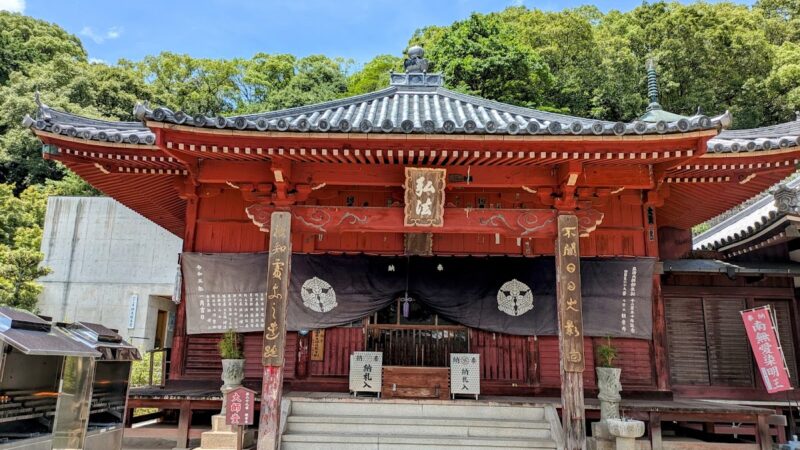
The most distinctive feature of Jin’ein Temple is its main hall, newly constructed in 2002 (Heisei 14). This main hall is designed as a modern building, distinct from traditional temple architecture, and features a structure combining unpainted wood without the use of concrete.
The building is constructed on the slope of Kotohikiyama Mountain, appearing after climbing a long stone staircase. Its modern yet harmonious design, blending tradition and innovation, leaves a strong impression on visitors. The interior of the main hall is a warm, inviting space where one can quietly worship Amida Buddha.
Layout of the Temple Grounds and Relationship with Kannonji Temple
Jin’ein Temple and Kannonji Temple share the same grounds. Upon entering the temple grounds, the main hall of Kannonji Temple is the first thing one sees, with Jin’ein Temple’s main hall located on a hill behind it. While physically adjacent, the two temples function as independent pilgrimage sites.
In one corner of the temple grounds is a sutra copying office where you can receive sutra copying for both Shinkeiin and Kannonji temples at once. This is a convenient and efficient layout for pilgrims.
Gigi-en Garden
Within the temple grounds is the Gigi-en Garden, a strolling garden believed to have been created during the Muromachi period. While this garden is located on the Kannonji side, it’s a must-see spot when visiting Shinkeiin as well.
Gigi-en Garden is a pond-centered strolling garden where you can enjoy the beauty of nature throughout the seasons. Its beauty is particularly striking during the fresh greenery of spring and the vibrant autumn foliage. The historical stonework and plantings convey the aesthetic sensibilities of the medieval period.
Kotohikiyama Mountain and Kotohiki Hachimangu Shrine
Kotohikiyama Mountain, where Jin’ein Temple is located, is a small mountain approximately 100 meters high. At its summit sits Kotohiki Hachimangu Shrine, the origin of Jin’ein Temple’s name. From the summit, you can enjoy a panoramic view of the beautiful Seto Inland Sea, and in particular, you can look down on the giant “Zenigata Sunae” (coin-shaped sand painting) on Ariake Beach.
Although Kotohiki Hachimangu Shrine separated from Jin’ein Temple due to the separation of Shinto and Buddhism, it still maintains a deep historical connection. If you have time, we recommend extending your visit to the summit after visiting Jin’ein Temple and paying your respects at Kotohiki Hachimangu Shrine as well.
Cultural Properties and Treasures
Jin’ein Temple houses valuable cultural properties that have been preserved and passed down through a long history.
Principal Image: Amida Buddha Statue
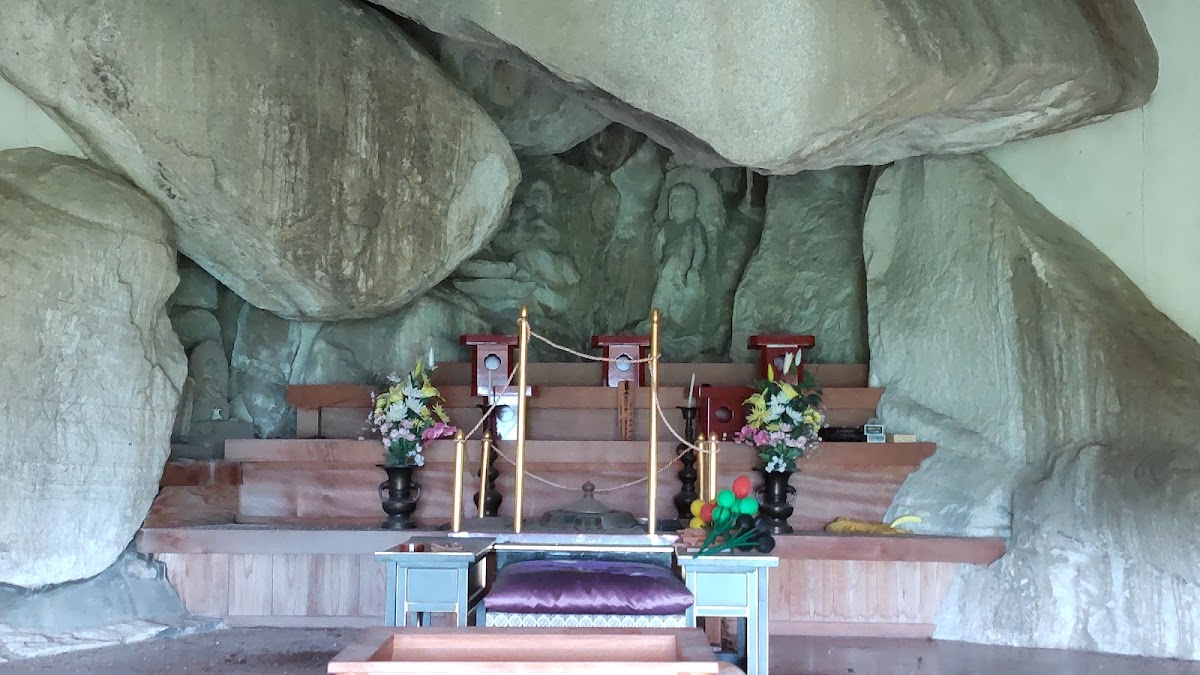
The principal image of Jin’ein Temple, the Amida Buddha statue, is a revered image said to have been painted by Kobo Daishi himself. It is carefully preserved as a hidden Buddha image and is not usually open to the public, but it may be unveiled during special religious ceremonies.
Other Buddhist Statues and Artifacts
Among the Buddhist art objects moved from Kotohiki Hachimangu Shrine during the Meiji-era separation of Shinto and Buddhism, there are valuable Buddhist statues and artifacts dating from the Heian to Kamakura periods. These are important historical materials that convey the state of faith during the era of syncretism of Shinto and Buddhism.
Method of Worship and Etiquette
Order of Worship
When visiting Jin’ein and Kannonji, the formal order is to visit Jin’ein, the 68th temple on the pilgrimage route, first, following the order of the temple numbers.
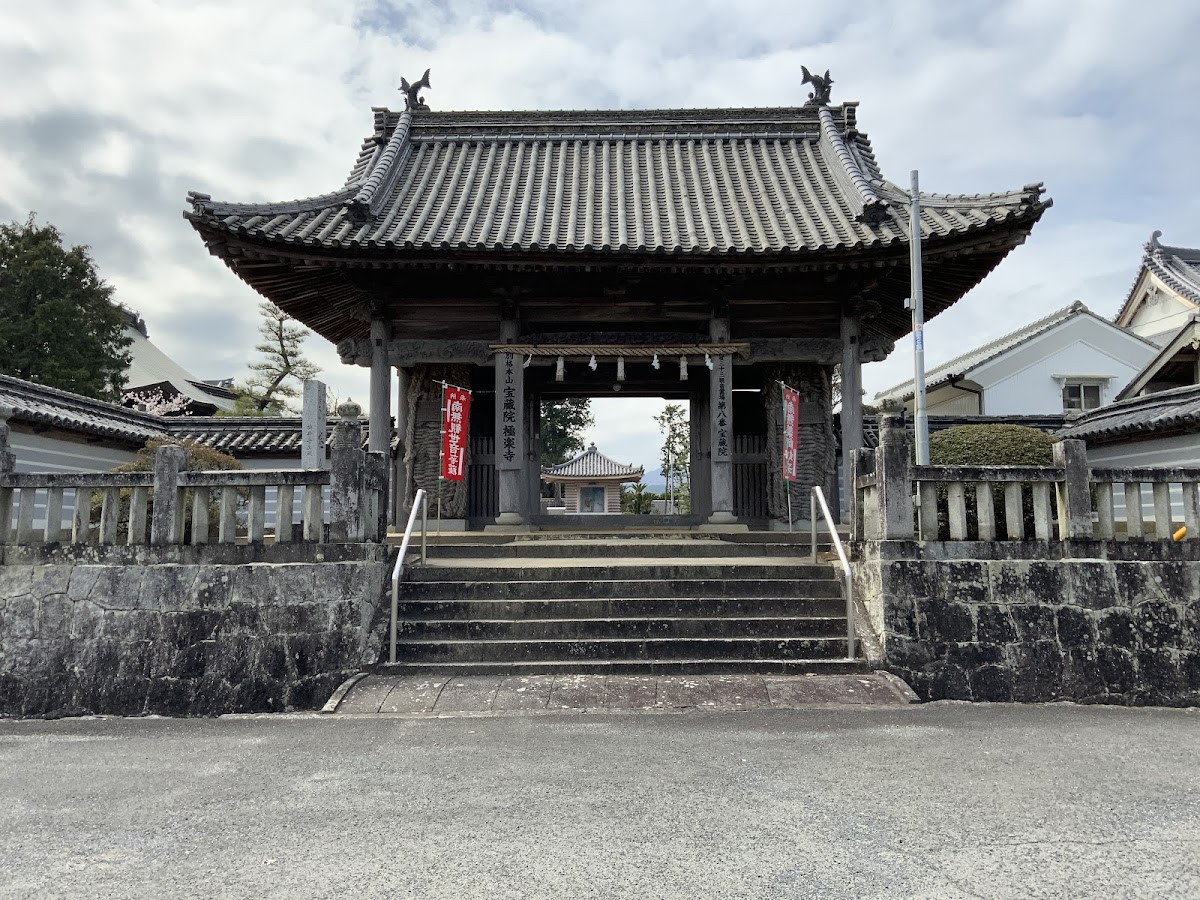
- Bow at the Temple Gate: Before entering the temple grounds, clasp your hands together and bow at the temple gate.
- Purify at the Water Basin: Purify your hands and mouth.
- Ring the Bell at the Bell Tower: Ring the bell before praying (do not ring it on your way out).
- Pray at the Main Hall: Offer candles and incense, and deposit your votive slip. Chant sutras.
- Pray at the Daishi Hall: Pray with gratitude to Kobo Daishi.
- Receive your Goshuin (temple stamp) at the Sutra Office: Receive your Goshuin.
About Sutra Receiving
The sutra office at Jinkei-in Temple is shared with Kannon-ji Temple. After receiving your sutra at Jinkei-in Temple, you can also receive your sutra at Kannon-ji Temple. The sutra receiving hours are usually 7:00 AM to 5:00 PM, but these may vary depending on the season, so it is recommended to check in advance.
Buddhist Hymn
The Buddhist hymn of Jin’ein Temple is as follows:
“The sound of the flute, the wind rustling through the pines, the playing of the koto, singing, and dancing—these are all voices of the Dharma.”
This hymn expresses that all the sounds of nature on Kotohikiyama Mountain are voices of the Buddhist Dharma.
Annual Events
Jin’ein Temple holds various Buddhist events throughout the year.
- January 1st: Shushō-e (New Year’s Ceremony)
- Spring Equinox in March: Spring Equinox Ceremony
- April 21st: Kōbō Daishi Memorial Service
- August 13th-15th: Obon Festival
- Autumn Equinox in September: Autumn Equinox Ceremony
- December 31st: New Year’s Eve Bell Ringing
Special memorial services are held during these events, attracting many worshippers.
Access
Access by Train
JR Yosan Line, Kannonji Station is the nearest station.
- Approximately 25 minutes on foot from Kannonji Station (approx. 2 km)
- Approximately 5 minutes by taxi from Kannonji Station
- Take the Kannonji City Community Bus “Kotohiki Park Line” from Kannonji Station, get off at the “Kannonji” bus stop, and walk for approximately 5 minutes.
Access by Car
- Approximately 15 minutes (approx. 7 km) from the Takamatsu Expressway, Ohnohara IC
- Approximately 20 minutes (approx. 10 km) from the Sanuki Toyonaka IC
- Parking: Free parking available on the temple grounds (approx. 50 spaces for regular cars)
Parking at Kotohiki Park is also available. Enjoying a drive along the Seto Inland Sea is one of the attractions.
Access from Previous and Next Temples
- From Temple No. 67, Daikoji: Approximately 7km, about 2 hours on foot, about 15 minutes by car
- To Temple No. 70, Honzanji: Approximately 5km, about 1 hour 30 minutes on foot, about 10 minutes by car
Kannonji Temple, Temple No. 69, is located within the same grounds, so there is no need to travel.
Inner Sanctuary and Surrounding Attractions
Kotohiki Park and Zenigata Sand Painting
The area around Kotohikiyama, where Jinkeiin Temple is located, is developed as “Kotohiki Park” and designated as a national scenic spot. A giant “Zenigata Sand Painting” modeled after a Kan’ei Tsūhō coin is painted on Ariakehama beach within the park. It is said that viewing this painting brings good health, longevity, and financial prosperity.
From the observation deck on Kotohikiyama, you can look down on this Zenigata Sand Painting and see its entirety. It is illuminated at night, creating a magical atmosphere. ### Ariake Beach
A beautiful sandy beach facing the Seto Inland Sea, it has been selected as one of “Japan’s Top 100 Beaches.” It’s also known as a famous spot for sunsets, and a stroll while watching the sun sink into the sea is highly recommended.
Other Attractions in Kanonji City
Kanonji City retains historical townscapes, such as the “Onohara” district. Also, as the central city of western Kagawa Prefecture, there are many famous Sanuki udon restaurants, so you can enjoy gourmet food after your pilgrimage.
Guidelines and Precautions for Visiting the Temple
Clothing and Items to Bring
- Since you will need to climb stone steps to reach the main hall, it is recommended to wear comfortable shoes.
- While formal pilgrimage attire such as white robes and straw hats is not required, please avoid revealing clothing.
- It is recommended to bring a pilgrimage notebook, prayer beads, and sutra book.
Photography
Photography is generally permitted on the temple grounds, but consideration for the interior of the main hall and other visitors is necessary. Please refrain from using flash photography and tripods.
Accessibility Information
Due to the stone steps leading to the main hall, wheelchair access is difficult. Those with mobility issues are advised to consult the temple in advance.
The Charm and Modern Significance of Jin’ein Temple
Jin’ein Temple is a temple where tradition and innovation coexist, boasting a history of over 1300 years while featuring a modern main hall built in 2002. Its unique form as one temple with two sacred sites reflects the historical shift of the Meiji-era separation of Shinto and Buddhism, making it a valuable example for studying Japanese religious history.
With its harmonious blend of the natural beauty of Kotohikiyama Mountain, views of the Seto Inland Sea, a historic garden, and a modern main hall, Jin’ein Temple is one of the most memorable temples on the Shikoku Pilgrimage. Its efficiency in allowing simultaneous visits to temples 68 and 69 contributes to its continued popularity among pilgrims.
Summary
Kamie-in Temple, as the 68th temple of the Shikoku 88 Temple Pilgrimage, is a unique temple with a distinctive structure of one temple and two sacred sites, alongside Kannon-ji Temple. Founded by the Hosso sect’s Nichisho Shonin, its temple name was established by Kobo Daishi, and it has undergone historical changes, including the separation of Shinto and Buddhism during the Meiji era, to reach its current form.
The modern main hall, built in 2002, the Muromachi-period garden, the natural beauty of Kotohiki Mountain, and the views of the Seto Inland Sea create a landscape that leaves a deep impression on visitors. It is a sacred site worth visiting not only for those undertaking the Shikoku pilgrimage, but also for those interested in history, architecture, and nature.
It is easily accessible from Kannon-ji Station, and there are also tourist attractions nearby, such as Kotohiki Park and the Zenigata Sand Painting. Please take your time to fully enjoy the charm of Kamie-in Temple and its surroundings.