Complete Guide to Niu Kanshobu Shrine | A World Heritage Site Founded by Kobo Daishi: Detailed Explanation of Goshuin (Shrine Seals), Access, and Highlights
What is Niu Kanshobu Shrine?
Niu Kanshobu Shrine is a historic shrine located in Jison-in, Kudoyama-cho, Ito-gun, Wakayama Prefecture. It is said to have been founded in 816 AD by Kobo Daishi Kukai, and has a history of over 1200 years as a gateway to the pilgrimage route to Mount Koya.
In 2004, it was registered as a World Heritage Site as part of the “Sacred Sites and Pilgrimage Routes in the Kii Mountain Range,” and its three main halls are designated as Important Cultural Properties of Japan. Furthermore, in 2020, it was recognized as a Japan Heritage Site as “Women’s Koya, a Site Still Thriving with Women,” attracting many visitors from both Japan and abroad.
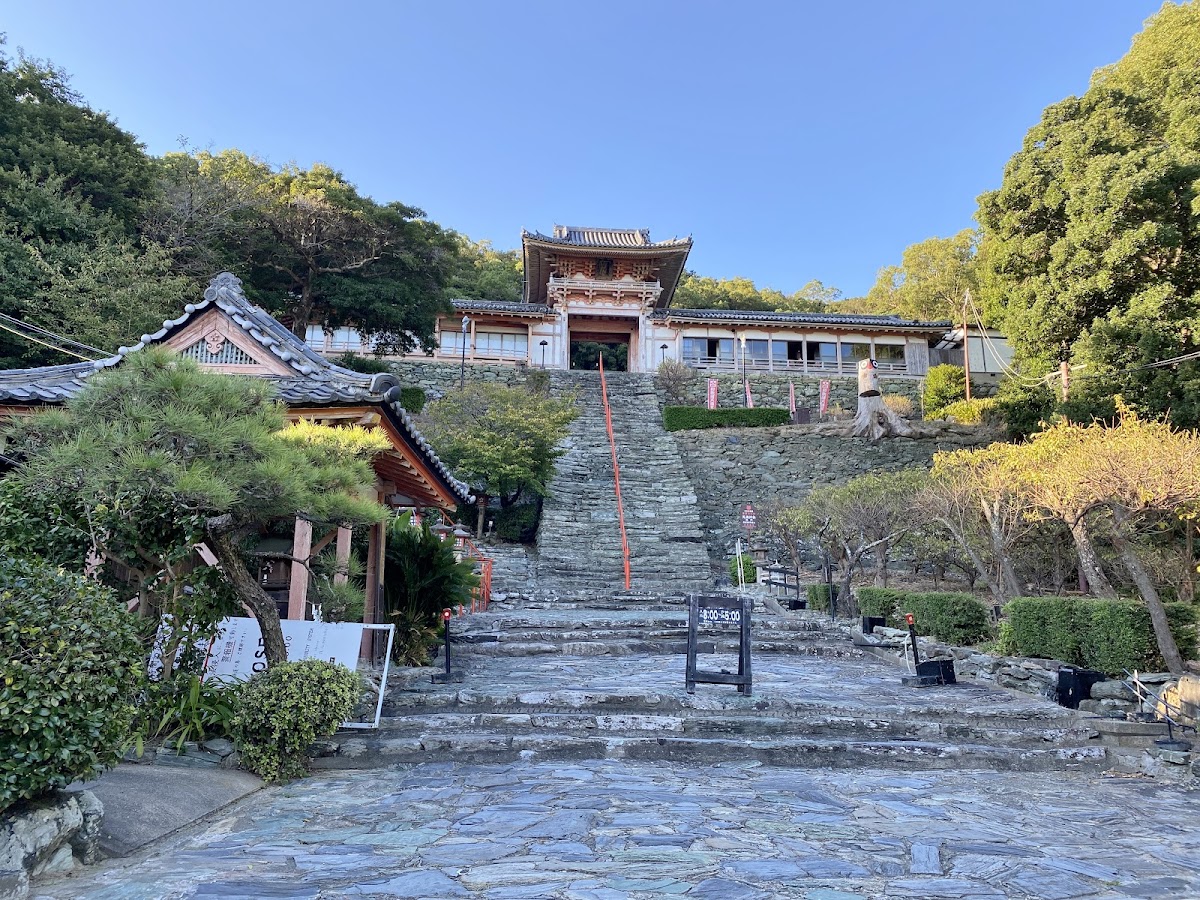
Located on the slopes of Mt. Kagurao, reached by climbing 109 stone steps from the main gate of Jison-in Temple, the shrine offers a magnificent view of the Kinokawa River below. The grounds are also known for their beautiful cherry blossoms and autumn foliage, captivating visitors with their seasonal beauty.
History and Origins of Niu Kanshofu Shrine
Founded by Kobo Daishi Kukai
In 816 AD (Kōnin 7), Kobo Daishi Kukai, seeking a sacred site for his Shingon esoteric Buddhism training, encountered a mysterious hunter on the banks of the Kinokawa River. This hunter was actually an incarnation of Niu Myōjin (the deity of Niu), accompanied by two dogs, one white and one black. It is said that the hunter released these two dogs, guiding Kukai to a sacred site on Mt. Koya.
Grateful for this mystical encounter, Kukai founded Jison-in Temple and simultaneously established Niu Kanshofu Shrine as its guardian shrine, enshrining the two deities Niutsuhime and Takanomiko. This marked the beginning of Niu Kanshofu Shrine.
The Two Black and White Dogs That Guided Kukai to Mount Koya
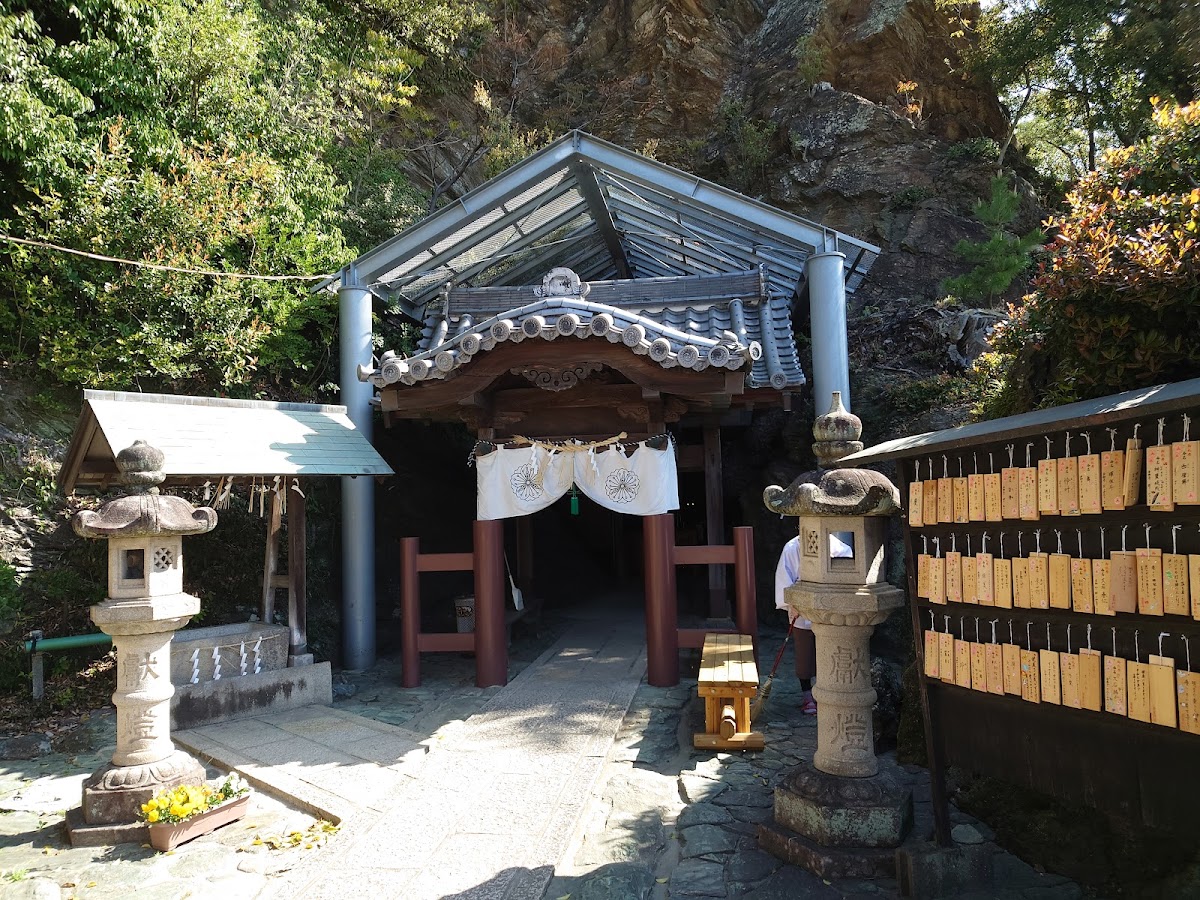
The two black and white dogs, considered divine messengers of Niu Kanshofu Shrine, can still be seen throughout the temple grounds. These two dogs have long been revered as deities of safe childbirth, fertility, and matchmaking, and are believed to bring blessings for family safety, success in examinations, business prosperity, traffic safety, exorcism, protection from evil, and recovery from illness.
The depiction of the encounter between Kobo Daishi and Takano Myojin is an important symbol of faith, visually conveying the story of Kukai’s journey to Mount Koya in search of a sacred place.
Development of Kanshobu Manor and Shrine
The shrine’s name, “Kanshobu,” originates from the “Kanshobu Manor,” a manor granted to Mount Koya by the Imperial Court. When Mount Koya became part of the Koya domain (formerly Kahoku) and 21 Kanshobu villages were established, this shrine flourished as the principal tutelary shrine.
Initially, the shrine is believed to have been located near Miyanobashi Bridge, east of the current ferry crossing. Later, when the Miroku Hall of Jison-in Temple was moved to its current location, the shrine was also moved to the higher Kaguraoyama Mountain in 1540. This relocation created the magnificent landscape with Mount Koya as its backdrop.
The Era of Shinto-Buddhist Syncretism
During the era of Shinto-Buddhist syncretism, the Niu Kanshobu Shrine and Jison-in Temple were collectively referred to as “Jison-in.” The shrine functions as the guardian shrine of Jison-in Temple, and a customary form of worship was established where worshippers would visit Jison-in Temple first, then climb the stone steps to visit Niu Kanshofu Shrine.
This tradition of syncretism of Shinto and Buddhism has continued to thrive in local faith even after the Meiji-era separation of Shinto and Buddhism, and many people still visit both Jison-in Temple and Niu Kanshofu Shrine today.
Deities and Benefits
Three deities are enshrined at Niu Kanshofu Shrine.
First Hall: Niutsuhime-no-Okami
Niutsuhime-no-Okami is the principal deity of Niutsuhime Shrine, the Ichinomiya (first-ranked shrine) of Kii Province, and is known as the local guardian deity of Mount Koya. She possesses characteristics as a goddess of mercury and agriculture, and has been revered as a guardian deity of national development and industrial progress.
Second Shrine: Takanomiko-no-Okami
Takanomiko-no-Okami is the child of Niutsuhime-no-Okami and is believed to be the hunter who guided Kukai to Mount Koya. As a god of guidance and opening paths, he is believed to bestow the blessing of leading people to the right direction at crossroads in life.
Third Shrine: Ogetsuhime-no-Okami
Ogetsuhime-no-Okami is the goddess of food who presides over abundant harvests. She is believed to bestow blessings of agricultural prosperity, business success, and family safety, and has protected the lives of local people.
These deities are generally believed to grant blessings in all aspects of life, including safe childbirth, fertility, matchmaking, family safety, success in examinations, business prosperity, traffic safety, protection from evil, and recovery from illness.
Highlights of the Shrine Grounds
Three Main Halls Designated as National Important Cultural Properties
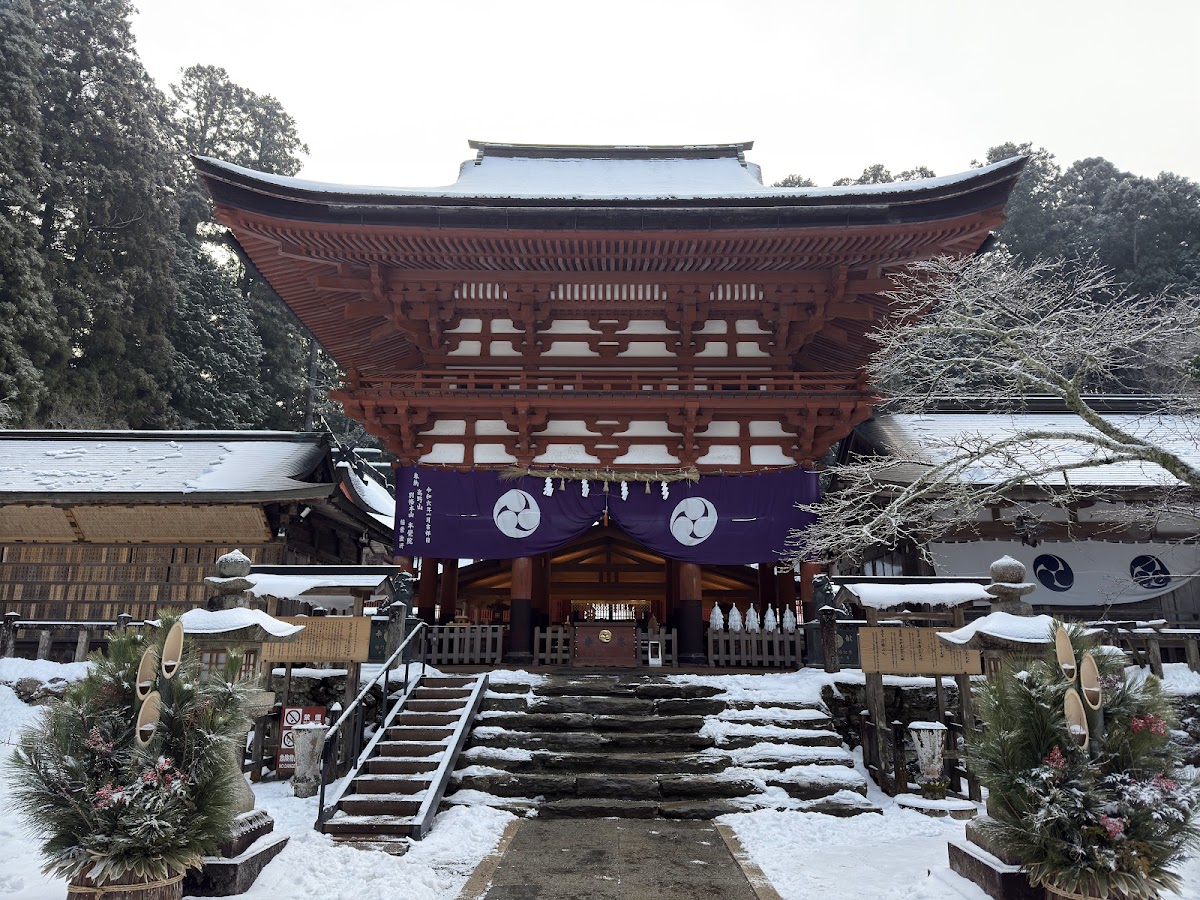
The greatest highlight of Niu Kanshofu Shrine is its three main halls, designated as National Important Cultural Properties. Arranged in a row from right to left—the First, Second, and Third Halls—each is built in the same style: a one-bay Kasuga-zukuri style with cypress bark roofing.
The vividly colored shrine buildings, set against the backdrop of the sacred Mount Koya and surrounded by lush green forest, are beautiful and deeply impress visitors. The view of the shrines from the worship hall truly embodies the solemnity of a sacred sanctuary where gods reside.
109 Stone Steps and the Stone-Walled Path
The 109 stone steps leading from the main gate of Jison-in Temple to the shrine grounds are an important element of worship. Climbing these steps, covered with ancient cherry trees, is a spiritual journey from the secular world to a sacred realm.
Along the way, you’ll find the 180th stone marker of the Koyasan Choishi-michi pilgrimage route, giving you a real sense that this is part of the pilgrimage route to Koyasan. The Choishi-michi is an important component of the World Heritage Site “Sacred Sites and Pilgrimage Routes in the Kii Mountain Range,” and the grounds of Niu Kanshofu Shrine are designated as a national historic site.
Stone Torii Gate and Vermilion Torii Gate
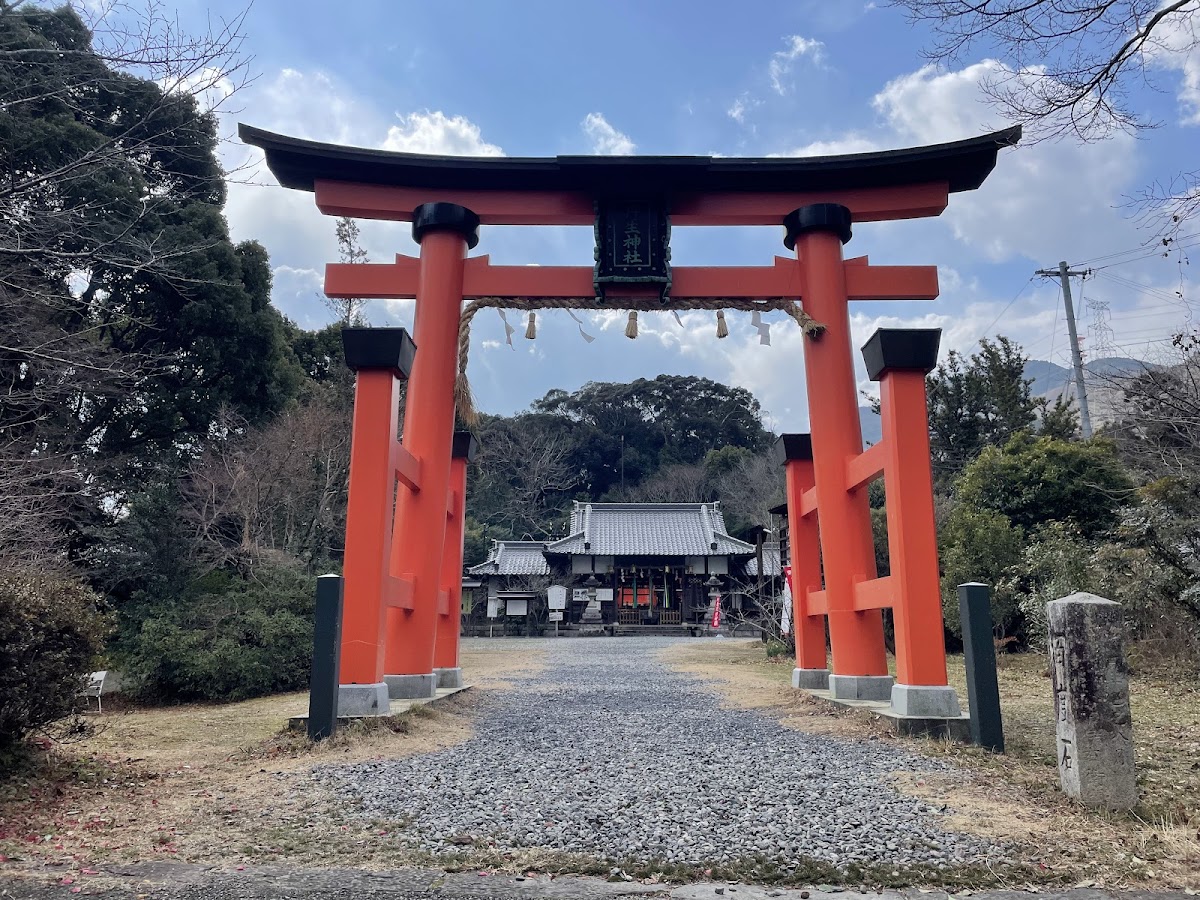
Halfway up the stone steps is a magnificent stone torii gate, and passing through it gives you the feeling that you’ve entered a sacred area. Climbing further up the steps leads to a spacious courtyard with a large vermilion torii gate. This vermilion torii gate is a symbol of the shrine and catches the eye even from afar.
Worship Hall and Kagura Hall
In front of the main shrine is the worship hall, where worshippers offer their prayers to the gods. The architectural style of the worship hall is magnificent, possessing a dignity befitting the center of Koyasan faith.
There is also a Kagura Hall on the grounds, where Kagura (sacred dance and music) are performed during festivals. Especially during special festivals such as the Year of the Horse Ema Dedication Ceremony, traditional Shinto rituals are performed, preserving the local culture to this day.
Spectacular Views
From the shrine grounds, you can enjoy a panoramic view of the Kinokawa River and the townscape of Kudoyama. Especially during cherry blossom season and autumn foliage season, the scenery below and the vibrant colors of the shrine grounds combine to create a truly spectacular view.
Relationship with Jison-in Temple
When discussing Niu Kanshofu Shrine, its relationship with Jison-in Temple is indispensable. Jison-in Temple is where Kukai’s mother, Tamayori Gozen, spent her later years, and is known as “Women’s Koyasan.”
When Kukai founded Koyasan, he could not welcome his mother to the mountaintop due to the women-forbidden rule, so he had her live at Jison-in Temple at the foot of the mountain. It is said that Tamayori Gozen visited her son on Koyasan nine times a month, which is why this area came to be called “Kudoyama” (nine-times mountain).
Jison-in Temple and Niu Kanshofu Shrine are interconnected both physically and religiously. The pilgrimage route from the main gate of Jison-in Temple, up the stone steps to Niu Kanshofu Shrine, forms a unique sacred site where women’s prayers and Koyasan faith merge.
Their registration in 2020 as a component cultural property of the Japan Heritage site “Women’s Koyasan: A Place Where Women Live On Today” officially recognized this unity.
Information on Goshuin (Shrine Seals) and Souvenirs
Goshuin (Shrine Seals)
At Niu Kanshofu Shrine, you can receive a goshuin as proof of your visit. The goshuin will have the shrine’s name and date of visit written in ink, and will be stamped with the shrine’s seal. A goshuin from a shrine of such prestige as a World Heritage site and a nationally important cultural property will be a precious memento of your visit.
Goshuin can be obtained at the shrine office, but since priests may not always be present, it is recommended to check in advance if you wish to be sure to receive one.
Items Offered
At the shrine’s office, you can receive a variety of items. Particularly popular is the “Guidance Amulet” (1,000 yen). This amulet is based on the two dogs, black and white, that guided Kobo Daishi Kukai to Mount Koya, and is believed to bring the benefit of guiding you on the right path in life.
In addition, amulets and talismans are available for various wishes, such as family safety, traffic safety, academic success, and matchmaking. Ema (votive tablets) are also available, and you can write your wish on them and dedicate them.
Annual Events and Festivals
Niu Kanshofu Shrine holds various festivals throughout the year.
New Year’s Visit
As a local shrine for New Year’s visits, many worshippers visit during the New Year. The shrine grounds are bustling with people praying for safety and prosperity in the new year, and it plays a central role in the community’s faith.
Year of the Horse Grand Votive Tablet Dedication Ceremony
Every 12 years, in the Year of the Horse, a special grand votive tablet dedication ceremony is held. This ceremony is an important traditional event of the shrine and a grand festival involving the entire community.
Spring and Autumn Grand Festivals
Grand festivals are held in spring and autumn, featuring Kagura (sacred dance) performances and Shinto rituals. The autumn festival, in particular, is an important festival expressing gratitude for the harvest.
Famous Cherry Blossom and Autumn Foliage Spot
The grounds of Niu Kanshofu Shrine are planted with many cherry and maple trees, allowing visitors to enjoy beautiful scenery throughout the seasons.
Spring Cherry Blossoms
From late March to early April, the cherry blossoms on the shrine grounds bloom all at once. The row of cherry trees along the stone steps is especially magnificent, and the experience of walking through a tunnel of cherry blossoms to worship is exceptional. Many visitors come to see the blossoms, and the shrine is enveloped in the splendor of spring.
Autumn Foliage
From mid- to late November, the shrine grounds are adorned with vibrant autumn leaves. The contrast between the vermilion shrine buildings, the red of the leaves, and the green of the evergreen trees is breathtakingly beautiful. The area is bustling with visitors enjoying the autumn colors, and many can be seen taking pictures.
Value as a World Heritage Site
Niu Kanshofu Shrine was registered as a World Heritage Site in 2004 as part of the “Sacred Sites and Pilgrimage Routes in the Kii Mountain Range.” This World Heritage Site consists of three sacred sites: Koyasan, Kumano Sanzan, and Yoshino-Omine, and the pilgrimage routes connecting them.
Niu Kanshofu Shrine is located at the starting point of the Choishi-michi, a pilgrimage route to Koyasan, and has served as a gateway to the Koyasan faith. The Choishi-michi is the main approach to Koyasan, stretching approximately 24 kilometers from Jison-in to Okunoin.
The shrine grounds are designated as part of the national historic site “Koyasan Pilgrimage Route,” making it an important place that conveys the historical and cultural value of the pilgrimage route to the present day. As a World Heritage site, its value is internationally recognized as a sacred place.
Attractions at Niu Kanshofu Shrine and its Surroundings
Town Center Area
In the heart of Kudoyama town, historical sites associated with Sanada Yukimura are scattered. Sanada-an (Zenmyoin) is known as the place where Yukimura lived in seclusion after the Battle of Sekigahara, and the Sanada Museum allows visitors to learn about Yukimura’s life.
You can enjoy a historical walk through Kudoyama by combining a visit to Niu Kanshofu Shrine from Jison-in Temple, the starting point of the Choishi-michi pilgrimage route.
Jison-in Temple (Women’s Koyasan)
Jison-in Temple is a must-visit when visiting Niu Kanshofu Shrine. The Miroku-do Hall houses a national treasure, a seated statue of Miroku Buddha, and is also famous for its “breast-shaped ema” (votive tablets) that are said to grant women’s wishes. Many women visit to pray for fertility, safe childbirth, child-rearing, and recovery from women’s illnesses.
Koyasan Choishi-michi Trail
If you have the time and energy, walking the Choishi-michi Trail to Koyasan is highly recommended. 180 stone markers (mileposts) are placed every 109 meters (approximately 109 meters), offering a moving experience of walking the same path as ancient pilgrims.
Kinokawa River Scenery
The view of the Kinokawa River from the shrine grounds truly showcases the richness of Wakayama’s nature. A promenade is also maintained along the river, allowing for a leisurely stroll.
Access Information
Access by Train
- From Nankai Electric Railway Koya Line “Kudoyama Station”: Approximately 25 minutes on foot (approx. 1.9 km)
- Walk west from the station towards Jison-in Temple and Niu Kanshofu Shrine
- There are signs along the way, so even first-time visitors can arrive without getting lost.
Access by Bus
- A community bus may operate from Kudoyama Station (please check the operating status)
- After getting off at the Jison-in-mae bus stop, it’s about a 5-minute walk to Jison-in Temple, and then about a 10-minute climb up the stone steps to reach the shrine.
Access by Car
- From Keinawa Expressway “Hashimoto IC”: Approximately 15 minutes
- Via National Route 24: Towards Jison-in Temple in Kudoyama Town
- Car Navigation Setting: Search for “Jison-in Temple” or “Niu Kanshofu Shrine”
- Parking: Free parking available at Jison-in Temple (approximately 20 spaces)
Parking Information
You can use the parking lot at Jison-in Temple. It’s free, but it gets crowded during cherry blossom and autumn foliage seasons, and during the New Year, so early arrival is recommended. If the parking lot is full, you will need to use nearby paid parking lots.
Notes on Visiting
Visiting Hours
While you can generally visit the temple grounds freely, the temple office is open from approximately 9:00 AM to 4:00 PM. If you wish to receive a Goshuin (temple stamp) or other items, it is recommended to visit within these hours.
Clothing and Preparations
Since you will need to climb 109 stone steps, it is important to wear comfortable shoes and clothing. Particular caution is needed during rainy weather, as the steps can become slippery. In summer, bring a parasol, hat, and drinks; in winter, dress warmly.
Photography
Photography is generally permitted on the temple grounds, but there are some areas where photography is prohibited, such as inside the main hall. Please be considerate of other visitors. ### Accessibility Information
Due to the 109 stone steps, access by wheelchair or stroller is difficult. Those with mobility issues should consider limiting their visit to Jison-in Temple only.
Nearby Accommodation and Dining Information
Accommodation
There are several guesthouses and inns within Kudoyama Town. Additionally, there are many temple lodgings and accommodations in the neighboring city of Hashimoto and Mount Koya, and accommodation packages combining visits to Mount Koya are popular.
Dining
Kudoyama Town is known as a famous persimmon producing area, and the “Fuyu persimmon” in particular is exquisite. In autumn, many shops offer sweets and dishes using persimmons, allowing you to enjoy local cuisine. There are also restaurants where you can savor vegetarian and regional dishes.
Summary
Niu Kanshofu Shrine is a historic shrine with over 1200 years of history, founded by Kobo Daishi Kukai. Designated as a World Heritage Site, a National Important Cultural Property, and a Japan Heritage Site, its value is recognized both domestically and internationally.
The mystical legend of two dogs, one black and one white, guiding Kukai; the three beautifully colored main halls; its deep connection with Jison-in Temple; the breathtaking scenery of cherry blossoms and autumn leaves; and its role as the starting point of the Koyasan pilgrimage route—all of these elements make Niu Kanshofu Shrine a truly special sacred place.
As you climb the 109 stone steps, one step at a time, you can reflect on the path walked by Kobo Daishi and feel the blessings of the gods. Such a soul-cleansing pilgrimage awaits you at Niu Kanshofu Shrine.
When you visit Wakayama, be sure to visit Niu Kanshofu Shrine in Kudoyama Town and experience the depth of Japanese spiritual culture. It will surely be a special and unforgettable experience.