What are Beppyo Jinja? A Complete Guide from the System’s Origins to a Nationwide List
While there are approximately 80,000 shrines throughout Japan, are you aware of the special status of shrines known as “Beppyo Jinja”? Beppyo Jinja are designated as particularly important shrines within the umbrella of the Association of Shinto Shrines. This article will provide a detailed explanation of the Beppyo Jinja system, from its historical background to its significance and a nationwide list of Beppyo Jinja.
Overview of Beppyo Jinja
Definition of Beppyo Jinja
Beppyo Jinja (Beppyo Shrine) refers to shrines that, according to Article 5 and the appendix of the “Regulations Concerning the Appointment and Dismissal of Officers and Employees” established by the Association of Shinto Shrines, are granted special treatment regarding the appointment and employment of chief priests and assistant chief priests. Currently, approximately 350 to 366 shrines nationwide are designated as Beppyo Jinja.
Importantly, it’s important to note that Beppyo Jinja is not a “ranking” of shrines, but rather a “distinction” related to the personnel of Shinto priests. This system is fundamentally different from the pre-war shrine ranking system.
Background to the Establishment of the Special List of Shrines System
The Special List of Shrines system arose from significant post-war social changes. On February 2, 1946, the GHQ (General Headquarters of the Supreme Commander for the Allied Powers) issued the Shinto Directive, abolishing state control of shrines and the modern shrine ranking system. This marked the end of the shrine ranking system, including government-sponsored shrines, which had continued since the Meiji era.
However, some form of classification or standard was necessary for managing shrine administration. In particular, it was not practical to treat all 80,000 shrines nationwide uniformly in terms of personnel management for Shinto priests. Therefore, in 1948, the Association of Shinto Shrines established the Special List of Shrines system as an alternative.
Selection Criteria for Special List Shrines
Initially, only former government-supported shrines were designated as Special List Shrines. However, a notice issued on July 9, 1951, “Regarding the Selection of Shrines Listed in the Special List,” established selection criteria for shrines to be added to the Special List.
The following factors are comprehensively considered in the selection process:
- History: The historical background and traditions of the shrine
- Activities: Rituals and contributions to the local community
- Financial: The economic foundation of the shrine
- Scale: The size of the shrine grounds and facilities, and the number of parishioners
- Social Influence: Importance in regional and national rituals
These factors are comprehensively considered, and designation is made upon application from the shrine.
Significance and Characteristics of the Special List Shrine System
Special Provisions in the Appointment of Shinto Priests
The most important characteristic of Special List Shrines is that special provisions are recognized in the appointment and employment of chief priests and assistant chief priests. According to the regulations of the Association of Shinto Shrines, the chief priests of shrines listed in the special register must possess specific qualifications and experience, and their appointment procedures differ from those of ordinary shrines.
This system ensures that historically significant and large shrines are staffed with priests possessing appropriate experience and abilities.
Differences from the Old Shrine Ranking System
There are fundamental differences between the pre-war shrine ranking system and the special register shrine system.
Pre-war Shrine Ranking System:
- Hierarchical ranking such as Kanpei Taisha, Kokuhei Taisha, Kanpei Chusha, Kokuhei Chusha, Kanpei Shosha, Kokuhei Shosha, and Bekkaku Kanpei-sha
- State-controlled and hierarchical ranking
- Different treatment from the state depending on the shrine rank
Special Register Shrine System (Post-war):
- Distinction for personnel management, not ranking
- Autonomous operation by the Association of Shinto Shrines
- Maintaining independence as a religious corporation
Thus, the special register shrine system differs from the pre-war hierarchical ranking system and functions purely as a practical classification. ### Relationship with Ise Grand Shrine
It’s important to note that Ise Grand Shrine is not included in the list of shrines designated as “Special List Shrines.” As the head shrine of the Association of Shinto Shrines, Ise Grand Shrine holds a special position beyond that of the Special List Shrines. Even within the regulations of the Association of Shinto Shrines, Ise Grand Shrine is treated as an exceptional entity.
Classification and Characteristics of Special List Shrines
Former Government-Sponsored and National Shrines and Post-War Rising Shrines
Special List Shrines can be broadly divided into two groups.
Special List Shrines from Former Government-Sponsored and National Shrines:
Many shrines that were government-sponsored, national-sponsored, medium-sponsored, national-sponsored, minor government-sponsored, minor national-sponsored, or special-rank government-sponsored shrines before the war have been designated as Special List Shrines. Historically important shrines such as Meiji Jingu and Kumano Hongu Taisha fall into this category.
Post-War Era Shrines with Special Listings:
Some shrines that were formerly prefectural or local shrines under the old shrine ranking system were added to the list of special-list shrines due to post-war development. These shrines met the requirements for special-listing shrines through strengthened regional influence and financial bases.
Relationship with Independent Shrines
Among shrines nationwide, there are “independent shrines” that are not included in the Association of Shinto Shrines and exist as independent religious corporations. Even if these shrines have a long history or are large in scale, they do not qualify as special-list shrines under the Association of Shinto Shrines’ system.
List of Special-Listed Shrines (by Region)
This section introduces special-listed shrines nationwide, categorized by region. Understanding the representative special-listed shrines of each region allows for an understanding of the diversity and richness of Japanese shrine culture.
Special List Shrines (Hokkaido and Tohoku Regions)
Hokkaido:
- Hokkaido Jingu (Sapporo City)
- Hakodate Hachimangu (Hakodate City)
- Sumiyoshi Shrine (Otaru City)
- Kamikawa Shrine (Asahikawa City)
- Obihiro Shrine (Obihiro City)
- Tarumaeyama Shrine (Tomakomai City)
Many of the special list shrines in Hokkaido developed alongside the Meiji era’s pioneering efforts. Hokkaido Jingu holds a particularly important position as the guardian deity of Hokkaido’s development.
Aomori Prefecture:
- Iwaki-san Shrine (Hirosaki City)
- Kushihiki Hachimangu Shrine (Hachinohe City)
Iwate Prefecture:
- Komagata Shrine (Oshu City)
- Morioka Hachimangu Shrine (Morioka City)
Miyagi Prefecture:
- Shiogama Shrine (Shiogama City)
- Osaki Hachimangu Shrine (Sendai City)
Akita Prefecture:
- Yataka Shrine (Akita City)
- Taiheizan Miyoshi Shrine (Akita City)
Yamagata Prefecture:
- Chokaisan Omokami Shrine (Yuza Town)
- Dewa Sanzan Shrine (Tsuruoka City)
Fukushima Prefecture:
- Isasumi Shrine (Aizumisato Town)
- Tsutsukowake Shrine (Tanagura Town)
Special Shrines (Kanto Region)
Ibaraki Prefecture:
- Kashima Jingu Shrine (Kashima City)
- Tokiwa Shrine (Mito City)
- Kasama Inari Shrine (Kasama City)
Kashima Jingu Shrine is one of the three major shrines of eastern Japan and has been an important shrine since ancient times.
Tochigi Prefecture:
- Nikko Futarasan Shrine (Nikko City)
- Nikko Toshogu Shrine (Nikko City)
- Utsunomiya Futarasan Shrine (Utsunomiya City)
Gunma Prefecture:
- Nukisaki Shrine (Tomioka City)
- Haruna Shrine (Takasaki City)
Saitama Prefecture:
- Hikawa Shrine (Saitama City)
- Chichibu Shrine (Chichibu City)
- Mitsumine Shrine (Chichibu City)
Chiba Prefecture:
- Katori Jingu Shrine (Katori City)
- Chiba Shrine (Chiba City)
Tokyo:
- Meiji Jingu Shrine (Shibuya Ward)
- Yasukuni Shrine (Chiyoda Ward)
- Kanda Shrine (Chiyoda Ward)
- Hie Shrine (Chiyoda Ward)
- Tomioka Hachimangu Shrine (Koto Ward)
- Okunitama Shrine (Fuchu City)
Tokyo has a high concentration of shrines designated as “special shrines,” and Meiji Jingu Shrine, in particular, boasts one of the highest visitor numbers in Japan.
Kanagawa Prefecture:
- Tsurugaoka Hachimangu Shrine (Kamakura City)
- Samukawa Shrine (Samukawa Town)
- Kawasaki Daishi Temple (Kawasaki City)
Special Shrines (Chubu Region)
Niigata Prefecture:
- Yahiko Shrine (Yahiko Village)
- Hakusan Shrine (Niigata City)
Toyama Prefecture:
- Takase Shrine (Nanto City)
- Imizu Shrine (Takaoka City)
Ishikawa Prefecture:
- Hakusan Hime Shrine (Hakusan City)
- Keta Taisha Shrine (Hakui City)
Fukui Prefecture:
- Kehi Jingu Shrine (Tsuruga City)
- Ashiwa Shrine (Fukui City)
Yamanashi Prefecture:
- Asama Shrine (Fuefuki City)
- Takeda Shrine (Kofu City)
Nagano Prefecture:
- Suwa Taisha Shrine (Suwa City, etc.)
- Togakushi Shrine (Nagano City)
- Zenkoji Daikanjin (Nagano City)
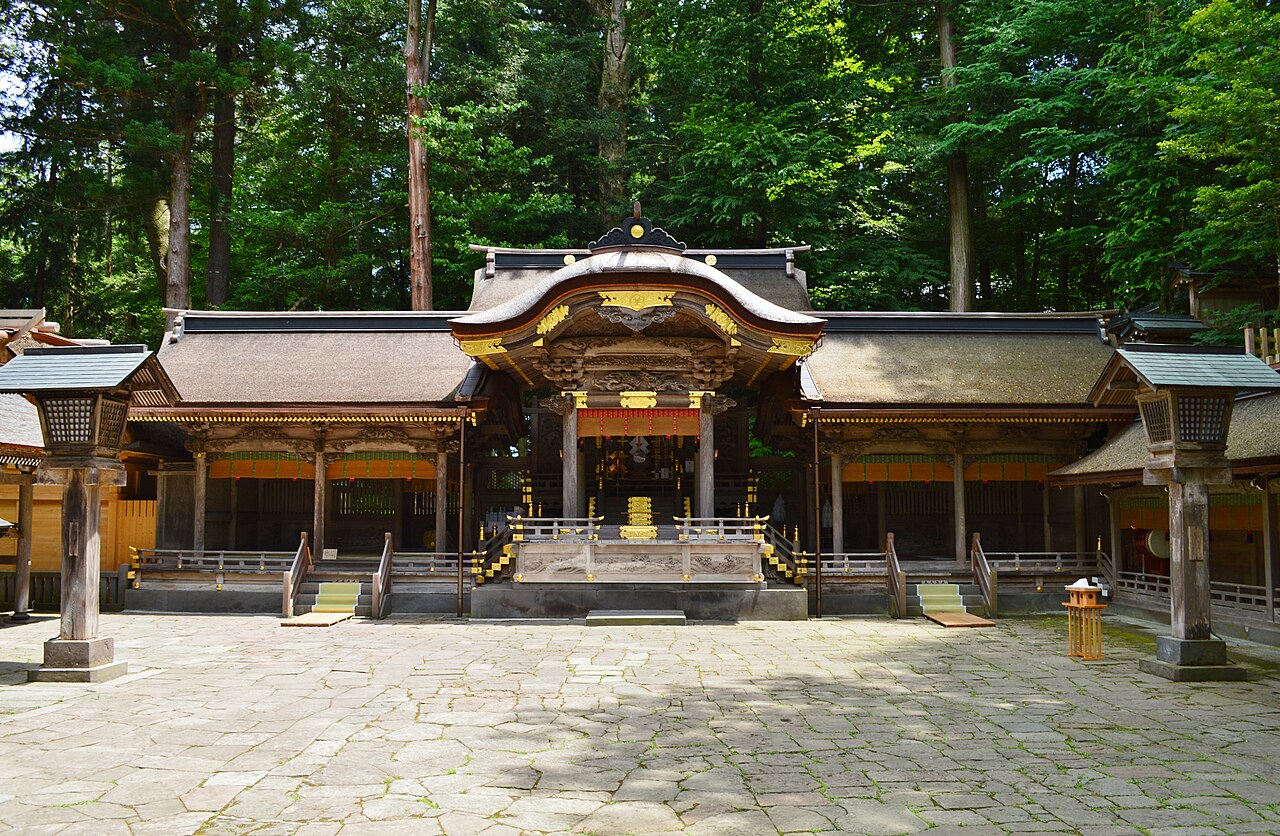
Suwa Grand Shrine is the head shrine of all Suwa shrines nationwide, consisting of four shrines: Kamisha Honmiya, Kamisha Maemiya, Shimosha Harumiya, and Shimosha Akimiya.
Gifu Prefecture:
- Nangū Taisha (Tarui Town)
- Inaba Shrine (Gifu City)
Shizuoka Prefecture:
- Fujisan Hongū Sengen Taisha (Fujinomiya City)
- Mishima Taisha (Mishima City)
- Oguni Shrine (Mori Town)
Aichi Prefecture:
- Atsuta Jingu (Nagoya City)
- Tsushima Shrine (Tsushima City)
- Togashi Shrine (Toyokawa City)
Atsuta Jingu is an important shrine that enshrines the Kusanagi-no-Tsurugi, one of the Three Sacred Treasures of Japan.
Special List Shrines (Kinki Region)
Mie Prefecture:
- Tsubaki Grand Shrine (Suzuka City)
- Tsubaki Nakato Shrine (Suzuka City)
Mie Prefecture has Ise Grand Shrine, but as mentioned above, Ise Grand Shrine is not a special list shrine, but rather a separate entity as the head shrine of the Association of Shinto Shrines.
Shiga Prefecture:
- Taga Taisha Shrine (Taga Town)
- Takebe Taisha Shrine (Otsu City)
- Hiyoshi Taisha Shrine (Otsu City)
Kyoto Prefecture:
- Kamigamo Shrine (Kyoto City)
- Shimogamo Shrine (Kyoto City)
- Yasaka Shrine (Kyoto City)
- Heian Jingu Shrine (Kyoto City)
- Fushimi Inari Taisha Shrine (Kyoto City)
- Kitano Tenmangu Shrine (Kyoto City)
- Matsuo Taisha Shrine (Kyoto City)
- Iwashimizu Hachimangu Shrine (Yawata City)
Kyoto has numerous Myojin Taisha and Kanpei Taisha shrines, and a large number of Beppyo Jinja shrines are also concentrated there.
Osaka Prefecture:
- Sumiyoshi Taisha (Osaka City)
- Osaka Tenmangu (Osaka City)
- Hiraoka Shrine (Higashi-Osaka City)
Hyogo Prefecture:
- Ikuta Shrine (Kobe City)
- Minatogawa Shrine (Kobe City)
- Hirota Shrine (Nishinomiya City)
- Nishinomiya Shrine (Nishinomiya City)
Nara Prefecture:
- Kasuga Taisha (Nara City)
- Omiwa Shrine (Sakurai City)
- Kashihara Jingu (Kashihara City)
Nara Prefecture boasts many of Japan’s oldest shrines. Omiwa Shrine, for example, retains a primitive form of worship, lacking a main hall and considering Mount Miwa itself as the sacred object of worship.
Wakayama Prefecture:
- Kumano Hongu Taisha (Tanabe City)
- Kumano Hayatama Taisha (Shingu City)
- Kumano Nachi Taisha (Nachikatsuura Town)
- Hinokuma Jingu/Kunikake Jingu (Wakayama City)
- Niutsuhime Shrine (Katsuragi Town)
The Kumano Sanzan (Three Grand Shrines of Kumano) are internationally known as a component of the World Heritage Site “Sacred Sites and Pilgrimage Routes in the Kii Mountain Range.”
Special Shrines (Chugoku Region)
Tottori Prefecture:
- Ube Shrine (Tottori City)
Shimane Prefecture:
- Izumo Taisha (Izumo City)
- Miho Shrine (Matsue City)
- Sata Shrine (Matsue City)
Izumo Taisha is nationally famous as a shrine for matchmaking, and it is believed that all the gods from across Japan gather there during the month of Kannazuki (the month without gods).
Okayama Prefecture:
- Kibitsu Shrine (Okayama City)
- Kibitsuhiko Shrine (Okayama City)
- Okayama Prefectural Gokoku Shrine (Okayama City)
Hiroshima Prefecture:
- Itsukushima Shrine (Hatsukaichi City)
- Hayatani Shrine (Hatsukaichi City)
- Hiroshima Gokoku Shrine (Hiroshima City)
Itsukushima Shrine is a World Heritage Site and one of Japan’s most representative shrines, known for its large torii gate standing in the sea.
Yamaguchi Prefecture:
- Sumiyoshi Shrine (Shimonoseki City)
- Hofu Tenmangu Shrine (Hofu City)
Special Shrines (Shikoku Region)
Tokushima Prefecture:
- Oasahiko Shrine (Naruto City)
- Tsumine Shrine (Anan City)
Kagawa Prefecture:
- Kotohira-gu Shrine (Kotohira Town)
- Tamura Shrine (Takamatsu City)
Kotohira-gu Shrine is affectionately known as “Konpira-san” and is famous for its long stone staircase.
Ehime Prefecture:
- Oyamazumi Shrine (Imabari City)
- Iyozuhiko-no-Mikoto Shrine (Matsuyama City)
Kochi Prefecture:
- Tosa Shrine (Kochi City)
- Shioe Tenmangu Shrine (Kochi City)
Special Shrines (Kyushu/Okinawa Region)
Fukuoka Prefecture:
- Hakozaki-gu Shrine (Fukuoka City)
- Munakata Taisha Shrine (Munakata City)
- Dazaifu Tenmangu Shrine (Dazaifu City)
- Kashii-gu Shrine (Fukuoka City)
Dazaifu Tenmangu Shrine enshrines Sugawara no Michizane, the god of learning, and attracts many worshippers during exam season.
Saga Prefecture:
- Yutoku Inari Shrine (Kashima City)
- Saga Shrine (Saga City)
Nagasaki Prefecture:
- Suwa Shrine (Nagasaki City)
Kumamoto Prefecture:
- Aso Shrine (Aso City)
- Fujisaki Hachimangu Shrine (Kumamoto City)
Oita Prefecture:
- Usa Jingu Shrine (Usa City)
- Isohara Hachimangu Shrine (Oita City)
Usa Jingu Shrine holds an important position as the head shrine of all Hachimangu shrines nationwide.
Miyazaki Prefecture:
- Miyazaki Jingu Shrine (Miyazaki City)
- Tsuno Shrine (Tsuno Town)
Kagoshima Prefecture:
- Kagoshima Jingu Shrine (Kirishima City)
- Kirishima Jingu Shrine (Kirishima City)
Okinawa Prefecture:
- Naminoue Shrine (Naha City)
Naminoue Shrine, the only shrine in Okinawa Prefecture with a special list of shrines, is one of the eight Ryukyu shrines. ## Shrines Formerly Designated as Special List Shrines
The designation as a Special List Shrine is not permanent, and in some cases, the designation may be revoked due to changes in circumstances.
Transition to Independent Shrines
Some Special List Shrines have chosen to separate from the Association of Shinto Shrines and become independent shrines. In this case, since they are no longer under the jurisdiction of the Association of Shinto Shrines, their designation as a Special List Shrine is automatically revoked.
Representative examples include Kehi Shrine (Fukui Prefecture) and Tomioka Hachimangu Shrine (Tokyo), but the subsequent situation varies for each shrine.
Reasons for Revocation of Designation
The main reasons for the revocation of a Special List Shrine designation are as follows:
- Separation from the Association of Shinto Shrines (becoming an independent shrine)
- Deterioration of financial situation
- Consolidation or closure of shrines
- Resignation by the shrine
However, such cases are relatively rare, and the vast majority of Special List Shrines continue to maintain their designation.
Shrines that were formerly government-supported shrines but never became specially designated shrines
Interestingly, some shrines that were government-supported shrines before the war were not designated as specially designated shrines.
Shrines not affiliated with the Association of Shinto Shrines
After the war, some former government-supported shrines chose not to join the Association of Shinto Shrines and instead operated as independent religious corporations. These shrines, even if they have a long history or are large in scale, do not qualify as specially designated shrines under the Association of Shinto Shrines’ system.
Reasons for not being designated as specially designated shrines
The reasons why former government-supported shrines were not designated as specially designated shrines include the following:
- Decrease in financial base after the war
- Consolidation of shrines
- Changes in influence in the region
- Shrine’s own policy (choosing independence as an independent shrine)
This indicates that the specially designated shrine system is not simply a continuation of the old shrine ranks, but rather a system that reflects the realities of the postwar period.
The Modern Significance of the Special List Shrine System
Practical Role in Shrine Management
The Special List Shrine system plays a crucial practical role in modern shrine management. In particular, it enables appropriate placement of Shinto priests according to their size and influence.
Relationship with Local Communities
Many Special List Shrines serve as important cultural and spiritual centers within their local communities. They function as venues for rituals marking life’s milestones, such as New Year’s visits, Shichi-Go-San (a traditional rite of passage for children), and weddings, and as centers for local festivals.
Value as a Tourism Resource
Many Special List Shrines are also important tourism resources due to their historical value and architectural beauty. Many Special List Shrines, such as Itsukushima Shrine, Izumo Taisha, and Fushimi Inari Taisha, attract numerous tourists from both within Japan and internationally.
Perspective on Cultural Property Protection
Many Special List Shrines house buildings and treasures designated as National Treasures or Important Cultural Properties, playing a vital role in the protection of Japanese cultural properties.
How to Enjoy Visiting Special Shrines
Pilgrimage to Special Shrines
A pilgrimage to special shrines throughout Japan is an excellent way to gain a deep understanding of Japanese history and culture. By visiting special shrines in each region, you can learn about the history and unique characteristics of the faith of that area.
Collecting Goshuin (Shrine Seals)
Special shrines are also important targets for collecting Goshuin, which has become popular in recent years. Each shrine’s unique Goshuin is valuable as a memento of your visit.
Participation in Festivals
Many special shrines continue to hold traditional festivals. By participating in these festivals, you can experience Japanese ritual culture.
Summary
Special shrines are a group of shrines that occupy an important position in the post-war shrine system. Established by the Association of Shinto Shrines out of practical necessity after the abolition of the pre-war shrine ranking system, this system currently encompasses approximately 350 shrines and plays a crucial role in personnel management of Shinto priests and shrine operations.
The designation of shrines as “Beppyo Jinja” (special listed shrines) is not a ranking system, but rather a distinction based on a comprehensive consideration of factors such as history, activities, finances, and size. It serves as a mechanism for the smooth operation of shrine administration under the comprehensive authority of the Association of Shinto Shrines. Beppyo Jinja throughout Japan continue to hold great significance in modern society, serving as centers of local faith and important bearers of Japanese culture.
Visiting a Beppyo Jinja offers a valuable opportunity to understand Japanese history and culture, as well as forms of faith that continue to this day. Each Beppyo Jinja in its region has its own unique history and characteristics, and you are sure to discover something new with every visit.