Negoro-ji Temple Complete Guide | Everything about the Shingi Shingon Sect’s Head Temple, boasting a National Treasure Great Pagoda and 900 Years of History
What is Negoro-ji Temple?
Negoro-ji Temple is the head temple of the Shingi Shingon sect, located in Negoro, Iwade City, Wakayama Prefecture. Its official name is “Ichijōzan Daidenpōin Negoro-ji,” and it is known as a venerable temple with a history of approximately 900 years. Its convenient access, approximately 60 minutes from Osaka city and 30 minutes from Kansai International Airport, makes it one of the prefecture’s leading tourist attractions, drawing many worshippers and tourists.
Its mountain name is Ichijōzan, and it enshrines the three principal images of Dainichi Nyorai, Kongōsattva, and Sonshōbutsuchō. It was founded by Kakuban Shōnin (Kōgyō Daishi). It possesses numerous important cultural properties, including the Konpon Daitō (Great Pagoda), which is designated a National Treasure, and is also famous as a spot for cherry blossoms and autumn leaves.
History of Negoro-ji Temple
From Founding to Development
The history of Negoro-ji Temple dates back to the first year of the Chōshō era (1132). It is said to have originated when Kakuban Shōnin, a scholar-monk of Mount Kōya, founded Daidenpō-in Temple on Mount Kōya. Kakuban Shōnin deeply studied the doctrines of Shingon Buddhism and established the “Shingi Shingon-shū” (New Version of Shingon Buddhism), adding new interpretations.
In the sixth year of the Hōen era (1140), due to doctrinal conflicts within Mount Kōya, Kakuban Shōnin left Mount Kōya and moved to Toyofuku-ji Temple in Naka-gun, Kii Province (present-day Iwade City). This Toyofuku-ji Temple became the main training ground, and was named Daidenpō-in Temple, marking the de facto beginning of Negoro-ji Temple.
Prosperity during the Muromachi Period
From the Nanboku-chō period to the Muromachi period, Negoro-ji Temple experienced remarkable development. Many learned monks gathered, and the temple grounds grew into a major religious city with numerous monastic residences (inke). At its peak, it boasted a temple territory of 720,000 koku, over 2,700 halls and temple buildings, and a massive religious force inhabited by tens of thousands of people, including warrior monks.
During this period, Negoro-ji Temple became known not only as a center of learning but also as a military force, possessing a group of warrior monks called the “Negoro-shu.” They were particularly skilled in the manufacture and use of matchlock guns, and their “Negoro guns” became famous during the Sengoku period.
Burning Down by Toyotomi Hideyoshi
In 1585, Toyotomi Hideyoshi, aiming for the unification of Japan, launched an invasion of Kishu Province. Negoro-ji Temple, along with the Saika-shu, resisted Hideyoshi, but was defeated by his overwhelming forces. Many of the temple buildings and residences within the grounds were destroyed by Hideyoshi’s army, resulting in catastrophic damage.
Fortunately, however, the main buildings in the central part of the temple grounds, such as the principal image of Buddha, the Great Pagoda, and the Great Dharma Hall, escaped destruction, and the Buddhist traditions of Negoro-ji Temple were preserved. While the temple lost its former prosperity due to the burning, its existence as a temple was maintained.
Edo Period Restoration and the Present
During the Edo period, Negoro-ji Temple gradually recovered under the patronage of the Kishu Tokugawa family. With donations and support from the lords of the Kishu domain, the repair and reconstruction of the temple buildings progressed.
Despite the impact of the anti-Buddhist movement of the Meiji era, Negoro-ji Temple continued to uphold its lineage as the head temple of the Shingi Shingon sect. From the Showa to the Heisei period, cultural property preservation and repair projects were actively carried out, and in 2015, a large-scale dismantling and repair of the Great Pagoda was completed.
Currently, its historical value and importance as a cultural property have been re-evaluated, and it has become a temple visited by many worshippers and tourists from both Japan and abroad.
Highlights of the Temple Grounds and Layout
National Treasure: Konpon Daito (Great Pagoda)
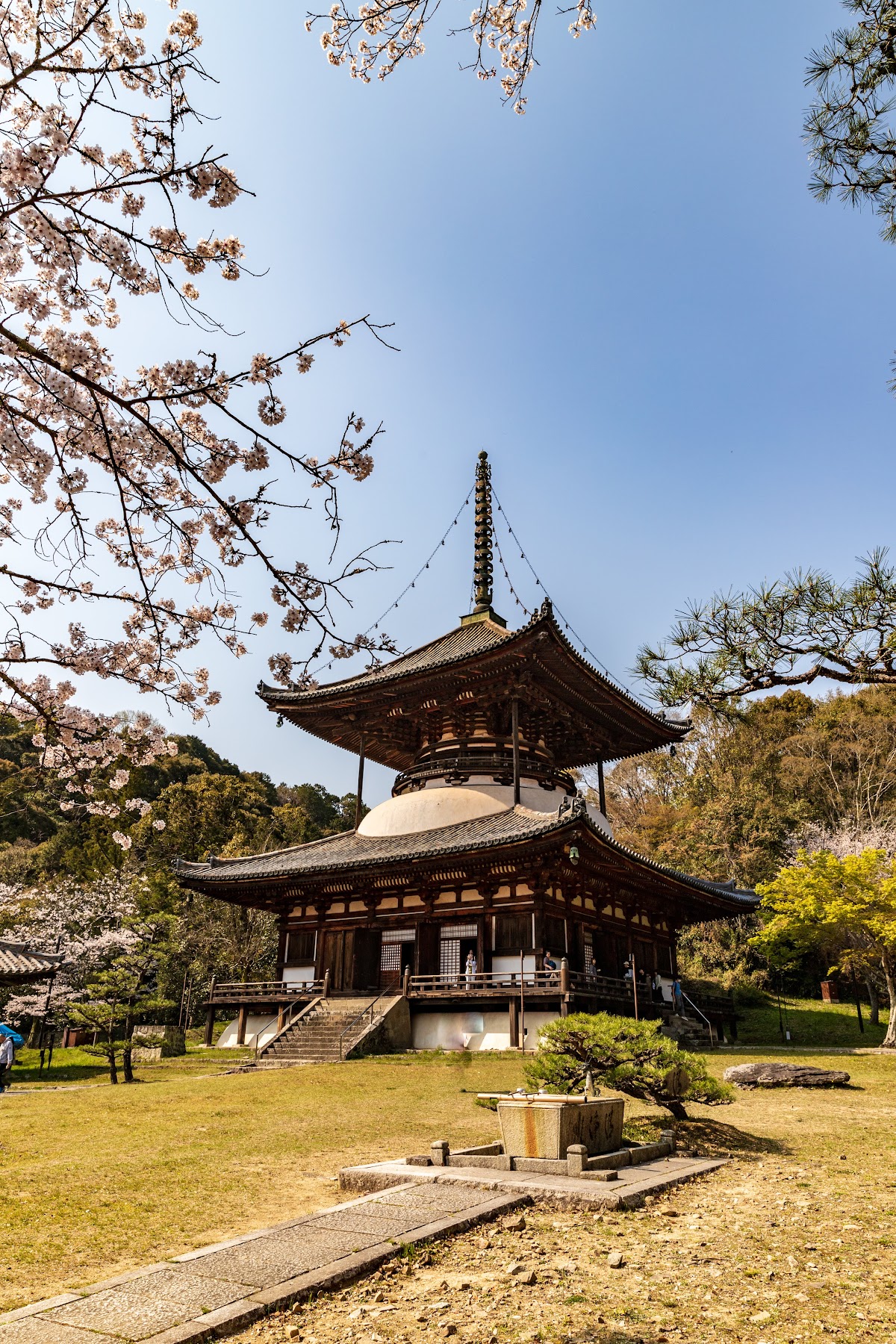
The Konpon Daito, a symbol of Negoro-ji Temple, is a National Treasure and one of the largest wooden pagodas in Japan. Standing approximately 40 meters tall, this magnificent structure in the Tahoto style is known as a masterpiece showcasing the pinnacle of Muromachi period architectural technology.
The Great Pagoda is believed to have been built around 1496 (Meio 5), and is one of the structures that miraculously escaped the burning of Toyotomi Hideyoshi’s temple. Its vermilion exterior has developed a unique patina over time, giving rise to the term “Negoro-nuri” (Negoro lacquerware). Inside, the Vajradhatu Dainichi Nyorai is enshrined as the principal image, and murals depicting the worldview of Esoteric Buddhism adorn the walls.
A major restoration completed in 2015 restored its original beauty, and it continues to welcome visitors with its majestic presence.
Daidenpo-do Hall
The Daidenpo-do Hall is the main hall of Negoro-ji Temple and is designated as an Important Cultural Property. It houses three principal images: a seated statue of Dainichi Nyorai, a seated statue of Kongosattva, and a seated statue of Sonsho Butcho, all of which are also Important Cultural Properties.
While the current building is a reconstruction from the Edo period, many Buddhist statues and artifacts from the Kamakura and Muromachi periods are preserved inside. The solemn atmosphere within the hall reflects its status as the head temple of the Shingi Shingon sect.
Daimon Gate
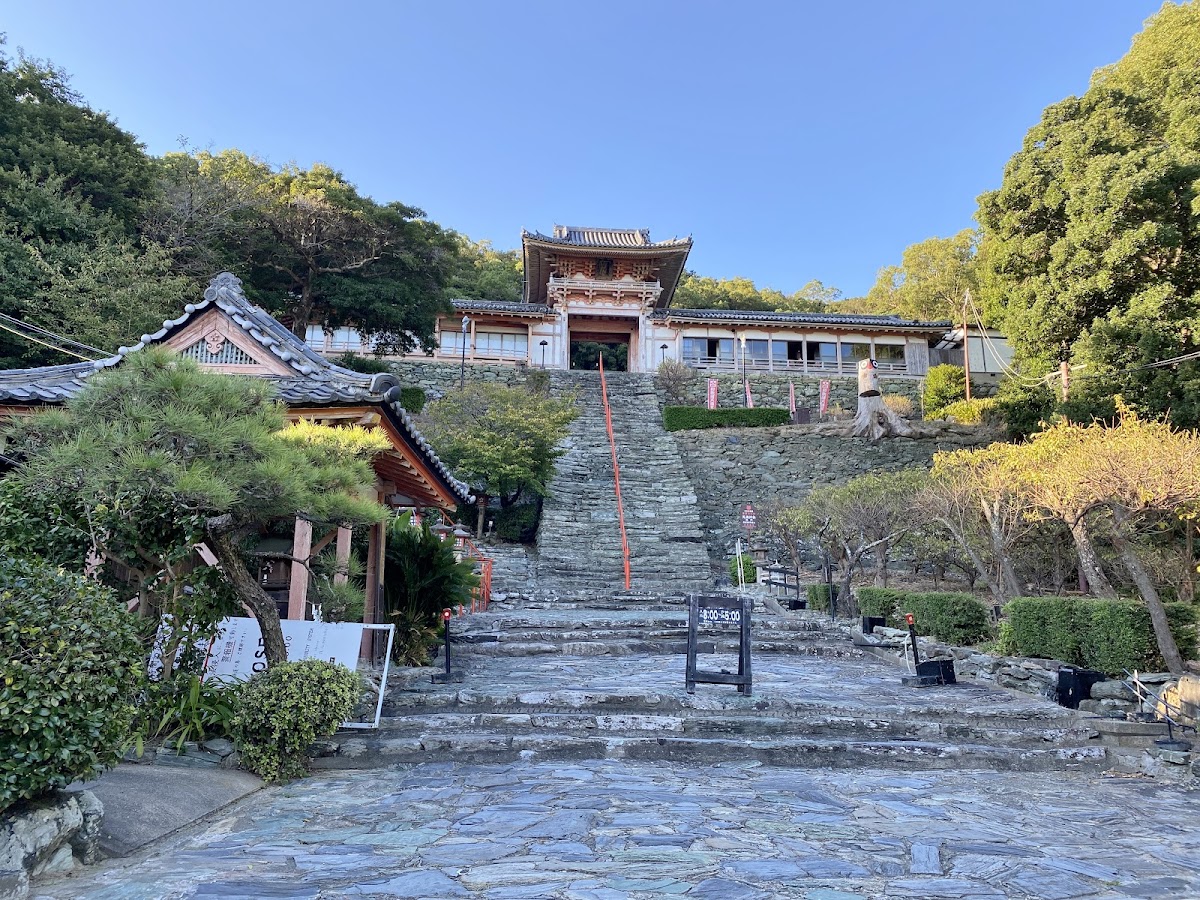
The Daimon Gate, the main gate of Negoro-ji Temple, is also designated as an Important Cultural Property. It is a three-bay, single-story gatehouse, a valuable structure that conveys the architectural style of the early Edo period. Its imposing presence evokes the vast grounds of the former Negoro-ji Temple and welcomes visitors.
Komyo Shingon Hall and Gyojado Hall
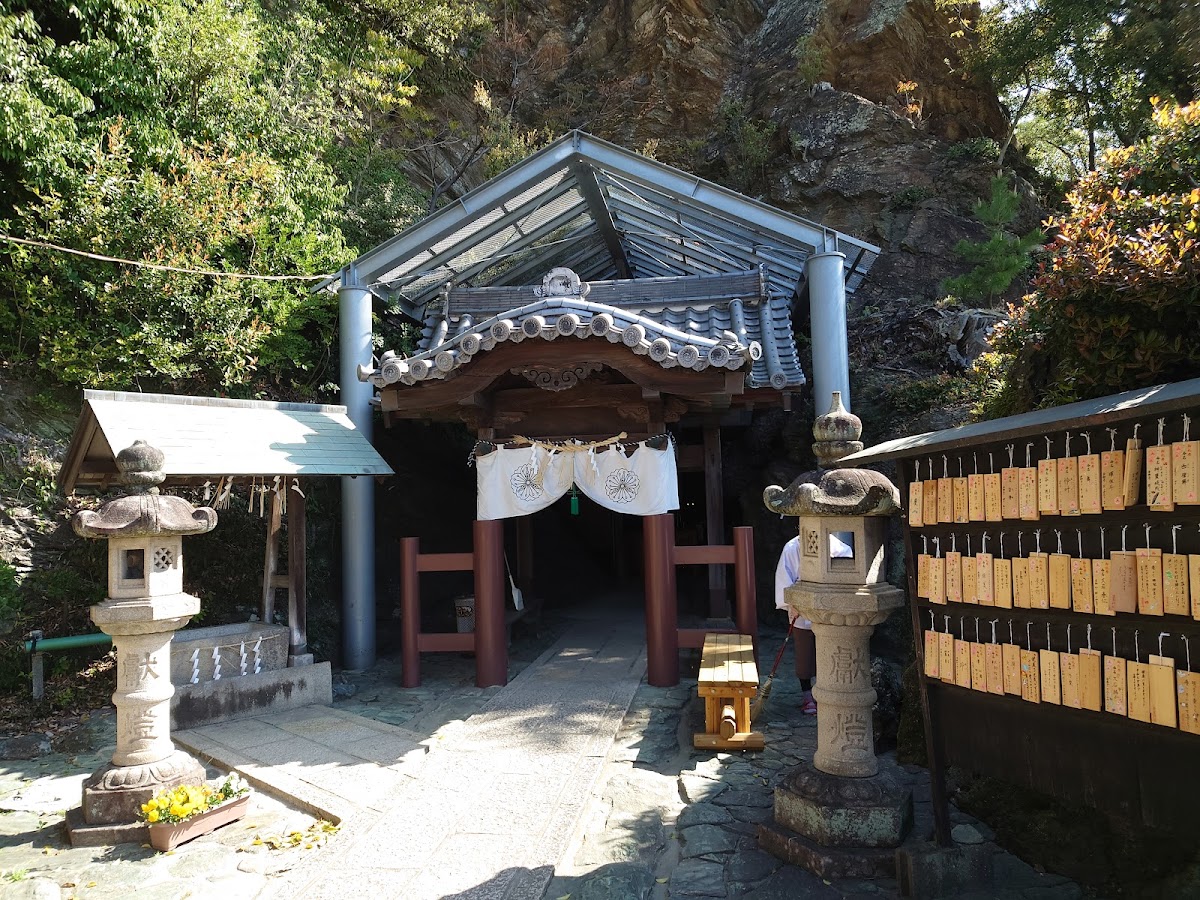
Throughout the temple grounds are several important halls and structures serving as places of worship, including the Komyo Shingon Hall and Gyojado Hall. Daily religious services are performed at the Kōmyō Shingon Hall, and the Gyōja-dō Hall enshrines En no Gyōja, the founder of Shugendō (mountain asceticism). These buildings were rebuilt after the Edo period, but they preserve the religious traditions of Negoro-ji Temple.
Shōtendō and Goma-dō Hall
The Shōtendō Hall enshrines Daishō Kangiten, attracting many worshippers praying for business prosperity and successful relationships. The Goma-dō Hall regularly holds Goma rituals and accepts prayers from believers. It is particularly known for its prayers for safe travels, attracting people from all over Japan.
Cultural Properties of Negoro-ji Temple
National Treasure
- Konpon Daitō (Great Pagoda): One of Japan’s largest wooden pagodas. A masterpiece of Muromachi period architecture.
Important Cultural Property (Building)
- Daidenpōdō: The main hall of Negoro-ji Temple. Rebuilt in the early Edo period.
- Daimon: The main gate. A three-bay, single-story gatehouse.
- Kōmyō Shingon-den
- Gyōja-dō
- Shōtendō
- Rōmon
Important Cultural Properties (Buddhist Statues and Art Objects)
- Seated Dainichi Nyorai Statue: Principal image of the Daidenpō-dō. Created in the late Heian period.
- Seated Kongōsattva Statue: Housed in the Daidenpō-dō.
- Seated Sonshō Butchō Statue: Housed in the Daidenpō-dō.
- Seated Amida Nyorai Statue
- Seated Yakushi Nyorai Statue
- Standing Fudō Myōō Statue
- Numerous other Buddhist paintings, scriptures, and crafts.
Designated as a National Place of Scenic Beauty
Negoro-ji Temple Garden is designated as a National Place of Scenic Beauty and is a valuable legacy that conveys garden design techniques from the Muromachi to Edo periods. The garden landscape, harmoniously blended with the natural beauty of the four seasons, soothes the hearts of visitors.
Scenery of the Four Seasons
Spring Cherry Blossoms
Negoro-ji Temple is also known as a famous cherry blossom viewing spot. Approximately 7,000 cherry trees are planted on the temple grounds, and they are in full bloom from late March to early April. In particular, various varieties such as Somei Yoshino cherry trees (known as Negoro cherry blossoms), mountain cherry trees, and weeping cherry trees bloom in profusion, creating a spectacular contrast with the National Treasure Great Pagoda.
During cherry blossom season, many visitors come to enjoy the blossoms, and the temple grounds are enveloped in a vibrant atmosphere. Nighttime illuminations are sometimes held, allowing visitors to enjoy the magical sight of cherry blossoms at night.
Season of Fresh Greenery
From late April to May is the season of fresh greenery. The trees on the temple grounds are dyed a vivid green, and the air is filled with freshness. This time of year is relatively less crowded, making it a hidden gem for a quiet visit.
Summer’s Green Leaves
In summer, the temple grounds, covered in deep green, create a cool and refreshing atmosphere. Walking through the shade of the trees while visiting the temple offers a refreshing escape from the heat.
Autumn Foliage
From mid-November to early December is the season for autumn leaves. The maple and other trees on the temple grounds turn red and yellow, adorning the National Treasure Great Pagoda. The autumn foliage around the Great Pagoda is particularly magnificent, attracting many photographers and tourists.
Special viewings and events are sometimes held during the autumn foliage season, allowing visitors to fully enjoy the autumn at Negoro-ji Temple.
Winter Silence
In winter, Negoro-ji Temple is quiet with fewer visitors. The snow-covered Great Pagoda is exceptionally beautiful, and visiting the temple in the crisp, clear air feels truly refreshing.
Visiting Information and Access
Visiting Hours and Admission Fees
Visiting Hours
- April to October: 9:10 AM to 4:30 PM
- November to March: 9:10 AM to 4:00 PM
Admission Fees
- Adults: 500 yen
- Junior and Senior High School Students: 300 yen
- Elementary School Students: 200 yen
*Group discounts available (20 or more people)
*Fees may differ during special viewing periods
Access Methods
By Train and Bus
- Approximately 10 minutes by bus from JR Wakayama Line “Iwade Station,” get off at “Negoro” bus stop, then approximately 25 minutes on foot
- Approximately 25 minutes by bus from Nankai Electric Railway “Tarui Station” or “Izumisunagawa Station”
- Approximately 10 minutes by bus from JR Hanwa Line “Kii Station”
By Private Car
- Approximately 10 minutes from Hanwa Expressway “Iwade IC”
- Approximately 15 minutes from the Sennan Interchange on the Hanwa Expressway
- Approximately 60 minutes from Osaka city center
- Approximately 30 minutes from Kansai International Airport
- Approximately 90 minutes from Kobe city center
- Approximately 95 minutes from Kyoto city center
Parking
- Free parking available (approximately 200 cars)
- Large buses can be parked
Address and Contact Information
Location
2286 Negoro, Iwade City, Wakayama Prefecture 649-6202
Phone Number
0736-62-1144
Official Website
https://www.negoroji.org/
Prayers and Memorial Services Available at Negoroji Temple
Car Prayers (Traffic Safety Prayer)
Negoroji Temple is particularly famous for its car prayers. You can drive your car onto the temple grounds and receive a traffic safety prayer from a monk. Many people visit when purchasing a new car, during vehicle inspections, or before traveling.
Reception Hours
- 9:00 AM – 4:00 PM (Until 3:30 PM in winter)
- No reservation required (Reservations required for groups)
Prayer Fee
- From 5,000 yen
Perpetual Memorial Service
Negoro-ji Temple also accepts perpetual memorial services. A perpetual memorial service at the head temple of the Shingi Shingon sect holds great significance in praying for the repose of the deceased’s soul.
Various Prayers
- Family Safety
- Business Prosperity
- Academic Success
- Recovery from Illness
- Finding a Good Partner
- Safe Childbirth
- Protection from Evil
We accept various prayers, including these.
Goshuin (Temple Seals)
Negoro-ji Temple offers multiple goshuin. There are goshuin for each of the temple buildings, such as the Daidenpo-do and the Daito, and goshuin notebooks are also available. Seasonal limited-edition goshuin are sometimes available, making it popular among goshuin collectors.
Goshuin (temple stamp) Reception Hours
- 9:00 AM – 4:00 PM
Offering Fee
- 300 yen – 500 yen
Annual Events
Negoro-ji Temple holds various religious events throughout the year.
Main Annual Events
January
- Shusho-e (January 1st-3rd): New Year’s memorial service
February
- Setsubun-e: Bean-throwing memorial service
March
- Spring Equinox Memorial Service
April
- Hana Matsuri (Buddha’s Birthday): Celebrating the birth of Buddha
- Sakura Matsuri: Special event coinciding with the cherry blossom season
June
- Kaisan-ki: Memorial service for the death anniversary of Kakuban Shonin (June 17th)
August
- Urabon-e: Obon memorial service
September
- Autumn Equinox Memorial Service
November
- Momiji Matsuri: Special viewing coinciding with the autumn foliage season
December
- Joya no Kane: Ringing of the temple bell on New Year’s Eve
Tourist Spots Around Negoro-ji Temple
Negoro-ji Temple Ruins
Outside the grounds of Negoro-ji Temple, the remains of the once vast temple area can be seen. It has been developed as the “Negoro-ji Historical Path,” allowing visitors to imagine its former prosperity.
Iwade City Folk Museum
Adjacent to Negoro-ji Temple, this museum exhibits the history of Negoro-ji Temple, Negoro lacquerware, and local folk materials. Visiting before or after a visit to Negoro-ji Temple will provide a deeper understanding.
Negoro-yama Genki no Mori (Negoro Mountain Genki Forest)
A nature park surrounding Negoro-ji Temple, perfect for hiking and birdwatching. A popular spot for families.
About Negoro Lacquerware
Negoro lacquerware is a traditional craft deeply connected to Negoro-ji Temple. It is a type of lacquerware where red lacquer is layered over black lacquer. As it is used, the red lacquer wears away, revealing the underlying black lacquer, creating a unique and beautiful patina.
This technique is said to have originated when the monks of Negoro-ji Temple were making everyday tableware, and it is highly valued as a craft that combines practicality and beauty. It is still preserved as a traditional craft of Wakayama Prefecture, and Negoro lacquerware can be purchased around Negoro-ji Temple.
About the Shingi Shingon Sect
The Shingi Shingon sect, with Negoro-ji Temple as its head temple, is a branch of Shingon Buddhism founded by Kakuban Shonin. It is called “Shingi” (New Meaning) in contrast to the traditional Shingon sect (Old Shingon sect), and it has established its own unique position in the interpretation of doctrine.
Kakuban Shonin deeply studied the doctrines of Esoteric Buddhism, and particularly emphasized the concept of “Mitsugon Jodo” (Esoteric Pure Land). This describes the Pure Land where Dainichi Nyorai resides, and is a unique view of the Pure Land of Esoteric Buddhism, distinct from the Pure Land of Amida Buddha. He also emphasized the teaching of “Sokushin Jōbutsu” (Attaining Buddhahood in this Life), explaining the possibility of becoming a Buddha in this world.
The Shingi Shingon sect developed around Negoro-ji Temple and continues to uphold its teachings as a major sect with branch temples throughout Japan.
About Kakuban Shonin (Kōgyō Daishi)
Kakuban Shonin (1095-1143), the founder of Negoro-ji Temple, was a high-ranking priest of the late Heian period. Born in Hizen Province (present-day Saga Prefecture), he showed a deep interest in Buddhism from a young age.
At the age of 13, he became a monk and studied Shingon Esoteric Buddhism at Ninna-ji Temple in Kyoto. After that, he ascended Mount Kōya and underwent rigorous training. Known as an excellent scholar-monk, he left behind many writings. In particular, “Mitsugon-in Hatsuro Zange-mon” and “Gorin Kuji Myōhitsu Shaku” are important documents that show the fundamental doctrines of the Shingi Shingon sect.
After descending from Mount Kōya due to doctrinal disputes, he founded Daiden-in Temple in Negoro and laid the foundation for the Shingi Shingon sect. After his death, he was bestowed the posthumous title of “Kōgyō Daishi” by the Imperial Court and is revered as the restorer of Shingon Buddhism.
Points to Note When Visiting Negoro-ji Temple
Time Required
If you wish to leisurely explore the temple grounds, allow approximately 1.5 to 2 hours. This includes viewing the interior of the National Treasure Great Pagoda, praying at the Daidenpōdō Hall, and strolling around the grounds.
Clothing and Items to Bring
The temple grounds are large and include slopes and stairs, so comfortable walking shoes are recommended. In summer, the sun is strong, so don’t forget a hat or parasol; in winter, bring warm clothing. Bringing a camera will allow you to capture the beautiful scenery of each season.
Busy Seasons
The temple is especially crowded during cherry blossom season (late March to early April) and autumn foliage season (mid-November to early December). Visiting on weekday mornings or during the off-season is recommended for a more relaxed visit.
Photography
Photography is generally permitted within the temple grounds, but there are areas where photography is prohibited, such as inside halls and of Buddhist statues. Please follow the signs and be considerate of other visitors when taking photographs.
Summary
Negoro-ji Temple, the head temple of the Shingi Shingon sect with a 900-year history, holds a significant place in the history of Japanese religious culture. Its precious cultural assets, including the National Treasure Konpon Daito pagoda, the beautiful nature that changes with the seasons, and its role as a place of faith that continues to thrive—all of these harmonize to deeply move visitors.
With excellent access from Osaka and Kansai International Airport, it’s an ideal location for day trips. Whether you’re a history buff, interested in architecture and art, want to enjoy nature, or simply seeking peace of mind, Negoro-ji Temple is open to everyone. It’s a fascinating temple where you can discover something new with every visit.
While cherry blossom and autumn foliage seasons are wonderful, a weekday visit enveloped in tranquility is also exceptional. Please visit Negoro-ji Temple at least once to experience its history, culture, and the beauty of nature.