Complete Guide to Nyoi-ji Temples | From Famous Temples Across Japan to the History and Highlights of Kyotango, Kobe, and Gunma
There are several temples named “Nyoi-ji” throughout Japan, each with its own unique history and charm. This article provides a detailed explanation of the major Nyoi-ji temples located in Kyotango City, Kyoto Prefecture, Kobe City, Hyogo Prefecture, and Minakami Town, Gunma Prefecture, including their history, highlights within the temple grounds, cultural assets, and access information.
Table of Contents
- What is Nyoi-ji?
- Nyoi-ji Temple in Kyotango City (Hoju-zan Nyoi-ji)
- Nyoi-ji Temple in Kobe City (Hikane-zan Nyoi-ji)
- Nyoi-ji Temple in Minakami Town, Gunma Prefecture
- Access Information for Each Nyoi-ji Temple
- Surrounding Area Information and Tourist Spots
What is Nyoi-ji?
The temple name “Nyoi-ji” originates from the Buddhist term “Nyoi.” “Nyoi” means “as one wishes” or “as one desires,” and is used in Buddhist terminology such as “Nyoi Hoju” (wish-granting jewel) and “Nyoirin Kannon” (wish-granting avalokiteshvara). Nyoi-ji temples throughout Japan, while each belonging to a different sect, having different founders and principal images, share this auspicious name.
This article will provide a detailed introduction to three Nyoi-ji temples, particularly those of high historical value and popularity as tourist destinations.
Nyoi-ji Temple in Kyotango City (Hoju-zan Nyoi-ji)
Overview and History
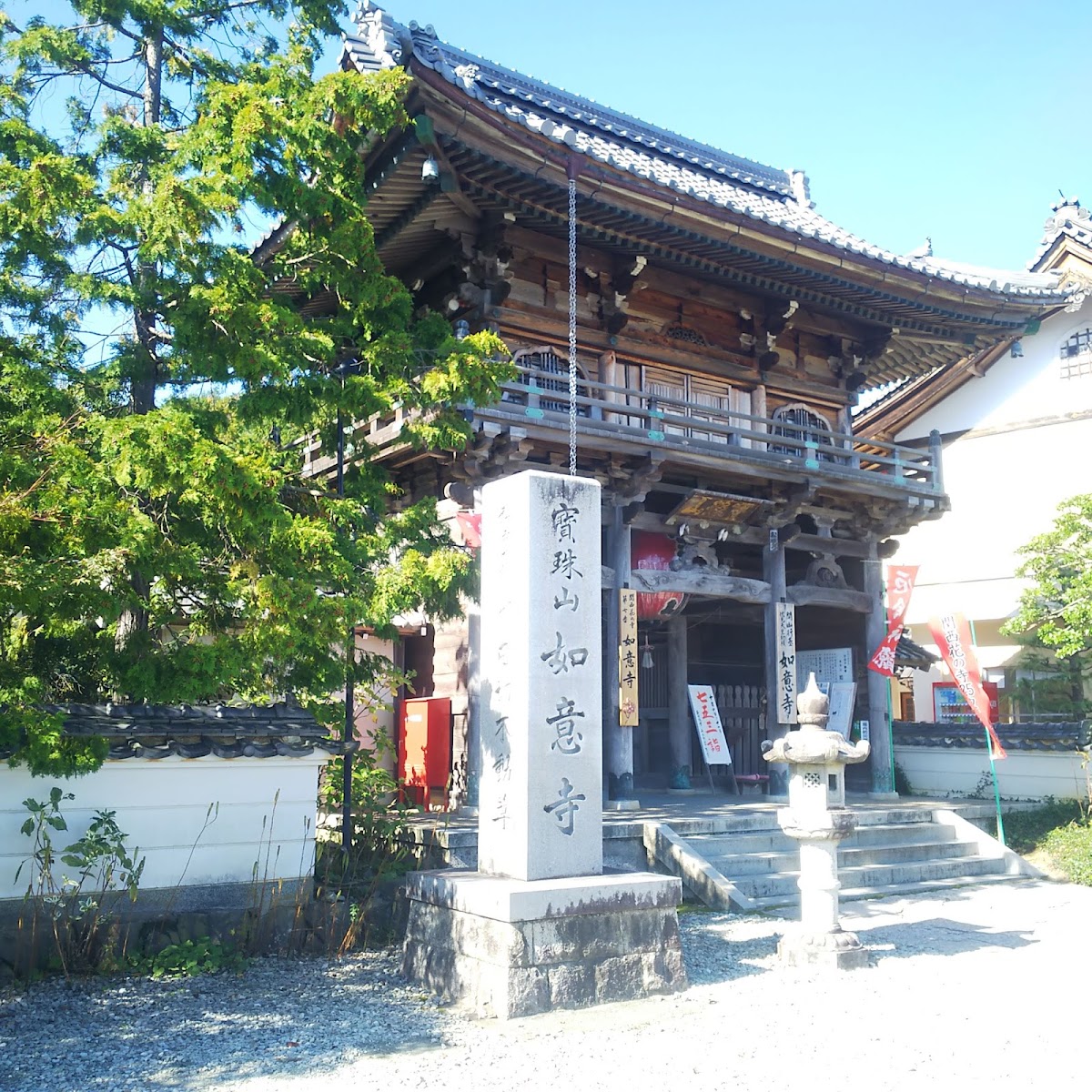
Located in Kumihama-cho, Kyotango City, Kyoto Prefecture, Nyoi-ji Temple belongs to the Koyasan Shingon sect, and its mountain name is Hoju-zan. Its principal image is the Eleven-faced Kannon Bodhisattva, and it is widely known as the seventh temple on the “Kansai Twenty-Five Flower Temples” pilgrimage route.
According to temple tradition, it was founded by the high-ranking priest Gyoki Bodhisattva during the Nara period and has flourished since ancient times as a central Shingon Buddhist temple in Kumano District, Tango Province. From the temple grounds, you can enjoy a panoramic view of Kumihama Bay, and the breathtaking scenery and seasonal flowers captivate visitors.
The Faith of Higiri Fudo-son
Nyoi-ji Temple in Kyotango City is a place of deep devotion as “Higiri Fudo-son.” Higiri Fudo-son is a Fudo Myoo (Acala) believed to grant miraculous wishes when a specific date is set for making a wish. Visitors come with various wishes, such as passing exams, business prosperity, and recovery from illness.
In particular, many people visit with urgent wishes or facing important decisions, and the temple is affectionately known as “Ofudo-san” by the local people.
Highlights of the Temple Grounds
Seasonal Flowers
The main reason Nyoi-ji Temple is known as the “Kansai Flower Temple” is the abundance of flowers that adorn its grounds.
Spring (March-May)
- Camellia: Adorns the temple grounds from March to April
- Weeping Plum: Its elegant branches are magnificent
- Japanese Andromeda (Pieris japonica): Delicate white and pink flowers bloom
- Magnolia/Kobushi Magnolia: Large white flowers announce the arrival of spring
- Japanese Azalea: Best seen from early to mid-April, when the natural forest surrounding the temple grounds blooms all at once, dyeing the entire area pink
- Mountain Cherry Blossom: Its beauty evokes the quintessential Japanese landscape
- Daffodil: Begins to bloom in early spring
- Rhododendron: Best seen around Golden Week
Summer (June-August)
- Hydrangea: Adorns the temple grounds during the rainy season
- Lotus Flower: A pure flower befitting a Buddhist temple
Autumn (September-November)
- Autumn Leaves: The trees in the temple grounds change color, creating a magnificent view of Kumihama Bay.
- Japanese Anemone: Its elegant form evokes the atmosphere of autumn.
Winter (December-February)
- Winter Camellia: Adds color to the temple grounds in winter.
- Winter Sweet: A sweet fragrance fills the air.
View of Kumihama Bay
From the grounds of Nyoi-ji Temple, you can enjoy a beautiful view of Kumihama Bay, which faces the Sea of Japan. Especially at sunset, the setting sun over the bay creates a spectacular view, making it a popular photo spot visited by many photography enthusiasts.
Cultural Properties
Nyoi-ji Temple in Kyotango City preserves cultural properties of high historical value.
Nyoi-ji Temple Plaque
This plaque is made of cypress wood and has a vertical two-piece joint structure in the center. The temple name “Nyoi-ji” is carved into the center of the inner section, which is enclosed in a single rectangular frame. The surface and sides are lacquered, and its historical value is recognized.
Annual Events
Nyoi-ji Temple holds various Buddhist ceremonies throughout the year.
- New Year’s First Shrine Visit (January 1st-3rd): Many worshippers visit to offer prayers for the new year.
- Setsubun Star Festival Goma Prayer Ceremony (February 1st-3rd): A Goma fire ritual is held to pray for protection from evil and good fortune.
- Spring Equinox Ceremony (Around the Spring Equinox)
- Autumn Equinox Ceremony (Around the Autumn Equinox)
Experiences and Activities
The following experiences are available at Nyoi-ji Temple:
- Various Prayers: Acceptance of prayers to Nichigiri Fudo-son
- Goshuin Stamp Reception: Receive a Goshuin stamp from the Kansai Flower Temples.
- Strolling the Temple Grounds: Enjoy a stroll while admiring the seasonal flowers.
- Photography: Take photos at a scenic spot with Kumihama Bay as the backdrop.
Nyoi-ji Temple (Hikane-yama Nyoi-ji Temple), Kobe City
Overview and History
Nyoi-ji Temple, located in Taniguchi, Hazutani-cho, Nishi-ku, Kobe City, Hyogo Prefecture, is a temple belonging to the Tendai sect, and its mountain name is Hikin-san. The principal image is Jizo Bodhisattva.
According to the “Nyoi-ji Old Records,” it is said that the temple was founded in 645 AD (the first year of the Taika era) by the hermit Hodo, who was influenced by the teachings of Tamonten. Hodo is a legendary figure said to be one of the Five Hundred Immortals of Tenjiku (India), and is believed to have founded many temples in the Harima and Settsu regions.
History
Nyoi-ji Temple is said to have had its current temple complex built during the Nanboku-cho period, from the late Kamakura to the early Muromachi period. During its heyday, it is said to have had 24 sub-temples and a vast precinct measuring 1744 meters east-west and 1308 meters north-south, making it a major center of the Tendai sect in the Harima and Settsu regions.
During the Sengoku period, it temporarily declined due to warfare, but it was restored during the Edo period and continues to exist today.
Temple Buildings
Nyoi-ji Temple in Kobe City has many buildings of high historical value.
Main Hall
This hall houses the principal image, Jizo Bodhisattva, and preserves the architectural style of the Edo period.
Three-Storied Pagoda
Designated as a Hyogo Prefecture Cultural Property, the three-storied pagoda is estimated to have been built during the Muromachi period and displays a beautifully balanced form. The cypress bark roof and vermilion-painted pillars are impressive.
Bell Tower
The sound of the temple bell echoing throughout the grounds has informed the local people of the time.
Cultural Properties
Nyoi-ji Temple in Kobe City houses many valuable cultural properties.
Nationally Designated Important Cultural Property
- Seated Amida Buddha Statue: This elegant Buddha statue, believed to be from the late Heian period, exhibits characteristics of the Jocho style. Hyogo Prefecture Designated Cultural Property
- Three-Storied Pagoda: As mentioned above, this is a Muromachi period building.
Kobe City Designated Cultural Property
- Standing Jizo Bodhisattva Statue: A Kamakura period work enshrined as the principal image.
- Wooden Standing Kannon Statue
- Painted Silk Portrait of Hodo Sennin: A valuable painting depicting Hodo Sennin, the temple’s founder.
These cultural properties are occasionally displayed to the public, but some are normally kept private for preservation purposes. If you wish to view them, it is recommended to contact the temple in advance.
Nature within the Temple Grounds
Nyoi-ji Temple, located on a hillside in Kobe’s Nishi Ward, is surrounded by abundant nature. You can enjoy beautiful scenery throughout the seasons: cherry blossoms in spring, fresh greenery in early summer, and autumn leaves in fall.
Especially during the autumn foliage season, the entire temple grounds are dyed in red and yellow, creating a magnificent landscape in harmony with the three-storied pagoda.
Nyoi-ji Temple, Minakami Town, Gunma Prefecture
Overview and History
Nyoi-ji Temple, located in Tsukiyono, Minakami Town, Tone District, Gunma Prefecture, is a temple with an interesting history related to a woman named Nyoi-hime.
The Story of Nyoi-hime
Nyoi-hime, considered the founder of this temple, was born during the Bunmei era (1469-1487) as the sister of Saburo Kagetoshi, the lord of Nagurumi Castle. Blessed with intelligence and beauty, and fond of waka poetry, the princess was summoned to Kyoto for her talents and became the adopted daughter of the Minister of the Right, serving in the imperial court.
The princess received the favor of Emperor Go-Hanazono, but eventually longed for her hometown and returned to Tsukiyono. It is said that she then converted to Buddhism and founded Nyoi-ji Temple in this place.
This temple, named after the princess, is affectionately known as “Nyoi-hime-sama” by the local people, and attracts many visitors praying for women’s happiness and good fortune in relationships.
Features of the Temple Grounds
Nyoi-ji Temple in Gunma Prefecture is located in the Tone River basin, in a scenic spot overlooking the three mountains of Jomo. Within the temple grounds, there are stone monuments commemorating Nyoi-hime and artifacts associated with her.
Access Information for Each Nyoi-ji Temple
Access to Nyoi-ji Temple in Kyotango City
Location
1845 Kumihama-cho, Kyotango City, Kyoto Prefecture 629-3410
Public Transportation
- Approximately 10 minutes by car from Kumihama Station on the Kyoto Tango Railway
- Taking a taxi from Kumihama Station is convenient
By Car
- Approximately 40 minutes from Kyotango-Omiya IC on the Kyoto Jukan Expressway
- Via National Route 312 and National Route 178 from Kyotango-Omiya IC on the Sanin Kinki Expressway
- Parking: Free parking available for visitors on the temple grounds
Notes
- Winter tires are recommended due to the possibility of snowfall in winter
- When searching with a car navigation system, please search by phone number or address
Access to Nyoi-ji Temple in Kobe City
Location
651-2234 259 Taniguchi, Hazutani-cho, Nishi-ku, Kobe City, Hyogo Prefecture
Public Transportation
- Get off at Sakae Station on the Kobe Electric Railway Ao Line
- From Sakae Station, take the Shinki Bus bound for “Nyoi-ji-mae” for approximately 15 minutes, and get off at the last stop.
- Since the number of buses is limited, it is recommended to check the timetable in advance.
By Car
- Approximately 20 minutes from the Daini-Shinmei Expressway “Okuradani IC”
- Approximately 30 minutes from the Sanyo Expressway “Miki-Ono IC”
- Approximately 35 minutes from the Chugoku Expressway “Yoshikawa IC”
- Parking: There is a parking lot for visitors on the temple grounds (free, approximately 20 cars)
Notes
- As it is located in a mountainous area, there are narrow sections of road.
- Please drive carefully, paying attention to oncoming traffic.
Access to Nyoi-ji Temple in Minakami Town, Gunma Prefecture
Location
Tsukiyono, Minakami Town, Tone District, Gunma Prefecture
Public Transportation
- Approximately 10 minutes by car from JR Joetsu Line “Gokan Station” or “Jomo-Kogen Station”
- Taking a taxi from the station is convenient.
By Car
- Approximately 5 minutes from Kan-Etsu Expressway “Tsukiyono IC”
- Easily accessible from National Route 17
- Parking: Parking available for visitors on the temple grounds
Surrounding Information and Tourist Spots
Around Nyoi-ji Temple in Kyotango City
Kumihama Bay
Kumihama Bay, visible from Nyoi-ji Temple, is a beautiful lagoon facing the Sea of Japan. Oyster farming is thriving in the bay, and you can enjoy fresh oysters in winter.
Kotenkyo
A sandbar separating Kumihama Bay from the Sea of Japan, this scenic spot features white sand and pine trees stretching for approximately 6 kilometers. Swimming and camping are popular activities.
Kumihama Onsenkyo
Hot spring inns are scattered around the bay, where you can enjoy seafood from the Sea of Japan and hot springs.
Kabutoyama
A mountain that is a symbol of Kumihama, offering a panoramic view of Kumihama Bay from its summit.
Around Nyoi-ji Temple, Kobe City
Taizan-ji Temple
An ancient Tendai sect temple with a national treasure main hall, said to have been founded by the hermit Hodo, just like Nyoi-ji Temple.
Kande Shrine
A shrine that has long attracted the faith of the local community, and is also known as a famous cherry blossom viewing spot in spring.
Kobe Winery
A wine brewing facility located in Nishi-ku, Kobe City, where you can enjoy tours and wine tastings.
Fruit & Flower Park
A theme park where you can enjoy seasonal flowers and fruit picking.
Around Nyoi-ji Temple, Minakami Town, Gunma Prefecture
Nagurumi Castle Ruins
The ruins of a castle where Saburo Kagetoshi, the younger brother of Princess Nyoi, served as lord, conveying the history of the Sengoku period.
Takumi no Sato
A tourist area with facilities where you can experience traditional crafts. Tanigawadake
One of Japan’s 100 Famous Mountains, you can easily enjoy the mountain scenery by ropeway.
Minakami Onsenkyo
A hot spring resort spread along the Tone River, boasting abundant hot spring water and diverse spring qualities.
Currently Popular Experiences
Goshuin Pilgrimage
Each Nyoi-ji temple offers its own uniquely designed goshuin (temple stamp). Nyoi-ji Temple in Kyotango City, in particular, is the seventh temple on the “Kansai Twenty-Five Flower Temples” pilgrimage route, and a special goshuin notebook is available.
Goshuin pilgrimages have become increasingly popular in recent years, and are enjoyed by many as an experience of quietly visiting temples while experiencing their history and culture.
Flower Temple Pilgrimage
The “Kansai Twenty-Five Flower Temples,” including Nyoi-ji Temple in Kyotango City, is a pilgrimage to 25 temples in the Kansai region that are famous for their flowers. Each temple is popular as a pilgrimage site where visitors can enjoy seasonal flowers and find peace of mind.
Photography
The beautiful scenery within the temple grounds is an ideal subject for photography enthusiasts. Especially:
- Nyoi-ji Temple in Kyotango City: Photos of flowers with Kumihama Bay in the background
- Nyoi-ji Temple in Kobe City: The contrast between the three-story pagoda and autumn leaves
- Nyoi-ji Temple in Gunma Prefecture: The scenery of the temple grounds overlooking the three mountains of Joshu
These are popular photo spots on social media.
Participation in Seasonal Events
Each Nyoi-ji Temple holds traditional Buddhist events such as Setsubun, Higan, and Obon. Participating in these events allows you to experience traditional Japanese culture and Buddhist teachings.
Notes and Manners for Visiting
Basic Manners for Visiting
- Dress Code: Please wear clean, understated clothing. Avoid revealing clothing.
- Photography: Photography is generally permitted within the temple grounds, but photography inside the main hall or of Buddha statues may be prohibited. Please be sure to check before taking pictures.
- Quietness: Please refrain from speaking loudly or making noise within the temple grounds.
- Smoking: Smoking is generally prohibited within the temple grounds. Smoking is strictly prohibited except in designated areas.
- Pets: Whether or not pets are allowed varies by temple. We recommend checking in advance.
Etiquette for Visiting a Temple
- Bow at the temple gate before entering the grounds.
- Cleanse your hands and mouth at the water basin.
- Place your offering in the offering box and bow in prayer in front of the main hall.
- If you wish to receive a temple stamp (Goshuin), please request it at the reception area after your visit.
- Bow at the temple gate when leaving.
Summary
Nyoi-ji temples, scattered throughout Japan, are valuable cultural heritage sites, each possessing its own unique history and charm.
Nyoi-ji Temple in Kyotango City is a healing spot known as the Kansai Flower Temple, where visitors can enjoy seasonal flowers and the spectacular view of Kumihama Bay. It also has a strong following of worshippers, with many visiting to offer their prayers.
Nyoi-ji Temple in Kobe City is an ancient temple founded by the hermit Hodo, and is a historically valuable temple possessing precious cultural assets such as a seated statue of Amida Buddha (a nationally designated important cultural property) and a three-story pagoda (a prefecturally designated cultural property).
Nyoi-ji Temple in Minakami Town, Gunma Prefecture, is a romantic temple steeped in the story of a woman named Nyoi-hime.
By visiting these Nyoi-ji Temples, you can experience the depth of Japanese Buddhist culture, the history of the region, and the beauty of nature throughout the seasons. We encourage you to visit each Nyoi-ji Temple and experience their charm firsthand.
For the latest information and event schedules of each temple, we recommend checking their official websites and social media. In particular, Nyoi-ji Temple in Kyotango City posts daily updates on the temple grounds and the flowering status on Instagram, so it’s a good idea to check it before visiting.