Daitsuji Temple Complete Guide: A Thorough Explanation of the History, Highlights, and Visiting Information of Nagahama Gobo
Located in the heart of Nagahama City, Shiga Prefecture, Daitsuji Temple is a branch temple of the Shinshu Otani sect (Higashi Honganji Temple). Locally known as “Nagahama Gobo” or affectionately as “Gobosan,” it is a historic temple. It is known as a valuable cultural heritage site where one can appreciate art and crafts from the Momoyama period to the Edo period, including important cultural property buildings believed to be remnants of Fushimi Castle, screen paintings by Maruyama Okyo, Kano Sanraku, and Sansetsu, and a nationally designated scenic garden.
This article provides a detailed explanation of everything you need to know before visiting Daitsuji Temple, from its historical background and architectural features to its highlights and visiting information.
About Daitsuji Temple: Formal Name and Historical Positioning
Daitsuji Temple is formally known as “Mugechizan Daitsuji,” and as a branch temple of the Shinshu Otani sect (Higashi Honganji), it has played a central role in Shinshu faith in the Kohoku region. With a vast grounds of approximately 7,000 tsubo (about 23,000 square meters), it remains a temple deeply intertwined with the townspeople’s culture of Nagahama, attracting many worshippers even today.
Why it’s called “Nagahama Gobo”
Daitsuji Temple is called “Nagahama Gobo” to reflect its status as a branch temple of Higashi Honganji. “Gobo” is an honorific title referring to a branch temple of the head temple, signifying a central temple of the Shinshu sect in the region. For followers in Kohoku, Daitsuji Temple is the center of faith and has functioned as an important training ground for preaching and spreading Buddhist teachings.
It is also affectionately known as “Gobosan” by locals, and many memorial services and events are held there throughout the year.
The History of Daitsuji Temple: A Story Continuing from Nagahama Castle
Founding and Relationship with Nagahama Castle
The origins of Daitsuji Temple date back to the late Sengoku period. It is believed to have begun in the late 1570s when followers of the Honshu sect in northern Omi Province established a general assembly hall in Nagahama to support Honganji Temple in its opposition to Oda Nobunaga. At that time, it was called “Nagahama Mido,” and a dojo (training hall) was opened within the former Nagahama Castle.
During the time when Toyotomi Hideyoshi was the lord of Nagahama Castle, Shinshu Buddhism flourished in this region, and the follower organizations were tightly united. Daitsuji Temple developed as the center of this faith community.
Development in the Edo Period and Relocation of Fushimi Castle Remains
During the early Edo period, Daitsuji Temple underwent significant development. Between the Keicho era (1596-1615) and the Genna era (1615-1624), the current main hall and great hall were constructed. These buildings are said to be relocated structures from Fushimi Castle, making them valuable architectural marvels that convey the splendor of Momoyama culture.
Fushimi Castle was a fortress renovated by Tokugawa Ieyasu using the remains of Toyotomi Hideyoshi, and it is believed that some of its buildings were moved to Daitsuji Temple. Because of this history, Daitsuji Temple has become more than just a religious facility; it is a treasure trove of cultural assets where one can experience the architectural style and arts and crafts of the Momoyama period.
Changes After the Meiji Restoration
Even after the Meiji Restoration, Daitsuji Temple continued to function as a branch temple of the Shinshu Otani sect. During the Showa period, the main hall and grand hall were designated as Important Cultural Properties, and the garden was designated a National Place of Scenic Beauty, officially recognizing its cultural value.
Currently, as a branch temple of Higashi Honganji Temple, it continues its religious activities while simultaneously preserving cultural assets and opening them to the public.
Important Cultural Property Buildings: A Collection of Architecture Showcasing the Essence of Momoyama Culture
The greatest attraction of Daitsuji Temple is its collection of buildings designated as Important Cultural Properties of Japan. These buildings, said to be remnants of Fushimi Castle, convey the magnificent and opulent style of the Momoyama period to the present day.
The Temple Gate Made of Zelkova Wood
The temple gate adorning the entrance to Daitsuji Temple welcomes visitors with its imposing structure made entirely of zelkova wood. Passing through this gate, one enters the world of Momoyama culture. The dignified style of the heavy wooden architecture speaks to its status as a branch temple.
The Main Hall: A Magnificent Space Retaining Traces of Fushimi Castle
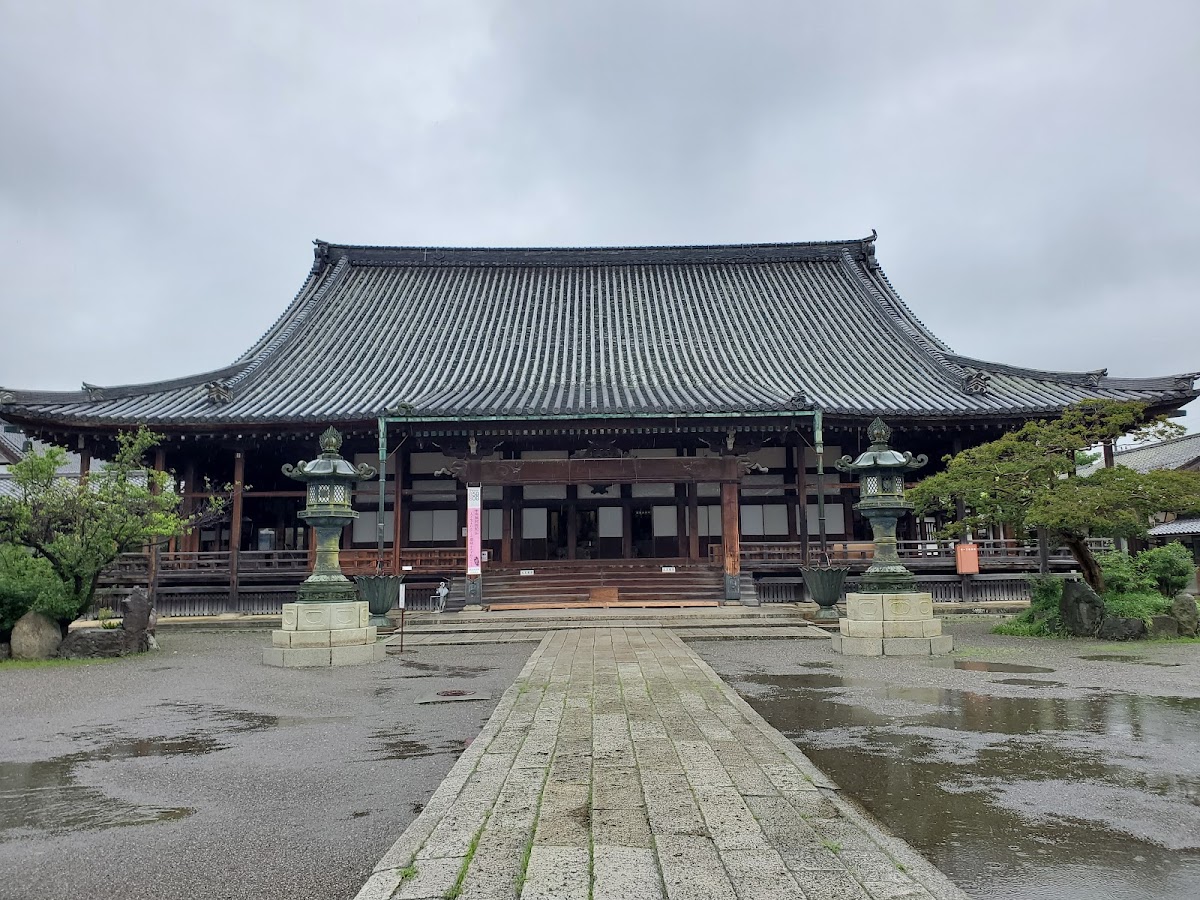
The main hall is the central building of Daitsuji Temple and is an Important Cultural Property said to have been relocated from Fushimi Castle. The interior boasts a vast space where one can appreciate the beauty of solemn Buddhist architecture.
The interior of the main hall is adorned with intricate carvings and decorations, demonstrating the high level of architectural skill of the Momoyama period. The unique structure, incorporating elements of castle architecture such as the thickness of the pillars and beams and the way the spaces are arranged, is a distinctive feature.
The Great Hall: A World of Splendid Wall Paintings
The Great Hall is also an important cultural property believed to be a remnant of Fushimi Castle, and the wall paintings adorning its interior are one of the greatest highlights of Daitsuji Temple. The Great Hall is divided into several guest rooms, each adorned with wall paintings depicting different themes.
The Great Hall, which strongly retains the architectural style from the Momoyama period to the early Edo period, is a unique space where samurai culture and temple architecture are fused.
Side Gate and Ancillary Buildings
In addition to the main hall and the Great Hall, several other buildings, including the Side Gate, are designated as important cultural properties. These buildings, together, convey the overall picture of early Edo period branch temple architecture.
A Treasure Trove of Masterpieces: Screen Paintings by Maruyama Okyo and Kano Sanraku/Sansetsu
Another major attraction of Daitsuji Temple is its collection of screen paintings by leading Edo period artists.
Works of Maruyama Okyo
Maruyama Okyo (1733-1795) was a leading painter of the mid-Edo period and is known as the founder of the Maruyama school, which emphasized realistic depiction. Daitsuji Temple houses several screen paintings by Okyo, allowing visitors to appreciate his delicate brushwork and realistic expression up close.
Okyo’s flower-and-bird and landscape paintings accurately capture the essence of nature while possessing a harmonious beauty that blends decorative elements. These works adorning the guest rooms of Daitsuji Temple are invaluable cultural assets that convey the true essence of Okyo’s art.
Magnificent Works by Kano Sanraku and Sansetsu
Kano Sanraku (1559-1635) and Kano Sansetsu (1590-1651) were Kano school painters who were active from the Momoyama period to the early Edo period. Sanraku was a leading disciple of Kano Eitoku, and Sansetsu was Sanraku’s adopted son. They left behind numerous magnificent and opulent screen paintings in the Momoyama style.
The screen paintings at Daitsuji Temple include works by Sanraku and Sansetsu with powerful brushstrokes. The vibrant colors and bold compositions on a gold background symbolize the opulent splendor of Momoyama culture.
Points to Note When Appreciating Screen Paintings
The screen paintings at Daitsuji Temple are designed to be integrated with the space of each guest room. The subjects of the paintings are selected according to the purpose and formality of the room, creating a single artistic world within the entire architectural space.
Through works depicting diverse themes such as the changing seasons, the beauty of flowers, birds, wind, and moon, and themes based on Chinese historical stories, you can experience the aesthetic sensibilities and culture of the Edo period.
Nationally Designated Place of Scenic Beauty: Ganzanken and Rantei Garden
The garden of Daitsuji Temple is known as “Daitsuji Ganzanken and Rantei Garden,” which was designated a National Place of Scenic Beauty in 1934.
Ganzanken Garden
Ganzanken is one of the guest rooms of Daitsuji Temple, and its front garden is a dry landscape garden created in the early Edo period. The simple yet refined garden, composed of white sand and stone arrangements, evokes a Zen Buddhist aesthetic.
The garden viewed from Ganzanken is designed with the perspective from the room in mind, allowing you to enjoy the spatial beauty where the architecture and garden are integrated.
The Garden of the Orchid Pavilion
The Orchid Pavilion is also an important guest room at Daitsuji Temple, and its garden has a different atmosphere from that of the Ganzanken Pavilion. The Orchid Pavilion Garden is also said to have been created in the early Edo period, and the balance of stonework and planting creates an exquisite space.
How to Enjoy the Garden
Viewing the garden of Daitsuji Temple in conjunction with the screen paintings will lead to a deeper understanding. The world of paintings inside and the natural beauty of the garden resonate with each other, providing a comprehensive aesthetic experience.
The garden displays different expressions throughout the seasons, and discovering different charms depending on when you visit is one of the pleasures.
Annual Events and Special Openings at Daitsuji Temple
Daitoji Temple holds various Buddhist services and events throughout the year.
Regular Buddhist Services
As a branch temple of the Shinshu Otani sect, important religious events such as monthly Buddhist services and Hoonko (memorial services) are held regularly. These services are open to the general public and provide an opportunity to experience the teachings of Shinshu Buddhism.
Special Openings and Cultural Events
Special openings are sometimes held in spring and autumn, allowing visitors to view screen paintings and cultural artifacts that are normally closed to the public. Cultural lectures and concerts are also held, making it a venue for cultural dissemination.
Connection to the Townscape of Nagahama
Daitoji Temple is located in the central urban area of Nagahama, close to tourist attractions such as Kurokabe Square. Visiting it in conjunction with a walk around Nagahama will allow you to gain a deeper understanding of the history and culture of this castle town.
Visiting Information: Access, Fees, and Points to Note
Access Methods
Access by Train
- Get off at Nagahama Station on the JR Hokuriku Main Line (Biwako Line), approximately 10 minutes on foot.
- Walk from Nagahama Station towards the center of Nagahama city, past the shopping street, and you will find Daitsuji Temple.
Access by Car
- Approximately 10 minutes from Nagahama IC on the Hokuriku Expressway.
- Paid parking is available around the temple grounds.
Admission Fees
- Adults: 500 yen
- Junior High School Students: 300 yen
- Elementary School Students: 200 yen
(Fees are subject to change, so please check the official website for the latest information before visiting.)
Visiting Hours
- 9:00 AM – 4:30 PM (Last entry at 4:00 PM)
- Open all year round (May be closed for religious services, etc.)
Estimated Visiting Time
If you wish to thoroughly appreciate the buildings, screen paintings, and gardens, we recommend allocating approximately 60-90 minutes.
Photography
Photography of the building’s exterior is permitted, but there may be restrictions on photography of the interior and screen paintings. Please check the photography policy on-site.
Nearby Tourist Attractions
After visiting Daitsuji Temple, you can also enjoy the surrounding tourist attractions of Nagahama.
Kurokabe Square
Within walking distance, “Kurokabe Square” is a tourist area centered around glass crafts, offering a retro townscape and shopping opportunities.
Nagahama Castle History Museum
Nagahama Castle (reconstructed keep), associated with Toyotomi Hideyoshi, features exhibits where you can learn about Nagahama’s history. It’s also a beautiful spot with views of Lake Biwa.
Keiunkan
This historical building, originally built as a guesthouse for Emperor Meiji, boasts a garden designated as a national scenic spot.
Points to Note and Etiquette When Visiting Daitsuji Temple
Etiquette for Visiting
Daitoji Temple is an active religious facility. Please observe proper religious etiquette, such as maintaining silence during prayers and refraining from visiting during religious services.
Dress Code
There are no specific dress code requirements, but appropriate and subdued attire for a temple is desirable. Since there are areas where you will need to remove your shoes, easy-to-remove shoes are recommended.
Seasonal Highlights
- Spring: Cherry blossoms and the beautiful fresh greenery of the garden
- Summer: Lush greenery of the garden
- Autumn: The contrast between autumn leaves and the screen paintings
- Winter: The tranquil garden in a snowy landscape
Daitoji Temple shows a different face in each of the four seasons, offering new discoveries with every visit.
Summary: Enjoying the Charms of Daitsuji Temple
Daitoji Temple in Nagahama City, Shiga Prefecture, is not only a religiously significant branch temple of the Shinshu Otani sect, but also a valuable cultural heritage site where you can appreciate art and crafts from the Momoyama period to the Edo period all in one place. It boasts important cultural properties such as buildings believed to be remnants of Fushimi Castle, screen paintings by Maruyama Okyo and Kano Sanraku and Sansetsu, and a nationally designated scenic garden.
Affectionately known locally as “Nagahama Gobo” or “Gobosan,” Daitsuji Temple is also open to tourists and can be considered a comprehensive cultural facility with high value in the fields of history, architecture, art, and gardens.
When visiting Nagahama, be sure to visit Daitsuji Temple and experience the splendor of Momoyama culture and the history of Shinshu faith. Its convenient location within walking distance of JR Nagahama Station is also a major attraction, making it a temple worth spending a full day exploring as a central part of Nagahama sightseeing.
The world of beauty created by the important cultural property buildings and screen paintings, and the nationally designated scenic garden, is sure to deeply impress visitors.