Hokoji Temple: A Complete Guide from the Shibata Domain Lord’s Family Temple to Famous Temples Nationwide
There are several temples named Hokoji throughout Japan. Among them, the most famous is the Soto Zen temple in Shibata City, Niigata Prefecture, which has played an important role since the Edo period as the family temple of the Mizoguchi family, the lords of the Shibata Domain. This article provides a detailed explanation of the history, cultural assets, and access methods of Hokoji temples throughout Japan, focusing on the Hokoji in Shibata City.
Hokoji Temple in Shibata City, Niigata Prefecture: The Family Temple of the Mizoguchi Family, Lords of the Shibata Domain
Overview of Hokoji Temple and its Mountain Name
Located in Suwa-cho, Shibata City, Niigata Prefecture, Hokoji Temple is a Zen temple belonging to the Soto Zen sect, and its mountain name is Kōtakusan. As the family temple of the Mizoguchi family, the lords of the Shibata Domain, it has played a role as the religious center of the domain. It was designated as a permanent temple and, during the Edo period, functioned as the Soto Zen sect’s administrative and supervisory body for temples within the Shibata domain.
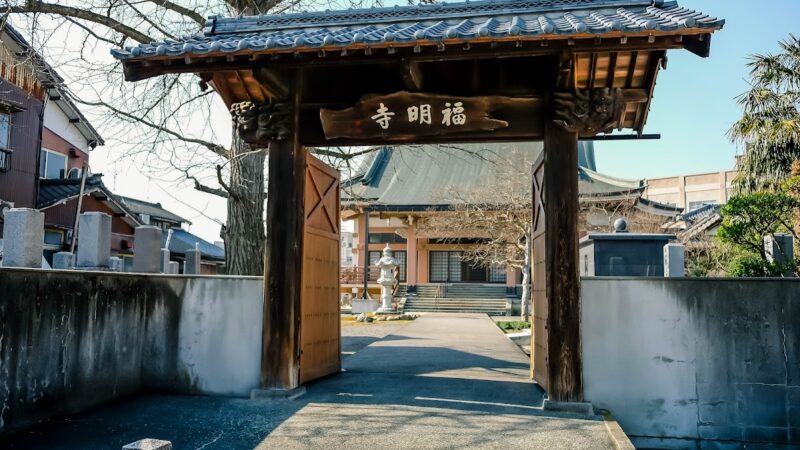
The main gate bears a plaque inscribed with “Jōtō no Hōkutsu,” signifying a sacred site of Buddhism located east of Shibata Castle, clearly indicating the purpose for which the temple was established.
History and Changes of Hōkōji Temple
Founding and Founder
Hōkōji Temple was founded by Mizoguchi Hidekatsu, the first lord of the Shibata domain. Mizoguchi Hidekatsu served Toyotomi Hideyoshi and distinguished himself on the Eastern Army side in the Battle of Sekigahara, becoming the lord of the Shibata domain with a 60,000 koku stipend in 1601. Hidekatsu established Hōkōji Temple as the spiritual pillar of the domain and as the Mizoguchi family’s ancestral temple.
Initially, the temple was named “Jōkōji,” but its name was changed later in history.
History of the Name Change
When the 5th Shogun, Tokugawa Tsunayoshi, died in 1703 (Genroku 16), his posthumous name was established as “Jōken-in.” To avoid homophony with the Shogun’s posthumous name, “Jōkōji” was renamed “Hōkōji,” and it remains so to this day. This name change demonstrates respect and consideration for the Edo Shogunate and is a historical episode that illustrates the relationship between the domain and the shogunate at the time.
Development during the Edo Period
Throughout the Edo period, Hōkōji developed under the patronage (protection and support) of successive feudal lords. The lords devoted themselves to maintaining and expanding the temple, and many halls and cultural properties were developed. Furthermore, it functioned as a central administrative center overseeing Sōtō Zen temples within the domain, playing a central role in religious administration in the Shibata domain.
Development during the Edo Period
Throughout the Edo period, Hōkōji developed under the patronage (gego: protection and support) of successive feudal lords. The lords devoted themselves to the maintenance and expansion of the temple, and many halls and cultural properties were developed. It also functioned as a regulatory body overseeing Sōtō Zen temples within the domain, playing a central role in religious administration in the Shibata domain. ### Cultural Properties of Hokoji Temple
Hokoji Temple preserves numerous cultural properties designated by Niigata Prefecture and Shibata City.
Prefectural Designated Tangible Cultural Property
Shogun Jizo
The Shogun Jizo, the guardian deity of the Mizoguchi family for generations, is designated as a tangible cultural property of Niigata Prefecture. The Shogun Jizo is worshipped as the guardian deity of samurai warriors and is often depicted wearing armor, making it an important Buddhist statue symbolizing the Mizoguchi family’s faith as a samurai.
City Designated Tangible Cultural Property
Sanmon Gate
The Sanmon gate, rebuilt in 1845 (Koka 2), is designated as a tangible cultural property of Shibata City. The imposing gate demonstrates the status of a Soto Zen temple and is a valuable structure that conveys the architectural techniques of the late Edo period.
Twelve Portraits of Successive Lords
The twelve portraits of successive lords of the Mizoguchi family are also designated as cultural properties of the city. These portraits not only convey the likenesses of each feudal lord, but are also valuable historical documents for understanding Edo period portrait painting techniques.
Amida Buddha Wooden Statue
The Amida Buddha wooden statue enshrined in the temple is designated as a cultural property demonstrating excellent sculptural technique.
Shibata Domain Printing Blocks
Printing blocks for books published in the Shibata Domain during the Edo period are also preserved, making them important historical documents for understanding the publishing culture and intellectual activities of the time.
Mizoguchi Family Cemetery
The cemetery of successive Mizoguchi family lords, located within the temple grounds, is highly valued for its historical significance as the burial place of the feudal lords and their families. The arrangement of the cemetery and the style of the tombstones are also valuable for studying the samurai burial system of the Edo period.
Hokoji Sutra Repository
The sutra repository employs a revolving sutra repository style and is designated as a city cultural property. The structure of the sutra repository is clear, with four central pillars, which form the side pillars of the upper level, giving it a unique structure. As a Soto Zen temple, it retains a well-preserved form of grounds typical of this sect, with corridors connecting the main hall and the temple gate on both sides, and a front garden in the center.
Features and Highlights of the Temple Grounds
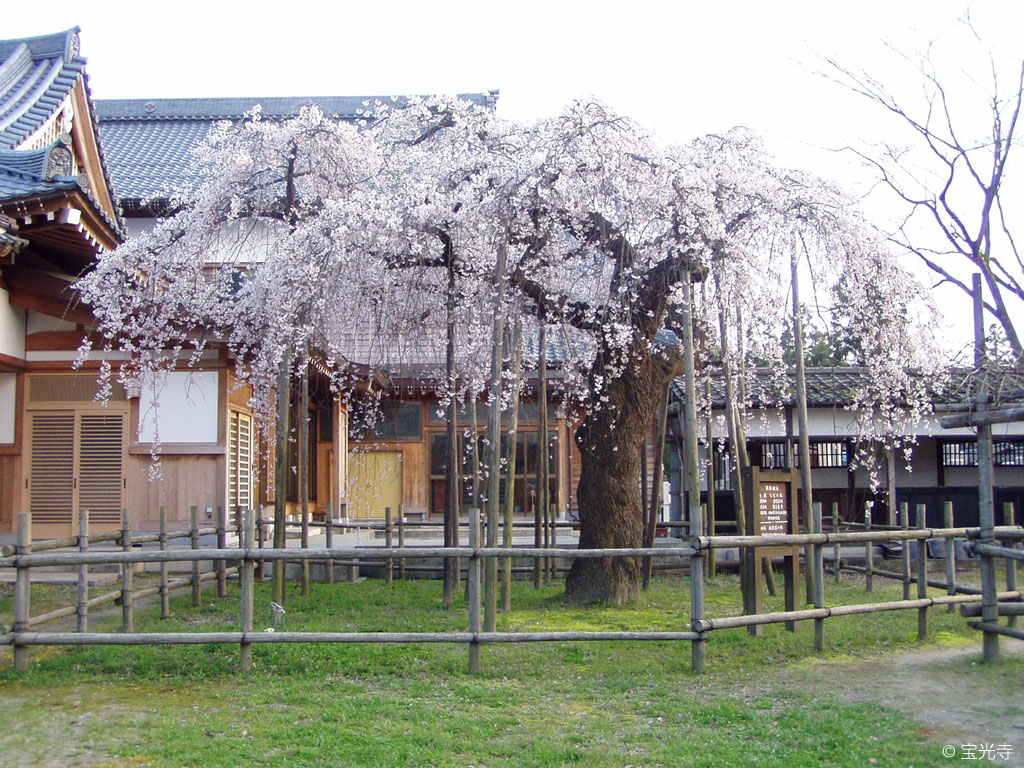
The grounds of Hokoji Temple clearly preserve the typical layout of a Soto Zen temple. Passing through the main gate, the temple gate stands at the end of the approach, with the main hall located beyond it. A corridor connects the temple gate and the main hall, and a front garden spreads out in the center, showcasing the spatial configuration unique to Zen temples.
The temple grounds are enveloped in a tranquil atmosphere, serving as a place of Zen training while also being a valuable cultural heritage site that conveys the history of the Shibata Domain.
Location and Access
Location
1-4-5 Suwa-cho, Shibata City, Niigata Prefecture
Access Method
- Access by Train: Approximately 15 minutes on foot from Shibata Station on the JR Uetsu Main Line and Hakushin Line
- Access by Car: Approximately 10 minutes from the Shibata Interchange on the Nihonkai Tohoku Expressway
- Parking: Parking available for visitors on the temple grounds
If you access the temple on foot from Shibata Station, you can enjoy the atmosphere of Shibata Castle ruins and the castle town along the way. Since it is located in the center of Shibata City, it is recommended to visit it along with other historical sites during your sightseeing.
Hokoji Temples Across Japan
There are temples named Hokoji Temple throughout Japan, not just in Shibata City. Each is a renowned temple with its own unique history and characteristics.
Hokoji Temple in Hinode-machi, Tokyo
Hokoji Temple, located in Hinode-machi, Nishitama-gun, Tokyo, is a Soto Zen Buddhist temple. Founded in 1478 (Bunmei 10) by Isen Bunsei.
Originally, there was a Tendai sect temple called “Bodai-in” on this site, but Isen Bunsei converted it to the Soto sect, and it began a new history as Hokoji Temple. Located in the mountainous area of the Tama region in western Tokyo, it offers a tranquil environment for Zen practice.
Hokoji Temple, Higashikagawa City, Kagawa Prefecture
Hokoji Temple, located in Higashikagawa City, Kagawa Prefecture, is a Shingon sect temple, particularly known for its rock garden.
Hokoji Garden
In 1999, the Hokoji Garden, a rock garden from the late Edo period, was discovered. Approximately 300 rocks are arranged against a mountain backdrop, beautifully expressing a dry landscape garden. It has been recognized as a nationally high-level rock garden by the Japan Garden Research Association, and on September 4, 2018, it was officially designated as a Kagawa Prefecture Designated Place of Scenic Beauty.
This rock garden is a valuable cultural asset that conveys the garden culture of the Edo period, allowing visitors to enjoy the beauty of Japanese gardens.
Hokoji Temple (Iozan Hokoji) in Marugame City, Kagawa Prefecture
Iozan Hokoji Temple, located in Doki-cho, Marugame City, Kagawa Prefecture, is a Buddhist temple of the Shingon sect, Zentsuji branch, and is the 27th temple on the Sanuki Thirty-Three Kannon Pilgrimage.
A sutra copying class is held every Sunday, and general visitors are welcome to participate. As a temple open to the community, it strives to spread Buddhist culture.
Hokoji Temple in Takase Town, Kagawa Prefecture
Hokoji Temple, located near Takase Station in Kagawa Prefecture, is a renowned temple of the Shingon sect, holding a first-class rank. It is known as a famous spot for autumn foliage in the city, attracting many visitors in the fall. It is said to have been founded during the Tensho era (1573-1592).
Hokoji Temple, Mishima City, Shizuoka Prefecture
Hokoji Temple, located in Mishima City, Shizuoka Prefecture, was founded in October 1910 (Meiji 43) by Masahira Kawashima Kogen Koji.
It is known as a cemetery surrounded by abundant nature and watched over by Mount Fuji. The cemetery is situated on a hill where the majestic Mount Fuji can be seen from all burial plots, and visitors can enjoy the beauty of each season, from cherry blossoms in spring to autumn leaves in fall.
Hokoji Temple, Tochigi City, Tochigi Prefecture
Hokoji Temple, located in Tochigi City, Tochigi Prefecture, is a Shingon Buddhist temple cemetery. The nearest station is Fujioka Station on the Nikko Line, and it is easily accessible from the station. Because a manager is always on-site, daily maintenance is thorough, creating a safe and secure environment for visiting graves.
Hokoji Temple and the Soto Zen School
Hokoji Temples in Shibata City and Hinode Town are Soto Zen Buddhist temples. The Soto Zen school is a branch of Zen Buddhism, founded by Zen Master Dogen, and its fundamental practice is “shikantaza,” that is, simply sitting in meditation.
A characteristic of Soto Zen temples is their orderly layout, emphasizing their function as training grounds. The layout of Hokoji Temple’s grounds preserves this typical form of a Soto Zen temple well, making it a valuable example for studying Zen architecture.
Hokoji Temple and Shingon Buddhism
On the other hand, Hokoji temples in Kagawa, Tochigi, and Shizuoka prefectures belong to the Shingon sect. The Shingon sect is a branch of esoteric Buddhism founded by Kukai (Kobo Daishi), characterized by esoteric rituals such as incantations and fire rituals.
Shingon temples often enshrine principal images such as Dainichi Nyorai, Yakushi Nyorai, and Kannon Bodhisattva, and are cherished as centers of local faith. The fact that Hokoji Temple in Kagawa Prefecture is a pilgrimage site for the Sanuki Thirty-Three Kannon Pilgrimage also demonstrates its character as a Shingon Buddhist temple.
Role as a Family Temple
Hokoji Temple in Shibata City has played an important role as the family temple of the Mizoguchi family. A family temple is a temple that enshrines and commemorates the spirits of ancestors of a specific family or lineage.
During the Edo period, for daimyo families, family temples were not merely burial grounds, but also the spiritual pillar of the domain and a symbol of the lord’s authority. Hokoji Temple houses the tombs of successive lords of the Mizoguchi family, and portraits and guardian Buddha images of the lords are carefully preserved.
Memorial services at family temples were important events for the domain, with the lord and retainers gathering to commemorate their ancestors. These religious ceremonies strengthened the unity of the domain and contributed to the stability of its administration.
Temples and Domain Administration in the Edo Period
During the Edo period, temples served not only as religious institutions but also played an administrative role. Hokoji Temple in the Shibata Domain played a central role in temple administration as the Rokusho (a government office overseeing Soto Zen temples within the domain).
The Rokusho was an organization that managed and supervised temples of a specific sect, handling matters such as the appointment and dismissal of abbots, management of temple lands, and coordination of religious ceremonies. Hokoji Temple’s function as a Rokusho demonstrates the importance of temples in the Shibata Domain and the high status of Hokoji Temple itself.
Furthermore, during the Edo period, the Danka system (parishioner system) was established, making it mandatory for all people to become parishioners of a temple. Temples also managed the household registers of their parishioners, thus playing a role as a grassroots administrative body.
Preservation and Transmission of Cultural Properties
The cultural properties preserved at Hokoji Temple are valuable resources that convey the history and culture of the Edo period. Preserving these cultural properties and passing them on to future generations is extremely important for protecting the history of the region.
In Shibata City, the cultural properties of Hokoji Temple have been designated as city cultural properties, and efforts are being made to preserve and utilize them. Regular restoration and surveys are also conducted, and efforts to maintain the cultural properties in good condition continue.
Opening the cultural properties to the public is also an important activity. By providing opportunities for the general public to experience cultural properties, it is possible to deepen their understanding of local history and raise awareness of cultural property protection.
Hokoji Temple as a Tourist Resource
Hokoji Temple is also an important tourist resource for Shibata City. Along with the Shibata Castle ruins and the townscape of the castle town, it is a place where many tourists can experience the history of Shibata.
Shibata City is focusing on promoting tourism utilizing historical buildings, including Hokoji Temple, and is working on developing tourist guides and installing information boards. Furthermore, efforts are being made to allow tourists to efficiently visit historical sites within the city, such as by setting up historical walking courses.
The tranquil grounds of Hokoji Temple are popular as a place to escape the hustle and bustle of everyday life and find peace of mind, making it an important space of relaxation for local residents.
Points to Note When Visiting Hokoji Temple
When visiting Hokoji Temple, please pay attention to the following points to make your visit more fulfilling.
Temple Visiting Etiquette
Temples are religious facilities and places of spiritual training. Please observe the following manners when visiting:
- Be quiet within the temple grounds
- Take photographs only in designated areas
- Enter buildings only in designated areas
- Choose clothing that is not too flashy
- Smoking and eating are only permitted in designated areas
Visiting Hours
Temples are generally open from morning to evening, but it is recommended to check the specific hours in advance. Visiting in the early morning allows you to find peace of mind in a quiet atmosphere.
Nearby Tourist Attractions
When visiting Hokoji Temple in Shibata City, it is recommended to also visit nearby tourist attractions.
- Shibata Castle Ruins: A castle ruin with a beautiful three-story turret, located within walking distance of Hokoji Temple.
- Shimizu Garden: A daimyo garden designated as a national scenic spot.
- Ashigaru Nagaya: A facility that recreates the residences of foot soldiers from the Edo period.
- Ichijima Residence: A historical building known as the mansion of a wealthy farmer.
Visiting these facilities will allow you to gain a deeper understanding of Shibata’s history and culture.
Summary
Hokoji Temple is most famous as the family temple of the Mizoguchi family, the lords of the Shibata Domain in Shibata City, Niigata Prefecture. However, there are temples with the same name throughout Japan, each playing an important role in conveying the history and culture of its region.
Hokoji Temple in Shibata City is a Soto Zen temple with a long history dating back to the Edo period, and it preserves many cultural assets. Many valuable materials that tell the story of the Edo period remain, such as the temple gate, sutra repository, Mizoguchi family tomb, and portraits of successive lords, conveying the atmosphere of that time to visitors.
Hokoji Temple in Kagawa Prefecture boasts a rock garden from the Edo period designated as a prefectural scenic spot, and each Hokoji temple throughout Japan has its own unique characteristics. While belonging to different sects—Shingon and Soto Zen—they all play an important role as centers of local faith and as inheritors of culture.
Visiting a Hokoji temple is an excellent opportunity to learn about Japanese temple culture and history. In the tranquil grounds, you can calm your mind and experience the cultural heritage left behind by our ancestors, truly feeling the weight of Japanese history and tradition.
When visiting Shibata City, be sure to visit Hokoji Temple and reflect on its former glory as the ancestral temple of the Mizoguchi family. Furthermore, Hokoji temples throughout Japan each possess their own unique charm. If a Hokoji temple is among your travel destinations, we recommend taking the time to appreciate its history and cultural treasures.