Complete Guide to Taiheiji Temple: The Charm of the Historic Temple Where Toyotomi Hideyoshi and Shimazu Yoshihisa Met
Taiheiji Temple is a Shingon Buddhist temple located in Oshoji-cho, Satsumasendai City, Kagoshima Prefecture. Its official name is “Iōzan Shōchiin Taiheiji,” and it is known as an important historical site during the late Sengoku period in Japan. This article provides detailed information you should know before visiting, including the history of Taiheiji Temple, its highlights, and how to access it.
Taiheiji Temple: Complete Guide to the Historic Temple Where Toyotomi Hideyoshi and Shimazu Yoshihisa Met
Taiheiji Temple is a Shingon Buddhist temple located in Ōkōji-chō, Satsumasendai City, Kagoshima Prefecture. Its official name is “Iōzan Shōchiin Taiheiji,” and it is known as an important historical site during the late Sengoku period in Japan. This article provides detailed information you should know before visiting, including the history of Taiheiji Temple, its highlights, and how to access it.
Table of Contents
- Overview and Basic Information of Taiheiji Temple
- History and Development of Taiheiji Temple
- The Meeting of Toyotomi Hideyoshi and Shimazu Yoshihisa
- Highlights of the Temple Grounds
- Taiheiji Park and the Peace Stone
- About the Principal Image and Sect
- Annual Events and Points for Visiting
- Access and Transportation Information
- Nearby Tourist Spots
- Legends Related to Taiheiji Temple
Overview and Basic Information of Taiheiji Temple
Taiheiji Temple is an ancient temple with a history of over 1300 years, located in the heart of Satsumasendai City, Kagoshima Prefecture. Archaeological excavations on the temple grounds have revealed that it was founded in the first year of the Wado era (708 AD), making it an important temple that existed from the dawn of Buddhist culture in the Satsuma region.
Basic Information
- Official Name: Iōzan Shōchiin Taiheiji Temple
- Sect: Shingon Buddhism
- Principal Image: Yakushi Nyorai (Medicine Buddha)
- Founded: Wado 1 (708 AD)
- Address: 48-37 Ōkoji-chō, Satsumasendai City, Kagoshima Prefecture 895-0076
- Phone Number: 0996-22-4593
- Visiting Hours: Grounds are freely accessible (Please check for entry to the main hall)
- Admission Fee: Free
- Parking: Available (Free)
History and Background of Taiheiji Temple
From Ancient to Medieval Times
Taiheiji Temple is said to have been founded in Wado 1 (708 AD), dating back to the early Nara period. This was a time when Buddhism began to spread throughout Japan, and it was also an important period when Buddhist culture began to take root in the Satsuma region. Archaeological excavations within the temple grounds have uncovered ancient remains, confirming the temple’s founding date.
Throughout the Middle Ages, Taiheiji Temple functioned as a center of local faith and developed into an important base for Shingon Buddhism in Satsuma Province. Because its principal deity is Yakushi Nyorai (the Medicine Buddha), it attracted worshippers seeking medical treatment and healing from illness.
A Turning Point in the Sengoku Period
Taiheiji Temple rose to prominence during Toyotomi Hideyoshi’s Kyushu campaign in 1587. This event is recounted as the most important episode in Taiheiji Temple’s history.
At that time, Toyotomi Hideyoshi led a large army to invade Kyushu against the Shimazu clan, who aimed to unify the region. Due to the overwhelming difference in troop strength, the Shimazu army suffered defeats in various locations, and Hideyoshi’s army advanced as far as Sendai in Satsuma Province (present-day Satsumasendai City).
Hideyoshi seized Taiheiji Temple as his headquarters (residence) and used it as a base to conduct negotiations with the Shimazu clan. This choice is thought to have been influenced by the fact that Taiheiji Temple was recognized as a high-ranking temple even at the time, and also by its strategically important location.
After the Edo Period
During the Edo period, Taiheiji Temple was maintained as an important regional temple under the patronage of the Shimazu clan. Due to its historical significance as the site of peace negotiations with Hideyoshi, it is said to have received special treatment within the Satsuma domain.
It survived the storm of anti-Buddhist movement after the Meiji Restoration and has continued to preserve its Buddhist traditions to this day. From the Showa to the Heisei era, improvements were made to the temple grounds and cultural properties were preserved, and it is now attracting attention as a historical tourist spot.
Meeting between Toyotomi Hideyoshi and Shimazu Yoshihisa
Background of the Kyushu Campaign
In 1587, for Toyotomi Hideyoshi, who was on the verge of unifying Japan, the Shimazu clan, the powerful force of Kyushu, was his greatest obstacle. The Shimazu clan controlled the three provinces of Satsuma, Osumi, and Hyuga, and further expanded their influence into Higo, Chikuzen, Chikugo, Buzen, and Bungo.
Hideyoshi mobilized a massive army, said to number around 200,000, and personally led it to Kyushu. The Shimazu army, however, numbered only tens of thousands and suffered repeated defeats. Hideyoshi’s army advanced southward with unstoppable force, finally reaching Kawauchi in Satsuma Province.
The Path to Surrender
Shimazu Yoshihisa realized that further resistance was futile and decided to surrender. Yuin Hoin, the head priest of Taihei-ji Temple, acted as a mediator, facilitating peace between the two parties. Yuin Hoin’s actions played a crucial role in minimizing the conflict and protecting Satsuma from the ravages of war.
Yoshihisa first shaved his head and became a monk at Sessō-in Temple, changing his name to “Ryūhaku.” This was a clear expression of his intention to surrender, signifying his abandonment of his position as a military commander.
Historic Meeting
Yoshihisa, having become a monk, visited Taihei-ji Temple and met with Hideyoshi there. This meeting resulted in the Shimazu clan being recognized as controlling the two provinces of Satsuma and Osumi, and thus coming under the umbrella of the Toyotomi regime.
This peace agreement brought all of Kyushu under Hideyoshi’s control, significantly advancing his unification of Japan. Meanwhile, the Shimazu clan was able to retain their base of operations, providing a foundation for their continued existence as the Satsuma Domain throughout the Edo period, following the Battle of Sekigahara.
The meeting at Taihei-ji Temple is one of the important turning points in Japanese history and a pivotal event that determined the historical value of this temple.
Highlights of the Temple Grounds
Main Hall
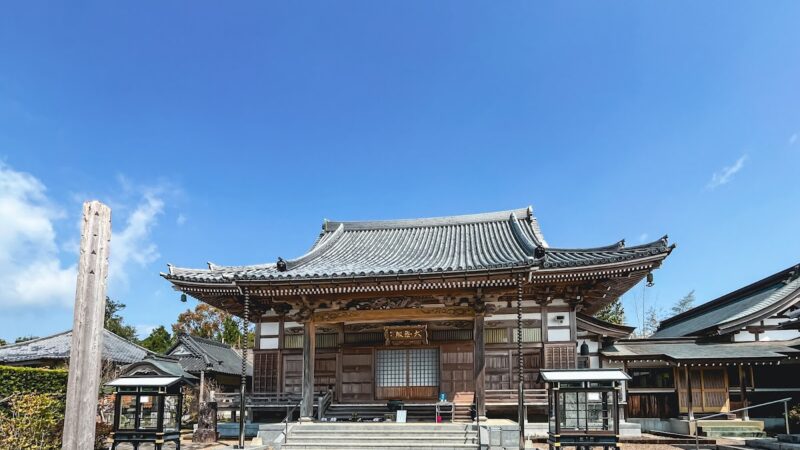
The main hall of Taihei-ji Temple is a magnificent building enshrining Yakushi Nyorai (Medicine Buddha) as its principal deity. While the current building was rebuilt after the Edo period, the interior houses Buddhist statues and implements that evoke a sense of history. In front of the main hall, there is an information board indicating the location where Hideyoshi and Yoshihisa met, allowing visitors to truly feel they are standing on a historical stage.
Yakushi Nyorai Statue
The principal image, Yakushi Nyorai (Medicine Buddha), has attracted the faith of people praying for healing from illness and longevity. Yakushi Nyorai is considered the principal deity of the Eastern Pure Land of Lapis Lazuli, and is said to have made twelve great vows to relieve people’s suffering.
The Yakushi Nyorai statue at Taihei-ji Temple has been cherished by local people for centuries, and many worshippers visit the temple.
Stone Monuments and Memorials on the Temple Grounds
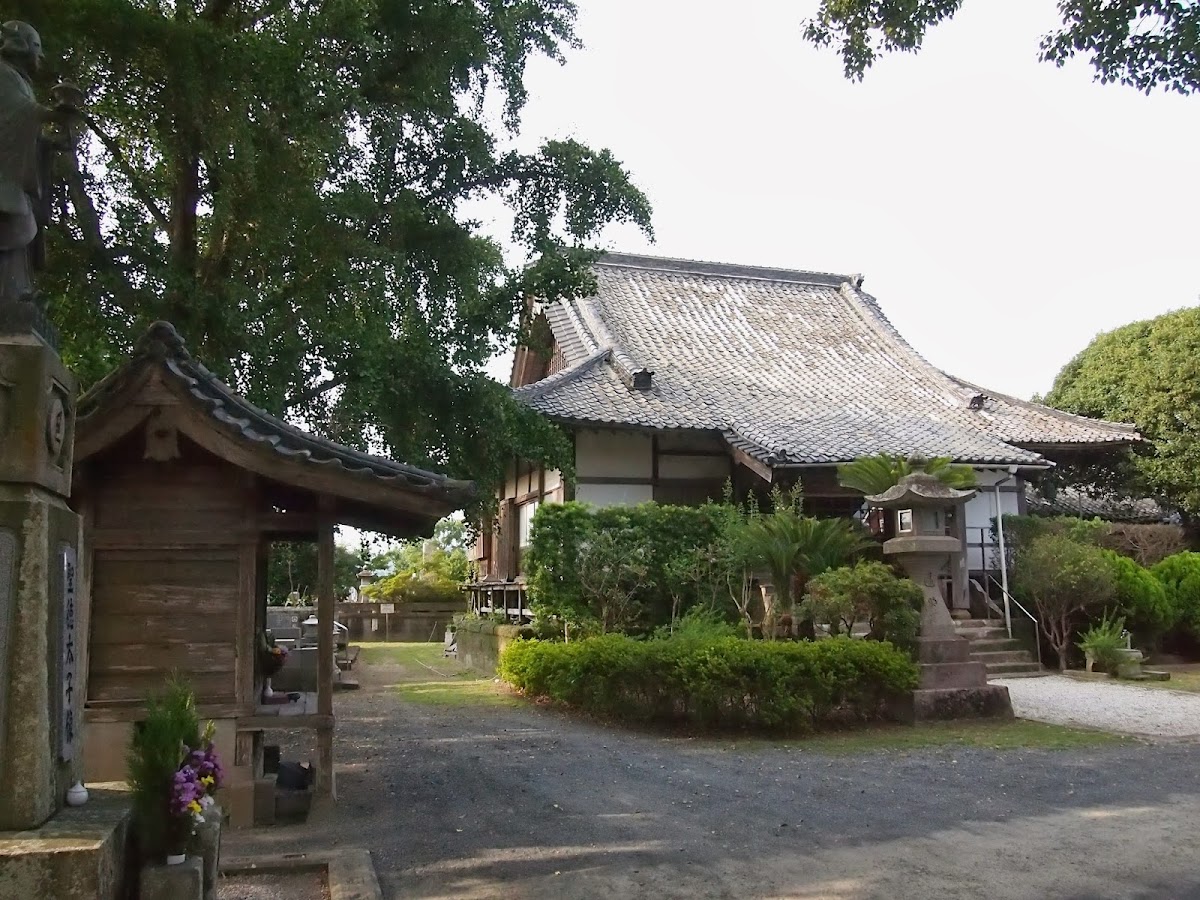
Various stone monuments and memorials telling the history of Taihei-ji Temple are erected on the temple grounds. In particular, the monument commemorating the meeting between Toyotomi Hideyoshi and Shimazu Yoshihisa conveys the weight of history to visitors.
There are also monuments honoring the achievements of the monks involved in the founding and restoration of Taihei-ji Temple, allowing visitors to feel the long history of the temple.
Gardens and Nature
The grounds of Taiheiji Temple are enveloped in a quiet and peaceful atmosphere. The well-maintained gardens are planted with seasonal flowers and trees, offering different scenery depending on the time of year.
The cherry blossoms in spring, the fresh greenery in early summer, and the autumn foliage are particularly beautiful, allowing visitors to enjoy nature in conjunction with their temple visit.
Taiheiji Park and the Peace Stone
Adjacent to Taiheiji Temple is Taiheiji Park, which preserves a historical artifact called the “Peace Stone.” This stone is said to have been used during the peace talks between Toyotomi Hideyoshi and Shimazu Yoshihisa, and is a valuable relic that conveys the history of that time.
Origin of the Peace Stone
The Peace Stone is believed to be the stone that Hideyoshi and Yoshihisa actually sat on during their talks, or a stone placed to commemorate that location. While there are various theories about its exact origin, it has been carefully preserved by the local people.
Currently, it is protected within the park and, with an information board, is accessible to everyone. It’s a must-see spot for history buffs.
Park Facilities
Taiheiji Park also functions as a place of relaxation for local residents. Benches and rest areas are provided, making it ideal for strolling and taking a break. Furthermore, the park offers a panoramic view of Taiheiji Temple, making it a popular spot for photography.
About the Principal Image and Sect
Teachings of Shingon Buddhism
Taiheiji Temple is a Shingon Buddhist temple. Shingon Buddhism is one of the major sects of Japanese Buddhism, founded by Kobo Daishi Kukai in the early Heian period, and is based on the teachings of Esoteric Buddhism.
In Shingon Buddhism, the goal is to attain Buddhahood in this body through practices such as chanting mantras and meditation using mandalas. Taiheiji Temple also holds ceremonies and events based on this Shingon tradition.
Faith in Yakushi Nyorai
Yakushi Nyorai, formally known as “Yakushi Rurikō Nyorai,” is a Buddha considered the principal deity of the Eastern Pure Land of Lapis Lazuli. He is believed to have made twelve great vows, particularly for the healing of illnesses, the maintenance of health, and relief from disaster.
Since ancient times, he has attracted the fervent faith of people praying for recovery from illness and longevity, and the Yakushi Nyorai at Taiheiji Temple has been a spiritual anchor for the local community. Even today, many worshippers visit the temple seeking good health.
Annual Events and Points for Visiting
Main Annual Events
Taiheiji Temple holds various annual events based on the traditions of the Shingon sect. The main events include the following:
- Hatsumode (January 1st-3rd): Praying for happiness and health in the new year
- Setsubun-e (around February 3rd): An event to ward off evil and invite good fortune
- Shunki Higan-e (around the spring equinox in March): Ancestor memorial service
- Yakushi Nyorai Ennichi (8th of each month): The main deity’s memorial day
- Aki Higan-e (around the autumn equinox in September): Ancestor memorial service
- Joya no Kane (December 31st): The end of the year
Manners and Points for Visiting
When visiting Taiheiji Temple, please note the following points:
- Dress Code: There are no specific dress code requirements, but clean and subdued attire appropriate for a temple is desirable.
- Photography: Photography is generally permitted within the temple grounds, but prior confirmation is necessary before photographing inside the main hall or of Buddha statues.
- How to Worship: Place your offering in front of the main hall, clasp your hands together, and offer a quiet prayer. In Shingon Buddhism, you may also chant “Namu Daishi Henjo Kongo.”
- Goshuin (Temple Stamp): If you wish to receive a Goshuin, bring your Goshuincho (stamp book) and request it at the temple office.
- Quietness: Please be quiet within the temple grounds and be considerate of other worshippers.
Access and Transportation Information
Access by Train
From JR Sendai Station
- Approximately 10 minutes by car (approx. 3km)
- Taxi is convenient (estimated fare: approx. 1,000 yen)
Access by Car
From Kagoshima City
- Approximately 50km via National Route 3, approximately 1 hour
- Approximately 10 minutes from the Satsuma-Sendai Miyako IC on the Minami-Kyushu West Bypass Expressway
From Kumamoto Area
- Approximately 1 hour 30 minutes from the Kurino IC on the Kyushu Expressway via National Routes 267 and 504
Parking Information
Taiheiji Temple has a free parking lot. Approximately 10 regular cars can park. However, congestion is expected during New Year’s visits and special events, so please consider using public transportation.
Access by Bus
Bus services are also available from JR Sendai Station, but the number of buses is limited, so it is recommended to check the timetable in advance. It’s about a 5-minute walk from the nearest bus stop.
Nearby Tourist Attractions
When visiting Taiheiji Temple, exploring the surrounding tourist attractions will allow you to gain a deeper understanding of the charm of Satsumasendai City.
Kawauchi Historical Museum
Located about a 5-minute drive from Taiheiji Temple, the Kawauchi Historical Museum offers a chance to learn about the history and culture of Satsumasendai City. Exhibits on Toyotomi Hideyoshi’s Kyushu campaign and the Shimazu clan are also included, providing a deeper understanding of Taiheiji Temple’s historical background.
Kawauchi River
The Kawauchi River, one of Kyushu’s three major rivers, is a beautiful river flowing through the city. The riverbanks are maintained as walking paths, allowing visitors to enjoy the changing seasons.
Nitta Shrine
Nitta Shrine, known as the Ichinomiya (first-ranked shrine) of Satsuma Province, is located about a 15-minute drive from Taiheiji Temple. This prestigious shrine, dedicated to Ninigi-no-Mikoto, attracts many worshippers during the New Year’s pilgrimage.
Kawauchi Magokoro Literature Museum
This literature museum exhibits materials related to writers and cultural figures from Satsumasendai City. It’s a facility where you can learn about the cultural aspects of the region.
Iriki Fumoto Samurai Residences
Located about 30 minutes by car, the Iriki Fumoto Samurai Residences are a historical district where samurai residences from the Edo period remain. Designated as an Important Preservation District for Groups of Traditional Buildings, it allows visitors to imagine the lifestyle of samurai at that time.
Legends Related to Taiheiji Temple
The Legend of Daikokuten and Salt
Taiheiji Temple has an interesting legend related to Daikokuten.
Long ago, in the area around Taiheiji Temple, located on the banks of the Kawauchi River, people were suffering because they couldn’t obtain salt. One day, a young monk spoke to the statue of Daikokuten in the temple grounds, saying, “Everyone is suffering because there is no salt. Can’t you do something?”
Miraculously, the next morning, saltwater began to spring from the temple’s well, allowing people to obtain salt. Because of this legend, the salt from Taihei-ji Temple has been cherished as “blessed salt” and is still given out as amulets today.
This salt is cherished by the local people as a purifying salt and amulet for warding off evil.
Hideyoshi’s Sword-Hanging Pine Tree
It is said that there was once a pine tree on the temple grounds where Toyotomi Hideyoshi hung his sword. This pine tree was called the “Sword-Hanging Pine Tree,” and the story of Hideyoshi’s stay at Taihei-ji Temple has been passed down through generations.
Unfortunately, this pine tree no longer exists, but a memorial monument has been erected at its site, preserving a trace of history.
Related Topics
To deepen your understanding of Taiheiji Temple, please also refer to the following related topics:
Historical Relations
- Toyotomi Hideyoshi’s Kyushu Campaign: The unification of Kyushu in 1587
- Shimazu Yoshihisa: A daimyo of Satsuma during the Sengoku period, and the 16th head of the Shimazu clan
- History of the Shimazu Clan: A prestigious family of Satsuma that lasted from the Kamakura period to the Meiji Restoration
- The Sengoku Period in Kyushu: The three-way conflict between the Otomo, Ryuzoji, and Shimazu clans
Religious Relations
- Shingon Buddhism: A sect of Japanese Buddhism founded by Kukai (Kobo Daishi)
- Yakushi Nyorai Faith: Faith in the Buddha who presides over healing illnesses and good health
- Temples of Satsuma: The history of Buddhist culture in the region
Regional Relations
- History of Satsumasendai City: Regional history from ancient times to the present day
- Sendai River: One of the three major rivers flowing through the region in Kyushu.
- Satsuma Province: The former name of the province corresponding to the western part of present-day Kagoshima Prefecture.
Other Taiheiji Temples
There are other temples in Japan named “Taiheiji”:
- Taiheiji (Uwajima City): A Soto Zen temple located in Uwajima City, Ehime Prefecture. Founded in 1600 by Todo Takatora, it is the 54th temple on the New Shikoku Mandala Pilgrimage.
- Taiheiji (Shimoda City): A Rinzai Zen temple of the Kenchoji school located in Shimoda City, Shizuoka Prefecture. Founded in 1590 by Toda Tadatsugu.
To distinguish it from these temples, the Taiheiji in Kagoshima is sometimes written as “Taiheiji (Satsuma-Sendai City)”.
Summary
Taiheiji Temple is an ancient Shingon Buddhist temple with a history of over 1300 years, and holds a particularly important place in Japanese history as the site of the historic meeting between Toyotomi Hideyoshi and Shimazu Yoshihisa. Since its founding in 708 AD, it has functioned as a center of local faith, and has continued to uphold its religious traditions through the turmoil of the Sengoku period to the present day.
The temple grounds contain the main hall and various stone monuments, and the adjacent Taiheiji Park preserves the Peace Stone, offering numerous historical sites. With Yakushi Nyorai (Medicine Buddha) as its principal deity, it attracts worshippers seeking healing from illness and longevity, and also has interesting legends, such as the legend of Daikokuten’s salt.
It is easily accessible, about a 10-minute drive from JR Sendai Station, and there are many other tourist attractions nearby, such as the Sendai Historical Museum and Nitta Shrine. When visiting Satsumasendai City, be sure to stop by Taiheiji Temple and quietly reflect on history at this important turning point in Japanese history. Taiheiji Temple is a place worth visiting not only for history buffs, but also for those who want to spend some quiet time or experience the culture of Satsuma. With its beautiful natural scenery throughout the seasons, it’s a fascinating temple where you can discover something new with each visit.