Complete Guide to Risshoji Temples | A Thorough Explanation of the Characteristics, Access, and Memorial Services of Risshoji Temples Nationwide
There are several temples named “Risshoji” throughout Japan. Each belongs to a different sect and has its own unique history and characteristics. This article comprehensively explains the historical background, memorial services offered, access methods, and characteristics of representative Risshoji temples. This information will be useful for those seeking funeral services, memorial services, or columbariums, or those who want to learn more about Risshoji temples.
What is Risshoji Temple? | Origin of the Name and Nationwide Distribution
The word “Rissho” originates from the work “Rissho Ankoku Ron” (Treatise on Establishing Righteousness and Securing the Peace of the Nation) by Nichiren Shonin. Temples bearing this name are mainly found in the Nichiren and Hokke sects, but they also exist in the Jodo sect. The Risshoji temples scattered throughout Japan are independent temples, each developing activities rooted in their local communities.
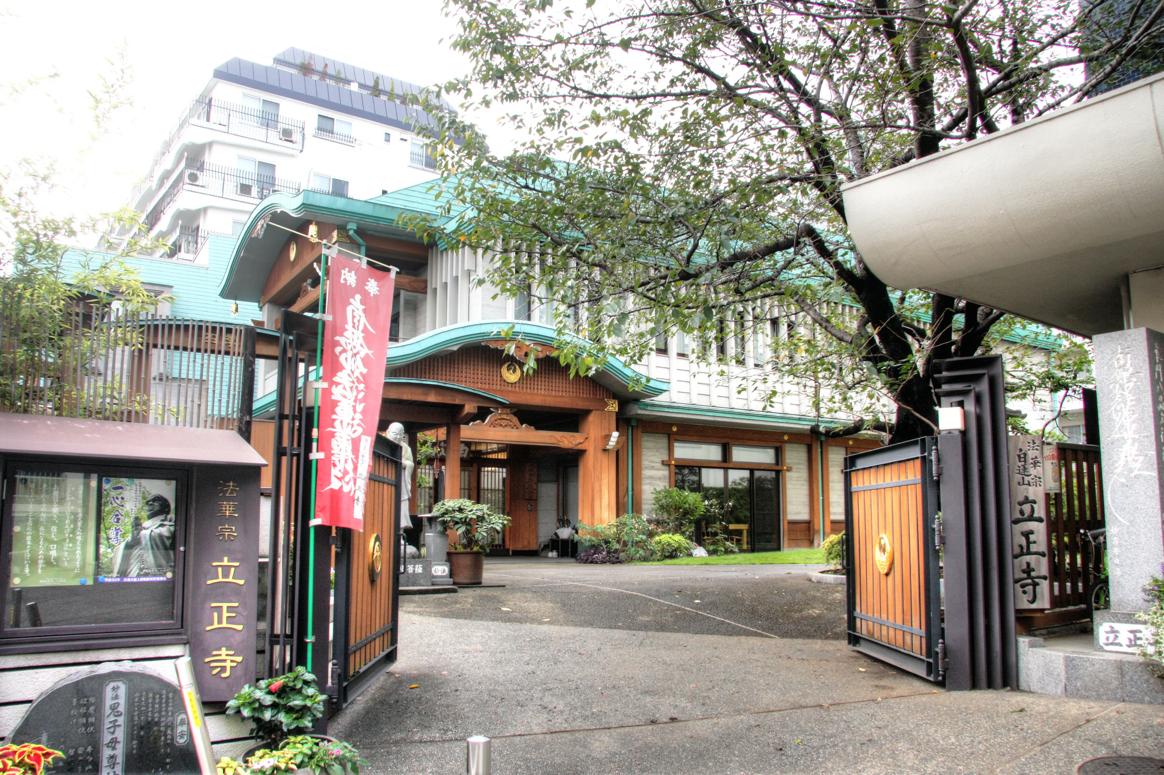
Representative Risshoji temples include the Honmon-ryu Hokke-shu Risshoji in Yoyogi, Shibuya-ku, Tokyo; the Jodo-shu Risshoji in Yashio City, Saitama Prefecture; the Nichiren-shu Risshoji (Minobu-san Miyazaki Branch Temple) in Miyazaki City, Miyazaki Prefecture; the Nichiren-shu Risshoji in Yokohama City, Kanagawa Prefecture; and the Hokke-shu Risshoji in Kanazawa City, Ishikawa Prefecture.
Characteristics of Risshoji Temple (Honmon-ryu Hokke-shu) in Yoyogi
History and Background
Risshoji Temple, a Honmon-ryu Hokke-shu temple located in Yoyogi, Shibuya-ku, Tokyo, was founded in 1931 (Showa 6) in Shimodate City, Ibaraki Prefecture, by its founder, Byakuren-in Nichijo Shonin. It was later relocated to its current location in Yoyogi in 1952 (Showa 27).
During the chaotic period of war and its aftermath, it was established out of concern for the anxieties of the people and the devastation of the nation. It was founded with the hope that the chanting of the Lotus Sutra’s mantra, “Namu Myoho Renge Kyo,” would bring peace to the nation and happiness to its people. Its head temple is Honnoji Temple in Kyoto.
Location and Access
Located in a prime location, approximately 3 minutes by car from Shinjuku’s sub-city center, it is also easily accessible by public transportation. The nearest stations are as follows:
- Within walking distance from Sangubashi Station on the Odakyu Line
- Within walking distance from Hatsudai Station on the Keio New Line
- Within walking distance from Yoyogi Station on the JR and Toei Oedo Subway Lines
Despite being in the city center, it offers a quiet environment and is a popular place for worship.
Features of the Temple Grounds
The temple grounds enshrine the Seven Lucky Gods, Jogyo Bodhisattva, and Jōfukyō Bodhisattva, and cherry blossoms bloom beautifully in the spring. While equipped with modern facilities, it cherishes the atmosphere of a traditional temple. ### Memorial Services Offered
Risshoji Temple in Yoyogi offers a wide range of memorial services, including:
Funeral and Memorial Services
- Annual Memorial Services
- Various Buddhist Services
- Funeral Services
Interment and Memorial Services
- BOOK-type columbarium “Memorial History”: A new style of storing the deceased’s memories and ashes in a book-like format
- Temple Cemetery
- Buddhist Altar-style Columbarium
- Locker-type Columbarium
- Perpetual Memorial Grave “Tomoiki”
- Pet Memorial Services
Counseling Services
As a distinctive service at Risshoji Temple, we also offer counseling by specialists on topics such as elderly care, inheritance, pensions, graves, funerals, and emotional support. We provide an environment where you can easily consult with us without having to worry alone or bear the burden alone as a family.
Characteristics of Risshoji Temple (Jodo Sect), Yashio City
Risshoji Temple, a Jodo sect temple located in Yashio City, Saitama Prefecture, adheres to the principle of being “a temple for everyone where everyone can gather with peace of mind.” It aims to be an accessible temple that anyone can easily visit, and operates as a temple open to the community.
Based on the teachings of the Jodo sect, it preaches the compassion of Amida Buddha and attains rebirth in paradise through chanting the Buddha’s name. Because it belongs to a different sect than Risshoji Temples of the Nichiren sect or Hokke sect, there are differences in doctrine and rituals.
Characteristics of Risshoji Temple (Minobu-san Miyazaki Branch Temple), Nichiren Sect, Miyazaki City
Temple Enshrining Buddha Relics
Risshoji Temple, a Nichiren sect temple located in the central area of Miyazaki City, Miyazaki Prefecture, is known as a temple that enshrines Buddha relics (the remains of Shakyamuni Buddha). As the Miyazaki branch temple of Minobu-san, the head temple of the Nichiren sect, it plays an important role.
Services Offered
- Annual Memorial Services
- Various Prayers
- Fortune Telling (Nine Consciousness Spiritual Divination Method)
- Memorial Services for Stillborn Children
- Pet Memorial Services
- Doll Memorial Services
- Limited Edition Goshuin (Temple Seal)
- Columbarium
The temple has a main hall with modern seating and is a familiar and beloved temple.
Characteristics of Shinmeizan Risshoji Temple, Nichiren Sect, Yokohama City
Risshoji Temple, a Nichiren sect temple located in Yokohama City, Kanagawa Prefecture, was founded by its founder, Nichie Shonin. Nichie Shonin was born in Gunma Prefecture in 1898 (Meiji 31). At the age of 12, he moved to Yokohama, worked in the embroidery industry, and harbored great ambitions, later becoming a monk.
Risshoji Temple also engages in activities rooted in the local community and serves as a base for spreading the teachings of the Nichiren sect.
History of Risshoji Temple, Kanazawa City
Risshoji Temple, a Nichiren Buddhist temple located in Kanazawa City, Ishikawa Prefecture, was founded in 1652 (Shoo 2) as Gennyuzan Honkoji Temple, with the founding priest being Koyoin Nichitatsu Shonin. Its current mountain name and temple name were adopted in the early Showa period.
It is a temple of high historical value, containing the graves of Fuwa Tomitaro, a loyalist samurai who served the Maeda family, and Enchu Sonpei, a trader in the early Meiji period who contributed to Kanazawa’s economic development.
Differences between Risshoji Temples by Sect
Nichiren Honmon-ryu
The Nichiren Honmon-ryu is one of the sects that inherits the teachings of Nichiren Shonin. It considers the Lotus Sutra as its fundamental scripture and emphasizes chanting the title “Nam Myoho Renge Kyo.” It aims to uphold the last wishes of Nichiren Daishonin and contribute to society through faith and action.
Nichiren Buddhism
Nichiren Buddhism also considers the Lotus Sutra as its fundamental scripture and Nichiren Shonin as its founder. Its head temple is Kuonji Temple on Mount Minobu, and it has many temples throughout Japan. It emphasizes chanting the title “Namu Myoho Renge Kyo” and practicing the teachings of the Lotus Sutra.
Jodo Buddhism
Jodo Buddhism considers Honen Shonin as its founder and believes in the original vow of Amida Buddha, aiming for rebirth in paradise through chanting the Nembutsu (invocation of Amida Buddha). Chanting “Namu Amida Butsu” is central to its practice.
Main Buddhist Services and Memorials Held at Risshoji Temple
Funeral and Memorial Services
Each Risshoji temple conducts funeral and memorial services according to the customs of its respective sect. Pre-consultations are also available, and a system is in place to allow for easy consultation.
Annual Memorial Services
Memorial services are held on the anniversary of the deceased’s death, such as the first, third, and seventh anniversaries. These are important occasions for family and relatives to gather, remember, and honor the deceased.
Perpetual Memorial Services
Some Risshoji temples offer perpetual memorial services for those without successors or those who do not wish to burden their descendants. The temple takes responsibility for continuing the memorial services in perpetuity.
Memorial Services for Stillborn Babies and Pets
In response to modern needs, some Risshoji temples also offer memorial services for stillborn babies and pets. They respectfully honor precious lives and provide peace of mind.
A New Form of Memorial Service | Book-Type Columbarium
Risshoji temple in Yoyogi has introduced an innovative book-type columbarium called “Memorial History.” This service places the memories and ashes of the deceased in a book-like format, a new style that sets it apart from traditional methods of interment.
The columbarium, enveloped in the scent of wood, offers visitors warmth and peace. Despite its prime location in the city center, it provides a tranquil environment for paying respects.
How to Consult/Inquire at Risshoji Temple
Importance of Pre-Consultation
Consulting in advance about funerals, memorial services, and interment allows you to say goodbye to your loved one in a way that is more satisfying. Many Risshoji temples offer counseling by specialists, addressing a wide range of concerns including caregiving, inheritance, pensions, graves, funerals, and emotional support.
Access and Visits
We recommend actually visiting the temple to see the atmosphere of the grounds and the columbarium. Each Risshoji temple aims to be an open temple that is easily accessible, and welcomes visits and consultations.
Utilizing an End-of-Life Notebook
Some Risshoji temples offer original end-of-life notebooks. Recording your wishes and messages to your family can reduce the burden on them in times of need.
Social Contribution Aimed at by Risshoji Temple
Each Risshoji temple aims to function not merely as a place for funerals and memorial services, but as a cornerstone of the local community. Its mission is to practice actions that foster the will to live and to be a source of support for the thoughts and feelings of many people living today.
We provide support in collaboration with experts regarding various issues facing modern society, such as caregiving, inheritance, and mental health care. By creating an environment where people can easily consult without having to suffer alone or bear the burden alone, we contribute to the local community.
Points to Consider When Choosing a Risshoji Temple
Confirming the Sect
First, confirm your own or the deceased’s sect. Even if the name is Risshoji, the sect may differ, such as the Nichiren sect, the Hokke sect, or the Jodo sect. Since doctrines and rituals differ depending on the sect, it is important to confirm this beforehand.
Convenience of Access
Considering regular visits, convenient access is an important factor. Check access by public transportation and the availability of parking.
Services Offered
Each Risshoji temple offers different services. Choose a temple that offers services that meet your needs, considering factors such as the type of columbarium, whether perpetual memorial services are available, and whether pet memorial services are offered.
Atmosphere and Compatibility
It’s also important to visit the temple in person to assess the atmosphere and your compatibility with the priest and staff. Since this will be a long-term relationship, determine if you can build a relationship where you can feel comfortable discussing matters.
Summary | Risshoji Temples: Modern Temples Open to the Community
Risshoji temples, scattered throughout Japan, each possess their own unique history and characteristics while operating in a way that meets the needs of modern society. While they belong to different sects (such as Hokke, Nichiren, and Jodo), they share a common goal: to be “open temples where people can easily seek advice.”
In addition to traditional services such as funerals, memorial services, and columbariums, they are developing innovative memorial methods like book-type columbariums and expert counseling services, adapting to the times.
Risshoji Temple contributes to the local community as a place where people can seek advice on various aspects of life, including caregiving, inheritance, pensions, graves, funerals, and emotional support. Don’t suffer alone; don’t try to handle everything with just your family. We encourage you to reach out for a consultation.
For detailed information and access to each Risshoji Temple, please contact the temple directly or check their official website. Visiting and seeing the temples in person will give you a more concrete understanding.