Complete Guide to Itsukushima Shrine’s Goshuin (Shrine Stamps) | From Reception Hours, Location, and Types to Limited Edition Goshuin Books – A Thorough Explanation
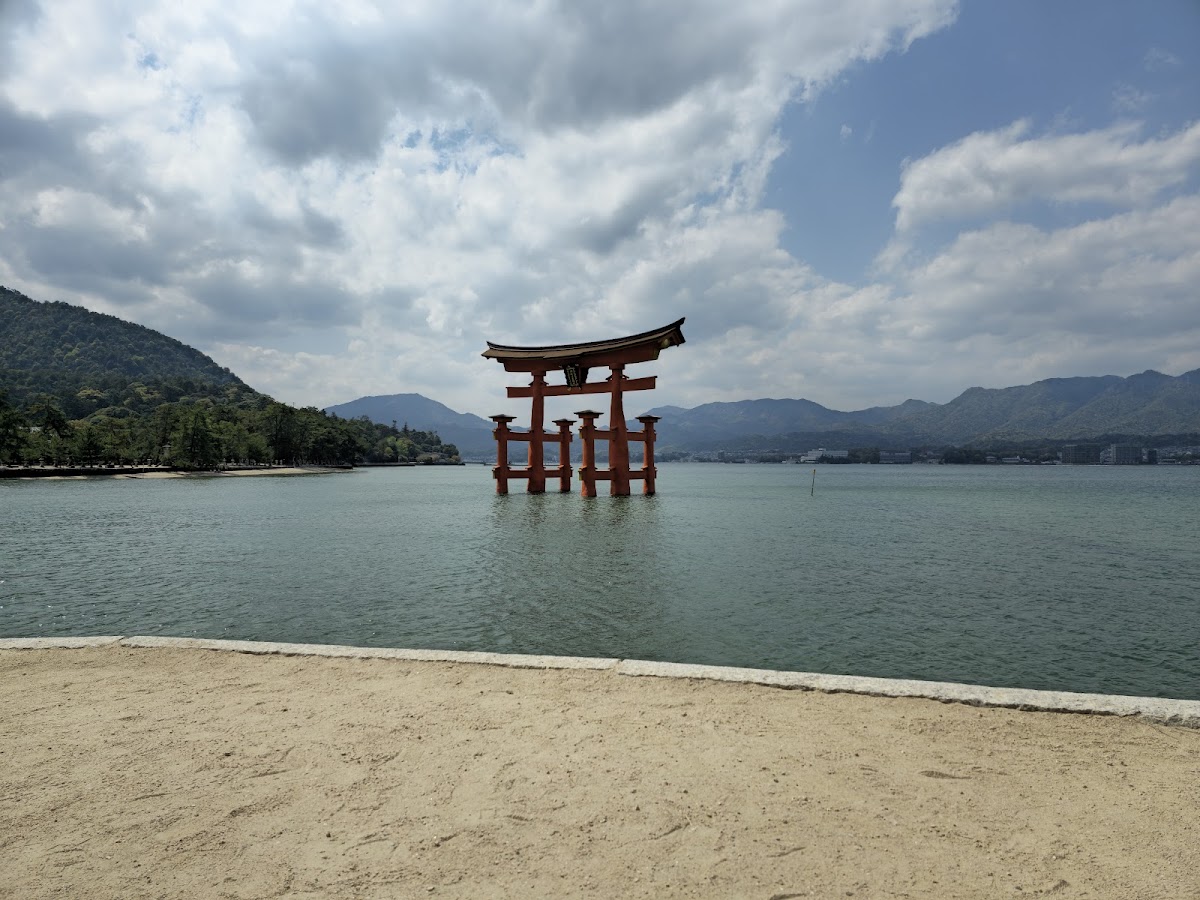
Itsukushima Shrine, a World Heritage Site, is one of Japan’s most renowned shrines, located on Miyajima Island in Hatsukaichi City, Hiroshima Prefecture. The scenery, with its floating torii gate and vermilion-lacquered shrine buildings, attracts many visitors from both Japan and abroad. This article provides a detailed guide to Itsukushima Shrine’s goshuin, including reception locations, hours, types, limited edition goshuin books, and even a goshuin pilgrimage around Miyajima Island.
Basic Information on Itsukushima Shrine’s Goshuin
Location for Receiving Goshuin
You can obtain Itsukushima Shrine’s goshuin at the office located to the right (east) of the main hall. After completing your prayers at the main hall, proceed to the right and you will see the office. In addition to goshuin, amulets and talismans are also available at the office.
Reception Hours
The reception hours for obtaining a Goshuin (temple/shrine stamp) are the same as the visiting hours: 6:30 AM to 5:30 PM. However, there may be slight variations depending on the season, so if you definitely want to receive a Goshuin, we recommend visiting between the morning and early afternoon.
During the New Year holidays and major festivals, reception hours may be extended, but crowds are expected, so please allow ample time for your visit.
Offering Fee
The offering fee for a Goshuin at Itsukushima Shrine is 300 yen. It’s best to have the exact amount of money ready to avoid needing change. If you wish to have your Goshuin book inscribed, please hand it over to the staff at the reception area.
Features and Design of Itsukushima Shrine’s Goshuin
Goshuin Design
The Goshuin at Itsukushima Shrine includes the following elements:
- Upper Center: The vermilion seal of the Itsukushima Shrine’s crest, “Mitsumori Nijū Kikkō ni Ken Hanabishi” (three-tiered double tortoise shell with sword and flower rhombus).
- Center: Calligraphy of “Itsukushima Shrine” or “Itsukushima Jinja” (Itsukushima Shrine).
- Right Side: The characters “Hōhai” (respectful worship).
- Left Side: Date of visit.
The calligraphy is beautifully and powerfully written, conveying the high status of the shrine.
Meaning of the Shrine Crest
The Itsukushima Shrine’s crest, “Mitsumori Nijū Kikkō ni Ken Hanabishi,” is an emblem that shows its deep connection to the Taira clan. Because Taira no Kiyomori deeply revered Itsukushima Shrine and contributed to the construction of the shrine buildings, elements of the Taira clan’s family crest were incorporated. This emblem symbolizes the historical importance of the shrine.
Itsukushima Shrine’s Original Goshuincho (Stamp Book)
Seasonal Limited Edition Goshuincho
Itsukushima Shrine offers original goshuincho (stamp books) featuring designs for each of the four seasons. These books feature different designs for each season, beautifully expressing the natural beauty of Miyajima and the scenery of Itsukushima Shrine.
- Spring: Design featuring cherry blossoms and the Great Torii Gate
- Summer: Design inspired by fresh greenery and the summer sea
- Autumn: Design combining autumn leaves and the shrine buildings
- Winter: Design expressing a snowy landscape and a solemn atmosphere
Standard Design Goshuincho
In addition to the seasonal limited editions, the standard design goshuincho depicting the Great Torii Gate and shrine buildings in the sea is also popular. The cover, primarily in vermilion, beautifully depicts the Great Torii Gate, the symbol of Itsukushima Shrine, making it a popular choice as a memento of your visit.
Price of Goshuincho (Stamp Book)
The offering fee for an original Goshuincho at Itsukushima Shrine is generally around 1,500 to 2,000 yen (sometimes including the stamp). Prices may vary depending on the design and size, so please check at the reception area.
Manners and Precautions When Receiving a Goshuin
Basic Manners
A Goshuin is received as proof of your visit. Please observe the following manners:
- Always complete your prayers before receiving your Goshuin
- Prepare your Goshuincho and hand it to the staff with the open page facing up
- Wait quietly and receive it respectfully
- Express your gratitude by saying “Thank you.”
Handling Crowds
Itsukushima Shrine is a popular tourist spot visited by many tourists from both Japan and abroad. Crowds are especially expected during the following periods.
- Golden Week
- Obon period
- Autumn foliage season (November)
- Year-end and New Year holidays
During busy periods, there may be a wait for your goshuin (temple/shrine stamp). It’s best to visit with plenty of time to spare, or aim for weekday mornings when it’s relatively less crowded.
About pre-printed goshuin
During busy periods or when staffing is insufficient, pre-printed goshuin (given on paper) may be provided. Pre-printed goshuin are also official, so please attach them to your goshuincho (stamp book) with glue or tape for safekeeping. Special glue for goshuincho is also commercially available.
Goshuin pilgrimage on Miyajima | Temples and shrines around Itsukushima Shrine
Besides Itsukushima Shrine, there are several other temples and shrines on Miyajima where you can receive goshuin. If you have time, why not enjoy a goshuin pilgrimage?
Daiganji Temple
Located near the exit of Itsukushima Shrine, this is an ancient Shingon Buddhist temple. It enshrines Itsukushima Benzaiten and is considered one of Japan’s three great Benzaiten temples.
- Goshuin (temple stamp): Itsukushima Benzaiten Goshuin
- Offering Fee: 300 yen
- Highlights: Important Cultural Property Buddha statue, nine pine trees hundreds of years old
Daishoin Temple
The oldest temple on Miyajima Island, and the head temple of the Omuro branch of Shingon Buddhism. It is said to have been founded by Kobo Daishi Kukai.
- Goshuin (temple stamp): Multiple Goshuin available, including the principal image, Namikiri Fudo Myoo (Wave-Cutting Fudo Myoo)
- Offering Fee: 300 yen each
- Highlights: Five Hundred Arhats, Henjo Cave, view from Mani-den Hall
Toyokuni Shrine (Senjokaku)
A large sutra hall ordered to be built by Toyotomi Hideyoshi, it is called “Senjokaku” (Thousand Tatami Mat Pavilion) because it is the size of 857 tatami mats.
- Goshuin (temple/shrine stamp): Goshuin of Toyokuni Shrine
- Offering Fee: 300 yen
- Admission Fee: 100 yen
- Highlights: Vast wooden-floored space, numerous votive tablets
Around the Tahoto and Five-Storied Pagoda
Near Itsukushima Shrine are the beautiful vermilion-painted Five-Storied Pagoda (Important Cultural Property) and the Tahoto Pagoda. While only the exterior can be viewed, these are popular photo spots.
Model Course for Visiting Itsukushima Shrine and Collecting Goshuin (Shrine Stamps)
Half-Day Course (Approx. 3-4 Hours)
- Arrive at Miyajima Pier (Approx. 10 minutes by ferry)
- Stroll through Omotesando Shopping Street (30 minutes) – Enjoy local specialties like Momiji Manju (maple leaf-shaped steamed buns) and oysters
- Visit Itsukushima Shrine (60 minutes) – See the main hall and the Great Torii gate, and receive a Goshuin (shrine stamp)
- Visit Daiganji Temple (20 minutes) – Receive a Goshuin (shrine stamp)
- Visit Toyokuni Shrine (Senjokaku) (30 minutes) – Receive a Goshuin (shrine stamp)
- Lunch (60 minutes) – Enjoy eel rice and oyster dishes
- Return to Miyajima Pier
Full-Day Course (Approx. 6-7 Hours)
In addition to the Half-Day Course:
- Visit Daishoin Temple (60 minutes) – Collecting multiple Goshuin (temple/shrine stamps)
- Stroll through Momijidani Park (30 minutes) – Enjoy the seasonal nature
- Climb Mt. Misen (3 hours round trip) – Ropeway access is also available
History of Itsukushima Shrine and the Significance of Goshuin
History of Itsukushima Shrine
Itsukushima Shrine is said to have been founded in the first year of Emperor Suiko’s reign (593 AD), boasting a history of over 1400 years. In the late Heian period, Taira no Kiyomori was a devout follower, laying the foundation for the current shrine built on the sea.
As the Taira clan prospered, the shrine also flourished, and many national treasures and important cultural properties, including the “Heike Nokyo” (Heike Sutras), were dedicated. Many of the current shrine buildings were rebuilt in the 16th century by Mori Motonari.
World Heritage Site Registration
In 1996, Itsukushima Shrine was registered as a World Cultural Heritage site under the name “Itsukushima Shrine.” The landscape, with the shrine built on the sea and the primeval forest of Mt. Misen behind it, is recognized as a globally valuable cultural heritage site.
The Significance of Goshuin (Shrine Seals)
Given its rich history and prestige, the goshuin of Itsukushima Shrine is not merely a commemorative stamp, but a precious symbol of one’s connection to the shrine. Receiving a goshuin provides an opportunity to connect with the history and faith of Itsukushima Shrine and to purify one’s heart.
Access and Visiting Information for Itsukushima Shrine
Access Methods
Train and Ferry
- From JR Miyajimaguchi Station or JR Hiroshima Station to Miyajimaguchi
- Approximately 10 minutes by ferry from Miyajimaguchi Pier (JR West Miyajima Ferry or Miyajima Matsudai Kisen)
- Ferry Fare: 180 yen one way for adults
Car
- Paid parking available at Miyajimaguchi (approximately 1,000 yen per day)
- Take a ferry to Miyajima
Visiting Hours
- Regular Season: 6:30 AM – 6:00 PM (may vary depending on the season)
- Winter Season (January – February): 6:30 AM – 5:30 PM
- Entrance Fee: 300 yen for adults, 200 yen for high school students, 100 yen for elementary and junior high school students
Contact Information
- Address: 739-0588 1-1 Miyajima-cho, Hatsukaichi City, Hiroshima Prefecture
- Phone: 0829-44-2020
- FAX: 0829-44-0517
Frequently Asked Questions (FAQ)
Q1. What should I do if I forget my goshuincho (stamp book)?
A. You can purchase an original goshuincho at the reception area, or receive a pre-written goshuin (stamp). The pre-written stamp can be pasted into your goshuincho at a later date.
Q2. Can someone else get a goshuin for me?
A. Generally, the person who visits the shrine should receive the goshuin, but it is generally acceptable to receive one on behalf of family or friends. However, please refrain from obtaining multiple goshuin for resale purposes.
Q3. Which time is recommended, high tide or low tide?
A. At high tide, you can see the fantastic sight of the torii gate floating on the sea, while at low tide, you can walk closer to the torii gate. Both are appealing, so check the tide table on the Miyajima Tourism Association website and choose your preferred time.
Q4. Should I use separate goshuincho (stamp books) for shrines and temples?
A. There are no strict rules, but many people use separate books for shrines and temples. Since Miyajima includes visits to both shrines (Itsukushima Shrine, Toyokuni Shrine) and temples (Daiganji Temple, Daishoin Temple), it’s a good idea to prepare two books if you wish to separate them.
Q5. Can I get a goshuin (stamp) even in rainy weather?
A. The goshuin office is open even in rainy weather, and you can receive a goshuin. However, it is recommended to protect your goshuincho with a plastic bag to prevent it from getting wet.
Summary: A Special Pilgrimage Experience with Itsukushima Shrine’s Goshuin
Itsukushima Shrine’s goshuin is cherished by many as proof of visiting a World Heritage site shrine. The beautiful calligraphy and historical shrine crests on the goshuin (temple/shrine stamps) make for a tangible memento of your visit.
When receiving a goshuin, please observe basic etiquette and visit the office with gratitude. The seasonal goshuin notebooks are also appealing, so visiting multiple times in different seasons is highly recommended.
Besides Itsukushima Shrine, Miyajima Island is dotted with other fascinating temples and shrines, such as Daiganji Temple and Daishoin Temple. If time permits, why not delve deeper into Miyajima’s history and culture through a goshuin pilgrimage?
The floating torii gate on the sea, the beautiful vermilion shrine buildings, and the heartfelt goshuin—a visit to Itsukushima Shrine is sure to be an unforgettable memory. Please use this article as a guide to enjoy a fulfilling visit to Miyajima.