Daruma-ji Temple Complete Guide | A Nara Ancient Temple Where the Legends of Prince Shotoku and Bodhidharma Come to Life
Located in Oji-cho, Kitakatsuragi-gun, Nara Prefecture, Daruma-ji Temple is a temple born from the mystical legends surrounding Prince Shotoku and Bodhidharma. Originating from the legend of the starving man recorded in the Nihon Shoki (Chronicles of Japan), this ancient temple, with over 1400 years of history, boasts many points of interest, including its main hall built on a circular burial mound from the Kofun period and Buddhist statues dating back to the Kamakura period.
The Origins of Daruma-ji Temple and the Legend of the Starving Man
A Mysterious Encounter Recorded in the Nihon Shoki
The history of Daruma-ji Temple begins with an event recorded in the Nihon Shoki (Chronicles of Japan) in December of the 21st year of Empress Suiko’s reign (613 AD). When Prince Shotoku was passing through Kataoka-yama (the area around present-day Oji-cho), he discovered a person lying by the roadside, starving. This encounter with the starving man is a crucial event that became the origin of the founding of Daruma-ji Temple.
Prince Shotoku offered the starving man food, drink, and his own clothes, and cared for him, but unfortunately, the man passed away. The Prince grieved deeply and carefully built a tomb and buried him with great respect.
The Mystery of the Vanished Body
However, when Prince Shotoku checked the tomb a few days later, he was astonished to find that the body he had buried had vanished. There were no signs of desecration; only the clothes remained. From this mysterious event, Prince Shotoku realized that this starving man was no ordinary person.
In later generations, it came to be believed that this starving man was an incarnation of Bodhidharma, the founder of Zen Buddhism, and this legend became the foundation of Daruma-ji Temple.
The History and Transformation of Daruma-ji Temple
Construction of Temple Buildings in the Kamakura Period
The history of Daruma-ji Temple as a full-fledged temple begins in the Kamakura period. A temple was built on top of a burial mound believed to be the tomb of Bodhidharma, built by Prince Shōtoku for the famine. At this time, statues of Prince Shōtoku and Bodhidharma were enshrined as the principal images, completing the temple’s form as a sanctuary for both saints.
As a Temple of the Rinzai Zen Nanzenji School
The current Daruma-ji Temple is a Zen temple belonging to the Rinzai Zen Nanzenji School. Its official name is “Kataokayama Daruma-ji,” and it welcomes many visitors as a temple that transmits Zen teachings and as a sacred site associated with Prince Shōtoku.
Daruma-ji Temple Burial Mound No. 3 and Burial Mounds
Burial Mound Beneath the Main Hall
One of the most distinctive features of Daruma-ji Temple is the presence of a late Kofun period circular burial mound called Daruma-ji Temple Burial Mound No. 3 directly beneath the main hall. This burial mound is traditionally believed to be the tomb built by Prince Shōtoku for the famine, i.e., the tomb of Bodhidharma.
The structure of building a Buddhist hall on top of a burial mound is a unique form that fuses ancient beliefs and Buddhism, and is an important element that enhances the historical value of Daruma-ji Temple.
Burial Mounds Scattered on the Temple Grounds
In addition to Burial Mound No. 3, several other burial mounds are scattered within the grounds of Daruma-ji Temple. These are the remains of the Kataokayama Burial Mound Group, indicating that this area was an important place from the Kofun period. Centered around Burial Mound No. 3 below the main hall, the surrounding burial mounds form a unique historical landscape of Daruma-ji Temple.
The Main Hall and the Enshrined Buddhist Statues
The Main Hall Enshrining Two Deities
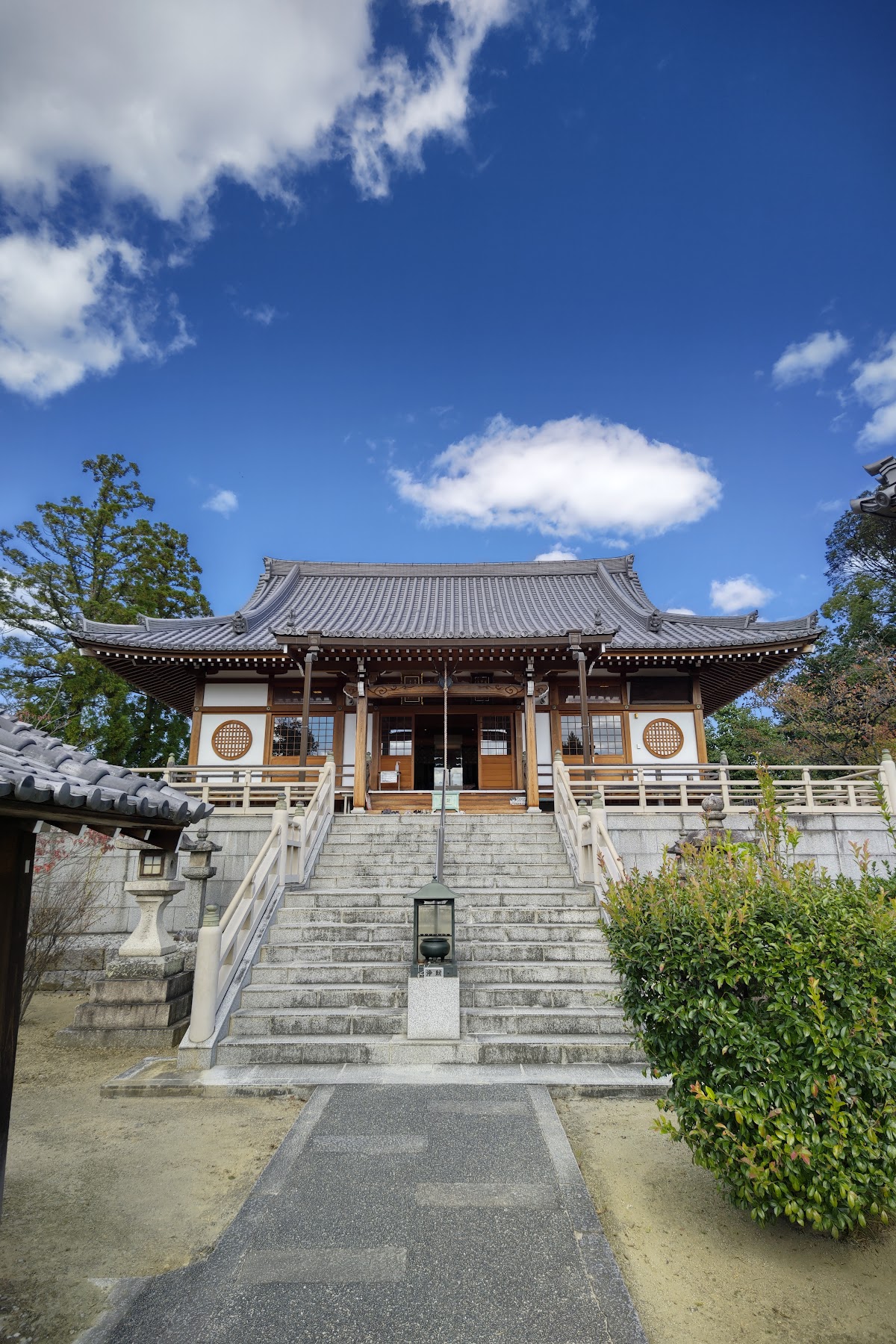
The main hall of Daruma-ji Temple enshrines statues of Prince Shotoku and Bodhidharma as its principal deities. The arrangement of enshrining these two deities side by side symbolizes the founding legend of Daruma-ji Temple.
The statue of Prince Shotoku depicts the prince’s compassionate attempt to save the starving, while the statue of Bodhidharma is revered as the founder of Zen Buddhism, who had a mysterious connection with the prince. ### Cultural Value of the Wooden Seated Daruma Statue
Daruma-ji Temple possesses a wooden seated statue of Daruma, a significant cultural asset. This statue, believed to be from the Kamakura period, is a masterpiece that beautifully captures the distinctive facial features and meditative posture of Bodhidharma. It is associated with the legend of the starving man, an incarnation of Bodhidharma, and has been carefully preserved as an object of worship.
Abbot’s Quarters and Garden
Daruma-ji Temple features an abbot’s quarters (serving as both the abbot’s residence and reception room), typical of Zen temples. The abbot’s quarters are the central building of Zen temples and play a crucial role at Daruma-ji.
Surrounding the abbot’s quarters is a garden expressing the spirit of Zen, providing visitors with a space for tranquility and meditation. The garden, with its harmonious arrangement of stones and plants, displays different expressions throughout the seasons, calming the hearts of visitors.
Highlights and Grounds Guide of Daruma-ji Temple
Visiting the Main Hall
Prior confirmation is recommended when visiting the main hall of Daruma-ji Temple. Inside the main hall, you can view statues of Prince Shotoku and Bodhidharma, and experience the unique structure built on top of an ancient burial mound.
Beneath the main hall’s floor, Daruma-ji Temple Burial Mound No. 3 is preserved, creating a space where ancient, medieval, and modern times coexist in layers.
Stone Structures and Historical Heritage on the Temple Grounds
Various stone structures that tell the story of history remain on the temple grounds. Past archaeological excavations have confirmed the presence of buried stone pagodas, indicating that many religious activities took place throughout Daruma-ji Temple’s long history.
A Mascot Character and a Friendly Temple
Daruma-ji Temple also has a friendly mascot character, demonstrating its openness to the local community. While preserving tradition and history, efforts have been made to make it accessible to modern visitors.
Access to Daruma-ji Temple
Location and Transportation
Daruma-ji Temple is located in Honmachi, Oji-cho, Kitakatsuragi-gun, Nara Prefecture, along National Route 168. The nearest station for public transportation is Oji Station on the JR Yamatoji Line and Kintetsu Ikoma Line.
Daruma-ji Temple is within walking distance from Oji Station, and you can easily access it by using the station’s information boards and tourist apps such as Cocosil.
Nearby Tourist Attractions
The area around Oji-cho, where Daruma-ji Temple is located, has many historical sites associated with Prince Shotoku. Visiting these sites along with World Heritage sites such as Horyu-ji Temple and Hoki-ji Temple in Ikaruga allows you to trace Prince Shotoku’s footsteps and explore history.
Furthermore, the Ikoma, Shigi, Ikaruga, and Katsuragi areas are dotted with many other shrines and temples, allowing you to gain a deeper understanding of the history and culture of western Nara Prefecture.
Annual Events and Ceremonies at Daruma-ji Temple
Daruma-ji Temple holds various Buddhist services and ceremonies throughout the year. In addition to Zen meditation sessions and Dharma talks, special services commemorating Prince Shotoku and Bodhidharma are also held.
In particular, in December, the month in which Prince Shotoku is said to have encountered starving people, events commemorating this legend are sometimes held, offering a valuable opportunity to experience the history and faith of Daruma-ji Temple.
Differences from Daruma-ji Temples in Other Parts of Japan
Daruma-ji Temple in Oji-cho, Nara Prefecture
The Daruma-ji Temple introduced in this article is a temple located in Oji-cho, Nara Prefecture, based on the legend of Prince Shotoku and Bodhidharma. It belongs to the Nanzen-ji branch of the Rinzai school of Zen Buddhism and has a unique structure with its main hall built on top of an ancient burial mound.
Shorinzan Daruma-ji Temple in Takasaki City, Gunma Prefecture
In Takasaki City, Gunma Prefecture, there is Shorinzan Daruma-ji Temple of the Obaku sect, known as the birthplace of the lucky Daruma doll. This temple, famous for its Takasaki Daruma dolls, belongs to the Obaku sect and enshrines Hokushin Chintaku Reifu Son, Eleven-faced Kannon, and Daruma Daishi.
Every January, a “Daruma Market” is held, attracting many visitors. Daruma shops line the area in front of the main hall, and modern events such as food trucks gather.
Daruma-ji Temple in Izu City, Shizuoka Prefecture
There is also a Daruma-ji Temple in Toi, Izu City, Shizuoka Prefecture, which is a temple whose head temple is Horin-ji Temple in Kyoto. Located in the scenic area of Fujimidai, the main hall houses the “Immortal Daruma Daishi,” one of the largest seated statues of Daruma Daishi in Japan, standing 5 meters tall and weighing 3 tons. Believed to offer blessings for healing illnesses, it captivates visitors with its views of Mount Fuji.
Horinji Temple (Daruma Temple) in Kyoto
Kyoto is home to Horinji Temple, commonly known as “Daruma Temple,” famous for the numerous Daruma statues enshrined within its grounds. Each Daruma Temple in Japan possesses its own unique history and characteristics, demonstrating the diversity of Daruma worship.
Cultural Value Conveyed by Daruma Temples
Fusion of Prince Shotoku Worship and Daruma Worship
The most distinctive feature of Daruma Temples is the fusion of the uniquely Japanese belief in Prince Shotoku and the belief in Bodhidharma, the founder of Zen Buddhism, which was introduced from China. The coexistence of these two beliefs within a single temple symbolizes the multi-layered nature and inclusiveness of Japanese Buddhism.
Coexistence of Kofun (ancient burial mounds) and Buddhist Temples
The structure of Buddhist temples built on top of Kofun period ruins is a valuable example demonstrating the continuity of faith in Japan. Daruma-ji Temple, reborn as a new sacred site through the fusion of ancient tomb worship and Buddhism, occupies an important position in the history of Japanese religion.
Initiatives Utilizing Local History
In Nara Prefecture, initiatives for regional development utilizing historical resources, including Daruma-ji Temple, are underway. As part of “regional initiatives utilizing history,” efforts are being made to preserve the cultural value of Daruma-ji Temple while also utilizing it as a tourist resource.
Local organizations, including the Oji Tourism Association, are widely disseminating the history and culture of Oji Town, including Daruma-ji Temple, and promoting its branding as a place associated with Prince Shotoku.
Guidelines for Visiting Daruma-ji Temple
Maintain Silence
Daruma-ji Temple is a Zen temple, a place of silence and meditation. When visiting, please refrain from loud conversations and quietly walk around the temple grounds. In the main hall and abbot’s quarters, please calm your mind and pray while experiencing the spirit of Zen.
Respect for History
Daruma-ji Temple, with its history spanning over 1400 years, embodies the accumulated faith and efforts of countless predecessors. It is crucial to respect and carefully preserve all cultural assets, including burial mounds, Buddhist statues, and buildings.
Photography Etiquette
Please follow the temple’s rules when taking photographs on the temple grounds. Photography inside the main hall and of Buddhist statues may be restricted, so it is recommended to check in advance.
Summary
Daruma-ji Temple in Oji-cho, Nara Prefecture, is a rare temple in Japan, born from a legend of a starving man that connects two great saints, Prince Shotoku and Bodhidharma. Originating from an event recorded in the Nihon Shoki (Chronicles of Japan) during the 21st year of Empress Suiko’s reign, its unique form of worship—a main hall built in the Kamakura period on top of a circular burial mound from the Kofun period, and the enshrinement of two principal deities, statues of Prince Shotoku and Bodhidharma—occupies a special place in the history of Japanese Buddhism.
As a Zen temple of the Rinzai sect’s Nanzenji branch, and a sacred site associated with Prince Shotoku, Daruma-ji Temple continues to welcome many visitors and preserve its history and traditions. The scattered burial mounds within the temple grounds, the abbot’s quarters and gardens, and various cultural artifacts evoke a profound sense of spirituality and historical weight in visitors.
Despite its convenient location in Oji Town, Daruma-ji Temple remains enveloped in tranquility, and will undoubtedly continue to play an important role as a place where modern people can confront history and seek inner peace. Why not visit this ancient temple, where the mysterious connection between Prince Shotoku and Daruma Daishi is still felt today?