Chokeiji Temple: A Famous Hydrangea Spot and Ancient Temple Associated with Gyoki | Complete Guide 2024
Located in Sennan City, Osaka Prefecture, Chokeiji Temple is a Shingon sect temple of the Sennyuji school, founded by Gyoki around 724 AD. Its mountain name is Kinzenzan, and its principal image is Nyoirin Kannon. Widely known as the “Hydrangea Temple,” approximately 3,000 hydrangea bushes adorn the temple grounds every June. From its elevated location, the temple grounds offer a panoramic view of Sennan city, and it’s a popular spot for its spectacular scenery, even overlooking Kansai International Airport and Awaji Island.
History and Origins of Chokeiji Temple
Founding and the Footsteps of Gyoki Bodhisattva
The founding of Chokeiji Temple dates back to the 724 AD era. It is said to have been opened by the Nara period high priest Gyoki Bodhisattva and flourished as an imperial temple of Emperor Shomu. Gyōki is known as a monk who built temples throughout Japan and dedicated himself to the relief of the people, and Chōkei-ji Temple is one of the important temples that shows his legacy.
The principal image, Nyoirin Kannon, is said to be a hidden Buddha statue created by Gyōki himself, and is a precious Buddha statue that is only unveiled once every 60 years. The last unveiling was in 2019, and many worshippers visited. The next unveiling will be in 2079, making it a once-in-a-lifetime opportunity for those of us living today.
Toyotomi Hideyori and the Relocation of the Kannon Hall
A significant turning point in the history of Chōkei-ji Temple was the relocation of the Kannon Hall during the Keichō era (1596-1615). It is said that the current Kannon Hall was moved from within Osaka Castle by Toyotomi Hideyori, and it is a valuable cultural asset that conveys the architectural style of that time.
The Kannon Hall bears the year of its relocation, testifying to the Toyotomi family’s prosperity and deep connection with Chokeiji Temple. This Kannon Hall is built separately from the main hall and is one of the important buildings on the temple grounds, welcoming visitors.
Connection with the Okabe Family
During the Edo period, the temple had deep ties with successive Okabe families, including Okabe Yukitaka, the lord of Kishiwada Castle, and received their patronage in the maintenance and management of the temple. The basic structure of the temple grounds, developed during this period, is still reflected in the current appearance of Chokeiji Temple.
Highlights of the Temple Grounds
100 Steps of Exorcism
The first thing visitors to Chokeiji Temple are greeted by is the 100 steps of exorcism leading to the temple gate. These steps are not merely an approach; they are objects of faith, believed to ward off evil as one climbs each step. During the hydrangea season in June, colorful hydrangeas bloom profusely on both sides of the steps, captivating visitors.
When climbing the stone steps, it is recommended to ascend slowly, taking each step deliberately, and with a calm mind. The number 100 steps also has significance; as a perfect number, it is believed to enhance the effect of warding off evil.
Main Hall and Principal Image
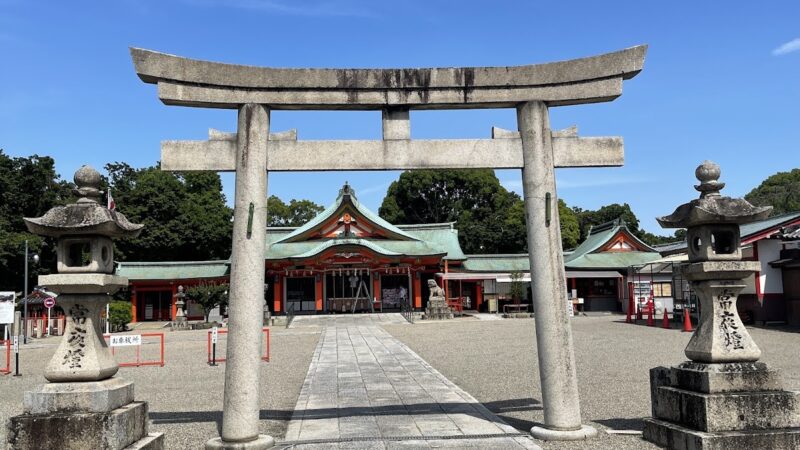
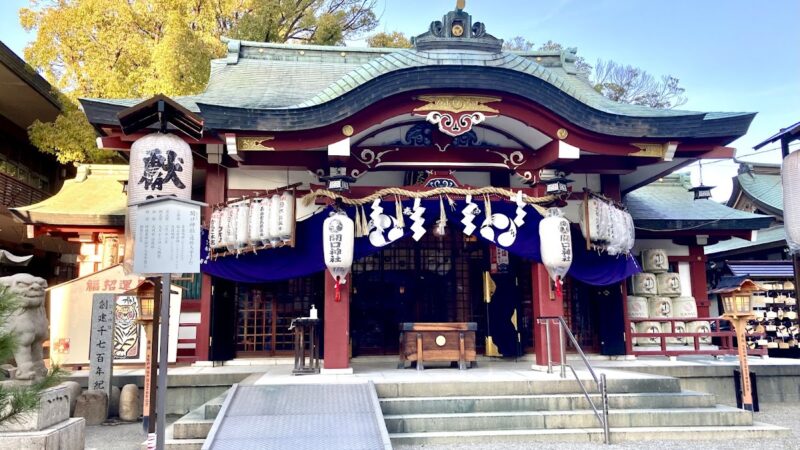
The main hall, located at the top of the stone steps, is the central building of Chokeiji Temple. The principal image, Nyoirin Kannon, is enshrined in the main hall, and is usually kept in a shrine as a hidden Buddha. Shingon Buddhist services are held inside the main hall, allowing worshippers to quietly offer their prayers.
The architectural style of the main hall is characteristic of Shingon Buddhist temples, allowing for a solemn atmosphere where one can offer prayers in peace. Portraits of successive chief priests and temple treasures are also enshrined inside, allowing one to feel the long history of Chokeiji Temple.
Three-Storied Pagoda and Multi-Storied Pagoda
Several pagodas stand on the temple grounds, among which the three-storied pagoda, the three-storied pagoda with a Chinese-style skirt roof, and the multi-storied pagoda (founder’s hall) are particularly striking. These pagodas are important architectural features that characterize the landscape of Chokeiji Temple, and serve as landmarks visible from afar.
The Tahoto pagoda, also known as the Kaisando (Founder’s Hall), is a hall dedicated to the temple’s founder, Gyoki Bodhisattva. The three-story pagoda is situated on a high point within the temple grounds, presenting a beautiful sight that harmonizes with the cityscape of Sennan. These pagodas are popular photography spots, and the combination of the pagodas and flowers is particularly stunning during hydrangea season.
Scenic Viewpoint
Chokeiji Temple is known as the “temple with a view of the airport” due to its elevated location. From the temple grounds, you can enjoy a panoramic view of Sennan city, and on clear days, you can see the runways and landing aircraft of Kansai International Airport, and even Awaji Island across Osaka Bay.
The view at sunset is especially spectacular; the silhouette of Osaka Bay and Kansai International Airport illuminated by the setting sun attracts many photography enthusiasts. An observation spot is provided within the temple grounds, where you can sit on benches and enjoy the view at your leisure.
The Charm of Chokeiji Temple as a Hydrangea Temple
The Valley of Hydrangeas and the Colors of the Entire Mountain
Chokeiji Temple is affectionately known as the “Hydrangea Temple” because of the approximately 3,000 hydrangea plants planted throughout the temple grounds. In particular, the area known as the “Valley of Hydrangeas” is completely covered in hydrangeas, creating a landscape resembling a sea of flowers.
During the peak blooming season in June, hydrangeas of various colors—blue, purple, pink, white, and more—color the entire temple grounds, captivating visitors. There are numerous hydrangea spots with different atmospheres, such as along the stone steps, around the main hall, and around the pagoda, allowing visitors to enjoy the hydrangeas from various angles while strolling around.
Hydrangea Viewing Season and Events
The best time to see the hydrangeas is usually from early to late June. Because this coincides with the rainy season, the beauty of the hydrangeas when wet with rain is exceptional. On rainy days, you’ll need an umbrella to visit the temple, but the hydrangeas, adorned with raindrops, offer a different kind of beauty than on sunny days.
During the hydrangea season in June, special ceremonies and events are sometimes held. Because many visitors come during this period, it’s recommended to visit early in the morning or on weekdays. Those who want to enjoy the hydrangeas in a quiet atmosphere should aim for the time immediately after opening.
Popular as a Photography Spot
Chokeiji Temple is also a very popular photography spot. You can enjoy taking photos in various compositions, such as the combination of stone steps and hydrangeas, hydrangeas with the three-story pagoda in the background, and hydrangeas with the Sennan city area viewed from the temple grounds.
Many photos are posted on social media with hashtags such as “#Chokeiji” and “#hydrangeatemple,” so it’s a good idea to refer to other visitors’ photos before your visit. However, it’s important to be mindful of manners and avoid disturbing other visitors while taking photos.
Pilgrimage and Faith
Seven Lucky Gods Pilgrimage Sites Along the Nankai Railway Line
Chokeiji Temple is one of the Seven Lucky Gods Pilgrimage Sites along the Nankai Railway Line, and is a target of the Seven Lucky Gods pilgrimage. The belief in the Seven Lucky Gods is widely popular in Japan, and it is believed that one will receive good fortune by visiting seven temples and shrines. Chokeiji Temple enshrines a specific Lucky God, and pilgrims visit the sites while collecting Goshuin (temple stamps).
The Seven Lucky Gods Pilgrimage Sites along the Nankai Railway Line consist of temples and shrines scattered along the Nankai Electric Railway line, and are popular with many pilgrims due to their convenient access. Each pilgrimage site offers unique Goshuin, which are popular as collectibles.
Twenty-Four Jizo Statues for Dementia Prevention Pilgrimage Sites
Chokeiji Temple is also one of the “Twenty-Four Jizo Statues for Dementia Prevention Pilgrimage Sites.” In an aging society, visiting Jizo statues for dementia prevention and praying for physical and mental health is gaining attention as a form of faith. Within the temple grounds, a Jizo Bodhisattva is enshrined, and many worshippers pray for health and longevity.
Many worshippers on this pilgrimage pray not only for their own health but also for the health of their family and loved ones, offering heartfelt prayers.
Izumi Saigoku Thirty-Three Kannon Pilgrimage
Chokeiji Temple is counted among the Izumi Saigoku Thirty-Three Kannon Pilgrimage sites. Kannon pilgrimage is a traditional Japanese pilgrimage culture, and it is believed that by visiting the thirty-three Kannon sites, one can receive the compassion of Kannon Bodhisattva.
As the principal image is Nyoirin Kannon, it has long been a center of Kannon worship, welcoming many pilgrims. During the pilgrimage, you can receive a Goshuin (temple stamp) in a special pilgrimage notebook, which is carefully kept as a record of your pilgrimage.
Goshuin and Items Offered
Types of Goshuin and Reception Hours
Chokeiji Temple offers several types of Goshuin. In addition to the basic Goshuin (temple stamp) of Chokeiji Temple, there are also Goshuin stamps for various pilgrimage sites, such as the Nankai Railway Seven Lucky Gods, the Twenty-Four Jizo Statues for Preventing Dementia, and the Thirty-Three Kannon Pilgrimage Sites of Izumi-Saigoku.
Goshuin stamps are available from 9:00 AM to 4:00 PM at the temple office. During busy periods, such as hydrangea season, there may be waiting times, so it is recommended to visit with ample time.
Goshuin stamps are not merely commemorative stamps, but sacred items bestowed as proof of worship. When receiving one, it is important to receive it carefully with both hands and with gratitude.
Amulets and Souvenirs
Chokeiji Temple offers a variety of amulets and souvenirs. There are amulets for various wishes, including those for warding off evil, for health and longevity, and for traffic safety. Seasonal amulets featuring hydrangeas are particularly popular as souvenirs of visits.
Furthermore, Goshuincho (stamp books) are also available, and the original design of the Goshuincho from Chokeiji Temple is recommended for those beginning their pilgrimage.
Basic Information
Location and Access
Address
815 Shindachi-Ichiba, Sennan City, Osaka Prefecture
Access by Train
- Approximately 12 minutes on foot from Izumi-Sunagawa Station on the JR Hanwa Line
- Approximately 20 minutes on foot from Tarui Station on the Nankai Main Line
From Izumi-Sunagawa Station, head west from the station, pass through a residential area, and go up a hill. There are signs along the way, so even first-time visitors can arrive without getting lost.
Access by Car
- Approximately 10 minutes from Sennan IC on the Hanwa Expressway
- Accessible via Prefectural Road from National Route 26
Parking Information
Chokeiji Temple has a parking lot for visitors. It can accommodate approximately 30 regular cars and is free of charge. However, the parking lot can become crowded on weekends and holidays during hydrangea season, and may be full. In that case, we recommend using nearby paid parking lots or visiting by public transportation.
The parking lot is a short walk from the temple entrance, making access easy. Groups wishing to visit by large bus are advised to contact the temple office in advance.
Visiting Hours and Admission Fee
Visiting Hours
Temple grounds are freely accessible (Goshuin stamps are available from 9:00 to 16:00)
Admission Fee
Free (except during special viewings)
Regular visits are free, and you can freely explore the temple grounds. However, an admission fee may be required during special viewings, such as the once-in-60-year unveiling of the main image.
Annual Events and Festivals
Chokeiji Temple holds various Buddhist services and events throughout the year.
- January: First shrine visit of the year, Shusho-e (New Year’s service)
- March: Spring Equinox service
- June: Hydrangea viewing season
- August: Segaki memorial service
- September: Autumn Equinox service
- December: New Year’s Eve bell ringing
For details on events and special service dates, we recommend contacting the temple office in advance or checking the official social media accounts.
Nearby Tourist Attractions
The Charms of Sennan City
Sennan City, where Chokeiji Temple is located, is a naturally rich area situated along the coast in southern Osaka Prefecture. It is close to Kansai International Airport and enjoys a mild climate, making it ideal for fruit cultivation. Tourist farms offering strawberry and grape picking are particularly popular.
Nearby Temples and Shrines
Besides Chokeiji Temple, many other historical temples and shrines are scattered throughout Sennan City and the surrounding areas. Those who enjoy pilgrimages can have a more fulfilling experience by combining visits to multiple temples and shrines.
Since other pilgrimage sites of the Izumi Saigoku Thirty-Three Kannon Pilgrimage and the Nankai Railway Seven Lucky Gods Pilgrimage are also nearby, it is possible to visit multiple pilgrimage sites in one day.
View of Kansai International Airport
Kansai International Airport, visible from Chokeiji Temple, is known as the world’s first full-fledged offshore airport. From the temple grounds, you can view the runway and aircraft taking off and landing, making it an attractive spot for aviation enthusiasts.
Especially at sunset, the view of the airport and sea illuminated by the setting sun is beautiful, and many visitors enjoy this scenery.
Manners and Precautions for Visiting
Clothing and Items to Bring
To visit Chokeiji Temple, you will need to climb 100 stone steps, so comfortable shoes and clothing are recommended. Especially during the rainy season when hydrangeas bloom, it is advisable to bring rain gear (umbrella or raincoat).
During the summer months, the sun is strong, so we recommend bringing a hat, parasol, and drinks for hydration. In winter, the temple is located on a hill and can be windy, so warm clothing is necessary.
Photography Etiquette
Photography is generally permitted on the temple grounds, but consideration should be given to avoiding disturbing other visitors. In particular, photography inside the main hall and during religious ceremonies should be avoided. Using tripods or occupying the same spot for extended periods should be avoided as it disrupts other visitors.
Posting to social media is permitted, but it is important to respect privacy and avoid publishing photos that include other visitors without their permission.
Proper Worship Etiquette
At Chokeiji Temple, a Shingon Buddhist temple, it is desirable to observe the following basic worship etiquette.
- Bow at the temple gate before entering the grounds.
- Cleanse your hands and mouth at the water basin.
- Join your hands in prayer in front of the main hall and offer a heartfelt bow.
- Stroll quietly through the temple grounds to calm your mind.
- When leaving, turn back to the temple gate and bow once more.
When making an offering, it is considered proper etiquette to quietly place it in the offering box rather than throwing it.
Summary
Chokeiji Temple is an ancient temple with a history of nearly 1300 years, associated with Gyoki, and is a popular landmark in Sennan City, Osaka Prefecture, known as the “Hydrangea Temple.” Since its founding during the Jinki era, it has a long history as an imperial temple of Emperor Shomu and an important temple of the Shingon sect.
It is a temple of high historical value, with its secret Buddha image created by Gyoki himself, which is only unveiled once every 60 years, the Kannon Hall said to have been relocated by Toyotomi Hidekoro, and its deep connection with the Okabe family. Within the temple grounds stand a three-story pagoda and a multi-storied pagoda, and from the hilltop, a spectacular panoramic view unfolds, encompassing Sennan city, Kansai International Airport, and even Awaji Island.
Especially during the hydrangea season in June, the entire temple grounds, including the 100 steps leading to the shrine and the hydrangea valley, are adorned with approximately 3,000 hydrangea bushes, captivating visitors. It also serves as a pilgrimage site for the Seven Lucky Gods along the Nankai Railway, the Twenty-Four Jizo Bodhisattvas for warding off dementia, and the Thirty-Three Kannon Pilgrimage of Izumi-Saigoku, playing an important role as a base for pilgrimage.
Located a 12-minute walk from JR Izumi-Sunagawa Station, with ample parking available, it boasts excellent accessibility. With Goshuin (temple stamp) reception hours from 9:00 to 16:00 and free admission (under normal circumstances), it’s a temple that’s easy to visit.
Where history, nature, views, and faith harmonize, Chokeiji Temple is a fascinating spot that you should definitely visit when exploring southern Osaka Prefecture. The temple grounds, which display different expressions in each of the four seasons, will offer new discoveries no matter how many times you visit.