Complete Guide to Ryutaku-ji Temples | A Thorough Explanation of the History, Access, and Highlights of Ryutaku-ji Temples Nationwide
Ryutaku-ji is the name of several temples located throughout Japan. Each Ryutaku-ji has a different history and characteristics, and is cherished as a place of worship deeply rooted in its region. This article provides a detailed explanation of the history, highlights, and access methods of major Ryutaku-ji temples, offering useful information for those considering visiting or sightseeing.
What is Ryutaku-ji? An Overview of Temples with the Same Name Scattered Across Japan
The name Ryutaku-ji is used for temples throughout Japan. Major Ryutaku-ji temples include the following:
- Ryūtaku-ji Temple in Mishima City, Shizuoka Prefecture: A Rinzai Zen temple associated with Zen Master Hakuin
- Ryūtaku-ji Temple in Motoazabu, Minato-ku, Tokyo: A Soto Zen temple in the heart of Tokyo
- Ryūtaku-ji Temple in Ehime Prefecture: The 51st temple of the New Shikoku Mandala Pilgrimage
- Ryūtaku-ji Temple in Awara City, Fukui Prefecture: A temple that attracts local faith
- Ryūtaku-ji Temple in Ishikari City, Hokkaido: A Soto Zen temple
- Ryūtaku-ji Temple in Minamiuonuma City, Niigata Prefecture: A Rinzai Zen temple of the Engaku-ji school
Each temple has its own unique history and characteristics, and plays an important role in the local community.
Ryūtaku-ji Temple in Mishima City, Shizuoka Prefecture: A famous temple associated with Zen Master Hakuin
History and Founder
Ryūtaku-ji Temple in Mishima City, Shizuoka Prefecture, is a temple known as a Rinzai Zen temple. It is said to have been founded in March 1761 by the Edo period high-ranking Zen master Hakuin Ekaku, but there are also records indicating that it existed as a Rinzai Zen temple even before that. According to tradition, it is also said to have been founded by Kukai (Kobo Daishi), making it a temple with a long history.
Although it fell into disrepair for a period, it was restored as a training ground for Zen practitioners by Master Yamamoto Genpo during the Taisho era. Currently, it is also known as the 21st temple on the Izu 88 Pilgrimage.
Connection to Zen Master Hakuin
Zen Master Hakuin was a high-ranking Zen master known as the restorer of the Rinzai Zen sect in the mid-Edo period. Famous for koans such as “The Sound of One Hand Clapping,” he trained many disciples and made a significant contribution to the development of Zen Buddhism in Japan. Ryutaku-ji Temple is said to have been founded by Zen Master Hakuin and occupies an important position as a Zen training ground.
Highlights of the Temple Grounds
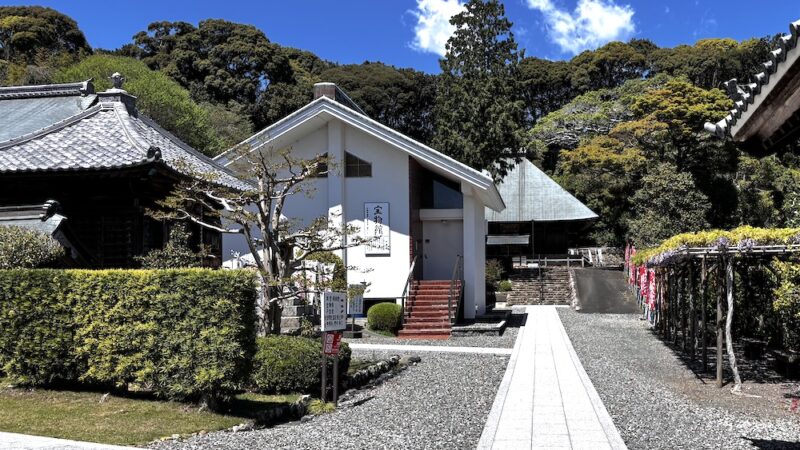
Ryūtaku-ji Temple is located in a tranquil area surrounded by cedar forests, providing an ideal environment for Zen practice. Many visitors come during the following times:
Autumn Foliage Season: In autumn, the temple grounds are adorned with beautiful autumn leaves, enhancing their beauty even further. The Autumn Foliage Festival is held annually on November 23rd, attracting many tourists.
Azalea Season: From spring to early summer, azaleas bloom profusely, adding vibrant color to the temple grounds. It is a popular temple where visitors can enjoy the beauty of nature throughout the seasons.
About Zen Meditation Sessions
Ryūtaku-ji Temple holds Zen meditation sessions for those with prior Zen meditation experience. These sessions are not for beginners, but for those who already have experience in Zen meditation, making them suitable for those seeking serious Zen practice. If you wish to participate, it is recommended to contact the temple in advance.
Access Information
Ryūtaku-ji Temple, located in Sawaike, Mishima City, Shizuoka Prefecture, can be accessed using the following methods.
- Train: Take a bus or taxi from JR Mishima Station
- Car: Approximately 20 minutes from Numazu IC on the Tomei Expressway
- Parking: Parking available for visitors (please check with the temple for details)
Ryutaku-ji Temple, Motoazabu, Minato-ku, Tokyo: A Soto Zen Temple in the Heart of Tokyo
History and Founding
Ryutaku-ji Temple, located in Motoazabu, Minato-ku, Tokyo, is a Soto Zen temple. It was founded in 1626 (Kanei 3) by the Venerable Hakuyo Densei. As a Soto Zen temple with Eihei-ji Temple in Fukui Prefecture and Soji-ji Temple in Kanagawa Prefecture as its head temples, it boasts a long history dating back to the Edo period.
In 1878 (Meiji 11), it was temporarily used as the Azabu Ward Office, demonstrating its deep connection to the local history.
Location and Environment
This temple boasts a prime location in the heart of Tokyo, just a 5-minute walk from Azabu-Juban Station and a 9-minute walk from Roppongi Station, yet maintains a tranquil environment. Surrounded by embassies and upscale residential areas, it offers a peaceful space away from the hustle and bustle of the city.
About the Cemetery
Ryūtaku-ji Temple has its own temple cemetery, offering a sunny environment despite its central Tokyo location. It is recommended to contact the temple in advance regarding cemetery registration and viewings. For those seeking a cemetery in central Tokyo, this is an excellent option, combining convenient access with a peaceful environment.
Access Information
- Address: 3-10-5 Motoazabu, Minato-ku, Tokyo
- Nearest Station:
- 5-minute walk from Azabu-Juban Station (Tokyo Metro Namboku Line/Toei Oedo Line)
- 9-minute walk from Roppongi Station (Tokyo Metro Hibiya Line/Toei Oedo Line)
- Parking: Available (Limited number of spaces; public transportation is recommended)
Ryutaku-ji Temple in Ehime Prefecture: The 51st Temple of the New Shikoku Mandala Pilgrimage
History and Background
Ryutaku-ji Temple in Ehime Prefecture is a Soto Zen Buddhist temple of the Soji-ji school, known as the 51st temple of the New Shikoku Mandala Pilgrimage. Founded in 1323, it was originally called “Ryuten-ji Temple” and was located in what is now Kihoku-cho, Kita-Uwa-gun.
In 1433, the temple was restored by Zen Master Nakao Morikuni, the eldest son of Shimazu Motohisa, the lord of the Satsuma domain, and renamed to its current name, “Ryūtaku-ji.” Due to this historical background, the temple’s roof tiles bear the Shimazu family crest, “Maru ni Jūji” (a circle with a cross), a testament to its deep connection with the Satsuma domain.
Role as a Pilgrimage Site
As the 51st temple of the New Shikoku Mandala Pilgrimage, it attracts many pilgrims. While a different pilgrimage site from the Shikoku 88 Temple Pilgrimage, it garners local faith and contributes to the continuation of pilgrimage culture.
Features and Highlights
The roof tiles, which demonstrate the historical connection with the Shimazu family, possess significant cultural value. Furthermore, a tranquil atmosphere based on the teachings of the Sōtō Zen sect permeates the entire temple grounds, creating a peaceful environment for worship.
Other Ryutaku-ji Temples
Ryutaku-ji Temple in Awara City, Fukui Prefecture
Ryutaku-ji Temple in Awara City is a temple beloved by the local people. For detailed history, please contact the temple directly to obtain more information.
Ryutaku-ji Temple in Ishikari City, Hokkaido
As a Soto Zen temple, it has walked hand in hand with the history of Hokkaido’s development. It functions as a center of Buddhist faith in the local community.
Ryutaku-ji Temple in Minamiuonuma City, Niigata Prefecture
Belonging to the Engaku-ji branch of the Rinzai school, it has continued to uphold its faith amidst the harsh natural environment of a snowy region. It is an important presence that conveys the history and culture of the region.
Etiquette and Manners for Visiting Ryutaku-ji Temples
Basic Manners for Visiting Temples
Regardless of which Ryutaku-ji Temple you visit, it is important to observe the following basic manners.
- Attire: Please wear modest, understated clothing.
- Photography: Photography is often permitted within the temple grounds, but prior confirmation is necessary for photography inside the main hall, etc.
- Quietness: As this is also a training hall, please refrain from loud conversations.
- Smoking and Eating: Smoking and eating are prohibited outside of designated areas.
- Offerings: Please offer your donation quietly and with sincerity.
Points to Note for Zen Meditation Experiences
When participating in a Zen meditation session, please note the following:
- Advance reservations are often required.
- Arrive 10 minutes before the start time.
- Choose comfortable, quiet clothing.
- Avoid strong fragrances such as perfume.
- Follow the instructor’s instructions and refrain from private conversations.
Seasonal Recommendations for Visiting Ryutaku-ji Temple
Spring (March-May)
This is the season when azaleas are in full bloom. Especially at Ryutaku-ji Temple in Mishima City, the azaleas on the temple grounds are in full bloom, creating a vibrant atmosphere. The fresh greenery is beautiful, making for a refreshing visit.
Summer (June-August)
The temple grounds, surrounded by cedar trees, remain relatively cool even in summer. The lush greenery deepens the tranquil atmosphere characteristic of a Zen temple.
Autumn (September-November)
The autumn foliage season is the perfect time to visit Ryutaku-ji Temple. In particular, Ryutaku-ji Temple in Mishima City holds its Autumn Foliage Festival on November 23rd, attracting many visitors. The autumn leaves in the garden are breathtakingly beautiful.
Winter (December-February)
Visiting the temple in the tranquil atmosphere of winter allows for a deeper spiritual experience. The temple amidst a snowy landscape has a special charm.
Tourist Attractions Around Ryutaku-ji Temple
Around Mishima City
- Mishima Taisha Shrine: A representative shrine of Mishima City
- Rakujuen Garden: A garden designated as a national natural monument
- Kakitagawa Park: A park where you can see spring water from Mt. Fuji
Around Azabu-Juban
- Azabu-Juban Shopping Street: A shopping street overflowing with old-town charm
- Roppongi Hills: A modern complex
- Tokyo Tower: A tourist attraction within walking distance
How to Contact Ryutaku-ji Temple
You can contact each Ryutaku-ji temple using the following methods:
- Telephone: Contact during each temple’s reception hours
- Official Website: Inquiries can be made through the official website of some temples
- Direct Visit: Direct visits are possible during reception hours
We recommend contacting the temple using the appropriate method depending on your purpose, such as participating in a Zen meditation session, visiting the cemetery, or requesting a memorial service.
Deepening Your Understanding of the Sect of Ryutaku-ji Temple
What is the Soto Zen School?
The Soto Zen School is a branch of Japanese Zen Buddhism founded by Zen Master Dogen. Its characteristic teaching emphasizes “Shikantaza,” that is, simply sitting in meditation. Its head temples are Eihei-ji Temple in Fukui Prefecture and Soji-ji Temple in Kanagawa Prefecture.
What is the Rinzai Zen School?
The Rinzai Zen School is a branch of Zen Buddhism introduced to Japan by Zen Master Eisai. It is characterized by its training method using koans (Zen dialogues), and Zen Master Hakuin is known as the restorer of the Rinzai Zen School.
Summary: The Charm of Ryutaku-ji Temple and a Recommendation to Visit
Ryutaku-ji temples, scattered throughout Japan, are valuable temples, each with its own unique history and characteristics. Ryutaku-ji Temple in Mishima City, Shizuoka Prefecture, is a Zen training hall associated with Zen Master Hakuin; Ryutaku-ji Temple in Minato Ward, Tokyo, is a tranquil temple in the heart of the city; and Ryutaku-ji Temple in Ehime Prefecture is a pilgrimage site. Each has its own unique charm.
These temples are worth visiting for a variety of purposes, whether you’re interested in Zen practice, want to enjoy beautiful gardens, or simply want to visit a historical temple. Checking the characteristics and opening hours of each temple beforehand and observing proper etiquette will ensure a more fulfilling experience.
From the beauty of nature in each season to tranquil Zen meditation experiences and appreciation of historical buildings, Ryutaku-ji Temple offers a diverse range of experiences. Why not visit a Ryutaku-ji Temple near you, or one that interests you? Peace of mind and new discoveries await you.