About Ninna-ji Temple
Ninna-ji Temple is the head temple of the Omuro branch of the Shingon sect, located in Omuro, Ukyo-ku, Kyoto City. Founded in 886 (Ninna 2) by Emperor Uda, it was a monzeki temple (a temple whose head priest is a member of the imperial family) and was also known as “Omuro Gosho” (Omuro Imperial Palace). In 1994, it was registered as a World Heritage Site as part of the “Historic Monuments of Ancient Kyoto.”
History and Origins
The founding of Ninna-ji Temple began with the wish of Emperor Koko, but after his death, Emperor Uda carried on his wishes and completed the temple in 888. After abdicating, Emperor Uda became a monk and built a monk’s residence called “Omuro” within the temple grounds, which is why the area came to be called “Omuro.” From then until the Meiji Restoration, it boasted a high status as a monzeki temple where members of the imperial family served as chief priests for generations.
Although most of the temple complex was destroyed in the Ōnin War (1467-1477), it was rebuilt between 1634 and 1646 during the early Edo period with the support of the Tokugawa shogunate. The current main hall (Kondo) is a relocated building from the Shishinden Hall of the Imperial Palace and is designated a National Treasure.
Points to Note During Your Visit
National Treasure: Kondo Hall
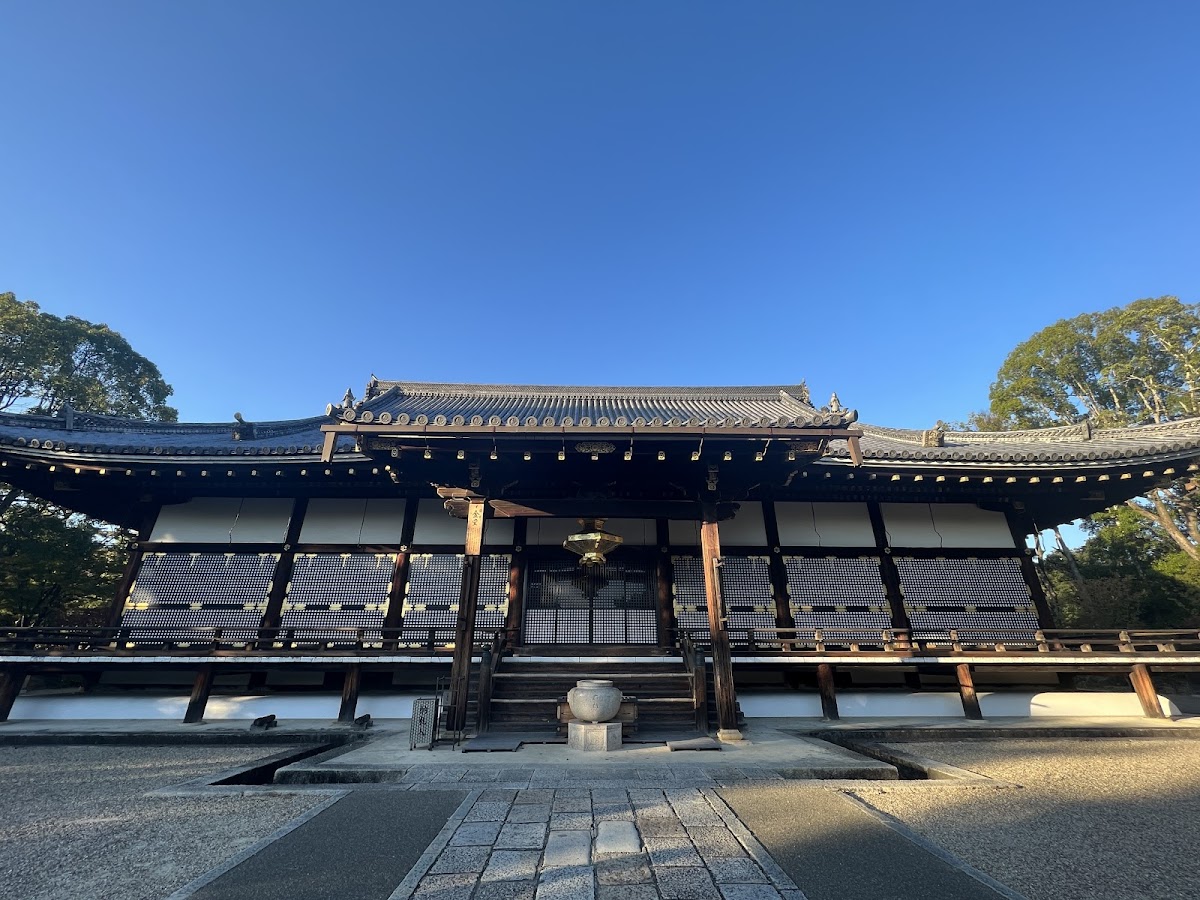
The main hall of Ninna-ji Temple, the Kondo Hall, was relocated in 1613 from the Shishinden Hall of the Kyoto Imperial Palace, which was built during the Keichō era (1596-1615). It is designated a National Treasure as the oldest existing Shishinden Hall structure. Inside, the principal image, the Amida Triad, is enshrined, and the walls are adorned with vividly colored murals depicting the Pure Land and Kannon. It is a valuable building that preserves the style of Momoyama period palace architecture.
Five-Storied Pagoda
The five-storied pagoda, approximately 36 meters tall, is an important cultural property built in 1644. It features a characteristic Edo period style with roofs of roughly the same size on each level, resulting in a beautifully balanced form. The interior of the first level houses murals depicting the worldview of Esoteric Buddhism, centered on Dainichi Nyorai (Vairocana Buddha), which can be viewed during special public viewings.
Omuro Cherry Blossoms
A representative landmark of Ninna-ji Temple are the approximately 200 Omuro cherry trees planted on the west side of the main gate. These trees are relatively short, only 2-3 meters tall, and are also known as “Otafuku cherry blossoms” or “low-nosed cherry blossoms.” Known as the latest-blooming cherry blossoms in Kyoto City, they typically reach their peak bloom around mid-April. They have been popular with the common people since the Edo period, and a folk song remains: “I am Otafuku, an Omuro cherry blossom; my flower (nose) may be low, but people like me.”
Palace (Scenic Garden)
The palace, consisting of the Shinden (main hall), Shiro-shoin (white study), and Kuro-shoin (black study), preserves the Edo period imperial palace architectural style. The two gardens, the South Garden and the North Garden, are designated as National Scenic Spots. The North Garden, in particular, is a pond-centered strolling garden where visitors can enjoy the beauty of each season. The sliding screen paintings in the Shiro-shoin are impressive works by the Kano school.
Treasure Hall
The Treasure Hall, which is open to the public during spring and autumn, houses valuable temple treasures from the Heian to Edo periods, including the National Treasure “Amida Triad” and important cultural properties such as Buddhist statues, paintings, and calligraphy.
Benefits
Ninna-ji Temple, as a fundamental training ground for Shingon Esoteric Buddhism, is believed to offer the following benefits:
- Fulfillment of All Wishes: Fulfillment of all wishes through the principal deity, Amida Buddha.
- Protection from Misfortune and Good Fortune: Protection from disaster through Fudo Myoo.
- Academic Success: Improvement of wisdom through Monju Bodhisattva.
- Finding a Good Match: Prayers for a good match through Kannon Bodhisattva.
- Healing from Illness: Prayers for good health through Yakushi Nyorai.
Especially known as a prestigious temple with ties to the Imperial family, it is also recognized as a place of high status for prayer.
Visiting Information
Visiting Hours
- March-November: 9:00-17:00 (Last entry 16:30)
- December-February: 9:00-16:30 (Last entry 16:00)
Admission Fees
- Palace: Adults 500 yen, Elementary/Junior High School Students 300 yen
- Treasure Hall (During special spring and autumn opening periods): Adults 500 yen, Elementary/Junior High School Students 300 yen
- Special Entry to the Temple Grounds (During Omuro Cherry Blossom Blooming Season): Adults 500 yen, Elementary/Junior High School Students 200 yen
*During normal periods, the temple grounds are free to enter (exterior of the main hall, etc.)
Access
Access by Train/Bus
- Keifuku Electric Railway (Arashiyama Line) Kitano Line: Get off at “Omuro Ninnaji Station,” approximately 3 minutes on foot (nearest station)
- From JR Kyoto Station: Take Kyoto City Bus No. 26 and get off at “Omuro Ninna-ji” bus stop (approximately 40 minutes).
- From Keihan Sanjo Station: Take Kyoto City Bus No. 10 or 59 and get off at “Omuro Ninna-ji” bus stop (approximately 40 minutes).
- From Hankyu Omiya Station: Take Kyoto City Bus No. 26 and get off at “Omuro Ninna-ji” bus stop (approximately 25 minutes).
Access by Car
- Approximately 40 minutes from Meishin Expressway “Kyoto Minami IC”
- Parking: 120 spaces for regular cars (Paid: 500 yen per visit, 9:00 AM – 5:30 PM)
Address
33 Omuro Ouchi, Ukyo-ku, Kyoto City, Kyoto Prefecture 616-8092
Nearby Attractions
Around Ninna-ji Temple, there is a walking path called “Kinukake-no-michi,” and World Heritage sites such as Ryoan-ji Temple (famous for its rock garden) and Kinkaku-ji Temple (Rokuon-ji Temple) are scattered within walking distance. During the cherry blossom season in spring and the autumn foliage season, sightseeing routes visiting these sites are popular.
Summary
Ninna-ji Temple boasts a history of over 1100 years as a prestigious monzeki temple with ties to the Imperial family. With its National Treasure Golden Hall, Important Cultural Property Five-Storied Pagoda, the late-blooming Omuro cherry blossoms, and beautiful gardens, it is a representative Kyoto temple of high value as a World Heritage site. It is one of the must-see places when sightseeing in Kyoto.