Complete Guide to Shoshazan Engyo-ji Temple | The Charm and Visiting Information of a Thousand-Year-Old Temple Known as the “Hieizan of the West”
Engyo-ji Temple, nestled on Mount Shosha (371 meters above sea level) in the northwestern part of Himeji City, Hyogo Prefecture, is a Tendai sect head temple with a history of over 1,000 years. Known as the “Hieizan of the West,” it welcomes many visitors as the 27th temple on the Saigoku Thirty-Three Kannon Pilgrimage. This article will fully convey the charm of this ancient temple, from its history and architecture to how to visit and its highlights.
History and Origin of Engyo-ji Temple
Founded by Shoku Shonin
Engyo-ji Temple was founded in 966 (Kōhō 3) by Shoku Shonin (910-1007). After training at Mount Hiei, Shōkū Shōnin traveled to various regions before settling on Mount Shosha as his training ground. He possessed profound knowledge and high virtue, earning the respect of many.
Shōkū Shōnin’s reputation reached the imperial court, and many members of the imperial family and nobility, including Emperor Kazan and Emperor Go-Shirakawa, visited Mount Shosha. Emperor Kazan, in particular, is said to have stayed here for three years in 986 and become a follower of Shōkū Shōnin. During this period, Engyō-ji Temple flourished greatly and came to be known as the “Mount Hiei of the West.”
Development from the Medieval to the Early Modern Period
From the late Heian period to the Kamakura period, Engyō-ji Temple prospered as an important training ground for the Tendai sect. Records indicate that at its peak, thousands of monks trained there, and numerous temple buildings stood within the grounds.
During the Sengoku period (Warring States period), it was caught in the ravages of war, but it was rebuilt during the Edo period under the protection of the Himeji domain lord. Many of the current major buildings were rebuilt during this period.
Engyo-ji Temple in the Modern Era
Despite being affected by the anti-Buddhist movement of the Meiji era, Engyo-ji Temple survived as a special head temple of the Tendai sect. Since the Showa era, many of its buildings have been designated as important cultural properties from the perspective of cultural property preservation.
In recent years, it has become a popular tourist spot, attracting many visitors from both Japan and abroad, and is known as a filming location for movies such as “The Last Samurai” and the historical drama “Gunshi Kanbei.”
Main Buildings and Highlights of Engyo-ji Temple
Mani-den Hall
The Mani-den Hall is the main hall of Engyo-ji Temple and, as the 27th temple of the Saigoku Kannon Pilgrimage, enshrines Nyoirin Kannon as its principal deity. The current building was rebuilt in 1933 (Showa 8) and employs a cantilevered architectural style called “kakezukuri,” which projects out over a cliff.
The view from the Mani-den Hall is magnificent, offering a panoramic view of Himeji city and the Harima Plain. The scenery is particularly beautiful during the seasons of fresh greenery in spring and vibrant autumn foliage.
The Three Halls
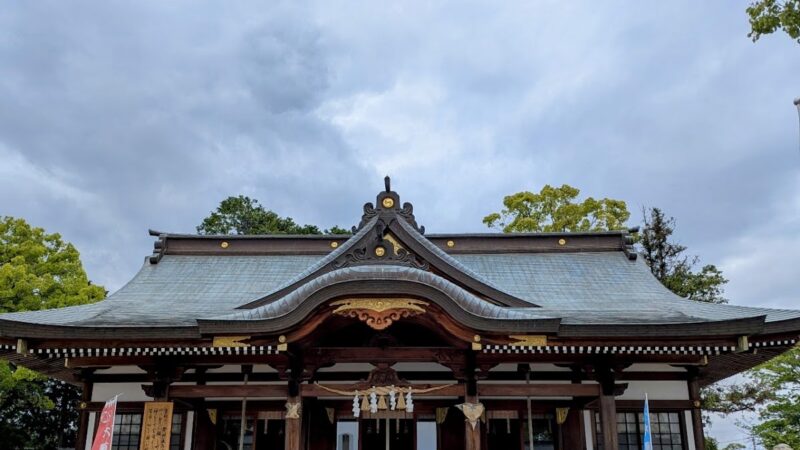
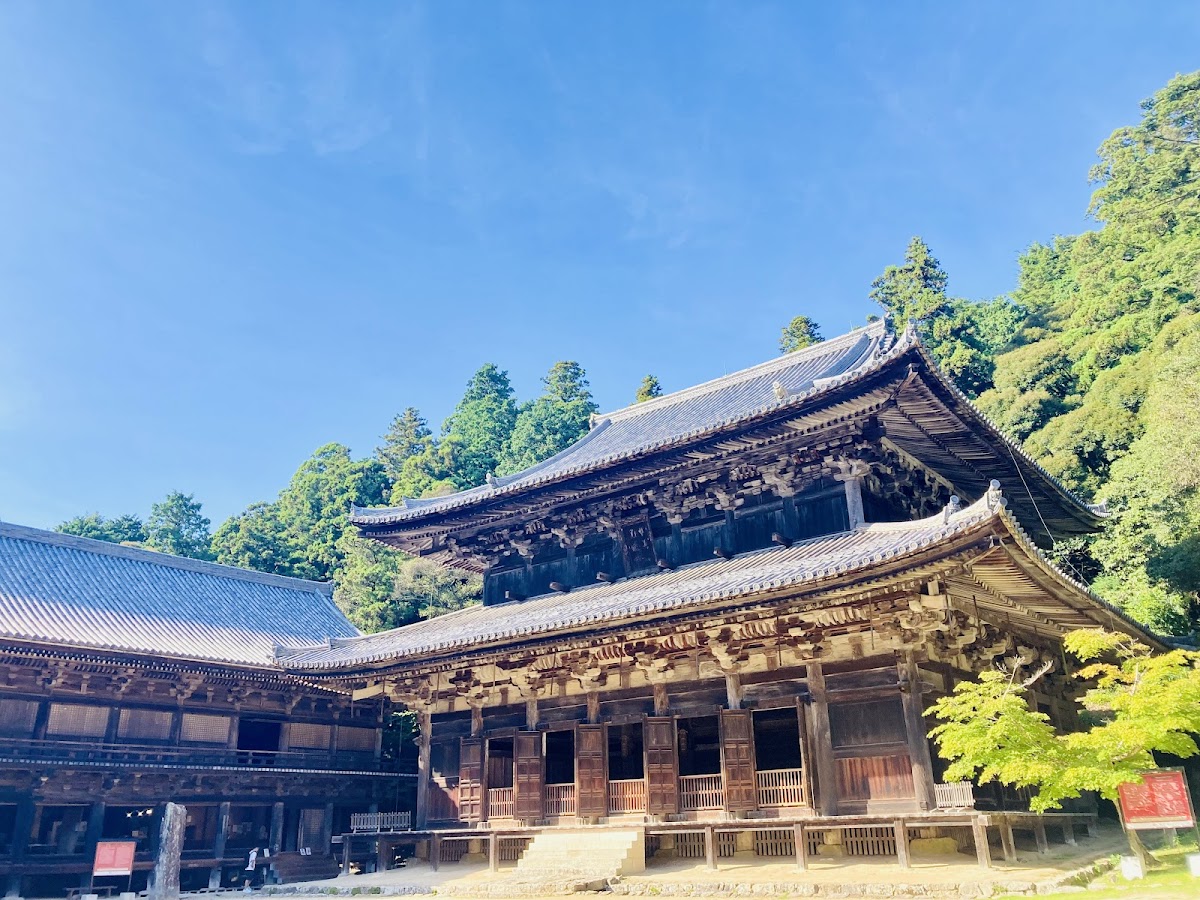
At the heart of Engyo-ji Temple are three important cultural properties known as the “Three Halls.” These are arranged in a “U” shape, a valuable historical site that preserves the layout of a medieval Tendai Buddhist temple complex.
The Great Lecture Hall
The Great Lecture Hall is the largest building at Engyo-ji Temple and served as a place for monks to study. The current building was rebuilt in 1618 (Genna 4) and is designated as a national important cultural property. Inside, statues of the Shakyamuni Triad and the Four Heavenly Kings are enshrined, and many votive tablets adorn the walls.
Dining Hall (Jikido)
The dining hall served as both a place for monks to eat and a place for ascetic training. The current building dates from the Muromachi period and is designated as an Important Cultural Property. Inside, statues of the monk-like Manjushri Bodhisattva and the Four Heavenly Kings are enshrined, and a painting of a cloud dragon adorns the ceiling.
The dining hall was also used as a filming location for the movie “The Last Samurai,” where scenes of the protagonist, played by Tom Cruise, learning about Japanese culture were filmed.
Jogyodo Hall (Jogyodo)
The Jogyodo Hall is a place for the ascetic practice of Jogyozama, and its principal image is Amida Buddha. Like the dining hall, it dates from the Muromachi period and is designated as an Important Cultural Property.
Other Important Buildings
Kaisando Hall (Kaisando)
The Kaisando Hall is a hall dedicated to the monk Shōkū Shōnin and is located at the back of the three halls. In a tranquil atmosphere, one can reflect on the virtues of the Venerable Master. In front of the hall stands a massive rock known as “Benkei’s Desk,” a legend that Musashibo Benkei used this rock as a desk.
Okunoin (Inner Sanctuary)
Further beyond the Founder’s Hall lies the Okunoin. This is considered the place where Venerable Shōkū first practiced asceticism, and holds special significance as the birthplace of Engyōji Temple. In this serene space surrounded by a deep forest, one can feel the origins of his training.
Gohōdō (Guardian Hall)
The Gohōdō is a hall dedicated to Ototen and Wakaten, two young boys who served Venerable Shōkū. Legend says these two boys were actually incarnations of mountain gods, and they are worshipped as the guardian deities of Engyōji Temple.
Annual and Traditional Events of Engyo-ji Temple
Oni-oi Ceremony (Shushō-e)
The Oni-oi Ceremony, held annually on January 18th, is a representative traditional event of Engyo-ji Temple. This ceremony serves as the concluding ritual of the Shūshō-e (New Year’s Day) ceremony, where red, blue, and black demons appear to ward off evil spirits and pray for a bountiful harvest and good health.
The Oni-oi Ceremony is a traditional event dating back to the Muromachi period and is designated as an Intangible Folk Cultural Property of Hyogo Prefecture. The sight of the demons running around with torches is impressive, attracting many spectators.
Kannon-e Ceremony
The Kannon-e Ceremony is held on March 18th. This is a ceremony to express gratitude to Kannon Bodhisattva, as the 27th temple on the Saigoku Thirty-Three Kannon Pilgrimage. Many pilgrims attend, and the ceremony is conducted in a solemn atmosphere.
Founding Ceremony
In October, the Founding Ceremony is held to commemorate the death anniversary of the Venerable Shōkū. This is an important Buddhist service to remember the Venerable Shōkū’s virtues and pray for the prosperity of Engyōji Temple.
Autumn Leaves Festival
From mid- to late November, the autumn leaves reach their peak, and the Autumn Leaves Festival is held. The entire Mt. Shosha is dyed in red and yellow, and the area around the Mani-den Hall and the Three Halls are particularly known as spectacular viewing spots.
Access and Visiting Information
Transportation Access
Access by Public Transportation
From JR/Sanyo Electric Railway Himeji Station
- Take the Shinki Bus bound for “Shosha Ropeway” (approx. 25 minutes)
- Get off at the last stop, “Shosha Ropeway”
- Take the Shosha Mountain Ropeway (approx. 4 minutes)
- Walk approximately 20 minutes from the mountaintop station to Mani-den Hall
Access by Car
- Approximately 15 minutes from the Sanyo Expressway “Himeji West IC”
- Free parking available at the Shosha Mountain Ropeway base station (approx. 270 spaces)
Ropeway Information
The Shosha Mountain Ropeway is the gateway to visiting Engyo-ji Temple.
Operating Hours
- Regular Season (March – November): 8:30 AM – 6:00 PM (Last uphill departure 5:30 PM)
- Winter Season (December – February): 8:30 AM – 5:00 PM (Last uphill departure 4:30 PM)
- Operates every 15 minutes
Fares
- Adults (Junior high school students and older): Round trip 1,000 yen, One way 600 yen
- Children (Elementary school students): Round trip 500 yen, One way 300 yen
Entrance Fee (Donation)
An entrance fee (donation) is required to maintain the grounds of Engyo-ji Temple.
- Adults: 500 yen
- Junior and Senior High School Students: 300 yen
- Elementary School Students: Free
Visiting Hours
- Regular Season (March – November): 8:30 – 18:00
- Winter Season (December – February): 8:30 – 17:00
*Hours may change due to events, etc.
Transportation by Microbus
It takes about 20 minutes to walk from the mountaintop station to Mani-den, but a paid microbus service is also available.
- Fare: 500 yen one way
- Approximately 5 minutes to Mani-den
Walking is also recommended, as you can enjoy the natural surroundings.
Recommended Pilgrimage Route
Standard Course (Estimated Time: Approx. 2 hours 30 minutes)
- Ropeway Mountaintop Station (Start)
- Niomon Gate (5-minute walk) – Main gate of Engyo-ji Temple
- Mani-den Hall (15-minute walk) – Pray at the main hall
- Three Halls (10-minute walk) – Visit the Great Lecture Hall, Dining Hall, and Jogyo-do Hall
- Kaisando Hall/Gohōdō Hall (5-minute walk) – Place associated with Shōkū Shōnin
- Okunoin (15-minute walk) – If time permits
- Return to Mountaintop Station (20-minute walk)
In-Depth Course (Estimated Time: Approx. 4 hours)
In addition to the standard course, visit the following spots:
- Sub-temples such as Jūmyōin and Jūchiin
- Zuikōin – The place where Shōkū Shōnin first built his hermitage
- Katanadezaka – A boundary preserving the tradition of visiting the temple without weapons.
Enjoy a leisurely stroll through the temple grounds and appreciate the beauty of nature and architecture.
The Seasonal Charms of Engyo-ji Temple
Spring (March-May)
Spring at Engyo-ji Temple is a beautiful season of fresh greenery. During the cherry blossom season, the entire mountain is dyed in a pale pink. The cherry blossoms around the Mani-den Hall are particularly magnificent, attracting many visitors. In spring, you can also hear the chirping of wild birds and feel the breath of nature.
Summer (June-August)
In summer, Mount Shosha is enveloped in deep green, and a cool breeze blows through. The temperature is lower than in the city, making it a popular summer resort. It is a season for quiet worship amidst the sound of cicadas.
Autumn (September-November)
Autumn is the most beautiful season at Engyo-ji Temple. From mid- to late November, the autumn leaves reach their peak, turning red and yellow. The contrast between the Mani-den (a cantilevered hall) and the autumn foliage, and the autumn colors around the three main halls, are particularly breathtaking.
Winter (December-February)
Engyo-ji Temple is enveloped in silence during winter. When it snows, a world of white unfolds, creating a beauty reminiscent of an ink painting. The Oni-oi-shiki (demon-chasing ceremony) on January 18th is a well-known winter tradition.
Shojin Ryori (vegetarian cuisine) at Engyo-ji Temple
Shojin Ryori is available at Engyo-ji Temple by reservation only.
Characteristics of Shojin Ryori
Shojin Ryori, traditionally eaten by Tendai Buddhist monks, is made using only plant-based ingredients such as vegetables, tofu, and yuba (tofu skin), without meat or fish. With its gentle seasoning that brings out the natural flavors of the ingredients, it is cherished as a meal that purifies both mind and body.
Serving Locations and Reservations
Shojin ryori (vegetarian Buddhist cuisine) is served in the dining hall and sub-temples. Reservations are required; please check the official website or call for details.
Goshuin (Temple Seals) and Souvenirs
Goshuin (Temple Seals)
At Engyo-ji Temple, you can receive multiple goshuin.
- Goshuin of Mani-den (27th temple of the Saigoku Thirty-Three Kannon Pilgrimage)
- Goshuin of Kaisando
- Goshuin of Okunoin
Each goshuin is carefully written at each hall. A special goshuin notebook is available for those on the Saigoku Thirty-Three Kannon Pilgrimage.
Amulets and Souvenirs
Various amulets and souvenirs are available at the Mani-den’s office.
- Traffic Safety Amulet
- Academic Success Amulet
- Health and Longevity Amulet
- Engyo-ji Temple Original Goshuincho (Stamp Book)
Engyo-ji Temple and its Appeal as a Filming Location
The Last Samurai
In the 2003 film “The Last Samurai,” the temple’s dining hall and main lecture hall were used for filming. Scenes of the protagonist, played by Tom Cruise, learning about Japanese culture, and scenes of samurai gathering, were filmed at Engyo-ji Temple.
The Taiga Drama “Gunshi Kanbei”
Engyo-ji Temple was also used as an important filming location in the 2014 NHK Taiga drama “Gunshi Kanbei.” Its architecture, retaining a medieval atmosphere, was perfectly suited as a setting for the Sengoku period.
Other Works
- The Battle of Sekigahara
- The Kakekomi Onna to Kakedashi Otoko
- The Mito Komon Drama
And many other historical dramas have chosen Engyo-ji Temple as a filming location.
Nearby Tourist Attractions
Himeji Castle
Located about 30 minutes by car from Engyo-ji Temple, Himeji Castle, a World Heritage Site and National Treasure, is a representative example of Japanese castle architecture. The beautiful keep, also known as the White Heron Castle, is a must-see.
Kokoen Garden
A Japanese garden located west of Himeji Castle. This pond-centered strolling garden offers beautiful scenery throughout the seasons.
Shosha-no-Sato Art and Craft Museum
An art museum located near the Shosha Mountain Ropeway base station. It exhibits local crafts and works of art.
Notes and Manners for Visiting the Temple
Attire
- Comfortable walking shoes are recommended as you will be walking on mountain paths.
- Please prepare clothing appropriate for the season.
- Warm clothing is necessary during winter.
Photography
- Photography is prohibited in some areas inside the temple.
- Even in areas where photography is permitted, please be considerate of other visitors.
- Please check in advance before using a tripod.
Other Manners
- Please pray quietly.
- Please take all your trash with you.
- Smoking is only permitted in designated areas.
- Bringing pets is generally prohibited.
Cultural Property Designation of Engyo-ji Temple
Engyo-ji Temple has many nationally designated cultural properties.
Important Cultural Properties (Buildings)
- Great Lecture Hall
- Dining Hall
- Jogyo-do Hall
- Kongo-do Hall
- Goho-do Hall
- Goho-do Hall Worship Hall
- Bell Tower
- Juryo-in Temple
- Jumyo-in Temple
Important Cultural Properties (Fine Arts and Crafts)
- Wooden Standing Statues of the Four Heavenly Kings
- Wooden Seated Statue of Monju Bodhisattva in Monastic Form
- Silk Painting of the Life of Shoku Shonin
Numerous Buddhist statues and paintings are designated as Important Cultural Properties.
Designated Historic Site
The grounds of Shoshazan Engyo-ji Temple are designated as a national historic site, recognizing their historical value.
Summary: Experience the Charm of Engyo-ji Temple
Shoshazan Engyo-ji Temple, a Tendai sect temple with a history of over a thousand years, is still revered and cherished by many people. Known as the “Hieizan of the West,” Engyo-ji Temple boasts a magnificent layout, precious buildings designated as Important Cultural Properties, the beauty of nature throughout the seasons, and a spiritual spirit inherited from the monk Shoku, all of which deeply touch the hearts of visitors.
Beyond welcoming pilgrims as the 27th temple of the Saigoku Kannon Pilgrimage, it is also known both domestically and internationally as a filming location for movies and dramas, and is a popular tourist spot. When visiting Himeji City, be sure to visit Engyo-ji Temple along with the World Heritage Site Himeji Castle and experience the tranquil space where a thousand years of history breathes.
The panoramic view of the Harima Plain from the mountaintop, the beauty of the cantilevered Mani-den Hall, the medieval layout of the three halls, and the mystical atmosphere of the Okunoin (inner sanctuary) nestled in the deep forest—all of these are part of Engyo-ji Temple’s unique charm. Whether you visit in spring with its fresh greenery, autumn with its vibrant foliage, or winter with its snowy landscape, Engyo-ji Temple reveals a different face in every season, making it a place where you can discover something new with every visit. Immerse yourself in the tranquility of Mount Shosha, a space of prayer passed down through a thousand years, and find inner peace. Your experience at Engyo-ji Temple will surely be deeply etched in your heart.