Zennōji Temple Complete Guide | History, Highlights, and Access Information for Temples in Kyoto, Saitama, and Gifu
There are several temples named Zennōji throughout Japan. Each has a different sect, history, and origin, and has played an important role as a center of local faith. This article focuses on the most famous Zennōji Temple in Higashiyama Ward, Kyoto City, but also provides detailed information on Zennōji Temples in Tsurugashima City, Saitama Prefecture, Ōno Town, Gifu Prefecture, Fujinomiya City, and other locations, including their historical background, highlights within the temple grounds, visiting information, and transportation access.
Table of Contents
- What is Zennōji Temple?
- Zennōji Temple in Higashiyama Ward, Kyoto City
- Zennōji Temple in Tsurugashima City, Saitama Prefecture
- Zennōji Temple in Ōno Town, Gifu Prefecture
- Other Zennōji Temples
- Access Information for Each Zennōji Temple
What is Zennōji Temple?
The name Zennōji combines the Buddhist concepts of “goodness” and “ability,” signifying a place to cultivate the ability to perform good deeds. While temples with the same name exist throughout Japan, each has its own independent history and beliefs, and belongs to a diverse sect, including Shingon, Jōdo Shinshū, and Nichiren Buddhism.
Currently, the most well-known is the Zennōji Temple of the Shingon sect, Sennyūji branch, located in Higashiyama Ward, Kyoto City. It attracts many visitors as the 18th temple of the Rakuyō Thirty-Three Kannon Pilgrimage.
Zennōji Temple, Higashiyama Ward, Kyoto City
History and Origin
Located in Sennyūji Yamauchi-chō, Higashiyama Ward, Kyoto City, Zennōji Temple is a temple of the Shingon sect, Sennyūji branch, and holds an important position as a sub-temple of the head temple, Sennyūji. Its principal image is the Holy Kannon Bodhisattva, and it is revered as the 18th temple of the Rakuyō Thirty-Three Kannon Pilgrimage.
According to temple tradition, Zennōji Temple was originally located at Hachijō Aburakōji (near present-day Minami Ward, Kyoto City) and was called “Nikai Kannon-dō” or “Hachijō Nikai Kannon-dō.” It is said that in 823 (Kōnin 14), Kūkai, the Kōbō Daishi, named it Zennōji Temple to enshrine Inari Daimyōjin. This is deeply connected to the founding of Fushimi Inari Taisha Shrine, and it is believed to have functioned as one of the earliest centers of Inari worship.
The temple has an interesting legend known as the “Shibamori Chōja Legend.” A poor old man who made a living selling firewood had a strange experience one day. The old man recited the Lotus Sutra daily and offered red bean rice before the Buddha. One day, an old man appeared and told the old man, “I am deeply moved by your faith. If you dig in this ground, you will find treasure.” The old man did as he was told, and treasure actually appeared, making him wealthy. This old man is believed to have been an incarnation of Inari Daimyojin (the god of rice and rice), and since then, Zennōji Temple has developed a unique form of worship that fuses Inari and Kannon beliefs.
Throughout the Middle Ages, Zennōji Temple flourished in the Hachijō area, but was destroyed by fire during the Tenbun era (1532-1555). Afterward, it is said to have been relocated to its current location within the grounds of Sennyūji Temple by imperial decree of Emperor Go-Nara. During the Edo period, it also served as a guardian temple of Sennyūji Temple and developed into a temple with deep ties to the Imperial family.
Highlights of the Temple Grounds
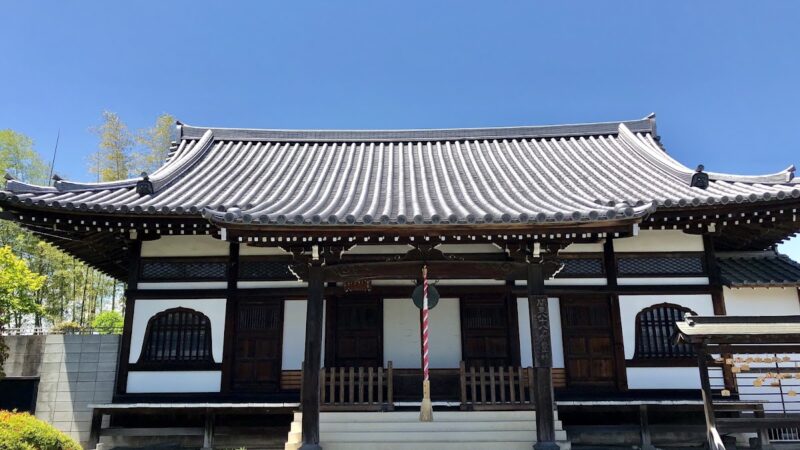
The current Zennōji Temple is a relatively small temple located across from Raikōin, a sub-temple of Sennyūji Temple. While usually managed as an unmanned temple, it serves as a pilgrimage site for the Rakuyō Thirty-Three Kannon Pilgrimage, providing opportunities for pilgrims to receive temple stamps and offer prayers.
The main hall was rebuilt in 1971 due to special circumstances. That year, a Toa Domestic Airlines YS-11 aircraft, the “Bandai,” crashed, resulting in many casualties. Mr. Tanimoto, a family member of one of the victims, donated to the reconstruction of the main hall to commemorate the aviation victims and pray for the complete elimination of future aviation accidents. Therefore, the main hall holds special significance as a place of prayer for aviation safety, and even today, it continues to receive visits from people involved in aviation.
The principal image, the sacred Kannon Bodhisattva, is a beautiful Buddha statue with a compassionate expression, and is the central figure of this temple as a Kannon pilgrimage site. Kannon is worshipped as “the Kannon who bestows good abilities,” and has been a source of spiritual support, especially for those in difficult circumstances.
The temple grounds are surrounded by the rich natural beauty of Sennyu-ji Temple, allowing visitors to enjoy the scenery of each season. In particular, during the cherry blossom season in spring and the autumn foliage season, the tranquil grounds are enveloped in beautiful colors.
Waka Poem and Faith
The waka poem for the 18th temple of the Rakuyo Thirty-Three Kannon Pilgrimage is: “By visiting Kannon, evil is turned away; now my heart is filled with Zennō-ji.” This waka poem expresses the essence of Zennō-ji Temple’s faith: by worshipping Kannon, evil is turned away, and good abilities are harbored in the heart.
Information for Visitors
Zennoji Temple is usually unattended, so there are no restrictions on visiting hours. However, if you wish to receive a Goshuin (temple stamp), it is recommended to check in advance for pilgrimage periods of the Rakuyo Thirty-Three Kannon Pilgrimage or special dates. Admission is generally free, but a donation is required to receive a Goshuin.
The temple grounds are enveloped in tranquility, allowing you to quietly offer your prayers to Kannon and find peace of mind. Visiting in conjunction with a pilgrimage to Sennyu-ji Temple as a whole will provide a deeper religious experience.
Preceding and Following Temples
For those undertaking the Rakuyo Thirty-Three Kannon Pilgrimage, information on preceding and following temples is provided below.
- Temple No. 17: Imakumano Kannon-ji (a sub-temple of Sennyu-ji)
- Temple No. 18: Zenno-ji (this temple)
- Temple No. 19: To-ji (Kyo-o-gokoku-ji)
Zenno-ji is located within the grounds of Sennyu-ji, making it within walking distance of Imakumano Kannon-ji (Temple No. 17). This allows for efficient pilgrimage.
Zenno-ji, Tsurugashima City, Saitama Prefecture
History
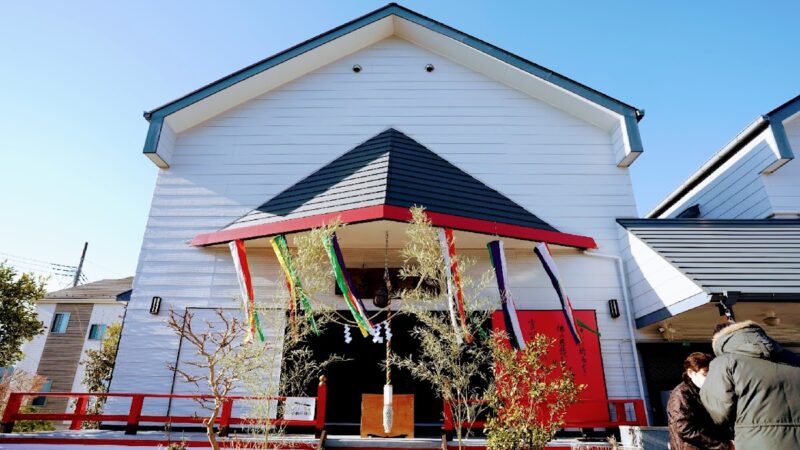
Zenno-ji, located in 6-chome, Ashiori-cho, Tsurugashima City, Saitama Prefecture, is a Shingon-shu Chizan-ha temple. Its mountain name is Anyo-zan. The principal image is said to be Amida Buddha.
While there are no clear records of its founding date, it is confirmed that it was restored and re-established in 1596 (Keicho 1) by a monk named Eikei. This occurred during the transition period from the Sengoku period to the Edo period, and it is believed to have played an important role as a center of Buddhist faith in this region.
The main hall has been repeatedly struck by fires throughout its history, undergoing repeated destruction and reconstruction. The current main hall was rebuilt in modern times and is maintained through the support of local parishioners and believers.
Current Activities
Zennoji Temple in Tsurugashima City is a community-oriented temple, primarily focusing on funerals, memorial services, and ancestral worship for its parishioners. It also has a cemetery on its grounds, functioning as a memorial park.
Based on the teachings of the Shingon Chizan sect, regular memorial services and events are held, providing spiritual support to local residents.
Zennoji Temple in Ono Town, Gifu Prefecture
History and Characteristics
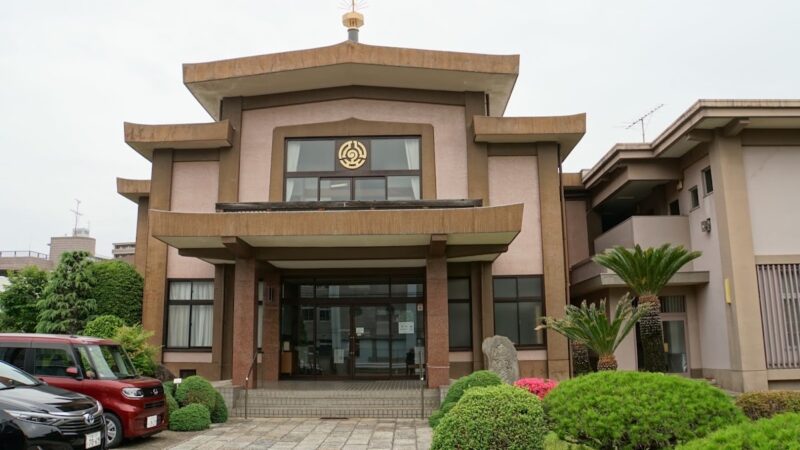
Zennoji Temple, located in Ono Town, Ibi District, Gifu Prefecture, is a temple of the Jodo Shinshu Honganji sect (Nishi Honganji sect) and is also known as “Ishida Zennoji.” Its mountain name is Kannozan, and its principal image is Amida Buddha.
According to the temple’s history, written during the time of its sixth head priest, Myōtaku, in the mid-Edo period, Miyamoto Heidaifu Masayoshi (Myōzen), who was the local administrator of Minato, Uji-gō, Saika-shō (present-day Wakayama City), was deeply involved in the temple’s founding.
Miyamoto Myōzen converted to Buddhism amidst the turmoil of the Sengoku period, later becoming a monk and devoting himself to spreading the teachings of Jōdo Shinshū Buddhism. It is said that during this process, he built a temple in this area and named it Zennōji.
Faith and Activities
As a temple of the Jōdo Shinshū Honganji sect, the temple’s core belief lies in the vow of Amida Buddha and the desire for rebirth in the Pure Land through the recitation of the Nembutsu. Together with local parishioners, the temple cherishes and continues to preserve annual events, including the Hōonkō (memorial service).
Other Zennōji Temples
Zennōji Temple in Fujinomiya City, Shizuoka Prefecture
In Nonaka, Fujinomiya City, Shizuoka Prefecture, there is a Nichiren Buddhist temple called Zennōji. It is under the jurisdiction of the Nichiren Buddhist Shizuoka Prefecture Central Office and is engaged in activities to spread the teachings of the Lotus Sutra. Its location at the foot of Mount Fuji means that worship is performed while gazing upon the sacred Mount Fuji.
As a Nichiren Buddhist temple, it chants the mantra “Namu Myōhō Renge Kyō” and conducts training and missionary activities based on the teachings of the Lotus Sutra.
Zennōji Temple in Wakayama Prefecture (Historical Existence)
Due to its connection to Saiga-shō (Wakayama), which appears in the history of the aforementioned Zennōji Temple in Ōno Town, Gifu Prefecture, it has been suggested that a Zennōji Temple, or a predecessor temple, may have once existed in Wakayama. However, this has not been confirmed.
Access Information to Each Zennōji Temple
Access to Zennōji Temple in Higashiyama Ward, Kyoto City
Location: Sennyūji Yamauchi-chō, Higashiyama Ward, Kyoto City, Kyoto Prefecture
Transportation Access:
- By Train/Bus: Take Kyoto City Bus Route 208 from JR Kyoto Station and get off at “Sennyūji-michi” bus stop, then walk for approximately 15 minutes.
- Keihan Railway: Get off at “Tōfukuji Station” on the Keihan Main Line, then walk for approximately 20 minutes.
- Taxi: Approximately 15 minutes from Kyoto Station.
- By Car: Approximately 20 minutes from “Kyoto Minami IC” on the Meishin Expressway (use the Sennyūji Temple parking lot).
Nearby Attractions:
- Sennyūji Temple (Head Temple)
- Imakumano Kannonji Temple (17th temple of the Rakuyō Thirty-Three Kannon Pilgrimage)
- Raikōin Temple
- Tōfukuji Temple
- Fushimi Inari Taisha Shrine
The grounds of Sennyu-ji Temple have deep ties to the Imperial family and are a historical area with many temples. We recommend visiting the surrounding temples along with Zenno-ji Temple.
Access to Zennōji Temple, Tsurugashima City, Saitama Prefecture
Location: 6-3-10 Ashiori-cho, Tsurugashima City, Saitama Prefecture
Transportation Access:
- Train: Approximately 15 minutes on foot from Tsurugashima Station on the Tobu Tojo Line
- Bus: Kawagoe Kanko Bus available from Tsurugashima Station
- Car: Approximately 10 minutes from Tsurugashima IC on the Kan-Etsu Expressway
Parking: Parking available for visitors on the temple grounds
Access to Zennōji Temple, Ōno Town, Gifu Prefecture
Location: Ōno Town, Ibi District, Gifu Prefecture
Transportation Access:
- Train: Transfer to the Yōrō Railway from Ōgaki Station on the JR Tōkaidō Main Line, then take a bus
- Car: Approximately 20 minutes from Ōgaki IC on the Meishin Expressway
For detailed access information, it is recommended to inquire with the temple in advance.
Access to Zennōji Temple, Fujinomiya City, Shizuoka Prefecture
Location: 774 Nonaka, Fujinomiya City, Shizuoka Prefecture
Transportation Access:
- Train: Bus or taxi from JR Minobu Line “Fujinomiya Station”
- Car: Approximately 20 minutes from Shin-Tomei Expressway “Shin-Fuji IC”
Summary
There are several temples named Zennōji throughout Japan, each with its own unique history and beliefs. Zennōji in Kyoto holds an important position as a pilgrimage site for the Rakuyō Thirty-Three Kannon Pilgrimage and as one of the birthplaces of Inari worship. Zennōji temples in Saitama, Gifu, and Shizuoka also transmit the teachings of Shingon Buddhism, Jōdo Shinshū Buddhism, and Nichiren Buddhism, respectively, serving as spiritual havens for people in their respective regions.
When visiting each temple, understanding its historical background and sectarian differences will lead to a deeper pilgrimage experience. In particular, Zennōji Temple in Kyoto is located within the grounds of Sennyūji Temple, a place with ties to the Imperial family, offering a precious opportunity to spend time contemplating Kannon in a tranquil atmosphere.
Those undertaking the pilgrimage of the 33 Kannon temples of Rakuyō, or those interested in the various Zennōji temples, should definitely visit them in person to experience the unique charm and history of each temple. The wish embodied in the name Zennōji, “to cultivate good abilities,” continues to convey an important message to us across generations.