Complete Guide to Minamikata Shrine | History and Visiting Information for Multiple Suwa Faith Shrines in Kagoshima
Minamikata Shrine (南方神社) is a group of shrines located in various regions of Kagoshima Prefecture. All are Suwa faith shrines, having been established by inviting deities from Suwa Grand Shrine in Shinano Province (present-day Nagano Prefecture). Shrines with the same name exist throughout Kagoshima Prefecture, including in Makurazaki City, Shimizu-cho in Kagoshima City, and Ibusuki City. Each has a long history as a local tutelary deity and has been revered by samurai families, including the Shimazu clan.
This article comprehensively explains the history, enshrined deities, characteristics, access methods, and other useful information for visiting Minamikata Shrines located in Kagoshima Prefecture.
What is Minamikata Shrine? – Multiple Suwa Faith Shrines in Kagoshima Prefecture
There are several shrines named Minamikata Shrine in Kagoshima Prefecture. The main ones are listed below.
- Minamikata Shrine in Makurazaki: Located in Kagoshima-Fumoto-cho, Makurazaki City, Kagoshima Prefecture
- Minamikata Shrine in Kagoshima: Located in Shimizu-cho, Kagoshima City, Kagoshima Prefecture (the foremost of the five major shrines in Kagoshima)
- Minamikata Shrine in Ibusuki: Located in Yamakawa Narikawa, Ibusuki City, Kagoshima Prefecture
- Minamikata Shrine in Saito: Located in Saito City, Miyazaki Prefecture
All of these shrines were established through the enshrinement of deities from Suwa Grand Shrine and are sometimes referred to as “Suwa Shrines.” They enshrine Takeminakata-no-kami and Kotoshironushi-no-kami as their principal deities and have functioned as centers of local faith.
Relationship between Suwa Faith and Minamikata Shrines
Suwa faith is a Shinto belief system with Suwa Grand Shrine, the Ichinomiya (first-ranked shrine) of Shinano Province, as its head shrine. The main deity enshrined here is Takeminakata-no-kami, who also appears in the Kojiki (Records of Ancient Matters), and the shrine has been widely worshipped as a god of hunting, agriculture, and martial prowess.
The Minamikata Shrine in Kagoshima Prefecture was established during the medieval and early modern periods by the Shimazu clan and local samurai class, who invited the deity from Suwa Grand Shrine, and it became a center of Suwa faith rooted in the Satsuma region. The name “Minamikata” (南方) is said to derive from its location south of Suwa Grand Shrine, or, according to another theory, from a place name or geographical feature.
Minamikata Shrine in Makurazaki City – An Ancient Shrine Characterized by its Parallel Torii Gates
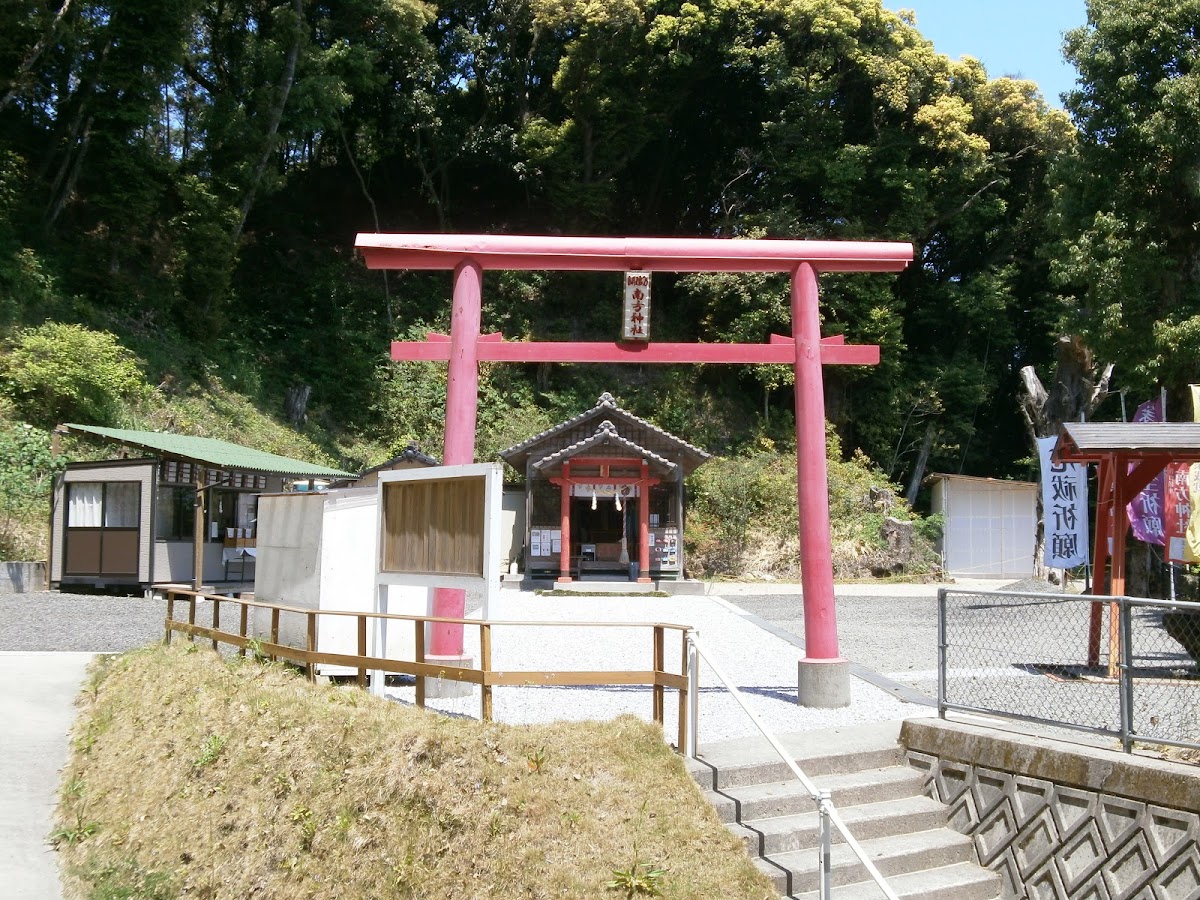
Located in Kagomoto-cho, Makurazaki City, Kagoshima Prefecture, Minamikata Shrine is known as a shrine with parallel torii gates, a rarity in Japan.
The History and Origins of Makurazaki Minamikata Shrine
The founding of Makurazaki’s Minamikata Shrine is said to date back to around 1357 (Shohei 12), when the deity was invited from Suwa Grand Shrine, the Ichinomiya (first-ranked shrine) of Shinano Province, to the summit of Ushikiyama (Kuratayama) in Kaseda-go, Ata-gun, Satsuma Province.
Later, in 1444 (Bun’an 1), Ijuin Hirohisa (Shimazu Hirohisa), a member of the Shimazu clan, moved the shrine from Ushikiyama to its current location. During this relocation, the parishioners of Yamashita-mon carried the sacred object on their backs, and the place names “Suwa-daira” and “Torii-sako” still remain at the locations where they rested along the way.
The shrine enshrines Takeminakata-no-kami in the upper shrine and Kotoshironushi-no-kami in the lower shrine, and has also been known as Suwa Shrine. It has been revered by successive generations of the Shimazu family and is worshipped as the local tutelary deity.
Features of the Parallel Torii Gates
The most distinctive feature of Makurazaki Minamikata Shrine is its unique style of two torii gates standing side-by-side. This stems from the fact that it enshrines two shrines, an Upper Shrine and a Lower Shrine, and is noteworthy as a rare structure nationwide.
These parallel torii gates visually represent the worship style of the Upper and Lower Shrines in Suwa faith and are considered a valuable example in the history of shrine architecture.
Access to Makurazaki Minamikata Shrine
Location: Kagoshima Prefecture, Makurazaki City, Kagoshima Prefecture
Access Method:
- Approximately 15 minutes on foot from JR Makurazaki Station
- By car, via National Route 226 from Ibusuki Skyline
- Parking available
Minamikata Shrine in Kagoshima City – The Foremost of the Five Kagoshima Shrines
Minamikata Shrine, located in Shimizu-cho, Kagoshima City, Kagoshima Prefecture, is a prestigious shrine considered the foremost of the “Five Kagoshima Shrines.”
History of Minamikata Shrine, Kagoshima City
Minamikata Shrine in Kagoshima City was founded as a branch shrine of Suwa Grand Shrine in Shinshu (present-day Nagano Prefecture), and was also known as Suwa Shrine. It was particularly revered by the Shimazu clan, the lords of the Satsuma Domain, and was positioned as an important shrine for the domain.
The “Five Shrines of Kagoshima” refer to the five shrines: Minamikata Shrine, Nitta Shrine, Eboshidake Shrine, Suwa Shrine, and Wakamiya Shrine, all of which have deep connections to the Shimazu clan. Minamikata Shrine held a special position as the foremost of these five.
Changes Since the Modern Era
After the Meiji Restoration, with the abolition of the Satsuma Domain, Minamikata Shrine lost its patronage and gradually declined. In 2004, it faced a crisis when its shrine building was threatened with demolition due to dilapidation. However, thanks to the efforts of local residents and worshippers, the shrine building was rebuilt in 2010.
The current shrine building is a robust structure that incorporates modern technology while adhering to traditional shrine architectural styles.
Access to Minamikata Shrine in Kagoshima City
Location: Shimizu-cho, Kagoshima City, Kagoshima Prefecture
Access Method:
- Approximately 10 minutes on foot from the “Kishiba” tram stop on the Kagoshima City Tram
- Approximately 15 minutes by car from JR Kagoshima-Chuo Station
- 5 minutes on foot from the “Shimizu-cho” bus stop on the city bus
Minamikata Shrine in Ibusuki City – A shrine where the Narikawa Shinmai dance is passed down
Minamikata Shrine, located in Yamakawa Narikawa, Ibusuki City, Kagoshima Prefecture, is known for passing down the traditional performing art “Narikawa Minamikata Shrine Shinmai (Kanme).”
History and Characteristics of Narikawa Minamikata Shrine Shinmai
The Shinmai dance of Minamikata Shrine has a history of over 360 years, with records indicating it was performed in front of Shimazu Hisamitsu in 1649 (Keian 2). Currently, 14 dances, including the Oni-shinmai and Tomiken dances, are passed down by the preservation society.
This sacred dance is a form of Kagura (sacred dance) in Shintoism, possessing religious significance in praying for a bountiful harvest and peace in the region, and is positioned as an important intangible cultural property that expresses the cultural identity of the region.
Value as a Natural Habitat for Cycads
The Yamakawa area of Ibusuki City is one of four natural habitats for cycads in Kagoshima Prefecture, and is designated as a natural monument as the northernmost limit of its natural habitat. Cycads are also planted in front of the first torii gate of Minamikata Shrine, creating a landscape full of tropical charm.
Access to Minamikata Shrine, Ibusuki City
Location: Yamakawa Narikawa, Ibusuki City, Kagoshima Prefecture
Access Method:
- Approximately 10 minutes by car from JR Yamakawa Station
- Approximately 20 minutes by car from Ei IC on the Ibusuki Skyline
Deities and Beliefs of Minamikata Shrine
The deities enshrined at Minamikata Shrine are mainly the following gods:
Takeminakata-no-kami
A deity appearing in the Kojiki and Nihon Shoki, and a son of Okuninushi-no-mikoto. Known for his strength contest with Takemikazuchi-no-kami during the transfer of Izumo Province, he is said to have settled in the Suwa region. He is worshipped as the god of martial prowess, hunting, agriculture, and wind and rain.
Kotoshironushi-no-kami
A son of Okuninushi-no-mikoto, he played a crucial role during the transfer of the land. He is widely worshipped as the god of oracles, commerce, and fishing. In Suwa faith, he is often the principal deity of the lower shrine, and is enshrined at the lower shrine of Minamikata Shrine.
Significance of Suwa Faith in Satsuma
In the Satsuma region, Suwa faith was not merely a religious belief, but also served as a spiritual pillar for the samurai class. Takeminakata-no-kami’s character as a god of martial prowess had a strong affinity with the spirit of Bushido, and he attracted the reverence of Satsuma samurai, including the Shimazu clan.
Furthermore, its characteristics as a god of agriculture and hunting held significant meaning in agricultural communities, making it an object of worship for praying for abundant harvests and regional prosperity.
The Relationship Between the Shimazu Family and Minamikata Shrine
The relationship between Minamikata Shrine and the Shimazu family is an important element in understanding the history of Satsuma.
Establishment and Protection by the Shimazu Clan
Many Minamikata Shrines in Kagoshima Prefecture were established by the Shimazu family or developed under their protection. Records show deep ties to the Shimazu family, such as the relocation of the Makurazaki Minamikata Shrine by Shimazu Hirohisa (Ijuin Hirohisa) and the reverence of the Satsuma lords of the Kagoshima City Minamikata Shrine.
The Position of Minamikata Shrine in Samurai Society
Many of the areas where Minamikata Shrines are located were samurai residences known as “fumoto.” Fumoto was a unique regional governance system of the Satsuma domain, forming the core of the outer castle system and a samurai settlement. Minamikata Shrine functioned as the spiritual center of these foothills and attracted the faith of samurai warriors.
It is due to this historical background that Minamikata Shrine is designated as a constituent cultural property of the Japan Heritage site “The Town Where Satsuma Samurai Lived: Walking Through the Samurai Residences of ‘Fumoto’.”
Annual Events and Festivals of Minamikata Shrine
Minamikata Shrine holds various festivals and events throughout the year.
Grand Festival
Each Minamikata Shrine holds a grand festival in spring and autumn. These festivals include a portable shrine procession, Kagura (sacred dance) performances, and festival events by local residents, serving as an important opportunity to reaffirm the unity of the local community.
Dedication of Sacred Dance
At Minamikata Shrine in Ibusuki City, the traditional Narikawa Kagura dance is regularly performed. Thanks to the dedicated efforts of the preservation society, this ancient and elegant dance has been passed down to the present day.
New Year’s Visit and Shichi-Go-San Ceremony
As the local tutelary shrine, it plays an important role as a place for life-changing rituals such as New Year’s visits and Shichi-Go-San (a traditional rite of passage for children). Especially during the New Year, many worshippers visit to pray for a safe and peaceful year.
Prayers and Blessings Available at Minamikata Shrine
Minamikata Shrine offers a variety of prayers and blessings.
- Family Safety: Praying for the health and happiness of the family
- Business Prosperity: Praying for the development and prosperity of the business
- Exorcism: Praying for protection from misfortune during the unlucky year
- Traffic Safety: Praying for the safety of vehicles and drivers
- Academic Success: Praying for passing exams and academic improvement
- Safe Childbirth: Praying for the health of mother and child and a safe delivery
- First Shrine Visit: Praying for the healthy growth of the baby
- Shichi-Go-San (7-5-3 Festival): Expressing gratitude for the child’s growth and praying for their future health
If you wish to have a prayer performed, we recommend contacting the shrine office in advance to confirm reservations and preparations.
Tourist Spots Around Minamikata Shrine
When visiting Minamikata Shrine, you can enjoy a more fulfilling Kagoshima sightseeing experience by also visiting the surrounding tourist spots.
Around Makurazaki City
- Makurazaki Fish Market: A market where you can buy fresh seafood
- Hinokami Park: A scenic spot with a panoramic view of the East China Sea
- Makurazaki Shochu Brewery Tour: A tour of the authentic shochu manufacturing process
- Tategami Rock: A scenic spot with strangely shaped rocks jutting out into the sea
Around Kagoshima City
- Sengan-en Garden: The Shimazu family’s villa garden (World Cultural Heritage Site)
- Shiroyama Observatory: A scenic spot with a view of Sakurajima
- Kagoshima City Meiji Restoration Museum: A museum where you can learn about the history of Satsuma
- Tenmonkan: Kagoshima’s largest shopping and entertainment district
Around Ibusuki City
- Sand Bath Hot Springs: Ibusuki’s famous sand baths
- Lake Ikeda: Kyushu’s largest caldera lake
- Nagasakibana: A scenic spot at the southernmost tip of the Satsuma Peninsula
- Chiringashima Island: An island accessible via a sandbar at low tide.
Manners and Etiquette for Visiting Minami Shrine
When visiting a shrine, it is important to observe basic manners and etiquette.
How to Pass Through a Torii Gate
The torii gate is the entrance to the sacred area. Bow before passing through the gate. Since the center of the path is considered the path of the gods, it is polite to walk along the side.
Proper Ritual for Washing Hands
- Take the ladle with your right hand and wash your left hand.
- Switch the ladle to your left hand and wash your right hand.
- Switch the ladle back to your right hand, receive water in your left hand, and rinse your mouth.
- Wash your left hand again.
- Hold the ladle upright, let water flow down the handle, and return it to its original position.
Proper Ritual for Worship
- Stand in front of the offering box and bow slightly.
- Gently place your offering in the box.
- If there is a bell, ring it.
- Bow twice, clap twice, and bow once (bow deeply twice, clap twice, bow deeply once).
- Take a few steps back, bow once, and leave.
Cultural Value of Minamikata Shrine
Minamikata Shrine holds significant value not only as a religious facility but also as a cultural property.
Cultural Property as a Japanese Heritage Site
Minamikata Shrine in Kagoshima City is recognized as a cultural property that constitutes the Japanese Heritage site “The Town Where Satsuma Samurai Lived – Walking Through the Samurai Residences of ‘Fumoto'”. This recognition acknowledges its importance as a historical heritage site that conveys the culture of Satsuma samurai to the present day.
Sacred Dance as an Intangible Cultural Heritage
The Narikawa sacred dance, passed down at Minamikata Shrine in Ibusuki City, is protected as an important intangible cultural heritage of the region. Having been handed down for over 360 years, this sacred dance is a valuable resource for studying the history of folk performing arts in Satsuma.
Architectural Historical Value
The parallel torii gates and the style of the shrine buildings are valuable as architectural historical materials that show how Suwa faith was received and uniquely developed in the Satsuma region.
Comprehensive Access Guide to Minamikata Shrine
This summarizes the access methods to major Minamikata Shrines within Kagoshima Prefecture.
By Public Transportation
Minamikata Shrine, Makurazaki City:
- Get off at Makurazaki Station on the JR Ibusuki-Makurazaki Line, approximately 15 minutes on foot
- Approximately 1 hour 30 minutes by limited express train from Kagoshima-Chuo Station to Makurazaki Station
Minamikata Shrine, Kagoshima City:
- Get off at Kishiba tram stop on the Kagoshima City Tram, approximately 10 minutes on foot
- Get off at Shimizu-cho bus stop on the city bus, approximately 5 minutes on foot
Minamikata Shrine, Ibusuki City:
- Get off at Yamakawa Station on the JR Ibusuki-Makurazaki Line, approximately 10 minutes by taxi
By Car
Minamikata Shrine, Makurazaki City:
- Approximately 30 minutes from Ei IC on the Ibusuki Skyline via National Route 226
Minamikata Shrine, Kagoshima City:
- Approximately 20 minutes from Kagoshima IC
Minamikata Shrine, Ibusuki City:
- Approximately 20 minutes from the Ei Interchange on the Ibusuki Skyline.
While each shrine has parking facilities, it can get crowded during festivals, so please consider using public transportation.
Summary – The Charm and Significance of Visiting Minamikata Shrines
Minamikata Shrines are a group of shrines belonging to the Suwa faith, located throughout Kagoshima Prefecture, each with its own unique history and characteristics. They enshrine Takeminakata-no-kami and Kotoshironushi-no-kami, who were invited from the Suwa Grand Shrine in Shinano Province, and have a history of being revered by the Shimazu family and other Satsuma samurai. This history is an important element in understanding Satsuma culture and spirituality.
Each shrine has its own unique charm, such as the parallel torii gates of the Minamikata Shrine in Makurazaki City, the prestige of the Minamikata Shrine in Kagoshima City as the foremost of the five major Kagoshima shrines, and the traditional sacred dances passed down at the Minamikata Shrine in Ibusuki City.
Even today, Minamikata Shrines play an important role as local tutelary deities and as historical and cultural heritage sites. When you visit Kagoshima, be sure to pay your respects at Minamikata Shrine and experience the history and spirit of faith of Satsuma.
Visiting a shrine is not just sightseeing; it’s a valuable opportunity to connect with the history, culture, and prayers of the people of that region. Through Minamikata Shrine, you can learn how the Suwa faith took root and developed in Satsuma, gaining a deeper understanding of the diversity and regional characteristics of Japanese religious culture.