About Yakushi-ji Temple
Yakushi-ji Temple is a prestigious Buddhist temple, one of the seven great temples of Nara, and the head temple of the Hossō sect, founded in 680 (the 9th year of Emperor Tenmu’s reign). Its origins trace back to Emperor Tenmu’s prayer for the recovery of his empress (later Empress Jitō), and it was moved to its current location in 718 following the relocation of the capital to Heijō-kyō. In 1998, it was registered as a World Heritage Site as part of the “Historic Monuments of Ancient Nara.”
History and Origin
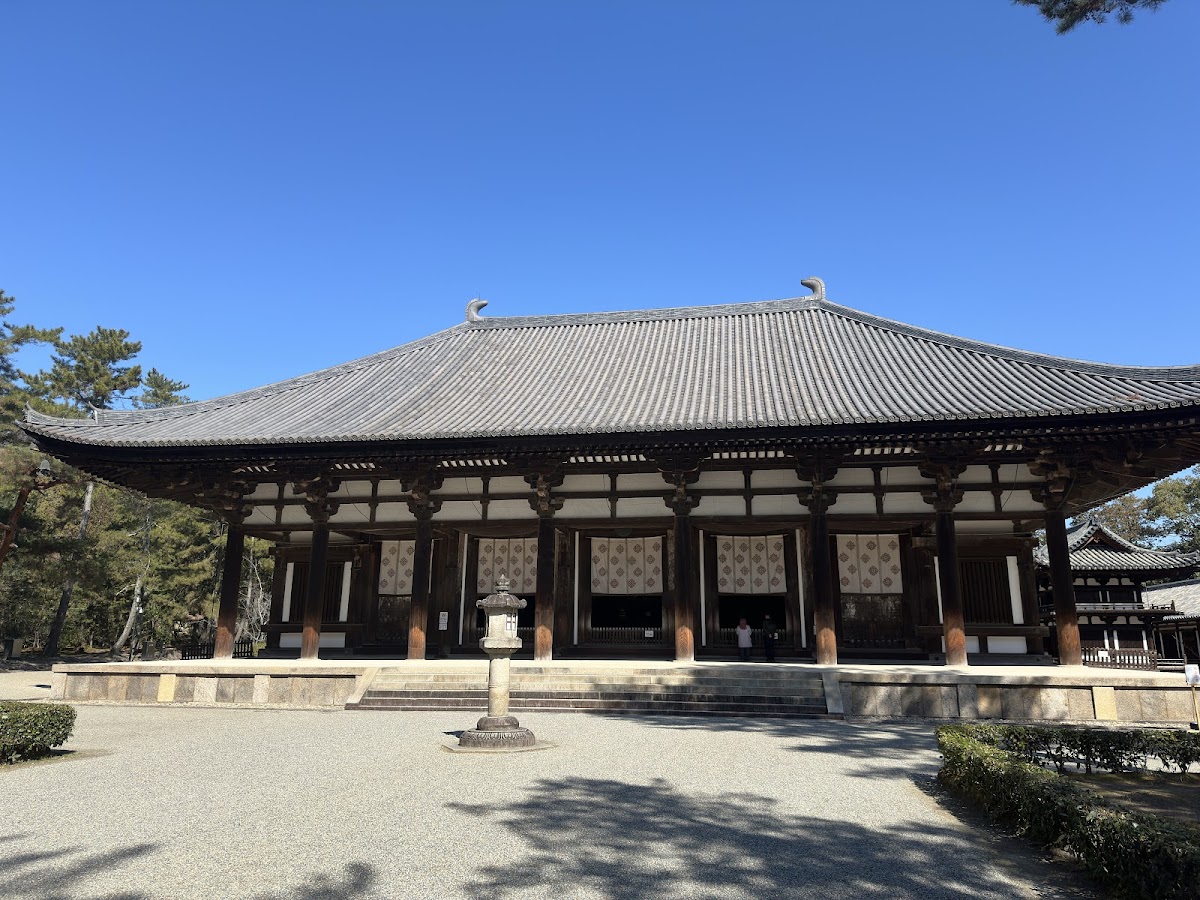
Originally built in Fujiwara-kyō, it was moved to its current location in Nishinokyō with the relocation of the capital to Heijō-kyō. Although many buildings were lost due to repeated fires, the East Pagoda alone is designated a National Treasure as a valuable structure that preserves its original appearance from the Nara period. From the late Showa period to the Heisei period, the main hall, West Pagoda, Middle Gate, and corridors were restored, reviving the magnificent temple layout of the time of its founding.
Points to Note During Your Visit
National Treasure: Yakushi Triad
The Yakushi Triad, enshrined in the main hall, features a seated statue of Yakushi Nyorai (Medicine Buddha) flanked by Nikko Bosatsu (Sunlight Bodhisattva) and Gekko Bosatsu (Moonlight Bodhisattva). This triad is a masterpiece of Buddhist sculpture representative of the Hakuhō period. The pedestal is adorned with intricate decorations influenced by Central Asia and China, reflecting the rich international cultural exchange of the time.
East Pagoda (National Treasure)
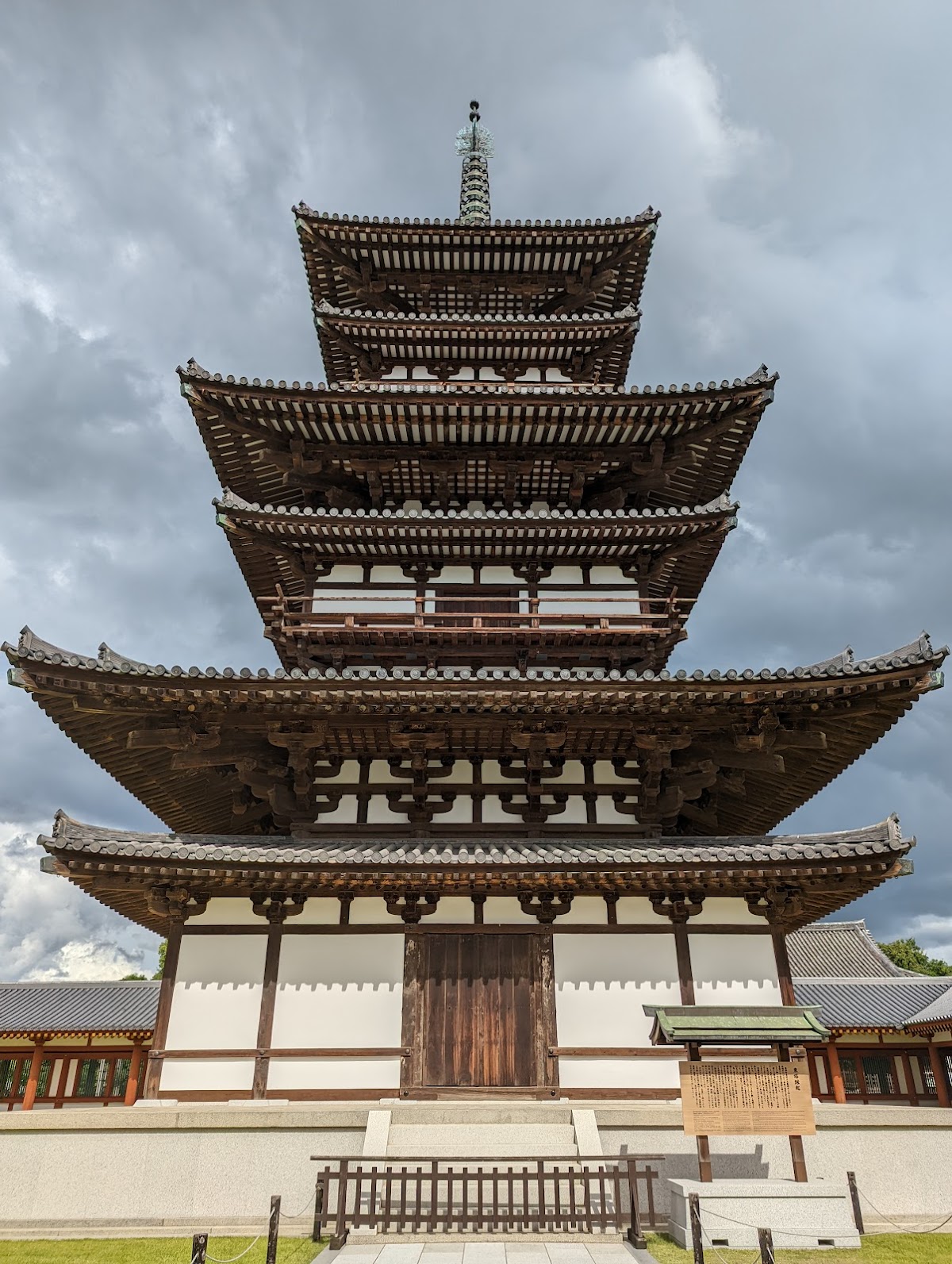
This three-story pagoda is the only surviving structure from the Nara period. Its unique structure, with a mokoshi (a type of eaves) on each level, has earned it the nickname “frozen music.” Standing approximately 34 meters tall, its gracefully curved roofline is considered the epitome of Japanese architectural beauty. It was reopened to the public in 2020 after its first dismantling and repair in approximately 110 years.
West Pagoda and Temple Layout
Reconstructed in 1981, the West Pagoda, paired with the East Pagoda, completes the beautiful Yakushiji-style temple layout. The temple’s layout, with the main hall at the center and east and west pagodas, recreates the magnificent temple appearance of the time of its founding, and the contrast between the vermilion pillars and white walls is striking.
Xuanzang Sanzang Temple Complex
This temple complex, built in 1991 to commemorate the virtues of Xuanzang Sanzang, known from “Journey to the West,” features the large mural “Great Tang Western Regions Mural” (2.2m high x 49m wide) by artist Ikuo Hirayama. This magnificent work depicting the landscape of the Silk Road is a must-see.
Benefits and Faith
The principal image of Yakushi-ji Temple, Yakushi Nyorai, is also known as the “King of Medicine” and is known for its benefits of healing illnesses and good health and longevity. Because the temple was founded to pray for the recovery of the Empress from illness, many worshippers have prayed for physical and mental health since ancient times.
Furthermore, the worship of the Yakushi Triad, including Nikko Bosatsu and Gekko Bosatsu, is believed to offer protection from disaster and misfortune, attracting many visitors, especially at the beginning of the year and during unlucky years. A sutra copying hall is also available, offering opportunities for spiritual practice aimed at achieving inner peace.
Visiting Information
Visiting Hours
8:30 AM – 5:00 PM (Last entry at 4:30 PM)
Admission Fee
- General: ¥1,100
- Junior and Senior High School Students: ¥700
- Elementary School Students: ¥300
*An additional ¥800 is charged during the Genjo Sanzoin Temple grounds opening period (Spring and Autumn)
Estimated Time Required
Approximately 60-90 minutes (including Genjo Sanzoin Temple grounds)
Access
Access by Train
- Get off at Kintetsu Kashihara Line “Nishinokyo Station” and it’s a short walk (nearest station)
- Approximately 20 minutes from JR Nara Station via Kintetsu Nara Station
The temple grounds of Yakushiji are immediately visible upon exiting the station, making access very convenient.
Access by Bus
- Take the Nara Kotsu bus from JR Nara Station or Kintetsu Nara Station and get off at the “Yakushiji” bus stop.
- Travel time: Approximately 20-25 minutes
Access by Car
- Approximately 5 minutes from the “Horai IC” on the Daini-Hanna Expressway
- Approximately 20 minutes from the “Koriyama IC” on the Nishi-Meihan Expressway
- Parking: Available (500 yen for regular cars, approximately 100 spaces)
Combining with Nearby Temples
Yakushiji Temple is about a 10-minute walk from Toshodaiji Temple, and visiting both temples together is a popular option. The Nishinokyo area is home to many World Heritage Sites, making it an ideal route for historical walks.
Summary
Yakushiji Temple boasts a history of over 1300 years and is a valuable cultural heritage site that conveys the architectural beauty and Buddhist art of the Nara period. The graceful form of the National Treasure East Pagoda, the majestic presence of the Yakushi Triad statues, and the splendor of the restored temple complex deeply move visitors. As a place of faith to pray for recovery from illness and longevity, and as a place to learn about the history of Japanese Buddhism, it is a representative ancient temple of Nara that you should visit at least once.