About Toshodai-ji Temple
Toshodai-ji Temple is the head temple of the Ritsu sect, located in Gojo-cho, Nara City. It was founded in 759 (Tenpyo Hoji 3) by the eminent monk Ganjin Wajo, who came from Tang China. “Shodai” in Buddhism means a place to invite practitioners, and the temple has a history of being established as a training ground for correctly transmitting the precepts.
In 1998 (Heisei 10), it was registered as a World Heritage Site as part of the “Historic Monuments of Ancient Nara,” attracting many visitors from both Japan and abroad.
History and Ganjin Wajo
Ganjin Wajo’s Arrival in Japan
Ganjin Wajo was an eminent monk from Tang China who, after five failed attempts to travel to Japan in response to an invitation, finally arrived in 753 (Tenpyo Shoho 5). He overcame the difficulty of losing his sight during this process and dedicated his life to transmitting the correct precepts to Japan. After receiving Buddhist precepts at Todai-ji Temple, he founded Toshodai-ji Temple in his later years and passed away in 763 at the age of 76.
Changes in the Temple Complex
Initially, the temple consisted only of a lecture hall and a building converted from the former residence of Prince Niitabe. Later, the main hall (Kondo) was built by Ganjin’s disciples. It was maintained throughout the Heian period and became a center for the revival of Buddhist precepts during the Kamakura period under the monk Kakujo. A large-scale “Heisei Restoration” was carried out from the Showa to Heisei periods, restoring the temple to its original appearance.
National Treasure Architecture and Cultural Properties
Main Hall (National Treasure)
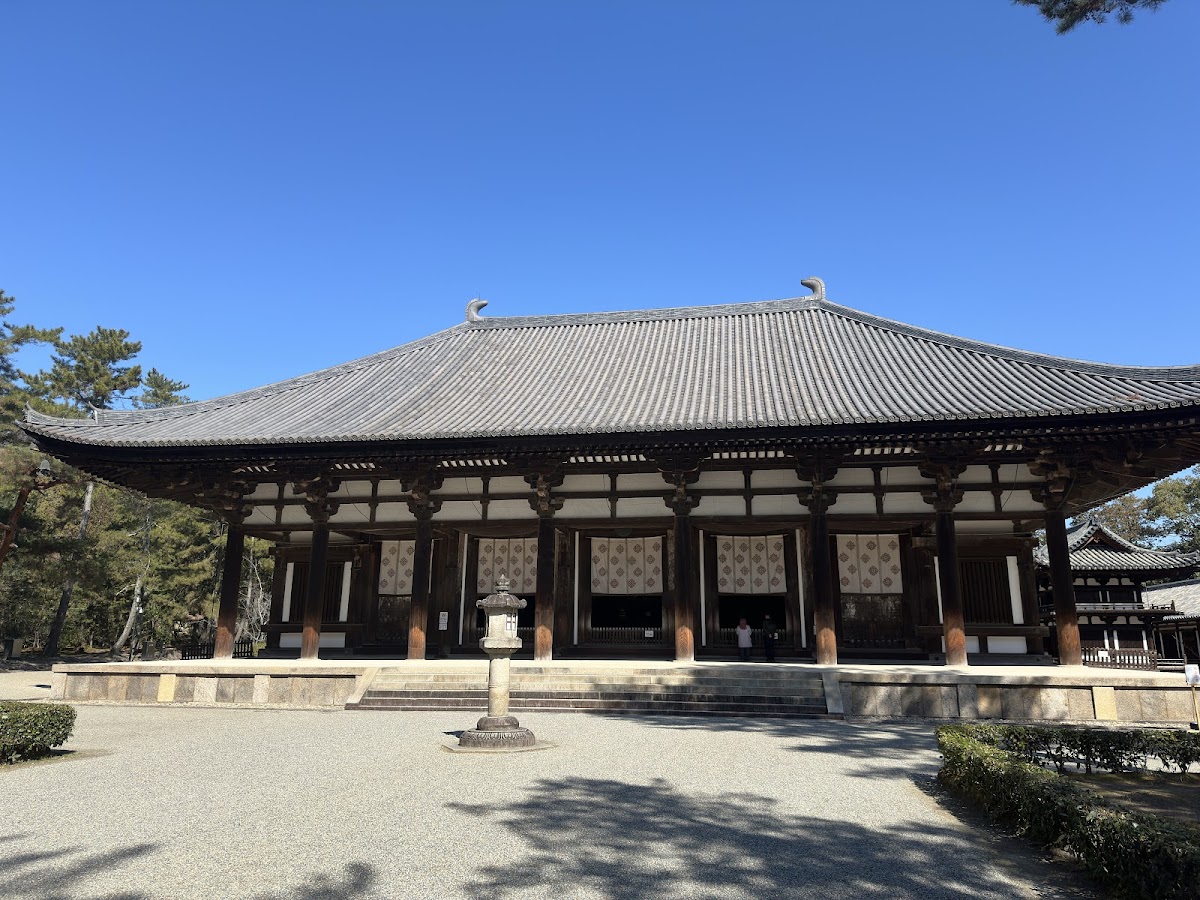
Built in the latter half of the 8th century, the main hall is a masterpiece that embodies the essence of Tenpyo architecture. It is a magnificent building with a hipped roof and tiled roof, boasting a size of approximately 28 meters in front and 17 meters in depth.
Architectural Features:
- Characterized by a colonnade (entasis) supported by eight cylindrical columns.
- The gently curving roof gives a powerful impression.
- The only existing example that retains the pure form of the Tenpyo style.
Household Buddhist Statues:
- Principal image, seated statue of Roshana Buddha (National Treasure): Over 3 meters tall, made using the dry lacquer technique.
- Standing statue of Yakushi Nyorai (National Treasure): Located to the right of the main hall.
- Standing statue of Senju Kannon (National Treasure): To the left of the main hall, a colossal statue 5.36 meters tall.
- Standing statues of the Four Heavenly Kings (National Treasure): Guarding the four corners of the altar.
All of these are works from the Tenpyo period and are known as some of the greatest masterpieces in the history of Japanese sculpture.
Lecture Hall (National Treasure)
This building is a relocated and remodeled version of the East Assembly Hall of Heijo Palace, and is extremely valuable as a surviving example of Nara period court architecture. Inside, the principal image, a seated statue of Miroku Nyorai (Important Cultural Property), is enshrined.
Drum Tower, Treasure House, and Sutra Repository
The Drum Tower (National Treasure) is a Kamakura period building, while the Treasure House and Sutra Repository (both National Treasures), built in the Azekura style, are valuable Nara period structures with a similar structure to the Shosoin Treasure House.
Points of Interest for Visitors
Mikage-do Hall and the Seated Statue of Ganjin
The Mikage-do Hall houses the National Treasure, a seated statue of Ganjin (dry lacquer technique). This statue is considered a masterpiece of portrait sculpture, depicting Ganjin as he was during his lifetime. It is usually not open to the public, but is specially displayed only during the Kaisanki (memorial service for Ganjin’s death) from June 5th to 7th each year.
Tips for Visiting:
- The temple gets crowded on the first day of the Founder’s Memorial Day, so visiting in the morning is recommended.
- The beauty of the moss and fresh greenery in the Mikage-do Garden is also a highlight.
The Ordination Platform and the Place of Ordination
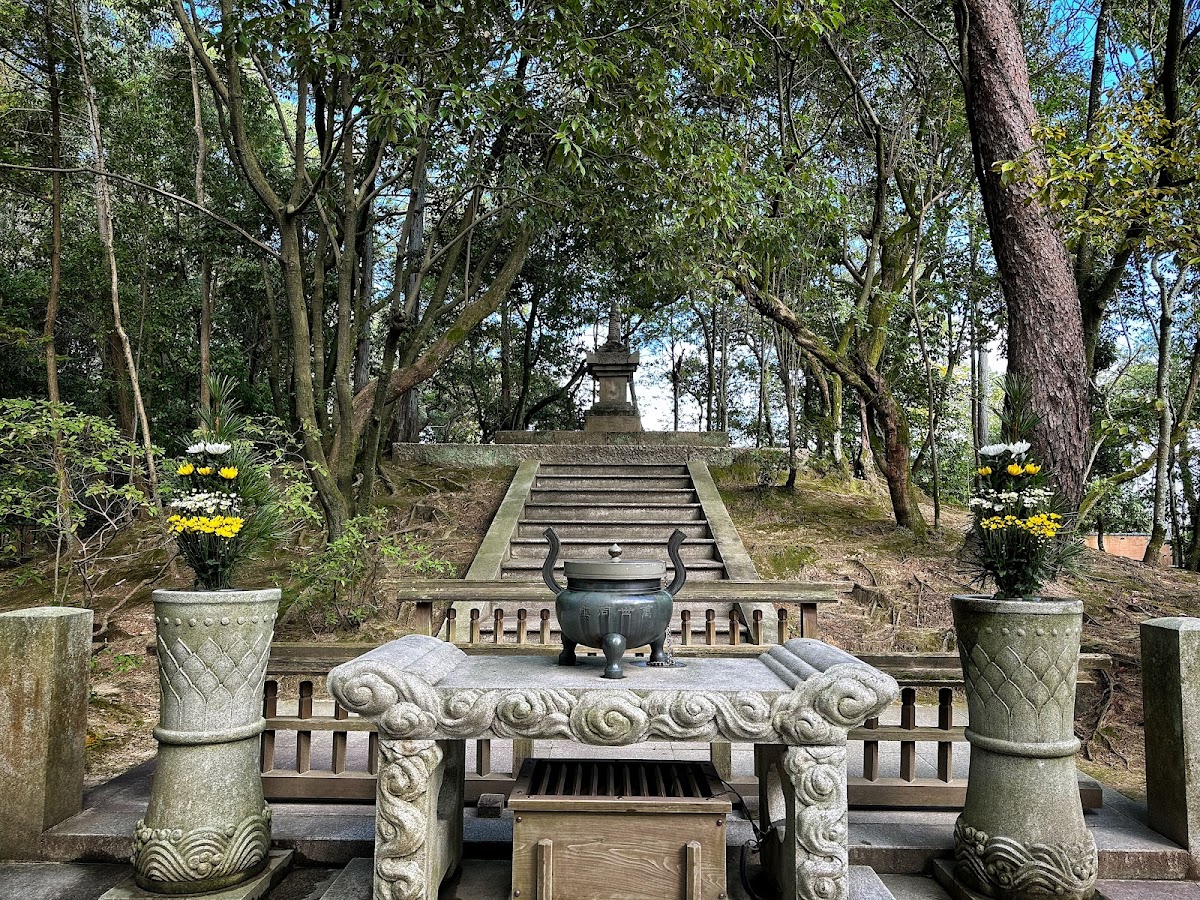
Within the temple grounds is an ordination platform, where you can feel the atmosphere of the place where Ganjin formally ordained the precepts. In this tranquil space, you can connect with the spirit of Ganjin, who preached the importance of precepts.
Seasonal Highlights
- Spring (April): Cherry blossoms in the temple grounds are in full bloom, creating a beautiful landscape with the main hall as a backdrop.
- Early Summer (May): The moss garden is vibrant with fresh greenery, and the rare Keika flower blooms.
- Autumn (November): Autumn leaves adorn the temple grounds, creating a magnificent harmony with the Tenpyo-era architecture.
- Winter (January-February): The main hall, covered in snow, presents a majestic sight.
Estimated Visiting Time
For a thorough visit, 60-90 minutes is a good guideline. Allow approximately 15 minutes each for viewing the interiors of the main hall and lecture hall, and about 30 minutes for strolling around the temple grounds.
Benefits and Faith
Precepts and Purification of Mind
Because Toshodai-ji Temple was founded as a training ground for imparting precepts, it is believed to offer benefits such as purification of mind and body and self-discipline. It has attracted the faith of people seeking a righteous way of life.
Academic Achievement and Wisdom
Many visitors come here to pray for academic success and improved wisdom, in honor of the learning and teachings of Venerable Ganjin.
Health and Recovery from Illness
Prayers to the principal deities, Vairocana Buddha and Yakushi Nyorai, are also believed to bring health, longevity, and recovery from illness.
Overcoming Difficulties and Perseverance
Based on the story of Venerable Ganjin overcoming five failures and blindness to reach Japan, many people facing life’s challenges visit here to receive the strength to overcome difficulties and perseverance.
Access Information
Access by Train and Bus
From Kintetsu Nara Station:
- Approximately 17 minutes by Nara Kotsu Bus bound for Rokujoyama, get off at the Toshodaiji bus stop.
- Or take the bus bound for Nishinokyo Station, get off at Toshodaiji Higashiguchi, and walk for 1 minute.
From JR Nara Station:
- Approximately 22 minutes by Nara Kotsu Bus bound for Rokujoyama, get off at the Toshodaiji bus stop.
From Kintetsu Nishinokyo Station:
- Approximately 10 minutes on foot (there is also a route via Yakushiji Temple).
Access by Car
- Approximately 5 minutes from the Horai IC on the Daini Hanna Expressway
- Approximately 15 minutes from the Koriyama IC on the Nishimeihan Expressway
- Parking: 150 passenger cars (paid, 500 yen per day)
Visiting Hours and Admission Fee
Visiting Hours:
- 8:30 AM – 5:00 PM (Last entry at 4:30 PM)
Admission Fee:
- Adults/University Students: 1,000 yen
- High School/Junior High School Students: 400 yen
- Elementary School Students: 200 yen
Notes:
- A separate admission fee may be required for the New Treasure House (storage facility)
- Separate fees apply during special openings of the Mikage-do Hall
Nearby Attractions
To the south of Toshodai-ji Temple lies the World Heritage site, Yakushi-ji Temple, and both temples are within walking distance. Heijo Palace Site Historical Park is also nearby, making it a popular one-day course for experiencing the history of the Nara period.
Summary
Toshodai-ji Temple is a sacred place where the indomitable spirit of Jianzhen and the essence of Tenpyo culture are crystallized. The numerous Tenpyo sculptures in the National Treasure Golden Hall and the tranquil atmosphere of the temple grounds purify the hearts of visitors, transcending more than 1200 years of history. This is a famous temple that I highly recommend visiting when you come to Nara.