About Asuka-dera Temple
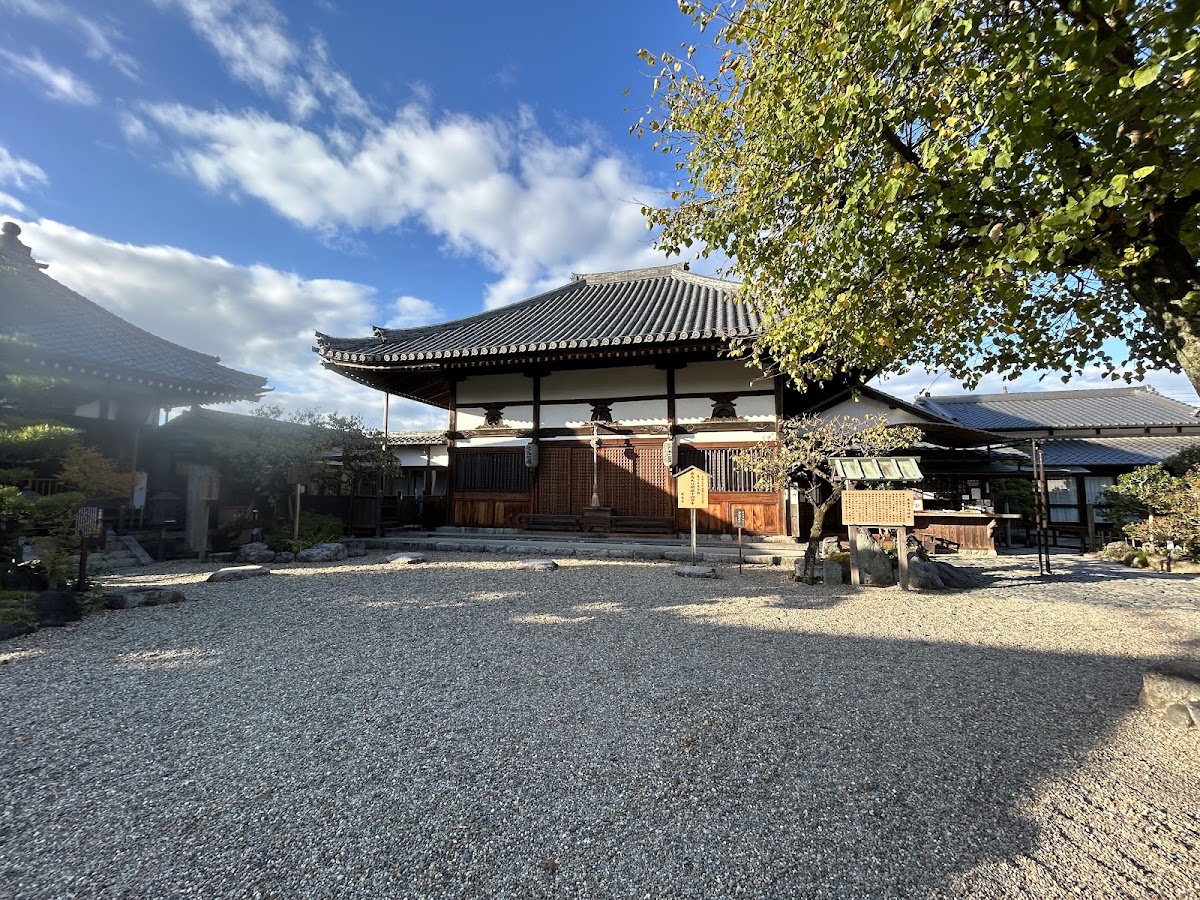
Asuka-dera Temple, also known as Torigatayama Angoin, is Japan’s oldest full-fledged Buddhist temple, founded in 596 (the 4th year of Empress Suiko’s reign) by Soga no Umako. Also known as Hokoji and Gangoji, it flourished as a center of Buddhist culture during the Asuka period.
At the time of its founding, it boasted a magnificent temple complex with a pagoda at its center and main halls to the east, west, and north. However, much of it was destroyed by fire during the Kamakura period. The current main hall was rebuilt during the Edo period.
Points of Interest for Visitors
Asuka Great Buddha (Seated Shakyamuni Buddha Statue)
The Asuka Great Buddha, enshrined in the main hall, is one of Japan’s oldest Buddhist statues, created in 609 (the 17th year of Empress Suiko’s reign) by Kuratsukuri no Tori (Tori Busshi). It is a bronze statue approximately 2.75 meters tall and is designated as an Important Cultural Property.
Despite damage from fire, the face of the statue retains its original form, making it a valuable cultural asset that conveys the style of Buddhist statues from the Asuka period. Its serene expression and almond-shaped eyes are distinctive, evoking the spirit of ancient faith.
Highlights of the Temple Grounds
- Shii-den: Houses a statue of Prince Shotoku showing filial piety.
- Soga no Iruka’s Head Mound: A mound said to enshrine the head of Soga no Iruka, who was killed during the Taika Reforms.
- Asuka-dera Temple Ruins: Foundation stones from the time of its founding remain around the temple grounds, giving a glimpse into its former scale.
- Manyoshu Poetry Monument: Inscribed with a poem about Asuka.
Benefits
The Asuka Great Buddha is believed to bring good fortune, fulfillment of wishes, and academic success. Especially as a temple considered the origin of Japanese Buddhism, it attracts many visitors seeking spiritual peace and enlightenment.
The burial mound of Soga no Iruka is said to offer protection against misfortune.
Access
Access by Train and Bus
- From Kintetsu Kashihara Line “Kashiharajingu-mae Station”, take the Nara Kotsu bus and get off at “Asuka Daibutsu-mae” bus stop, then a 1-minute walk.
- From Kintetsu Yoshino Line “Asuka Station”, a 20-minute walk.
- From JR Sakurai Line “Sakurai Station”, take the Nara Kotsu bus and get off at “Asuka Daibutsu-mae” bus stop, then a 1-minute walk.
Access by Car
- Approximately 40 minutes from Nishimeihan Expressway “Koriyama IC” via National Route 24.
- Parking: Paid parking available (enough space for a few regular cars).
Nearby Sightseeing
Around Asuka-dera Temple, there are numerous historical sites from the Asuka period, such as the Ishibutai Kofun, Takamatsuzuka Kofun, and Tachibana-dera Temple. Renting a bicycle for a tour is recommended.
Visiting Information
- Visiting Hours: 9:00 AM – 5:30 PM (until 5:00 PM from October to March)
- Admission Fee: Adults 350 yen, High school and junior high school students 250 yen, Elementary school students 200 yen
- Location: 682 Asuka, Asuka-mura, Takaichi-gun, Nara Prefecture
- Phone: 0744-54-2126
Historical Significance
Asuka-dera Temple is a temple that symbolizes the dawn of Japanese Buddhist culture. It was the first example of Buddhism, introduced from Baekje, culminating in the construction of a temple as a national project, and it had a great influence on subsequent Japanese temple architecture and Buddhist statue production.
Asuka-dera Temple, built as the family temple of the Soga clan, is a valuable historical heritage that conveys to the present day the close relationship between politics and religion in ancient Japan.