About the Founder’s Mausoleum of Toshodai-ji Temple
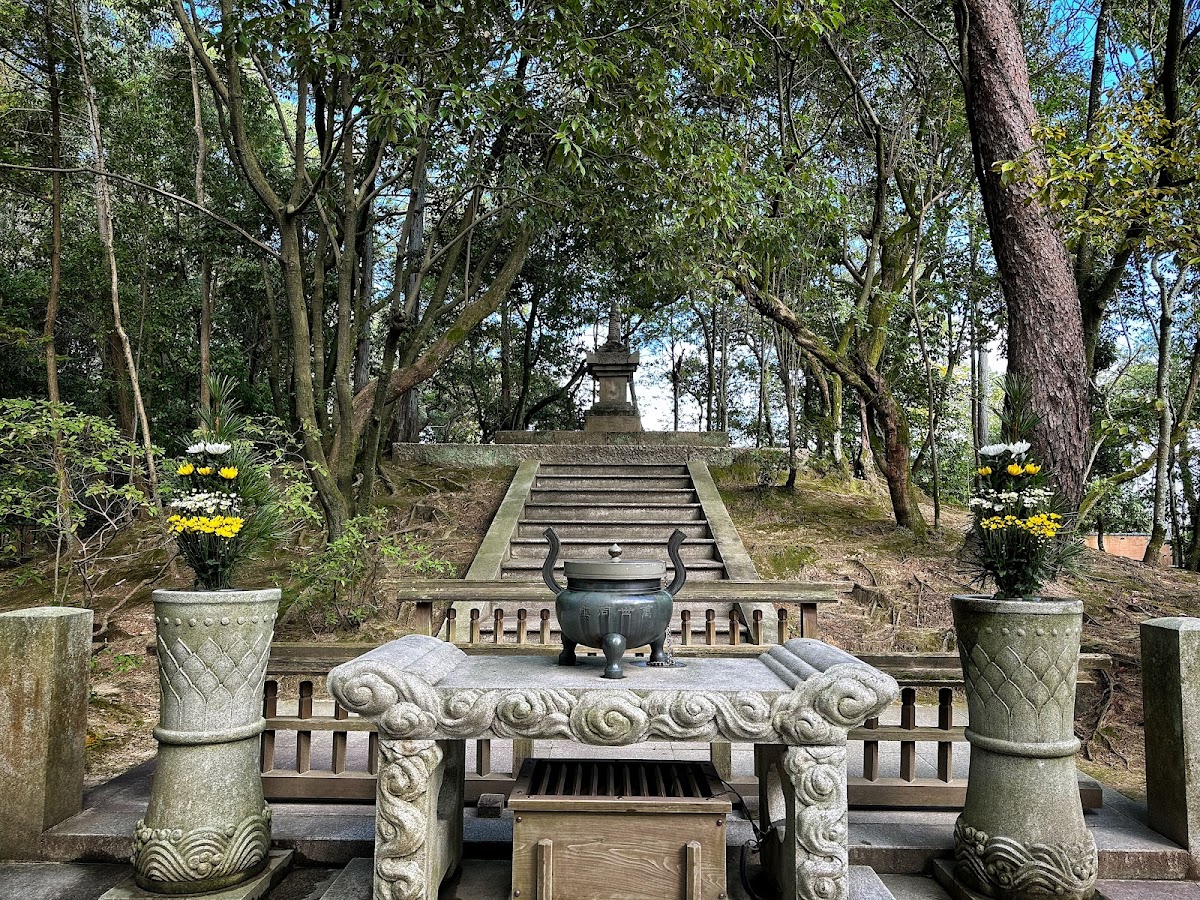
The Founder’s Mausoleum of Toshodai-ji Temple is the burial place of Ganjin Wajo, who came to Japan from Tang China during the Nara period and established the monastic system of Japanese Buddhism. Located in a tranquil forest on the east side of the Toshodai-ji Temple grounds, reached by climbing moss-covered stone steps, it is a sacred site where many worshippers visit to commemorate Ganjin Wajo’s indomitable spirit.
The Great Achievements of Ganjin Wajo
Ganjin Wajo was born in Yangzhou, China in 688. He overcame five failed attempts to travel to Japan and the hardship of blindness, finally arriving in Japan in 753. He performed the first ordination ceremony in Japan at Todai-ji Temple and founded Toshodai-ji Temple in 759. He dedicated himself to the development of Japanese Buddhism until his death at the age of 76 in 763.
Highlights of the Founder’s Mausoleum
The Path to the Mausoleum
The path leading from the east side of the Main Hall and Lecture Hall is a tranquil space covered with moss and trees. The approximately 200-meter climb up the stone steps offers a time to leave the secular world behind and compose one’s mind. Visiting in the early morning or evening is particularly serene, with sunlight filtering through the trees and birdsong deeply touching the soul.
Structure of the Mausoleum
The mausoleum is a stone pagoda in the style of a Hōkyōintō (a type of Buddhist stupa), approximately 2 meters tall. It is surrounded by a stone fence, and an incense burner is placed in front. Its simple yet majestic appearance seems to reflect the sincere character of Venerable Ganjin.
Connection to the Seated Statue of Venerable Ganjin (National Treasure)
Before or after visiting the mausoleum, we also recommend viewing the National Treasure, the seated statue of Venerable Ganjin, enshrined in the Mieido (Image Hall). This statue, created using the dry lacquer technique, is known as the oldest portrait sculpture in Japan and is a valuable cultural artifact that conveys the appearance of the Venerable Abbot during his lifetime. It is specially exhibited only during the annual memorial service for the temple’s founder, from June 5th to 7th.
Points to Note When Visiting
Etiquette for Visiting
- Purify at the Water Basin: Purify your hands and mouth at the entrance to the shrine path.
- Proceed Quietly Along the Path: Refrain from talking and ascend the stone steps with a calm mind.
- Bow Before Praying: Bow before the mausoleum, then clasp your hands together and pray quietly.
- Offering Flowers and Incense: You may offer flowers and incense that you have brought with you (prior confirmation recommended).
- Bow Upon Departure: Turn around, bow, and quietly exit.
Suitable Times for Visiting
- Early Morning (8:30-9:30): Fewer visitors, allowing for a peaceful and tranquil visit.
- Evening (16:00-Before Closing): The setting sun creates a mystical atmosphere.
- Founder’s Memorial Day (June 5-7): A memorial service is held, allowing visitors to worship in a special atmosphere.
Attire and Items to Bring
- Attire: Comfortable shoes are essential as the approach to the shrine consists of stone steps. Insect repellent is also recommended in summer.
- Items to Bring: Prayer beads, camera (check designated photography areas), drinks (please limit eating and drinking on the shrine grounds).
Benefits and Faith
Academic Success and Overcoming Difficulties
Based on the historical fact that Jianzhen overcame numerous difficulties to reach Japan, the shrine is believed to offer benefits such as academic success, achieving goals, and overcoming difficulties. Many students taking exams and those facing new challenges visit the shrine.
Healing of Eye Diseases
In honor of Jianzhen’s life, in which he fulfilled his mission despite being blind, many visitors pray for healing of eye diseases and restoration of eyesight.
Peace of Mind
The tranquil atmosphere of the mausoleum itself is believed to heal the weary hearts of modern people and bring peace of mind. More and more people are visiting this place for meditation and introspection.
Access Information
Access to Toshodai-ji Temple
By Train
- Approximately 8 minutes on foot from Kintetsu Nishinokyo Station (nearest station)
- Approximately 17 minutes by bus bound for Rokujoyama from JR Nara Station, get off at “Toshodai-ji” bus stop
- Approximately 20 minutes by bus bound for Rokujoyama from Kintetsu Nara Station, get off at “Toshodai-ji” bus stop
By Car
- Approximately 5 minutes from Daini Hanna Expressway, Horai IC
- Approximately 20 minutes from Nishi-Meihan Expressway, Koriyama IC
- Parking: 150 passenger cars (paid, 600 yen/day)
Visiting Information
- Visiting Hours: 8:30 AM – 5:00 PM (Last entry at 4:30 PM)
- Admission Fee: Adults 1,000 yen, High school and junior high school students 400 yen, Elementary school students 200 yen
- Estimated Time Required: 60-90 minutes to explore the entire temple grounds, approximately 20 minutes round trip to the mausoleum only.
- Closed Days: Open all year round
Nearby Attractions
- Yakushi-ji Temple: Approximately 10 minutes on foot. A World Heritage Site.
- Nishinokyo Area: A quiet area with a concentration of historical temples.
- Heijo Palace Site: Approximately 10 minutes by car. Remains of the capital city from the Nara period.
Notes for Visitors
- Entry into the mausoleum is prohibited.
- The path to the temple can be slippery in places, so be especially careful in rainy weather.
- In the summer, there are many mosquitoes, so bringing insect repellent is recommended.
- There may be areas around the mausoleum where photography is prohibited, so please check beforehand.
- To maintain peace and quiet, please refrain from loud conversations and the use of mobile phones.
Summary
The Toshodai-ji Temple Founder’s Mausoleum is a sacred place where Jianzhen, who left a great mark on the history of Japanese Buddhism, rests. Walking along the moss-covered path and offering prayers in the tranquil silence allows you to forget the hustle and bustle of everyday life and brings deep peace to your heart. When you visit Nara, be sure to stop by.