Enpuku-ji Temple Complete Guide | History, Highlights, and Access Information for Enpuku-ji Temples Nationwide
There are several temples named “Enpuku-ji” throughout Japan. Each has a different sect, history, and cultural assets, and has played an important role as a center of local faith. This article provides a comprehensive explanation of the major Enpuku-ji temples, from their historical background to their highlights and access methods.
What is Enpuku-ji?
The name “Enpuku-ji” embodies the Buddhist wish to “extend good fortune.” Temples with the same name exist throughout Japan, each with its own unique history and characteristics. Notable Enpuku-ji temples include a Koyasan Shingon sect temple in Kameoka City, Kyoto Prefecture, a Nichiren sect temple in Izumo City, Shimane Prefecture, and a Shinshu Otani sect temple in Hiedano-cho, Kameoka City, Kyoto Prefecture.
Each Enpuku-ji temple is deeply intertwined with the history of its region, surviving times of war and continuing to serve as a spiritual pillar for local residents to this day.
Enpuku-ji Temple (Koyasan Shingon Sect), Honme-cho, Kameoka City, Kyoto Prefecture
History and Origin
Enpuku-ji Temple, located in Honme-cho, Kameoka City, Kyoto Prefecture, is an ancient temple belonging to the Koyasan Shingon sect. This temple has a distinguished history, having been restored by the imperial decree of Emperor Hanazono. Emperor Hanazono reigned from the late Kamakura period to the Nanboku-cho period and was known for his deep faith in Buddhism; this imperial decree for Enpuku-ji Temple is an expression of that faith.
There are various theories regarding the temple’s founding date, but it is suggested that it may date back to the Heian period. Although it fell into disrepair due to war and other conflicts, it was restored by the imperial decree of Emperor Hanazono and flourished as a center of local faith.
National Important Cultural Property: Thirteen-Storied Stone Pagoda
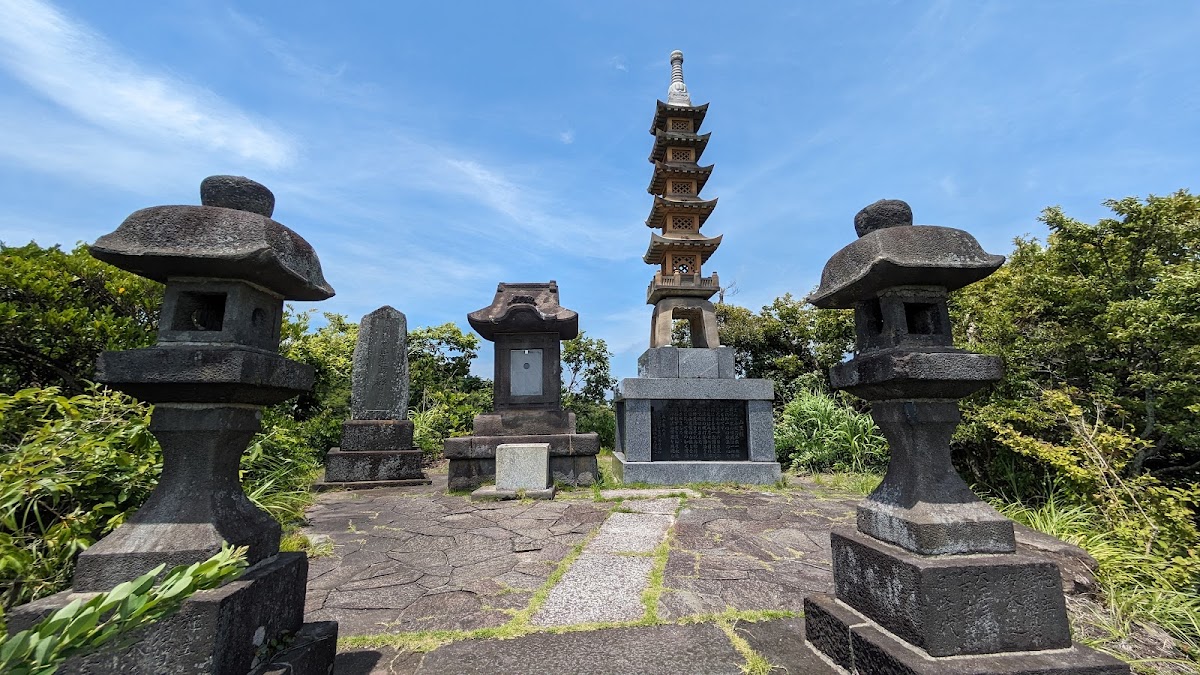
The greatest highlight of Enpuku-ji Temple in Honme-cho, Kameoka City, is the Thirteen-Storied Stone Pagoda, a nationally designated Important Cultural Property. This stone pagoda is believed to have been constructed during the late Kamakura period to the Nanboku-cho period, boasting superior stonework techniques and beautiful form.
The thirteen-story stone pagoda is associated with the Buddhist belief in the Thirteen Buddhas and the Tahōtō (multi-storied pagoda), and its intricately constructed layers are truly awe-inspiring. Having withstood the elements for hundreds of years, it remains a valuable cultural asset, attracting the attention of many researchers and visitors.
The pagoda is in excellent condition, allowing for detailed observation of the structure of each layer, including the shaft, the roof, and even the finial. Beyond its cultural value, it is also an important resource for understanding medieval stonework.
Enpuku-ji Temple Garden
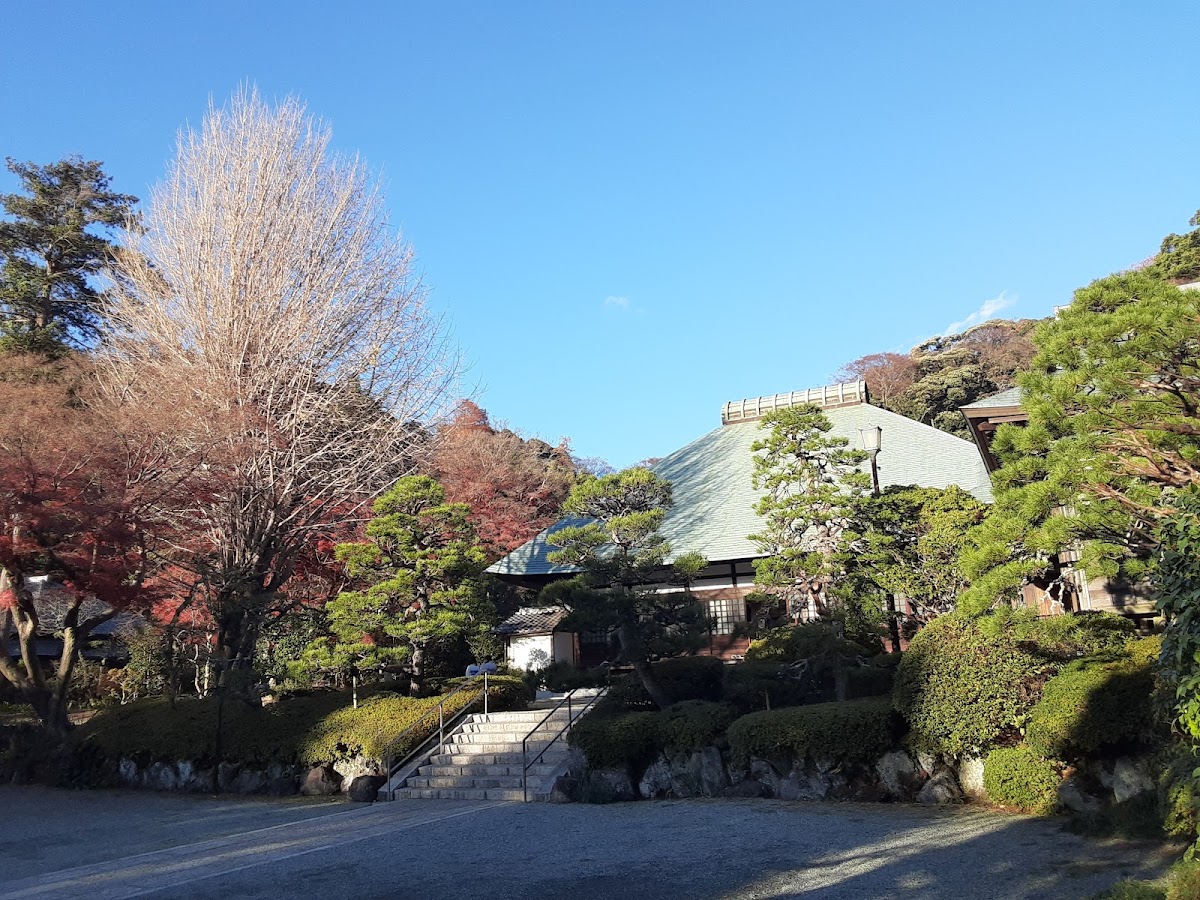
Enpuku-ji Temple has a pond garden believed to have been created during the Edo period, designated as a provisional registered cultural property of Kyoto Prefecture. This garden spreads out in front of the main hall and is a strolling garden centered around a pond.
The garden features skillfully arranged natural stones and trees that change their appearance with the seasons, allowing visitors to enjoy the beauty of each season. The reflections on the pond’s surface are particularly beautiful during the fresh greenery of spring and the vibrant autumn foliage, captivating visitors.
As a valuable cultural asset that preserves the garden style of the Edo period, it holds an important position in the study of garden history.
Access Information
Enpuku-ji Temple in Honme-cho, Kameoka City, is located in a mountainous area approximately 10 km west of the city center. Public transportation access is limited, so visiting by private car is recommended.
Access by Car:
- Approximately 20 minutes from the Kameoka IC on the Kyoto Jukan Expressway
- Accessible via Prefectural Road from National Route 9
The temple is nestled in a quiet mountain village, surrounded by a rich natural environment. It is recommended to check the visiting hours in advance before visiting.
Enpuku-ji Temple (Nichiren Sect) in Hikawa-cho, Izumo City, Shimane Prefecture
History of Tokozan Enpuku-ji Temple
Enpuku-ji Temple, located in Najima, Hikawa-cho, Izumo City, Shimane Prefecture, is officially called Tokozan Enpuku-ji and belongs to the Nichiren sect. Established in 1558 (Eiroku 1) during the Muromachi period, it has played an important role in the region as the only Nichiren sect temple in the former Hikawa-cho.
The temple’s history is deeply intertwined with the Hii River. Originally enshrined on a sandbar in the Hii River, it is said to have been damaged by a great flood in 1555-1556 (Koji 2-3) and relocated to its current location. This history of relocation overlaps with the history of flood control on the Hii River in the Izumo region, making it a valuable resource for understanding local history.
Main Hall and Temple Grounds
The main hall of Tokozan Enpuku-ji Temple features an architectural style characteristic of Nichiren sect temples. The main hall houses a statue of Nichiren Shonin and a mandala, and daily religious services are performed there.
The temple grounds are neatly maintained, creating an open atmosphere that makes it easy for visitors to come and go. It is a temple visited not only by local parishioners but also by a wide range of people who practice Nichiren Buddhism.
Sect and Dharma Connection
Enpuku-ji Temple’s former head temple is Yohō-ji Temple in Kyoto, and it belongs to the Kōtō lineage. In Nichiren Buddhism, a “dharma connection” indicates the link between temples of the same lineage, playing an important role in the transmission of doctrine and temple management.
As a temple with a history of over 460 years, it continues to be a central presence in the Nichiren Buddhist faith of the region.
Access Information
Location: Najima, Hikawa-cho, Izumo City, Shimane Prefecture
Access by Public Transportation:
- Within walking distance from JR San’in Main Line “Shohara Station”
- Accessible by bus from Ichibata Electric Railway “Unshu Hirata Station”
Access by Car:
- Approximately 10 minutes from San’in Expressway “Hikawa IC”
It is conveniently located for easy visits when exploring the Izumo region.
Enpuku-ji Temple (Shinshu Otani School) in Hiedano-cho, Kameoka City, Kyoto Prefecture
About Muryozan Enpuku-ji Temple
In Tenkawa Honzan, Hiedano-cho, Kameoka City, Kyoto Prefecture, Muryozan Enpuku-ji Temple belongs to the Shinshu Otani School. This temple has supported the faith of local followers as a temple that transmits the teachings of Jodo Shinshu Buddhism.
The Shinshu Otani School is a branch of Jodo Shinshu Buddhism, founded by Shinran Shonin, and its head temple is Higashi Hongan-ji Temple in Kyoto. Enpuku-ji Temple, with its deep ties to Higashi Hongan-ji Temple, has preserved and passed down the teachings of Nembutsu (recitation of Amida Buddha’s name).
Annual Events and Festivals
Enpuku-ji Temple, based on the traditions of the Shinshu Otani sect, holds annual events. The main events include:
- Ho-on-ko (Memorial Service): The most important memorial service commemorating the anniversary of Shinran Shonin’s death.
- Spring and Autumn Equinox Services: Memorial services for ancestors.
- Kotan-e (Birthday Celebration): A memorial service celebrating the birth of Shinran Shonin.
These events provide an opportunity for local parishioners to gather and hear Buddhist teachings.
Kyoto Branch Office
Enpuku-ji Temple has a branch office in Kyoto City to accommodate parishioners and visitors in urban areas. This initiative is attracting attention as an example of temple management adapted to modern lifestyles.
Access Information
Location: 4 Tenkawa Honzan, Hiedano-cho, Kameoka City, Kyoto Prefecture 621-0032
Access:
- Take a bus from JR Sagano Line “Kameoka Station”
- Approximately 15 minutes by car from Kyoto Jukan Expressway “Kameoka IC”
Other Enpuku-ji Temples
Enpuku-ji Temple Ruins at Jomyoji Temple in Kamakura
In Kamakura City, Kanagawa Prefecture, the Enpuku-ji Temple Ruins remain within the grounds of Jomyoji Temple. This Enpuku-ji Temple is associated with the Ashikaga clan and is known for containing the grave of Ashikaga Tadayoshi, the younger brother of Ashikaga Takauji, who founded the Muromachi Shogunate.
Ashikaga Tadayoshi, along with his brother Takauji, overthrew the Kamakura Shogunate and contributed to the establishment of the Muromachi Shogunate, but later met a tragic end due to a power struggle between brothers (the Kanno Disturbance). The site of Enpuku-ji Temple contains a yagura (a type of horizontal cave tomb unique to the Kamakura period) commemorating Tadayoshi, making it an important historical site of medieval history.
Although it no longer exists as a temple, it is a place visited by many history enthusiasts as a historical site.
Enpuku-ji Temple Site in Kasaoka City, Okayama Prefecture
The site of Enpuku-ji Temple also remains in Kasaoka City, Okayama Prefecture. A temple called Enpuku-ji (or Enpuku-ji) once stood on this site, and its founding is said to date back to the Heian period.
During the Nanboku-cho period, it became the battlefield of the “Battle of Enpuku-ji Mountain,” suffering significant damage. This battle was one of the regional battles during the turbulent Nanboku-cho period and is recorded as an important event in local history.
Later, it is said to have flourished again during the Muromachi period, but it no longer exists as a temple and is preserved as a historical site.
Enpuku-ji Temple in Wuyi County, China
There are also temples named Enpuku-ji outside of Japan. Yanfu Temple, located on Fuping Mountain in Taoxi Town, Wuyi County, Zhejiang Province, China, is a famous wooden building from the Yuan Dynasty in the Jiangnan region.
Construction began in the second year of Tianfu of the Later Jin Dynasty (937 AD), and the main hall was rebuilt in the fourth year of Yanyou of the Yuan Dynasty (1317 AD). Originally named Futian Temple, it was renamed Yanfu Temple during the Shaoxi era of the Song Dynasty. It is designated as an important cultural property of China and is preserved as a valuable relic of Yuan Dynasty architecture.
Yanfu Temple in Inner Mongolia Autonomous Region
In Alxa Left Banner, Alxa League, Inner Mongolia Autonomous Region, China, lies Yanfu Temple, a Tibetan Buddhist temple of the Gelug school. It has developed uniquely as one of the centers of Buddhist faith in the Mongolian region.
Points to Note When Visiting Enpuku-ji Temple
Temple Visiting Etiquette
When visiting Enpuku-ji Temple, please observe the following basic temple visiting etiquette:
- Bow at the Temple Gate: Bow before entering the temple grounds.
- Respectful Attitude: Pray quietly within the temple grounds.
- Photography: Permission may be required to photograph cultural properties.
- Attire: Avoid revealing clothing and dress appropriately.
- Offering: When praying, offer an offering according to your feelings.
Visiting Hours and Admission Fees
Visiting hours and admission fees vary depending on the Enpuku-ji temple. Especially for temples with cultural properties, advance reservations may be required, or visiting hours may be limited. It is recommended to check the official website or call before visiting.
Generally:
- Visiting Hours: 9:00 AM – 4:00 PM (Varies by temple)
- Admission Fee: Free to approximately 500 yen (Additional fees may apply for viewing cultural properties)
Seasonal Highlights
Spring (March – May):
- A season of beautiful cherry blossoms and fresh greenery
- Events such as the Spring Equinox Festival are held
Summer (June – August):
- Enjoy the coolness of the lush green temple grounds
- Summer events such as the Obon Festival
Autumn (September – November):
- A time of beautiful autumn foliage
- Important events such as the Autumn Equinox Festival and the Hoonko Festival
Winter (December – February):
- A time for worship in a tranquil atmosphere
- Year-end and New Year events such as the ringing of the temple bell and the Shusho-e ceremony
Tourist Spots Around Enpuku-ji Temple
Around Kameoka, Kyoto
When visiting Enpuku-ji Temple in Kameoka City, you can also visit the surrounding tourist spots:
- Hozugawa River Boat Ride: A sightseeing boat ride down the approximately 16km river from Kameoka to Arashiyama
- Torokko Train: A sightseeing train that runs along the Hozugawa River from Sagano to Kameoka
- Kameoka Castle Ruins: The ruins of a castle associated with Akechi Mitsuhide
- Izumo Grand Shrine: An ancient shrine known as the Ichinomiya (first-ranked shrine) of Tanba Province
Around Izumo Region
Around Enpuku-ji Temple in Izumo City, Shimane Prefecture, there are many tourist spots, including Izumo Taisha Shrine:
- Izumo Taisha Shrine: Nationally famous as the god of matchmaking
- Hinomisaki Shrine: An ancient shrine located on a coastline with beautiful sunsets
- Ancient Izumo History Museum: A museum where you can learn about the history and culture of Izumo
- Lake Shinji: A lake known as a famous spot for sunsets
Inquiries about Enpuku-ji Temples
Inquiries about each Enpuku-ji temple must be made directly to the respective temple. Please feel free to contact them if you have any questions regarding visits, events, or viewing cultural properties.
Many temples accept inquiries by phone as well as email through their official websites. Advance contact is essential, especially for group visits or special viewings.
Summary
There are temples named Enpuku-ji throughout Japan, each with its own unique history and cultural properties. These include the thirteen-story stone pagoda, a nationally designated important cultural property, in Kameoka, Kyoto; the Nichiren Buddhist temple of Tokozan Enpuku-ji in Izumo, Shimane; and the Shinshu Otani-ha temple of Muryozan Enpuku-ji, demonstrating the diversity of sects and histories.
Furthermore, remnants of Enpuku-ji temples remain in Kamakura and Kasaoka, preserving the history of the medieval period. Visiting these Enpuku-ji temples will deepen your understanding of Japanese Buddhist history and regional history.
To ensure a more fulfilling experience, please check information beforehand and observe appropriate manners during your visit. Please visit each Enpuku-ji temple in person to experience its unique charm.