Complete Guide to Taima-dera Temple: A Thorough Explanation of the Ancient Temple of the Chūjōhime Legend and the National Treasure Taima Mandala
Located in Katsuragi City, Nara Prefecture, Taima-dera Temple is an ancient temple with a history of over 1400 years, founded in 612 AD (the 20th year of Emperor Suiko’s reign). This temple, nestled at the foot of Mount Futakami, is widely known for the legend of Chūjōhime’s lotus thread mandala and the national treasure Taima Mandala, attracting many worshippers as a center of Pure Land Buddhism. This article provides a detailed explanation of all aspects of Taima-dera Temple, from its history, architecture, cultural assets, to its current state of worship.
History and Founding of Taima-dera Temple
Development from Founding to Ancient Times
The founding of Taima-dera Temple dates back to 612 AD (the 20th year of Emperor Suiko’s reign). It is said that Taima-dera Temple originated when Prince Maroko, the third son of Emperor Yomei, founded it as “Manpozoin Zenrin-ji” in Kawachi Province, based on the teachings of his older brother, Prince Shotoku. Later, in 681 (the 10th year of Emperor Tenmu’s reign), it was relocated to its current location in Taima, Katsuragi City, Nara Prefecture, by Taima no Kunimi, Prince Maroko’s grandson.
During the reign of Emperor Tenmu, it was renamed “Taima-dera,” and it is said that the seven main temple buildings were completed in 685. The Taima area, in ancient times, was a strategically important location for transportation and military purposes, situated at the western edge of the Nara Basin and bordering Osaka Prefecture. It flourished greatly as the family temple of the powerful Taima clan.
Formation and Architectural Style of the Hakuho Period Temple Complex
The layout of Taima-dera Temple complex adopts the Tang Dynasty style, and a notable feature is the unique arrangement of two three-story pagodas side-by-side, east and west. The fact that these east and west pagodas remain in their original form is a rare example, unique to Taima-dera Temple in Japan. While the main hall and lecture hall were rebuilt during the Kamakura period, they are highly valued as important relics that convey the layout of the temple complex from the Hakuhō period.
Both pagodas are also distinctive for having eight finials, a unique architectural style that has attracted attention. The temple complex, a culmination of Hakuhō architecture, occupies an extremely important position in the history of Japanese architecture.
The Legend of Chūjōhime and the Taima Mandala
The Story of Chūjōhime
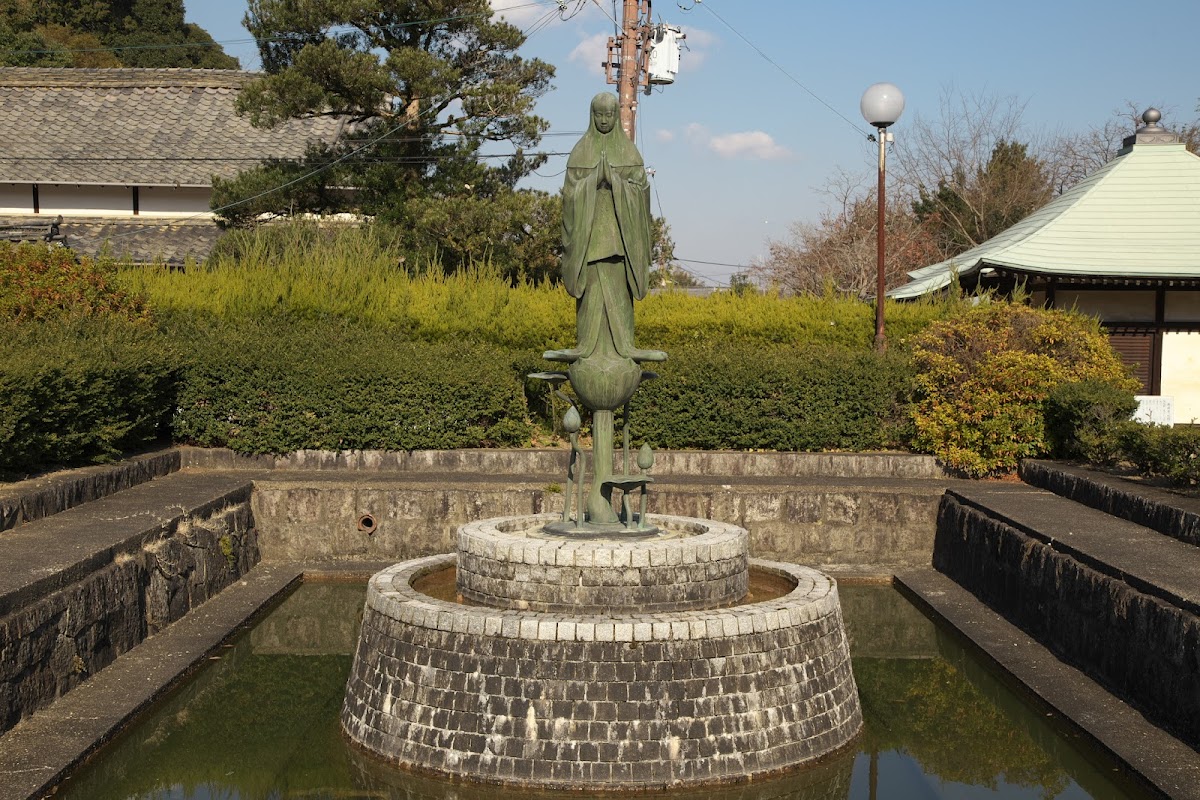
The legend of Chūjōhime is indispensable when discussing Taima-dera Temple. Chūjōhime was the daughter of a nobleman during the Nara period, and she lived a life of hardship due to her stepmother’s slander. Eventually, she converted to Buddhism and is said to have devoted herself to ascetic practice at Taima-dera Temple.
The Taima Mandala is said to have been woven overnight in 763 AD by Princess Chūjō when she was 16 years old, using lotus threads. According to legend, Kannon Bodhisattva and Amida Buddha transformed themselves to assist the princess, completing a magnificent mandala depicting the Pure Land. This legend of the lotus thread mandala became widely known with the rise of Pure Land Buddhism during the Heian period and beyond.
Artistic Value of the National Treasure Taima Mandala
The Taima Mandala is a massive hanging scroll, approximately 4 meters square, depicting in detail the Pure Land of Amida Buddha. The mandala currently housed in the Mandala Hall (main hall) is a tapestry woven during the Kamakura period and is designated a National Treasure.
The mandala meticulously depicts Amida Buddha at its center, surrounded by various bodhisattvas including Kannon Bodhisattva and Seishi Bodhisattva, as well as the figures of those who attained rebirth in the Pure Land. The richly colored weaving techniques represent the highest level of craftsmanship at the time, giving it immeasurable value from both an art and religious historical perspective.
Taima-dera Temple as a Center of Pure Land Buddhism
Connection with the Jodo Sect
Taima-dera Temple currently exhibits a rare form of coexistence among multiple Buddhist sects. The temple complex is managed by both the Shingon and Jodo sects; the inner sanctuary belongs to the Jodo sect, while the central hall belongs to the Shingon sect. Its connection with the Jodo sect is particularly deep, and as the 9th temple on the 25 sacred sites of Honen Shonin, it serves as an important center of Pure Land faith.
Because the Taima Mandala visually represents the Pure Land, faith in Taima-dera Temple grew as Pure Land Buddhism flourished from the Heian period onward. For those who pledge allegiance to Amida Buddha and aspire to rebirth in paradise, Taima-dera Temple has been revered as a sacred place where they can witness the ideal Pure Land.
The Beauty of the Pure Land Garden
A beautiful Pure Land garden is situated within the inner sanctuary of Taima-dera Temple. This garden was constructed with the aim of recreating the Pure Land on earth and is a pond-centered strolling garden. Flowers bloom throughout the seasons, and many visitors come, especially during the cherry blossom season in spring, the peony season in early summer, and the autumn foliage season.
Historical sites related to Princess Chujo are scattered throughout the garden, including the Shaving Hall where the princess is said to have shaved her head, and the Somei well where she dyed thread. By strolling through the garden while visiting these historical sites, one can feel closer to the story of Princess Chujo.
A Treasure Trove of National Treasures and Important Cultural Properties
Mandara-do Hall (Main Hall)
The Mandara-do Hall is the main hall of Taima-dera Temple and is designated a National Treasure. Built during the Kamakura period, it houses the Taima Mandala, the principal image of worship. Photography is prohibited inside the hall, but the sheer power and exquisite detail of the mandala, seen up close, is breathtaking.
The Mandara-do Hall is the heart of Taima-dera faith, and many worshippers visit it hoping for rebirth in paradise. The solemn atmosphere inside the hall evokes deep religious emotion in visitors.
Buddhist Statues in the Golden Hall and Lecture Hall
The Golden Hall houses a seated statue of Miroku Buddha, the principal image of worship from the Hakuhō period. This statue is a valuable example of a clay sculpture (a Buddhist statue made of clay) and conveys the original form of worship from the temple’s founding. Furthermore, the main hall houses statues of the Four Heavenly Kings, all of which are designated as Important Cultural Properties.
The lecture hall houses Buddhist statues from the Heian period, including a seated statue of Amida Buddha. These statues, adorned with gold leaf, exhibit a refined beauty and demonstrate the high level of Buddhist art during the Heian period. The seated Amida Buddha statue, in particular, has attracted many worshippers as the principal deity of Pure Land Buddhism.
East and West Pagodas
Both the East and West Pagodas are designated as National Treasures and are known as masterpieces of three-story pagoda architecture from the Hakuhō period. The East Pagoda is believed to be a Nara period building, while the West Pagoda is estimated to be an early Heian period building. Both pagodas are approximately 25 meters tall and boast beautifully balanced proportions.
As mentioned above, the eight-ringed finials on both pagodas are extremely rare and have attracted the attention of researchers as a unique architectural style of Taima-dera Temple. Buddhist statues are enshrined inside the pagodas and can be viewed during special public viewings.
Temple Bell and Other Cultural Properties
Taima-dera Temple possesses a temple bell that retains its original form from the Hakuhō period (1404-1400). This bell is designated a National Treasure and is extremely valuable as one of the oldest temple bells in Japan. Its sound is beautiful, and it is still used as the New Year’s Eve bell.
In addition, Taima-dera Temple houses numerous other important cultural properties. Excellent cultural artifacts from various periods, including Buddhist paintings, scriptures, and crafts, are preserved and sometimes displayed in special exhibitions and planned exhibitions.
Taima-dera Temple’s Sub-temples
Taima-dera Okunoin
Taima-dera Okunoin is a sub-temple belonging to the Jōdo sect and is known for its Jōdo garden and ossuary. As one of the 25 sacred sites of Hōnen Shōnin, it is a center of Jōdo faith. A replica of the Taima Mandala tapestry is enshrined on the temple grounds and can be viewed up close.
The inner sanctuary accepts interment regardless of sect and also offers perpetual memorial services. The ossuary, overlooking the Jodo garden, is enveloped in a tranquil atmosphere and is used by many as a place to pray for the peaceful rest of their loved ones. They also offer consultations for various memorial services, from funerals to annual memorial services.
Nakanobo
Nakanobo is a sub-temple belonging to the Shingon sect and is known as the training hall where Princess Chujo had her head shaved. A guiding Kannon is enshrined on the grounds, attracting worshippers seeking guidance in life.
Nakanobo offers Buddhist image and sutra copying experiences, and you can also enjoy matcha tea in the former national treasure tea room. The garden is also beautiful, especially during peony season when magnificent flowers bloom. Furthermore, Nakanobo houses many valuable treasures, which can be viewed during special exhibitions.
Other Sub-temples
In addition to these, several other sub-temples, such as Gonen-in, Senbutsu-in, and Soin-in, are scattered throughout the temple grounds. Each temple possesses its own unique history and cultural assets, preserving the diverse forms of faith prevalent at Taima-dera Temple.
Annual Events and Special Openings
Major Annual Events
Taima-dera Temple holds various events throughout the year. Every year on April 14th, the Nerikuyo-e Ceremony is held, recreating the scene of the 25 Bodhisattvas descending from the Pure Land to welcome the deceased. This event, affectionately known as “Oneri,” attracts many worshippers.
On May 14th, a memorial service is held for Princess Chujo, commemorating her virtues. Seasonal events such as the ringing of the New Year’s Eve bell, the first shrine visit of the year, and the Setsubun festival are also held with great fanfare.
Special Openings and Events
Special openings of treasures are held in spring and autumn, allowing visitors to view cultural assets that are normally closed to the public. In recent years, special exhibitions such as the “Flower and Bird Pure Land” painting by artist Atsushi Uemura have been held, attempting to fuse contemporary art with traditional faith.
Furthermore, Taima-dera Temple’s national treasures and important cultural properties are frequently exhibited in special exhibitions at museums such as the Kyoto National Museum, Tokyo National Museum, and Nara National Museum, attracting nationwide attention with exhibitions such as “Honen and the Pure Land” and “Yamato-e” exhibitions.
Access and Visiting Information
Transportation Access
Taima-dera Temple is approximately a 15-minute walk from Taima-dera Station on the Kintetsu Minami-Osaka Line. Alternatively, it is about a 10-minute taxi ride from Iwaki Station on the Kintetsu Osaka Line. If traveling by car, it is approximately 15 minutes from the Kashiba Interchange on the Nishi-Meihan Expressway, and there is ample parking for visitors on the temple grounds.
Located approximately 40 minutes by car from Nara City and about 1 hour from Osaka City, it is ideally situated for a day trip. Its natural surroundings at the foot of Mount Futakami are also a major attraction.
Visiting Hours and Admission Fees
Visiting hours are usually from 9:00 to 17:00 (may vary depending on the season). Admission fees differ for the main hall, inner sanctuary, and central sanctuary; combined tickets are also available. Please check the official website for the latest information.
The temple grounds are vast, and it takes approximately 2-3 hours to see everything thoroughly. Those who wish to carefully appreciate the National Treasures and Important Cultural Properties are especially advised to allow ample time for their visit.
The Significance of Taima-dera Temple in the Modern Era
As a Center for Cultural Property Preservation
Taima-dera Temple, with its history spanning over 1400 years, is a treasure trove of cultural properties and plays a crucial role in the preservation of Japan’s cultural heritage. Appropriate preservation, restoration, and transmission to future generations of National Treasures and Important Cultural Properties are continuously carried out.
In recent years, the temple has also been advancing the archiving of cultural properties using digital technology and is actively engaged in academic research and educational outreach activities.
A Place for the Practice of Pure Land Buddhism
Even in modern times, Taima-dera Temple continues to function as a place for the practice of Pure Land Buddhism. It accommodates diverse forms of faith by accepting interment and perpetual memorial services regardless of sect. Furthermore, it offers opportunities for modern people to experience Buddhism through activities such as sutra copying, Buddha image copying, Dharma talks, and Zen meditation sessions.
The image of the Pure Land depicted in the Taima Mandala continues to offer hope to people seeking peace of mind in modern society.
Tourism and Regional Development
Taima-dera Temple is an important tourist resource in Katsuragi City and contributes significantly to the local economy. Many worshippers and tourists visit throughout the year, contributing to the revitalization of the region.
Nearby are hiking trails on Mt. Futakami, the old townscape of Taima no Sato, and the Katsuragi City Historical Museum, forming a tourist route centered around Taima-dera Temple. The entire region is promoting town development that leverages its history and culture.
Summary
Taima-dera Temple has played a vital role as one of the centers of Japanese Buddhist culture for over 1400 years since its founding during the Hakuhō period. Its Pure Land Buddhism, centered on the legend of Princess Chūjō and the Taima Mandala, its precious architectural complex including two three-story pagodas (east and west), and its numerous national treasures and important cultural properties are indispensable for understanding Japanese history and culture.
Even today, Taima-dera Temple continues to possess multifaceted value as a place of worship, a center for cultural property preservation, and a tourist attraction. The experience of immersing oneself in history and faith amidst the rich natural environment at the foot of Mount Futakami will leave a deep impression on the hearts of visitors.
When visiting Nara, be sure to extend your trip to Taima-dera Temple and experience the rich history and culture of this ancient temple, as well as the faith that still thrives there today. The world of the Pure Land depicted in the Taima Mandala will surely bring peace and hope to your heart.