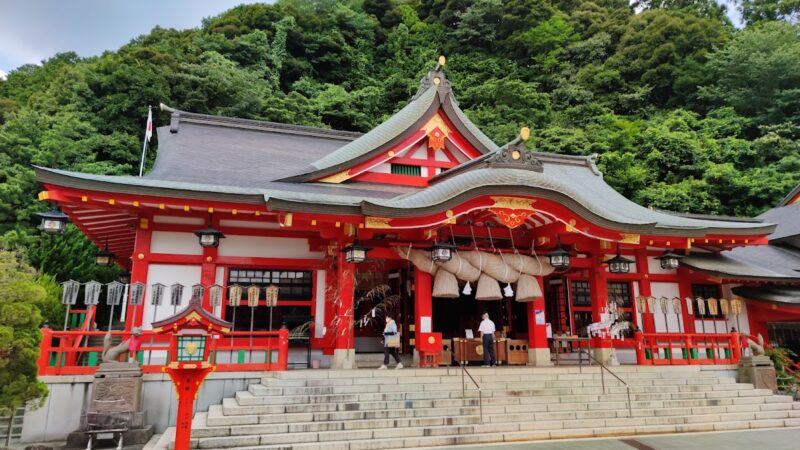
Complete Guide to Mii Shrine | History and Benefits of Ancient Shrines in Gifu and Shimane Prefectures Dedicated to Safe Childbirth and Water
Mii Shrine is a historical shrine with several locations throughout Japan, with the Mii Shrines in Kakamigahara City, Gifu Prefecture, and Izumo City, Shimane Prefecture being particularly famous. Both have long been revered as deities of safe childbirth and water, and enshrine Kinomata-no-kami, a deity mentioned in the Kojiki (Records of Ancient Matters). This article provides a detailed overview of the history, benefits, highlights of the shrine grounds, and visiting information for both shrines.
Mii Shrine is a historical shrine with several locations throughout Japan, particularly in Kakamigahara City, Gifu Prefecture, and Izumo City, Shimane Prefecture. ## Table of Contents
- What is Mii Shrine?
- Mii Shrine in Kakamigahara City, Gifu Prefecture
- Mii Shrine in Izumo City, Shimane Prefecture
- Mii Shrine in Yoro Town, Gifu Prefecture
- Benefits and Faith of Mii Shrine
- Visiting Information and Access
- Frequently Asked Questions
What is Mii Shrine?
Mii Shrine is the name of a group of shrines scattered throughout Japan, primarily enshrining Mii-no-kami (or Kimata-no-kami), the god of water, trees, and safe childbirth. “Mii” means a sacred well or spring, and has been worshipped since ancient times in places where pure water springs forth.
About the Main Deity
The main deity of Mii Shrine, Kinomata-no-kami, is a god appearing in the Kojiki (Records of Ancient Matters). Kimata-no-kami is considered a child deity of Ōkuninushi-no-mikoto, and is revered as a god of safe childbirth due to the myth surrounding his birth. Kimata-no-kami is also known as Mii-no-kami and possesses characteristics as a guardian deity of water and a god of trees.
According to the Kojiki, Kimata-no-kami was born from the fork of a tree (a tree crotch) of Kamuyatatehime-no-mikoto, and this mysterious birth story is the source of the belief in safe childbirth.
Mii Shrine, Kakamigahara City, Gifu Prefecture
Overview and History
Mii Shrine, located in Mitsui-cho, Kakamigahara City, Gifu Prefecture, is a shrine with a long history as a Shikinaisha (a shrine listed in the Engishiki) of Kakamigahara District, Mino Province. The exact founding date is unknown, but it is an ancient shrine listed in the Engishiki Jinmyōchō (a list of shrines compiled in the Heian period), and originally, the entire Mitsuiyama mountain was considered sacred ground.
At the summit of Mt. Mitsui, the Okunomiya shrine is still enshrined, and the remains of an iwakura (sacred rock) ritual site are still preserved. On the mountainside, there is also a burial mound called the Mitsuiyama Kofun (a burial mound within the grounds of the Mii Shrine), indicating that this area has been a center of worship since ancient times. Many artifacts have been discovered, making it an archaeologically important site.
Originally the tutelary deity of Mitsui Village, it is now revered as the tutelary deity of the entire Inaba district of Kakamigahara City.
Highlights of the Shrine Grounds
Main Hall and Worship Hall
The current shrine buildings are located at the foot of the mountain, making them easily accessible for worshippers. Traditional shrine architecture welcomes visitors in a tranquil atmosphere surrounded by trees.
Okunomiya (Mt. Mitsui Summit)
The Okunomiya, located at the summit of Mt. Mitsui, is a site of iwakura ritual, preserving a primitive form of worship. While it requires climbing a mountain trail, the view from the summit is magnificent, and you can experience a sacred atmosphere.
Betsugu Ikenomiya (Mitsuiike Park)
Within Mitsuiike Park is the Betsugu Ikenomiya shrine, a place where you can feel close to the water deity, Mii-no-kami. The area around the pond is also a popular place for citizens to relax.
Water Source
This area is rich in water, and an important water source for Kakamigahara City is located nearby. As a place where pure water springs forth, it has long been considered a suitable place to enshrine the water deity.
Main Shinto Rituals
Various Shinto rituals are performed at Mii Shrine throughout the year. In particular, traditional festivals such as the annual grand festival and the harvest festival are carefully preserved by the local people. Many life-changing rituals such as prayers for safe childbirth, first shrine visits for newborns, and Shichi-Go-San (a traditional rite of passage for children) are also performed, demonstrating the continued deep-rooted faith in the community.
Jointly Enshrined Shrines and Subsidiary Shrines
Within the shrine grounds is the Tsushima Shrine, a subsidiary shrine where Tsushima-no-kami and Ukemochi-no-kami are enshrined together. Tsushima-no-kami is worshipped as a god who wards off disease, and Ukemochi-no-kami is worshipped as a god of abundant harvests.
Mii Shrine, Izumo City, Shimane Prefecture
Overview and History
Located in Izumo City, Shimane Prefecture, the Mii Shrine is known as a guardian deity of safe childbirth and water, a tradition passed down through generations in the Izumo region. It also enshrines Kimata-no-kami as its main deity and is a historically significant shrine with records in the Kojiki (Records of Ancient Matters).
The Mii Shrine in Izumo is deeply connected to the birth story of Kimata-no-kami, and due to the legend that its water was used for Kimata-no-kami’s first bath, it attracts special devotion as a water deity for safe childbirth and longevity. It is believed to have existed since before 732 AD, and has a long history as a deity of the Izumo region.
Three Sacred Springs
The most distinctive feature of Izumo’s Mii Shrine is the three sacred springs that spring forth within its grounds:
Ikui: A well revered as water that nourishes life, it continues to produce pure water without ever drying up.
Sakui: Believed to be water that brings happiness, it is thought to bestow good fortune upon worshippers.
Tsunagai: Revered as water that brings longevity and health.
These three wells continued to gush forth water until 50 years ago and are said to be the oldest excavated wells in Japan. They continue to flow without drying up, maintaining a mystical atmosphere.
Center for Safe Childbirth Worship
Izumo’s Mii Shrine has long been said to guarantee safe childbirth for those who worship here and receive the mystical amulet. It is believed that wearing the amulet properly guarantees a safe delivery, and the shrine enjoys immense trust in the local community as the “god of childbirth.”
Besides prayers for safe childbirth, many people visit to give thanks, for the first shrine visit of a newborn, and for Shichi-Go-San (a traditional Japanese rite of passage for children), praying for the healthy growth of their children. It is cherished as a guardian deity for mothers and children. As indicated by the three sacred springs, it is worshipped as a deity that watches over life from its inception to its growth.
Mii Shrine in Yoro Town, Gifu Prefecture
There is also a Mii Shrine in Yoro Town, Gifu Prefecture. This is also an ancient shrine listed in the Engishiki (an ancient Japanese legal code) and is a historically significant shrine whose name is recorded in the Mino Province Shrine Register.
History of Relocation
The Mii Shrine in Yoro Town has been relocated twice, as far as records show. A marker post and the remains of a well remain at the original location, and the subsequent location was forced to relocate again in 1964 due to the construction of the Meishin Expressway. It is currently enshrined within the grounds of Kasuga Shrine.
The enshrined deity is Mii-no-kami (also known as Kimata-no-kami), and like other Mii Shrines, it is worshipped as the god of water and safe childbirth.
Benefits and Faith of Mii Shrine
Safe Childbirth and Fertility
The most well-known benefit of Mii Shrine is safe childbirth. Due to the mysterious birth story of Kimata-no-kami, it has long been worshipped as the god of safe childbirth. It is believed that pregnant women who visit the shrine and receive a protective amulet are guaranteed a safe delivery.
In particular, the Mii Shrine in Izumo City, Shimane Prefecture, is famous for its mystical amulet, and it is believed that wearing it guarantees a safe delivery. Many worshippers visit to express their gratitude for a safe delivery.
Childcare and Child Growth
Besides safe childbirth, there is also a strong belief in the healthy growth of newborn children. Many families visit this shrine to celebrate milestones in their children’s growth, such as their first shrine visit (Hatsumiyamairi) and Shichi-Go-San (a traditional Japanese rite of passage for children). The deity is revered as a guardian of mothers and children, watching over them consistently from birth to growth.
Guardian of Water
Mii-no-Kami is also a water deity, worshipped as a god who brings pure water. Securing water for agriculture and daily life has been a crucial issue since ancient times, and Mii Shrine, located near water sources, was a place to express gratitude for the blessings of water and pray for abundant water.
The fact that the area around Mii Shrine in Kakamigahara City, Gifu Prefecture, is rich in water and serves as the city’s water source, and that Mii Shrine in Izumo City, Shimane Prefecture, has three sacred springs, both clearly demonstrate the deity’s nature as a water god.
God of Trees and Guardian of Nature
As the name Kimata-no-Kami suggests, the deity also possesses characteristics as a tree god. This includes a belief in gratitude for the blessings of forests and nature, and a desire for harmony with nature.
Visiting Information and Access
Mii Shrine, Kakamigahara City, Gifu Prefecture
Address
5-8, Mitsui-cho, Kakamigahara City, Gifu Prefecture 504-0961
Phone Number
058-383-8397
Access
- Approximately 17 minutes on foot from Shin-Naka Station on the Meitetsu Kakamigahara Line
- By car: Approximately 10 minutes from Kakamigahara IC on the Tokai-Hokuriku Expressway
- Parking available
Visiting Hours
Grounds are freely accessible (please check the reception hours of the shrine office)
Official Instagram Account
@miijinja posts the latest information, announcements, and seasonal photos of the shrine grounds.
Mii Shrine, Izumo City, Shimane Prefecture
Location
Izumo City, Shimane Prefecture (Please check official information for the detailed address)
Access
Approximately 10 minutes by car from Izumo City Station (Please check the Izumo tourist guide for details)
Visiting Hours
Grounds are freely accessible
Contact Information
Izumo Tourism Association (located within Big Heart Izumo)
1-5 Ekiminami-cho, Izumo City, Shimane Prefecture 693-0008
Opening Hours: 9:00 AM – 5:00 PM (Closed Sundays; if Sunday is a public holiday, closed the following day)
About Goshuin (Shrine Seals)
Both shrines offer Goshuin. At Mii Shrine in Kakamigahara City, Gifu Prefecture, Goshuin are available at the shrine office. Many visitors receive Goshuin as a memento of their visit and to deepen their connection with the shrine.
You can bring your own Goshuincho (seal book) or receive a pre-printed Goshuin. Reception hours vary by shrine, so it is recommended to check in advance.
Guidelines for Visiting Mii Shrine
Etiquette for Visiting a Shrine
Please observe the basic etiquette for visiting a shrine:
- Bow before passing through the torii gate
- Purify your body and mind at the water basin
- Walk on the path, avoiding the center
- Perform “two bows, two claps, one bow” in front of the main hall
- Bow again at the torii gate on your way out
Timing for Prayers for Safe Childbirth
It is generally considered best to pray for safe childbirth on the Day of the Dog in the fifth month of pregnancy, but you can visit at any time that suits your physical condition and circumstances. The important thing is to pray sincerely within your means.
Regarding Clothing
There are no specific dress code requirements, but please dress in clean and modest attire, keeping in mind that you are appearing before the gods. It is best to avoid revealing or overly flashy clothing.
Nearby Attractions
Around Kakamigahara City, Gifu Prefecture
Mitsuiike Park
Mitsuiike Park, home to the Ikenomiya Shrine, is also known as a famous cherry blossom viewing spot and is bustling with many visitors in spring. You can enjoy nature while strolling around the pond.
Kakamigahara City Historical and Folk Museum
This facility allows you to learn about the history and culture of Kakamigahara, and exhibits materials related to Mii Shrine.
Around Izumo City, Shimane Prefecture
Izumo Taisha Shrine
One of Japan’s leading shrines, famous as a god of matchmaking. Many people visit both Mii Shrine and Izumo Taisha Shrine.
Izumo Soba
When visiting Izumo, be sure to try the famous Izumo soba noodles.
The Charm of Mii Shrine and the Inheritance of Faith
Mii Shrine is a valuable shrine that preserves ancient beliefs dating back to the time of the Kojiki (Records of Ancient Matters). As the guardian deity of safe childbirth and water, this shrine has been a part of people’s lives for generations, watching over the birth and growth of life.
Even today, expectant mothers praying for safe childbirth, families praying for the healthy growth of their children, and people expressing gratitude for the blessings of pure water visit the shrine. Information is also disseminated through official Instagram accounts, making it a shrine familiar to younger generations as well.
With its tranquil atmosphere, ancient spring, and sacred rock formations on the mountaintop, Mii Shrine retains a harmony with nature and a sacred space that is being lost in modern society. Through a visit, you can feel the traditional Japanese faith and reverence for nature.
The Mii Shrines in Gifu and Shimane prefectures are deeply intertwined with the history and culture of their respective regions, and continue to be a spiritual haven for many people. Whether you are praying for safe childbirth, your child’s healthy growth, or simply seeking peace of mind, why not visit the shrine?
Frequently Asked Questions (FAQ)
Q1: Where is Mii Shrine located?
A: Mii Shrines exist throughout Japan, but the most famous are those in Kakamigahara City, Gifu Prefecture, and Izumo City, Shimane Prefecture. The Mii Shrine in Kakamigahara City, Gifu Prefecture, is located at 5-8 Mitsui-cho, and the Mii Shrine in Izumo City, Shimane Prefecture, is located within Izumo City. There is also a Mii Shrine in Yoro Town, Gifu Prefecture.
Q2: What are the blessings of Mii Shrine?
A: The main blessings are safe childbirth, fertility, child-rearing, and the healthy growth of children. It is also worshipped as a guardian deity of water, and offers blessings related to the blessings of pure water and nature. Because it enshrines Kimata-no-kami, it also has characteristics as a god of trees and a guardian deity of nature.
Q3: When is the best time to pray for a safe delivery?
A: Generally, it is considered best to pray for a safe delivery on the Day of the Dog in the fifth month of pregnancy, but you can visit anytime according to your physical condition and circumstances. It is important to visit with sincerity and within your means.
Q4: Can I get a Goshuin (temple/shrine stamp)?
A: Yes, you can get a Goshuin at Mii Shrine in Kakamigahara City, Gifu Prefecture. Visit during the shrine office’s reception hours and bring your Goshuincho (stamp book), or you can receive a pre-printed Goshuin. For details regarding Mii Shrine in Izumo City, Shimane Prefecture, please contact the shrine directly.
Q5: Is there parking?
A: There is parking at Mii Shrine in Kakamigahara City, Gifu Prefecture. For Mii Shrine in Izumo City, Shimane Prefecture, we recommend checking in advance.
Q6: Can I visit the inner shrine at the summit of Mt. Mitsui?
A: Yes, at Mii Shrine in Kakamigahara City, Gifu Prefecture, you can visit the inner shrine at the summit of Mt. Mitsui. You will need to climb a mountain trail, so please wear comfortable clothing and shoes. There is a sacred rock formation at the summit where you can experience a sacred atmosphere.
Q7: Do the three wells at Mii Shrine in Izumo City, Shimane Prefecture still have water flowing?
A: Yes, the three sacred springs of Ikui, Fukui, and Tsunagai still have water flowing without drying up. These are said to be some of the oldest excavated wells in Japan, and you can feel a mystical atmosphere.
Q8: How old is the history of Mii Shrine?
A: The founding date of Mii Shrine is unknown, but it is listed as a Shikinaisha (a shrine listed in the Engishiki Jinmyocho) and there is a description of Kimata-no-kami in the Kojiki, so it is an ancient shrine with a history of at least 1000 years. It is believed that the Mii Shrine in Izumo City, Shimane Prefecture, has existed since before 732.