Honzenji Temple (Iigai Gobo) Complete Guide | History of its Founding by Rennyo Shonin and Highlights of the Temple Grounds
About Honzenji Temple
Honzenji Temple is a Jodo Shinshu Honganji-ha temple located in Iigai, Yoshino-cho, Yoshino-gun, Nara Prefecture. It is also known as Iigai Gobo, and its mountain name is Mutsuozan. Founded in 1476 by Rennyo Shonin, it is a historic temple with a rich history. Its grounds, spread out at the foot of Mount Yoshino, are also known as a famous cherry blossom viewing spot.
From the medieval to the early modern period, it boasted the highest temple rank among the Honganji sect temples in Yamato Province, and along with Shimoichi Gobo and Gangyo-ji Temple, it played an important role as a base for Ikko-shu followers in the Yoshino region. Even today, it remains a center of local faith, attracting many worshippers and tourists.
History of Honzenji Temple
Founded by Rennyo Shonin
Honzenji Temple’s founding dates back to Bunmei 8 (1476). Rennyo Shonin, known as the restorer of the Jodo Shinshu Honganji sect, needed to utilize high-quality timber from Yoshino for building large temples, including Ishiyama Honganji. He established the temple in Iigai as a base for transporting this timber.
It is said that Rennyo Shonin himself, along with his followers, worked tirelessly to build the temple, making it one of the few temples in Japan where he was directly involved in its founding. This history of its founding illustrates that Honzenji Temple was not merely a religious facility, but also a practical base closely linked to Yoshino’s forestry industry.
The Arrival of Jitsuko and its Development
In Meio 4 (1495), Jitsuko, Rennyo Shonin’s son, entered the temple and became the successor abbot. Throughout the time of Sanetaka, Honzenji Temple established its position as a center for the propagation of Jodo Shinshu Buddhism in Yoshino. It was around this time that it became affectionately known as Iikai Gobo, and it developed into a central hub of religious life in the region.
The Trials of the Sengoku Period
During the Sengoku period, Honzenji Temple faced trials under pressure from Oda Nobunaga and Tsutsui Junkei. The Ishiyama War (1570-1580), in which the Honganji sect clashed with Oda Nobunaga, had repercussions in Yamato Province, placing Honganji temples in a difficult situation. Tsutsui Junkei, as the ruler of Yamato Province, followed Oda Nobunaga, and it is believed that Honzenji Temple was also under his influence.
However, Honzenji Temple overcame these difficult times and continued to maintain its role as a center of faith.
Developments from the Edo Period Onward
In the Edo period, Honzenji Temple established stable temple management. During this period, the main hall and other major buildings, such as the Onari Goten (Imperial Palace), were constructed and have been preserved to this day as excellent examples of early modern Shinshu Buddhist architecture. Throughout the Edo period, Honzenji Temple firmly established its position as the central temple of Jodo Shinshu Buddhism in the Yoshino region.
The impact of the anti-Buddhist movement after the Meiji Restoration was relatively minor, and the temple has a history of preserving its valuable cultural assets. Even today, it continues to play an important role as a center of faith and culture in the region.
Highlights of the Temple Grounds
Main Hall (Important Cultural Property)
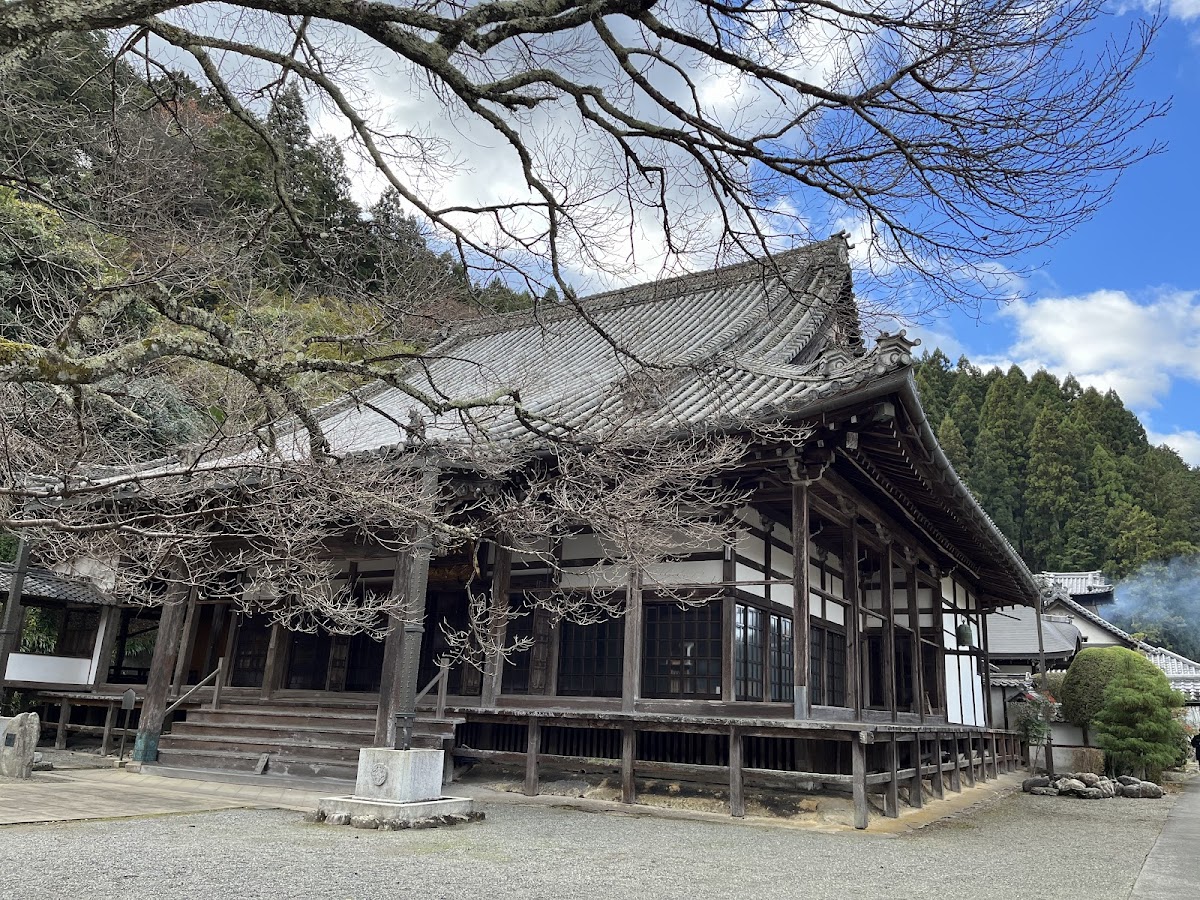
The Honzenji Temple Main Hall is a magnificent building standing in the center of the temple grounds at the foot of the mountain overlooking the south bank of the Yoshino River. It boasts a scale of 18 meters in length and 17 meters in width, with a hipped roof covered with traditional tiles and a one-bay portico at the front.
The building’s structure consists of an outer sanctuary, an inner sanctuary and side rooms, a sash room, and a rear hall, with wide verandas surrounding three sides of the outer sanctuary. The magnificent interior space exhibits a typical layout for a Jodo Shinshu Buddhist temple, yet showcases unique architectural ingenuity throughout.
The main hall is highly regarded as an excellent example of early modern Shinshu architecture and is recognized for its significant cultural value. Regular religious services are held within the hall, and it continues to function as a center of faith.
Onari Goten (Important Cultural Property)
The Honzenji Onari Goten is a dignified building connected to the south of the guest hall. Measuring 9.0 meters in length and 8.0 meters in width, it features a gabled roof on the north side and a hipped roof with tiled roofing on the south side.
The building consists of an eight-mat main room with an alcove, staggered shelves, and attached study, and a four-mat anteroom. A wide veranda surrounds the west and south sides, and a surrounding veranda. This Onari Goten, along with the main hall, is designated as an Important Cultural Property, representing a typical example of a reception space in an Edo-period Shinshu Buddhist temple.
The dignified tatami room decorations and refined designs speak to the high status of Honzenji Temple.
Cherry Blossoms on the Temple Grounds
Many cherry trees are planted on the grounds of Honzenji Temple, creating a magnificent cherry blossom landscape in spring. While the entire Yoshino Mountain area is known as a famous cherry blossom viewing spot, the cherry blossoms on Honzenji Temple’s grounds are also cherished by locals as a hidden gem.
Combined with its location overlooking the Yoshino River, many worshippers and tourists visit during cherry blossom season, bringing vibrancy to the otherwise quiet temple grounds. Located in the Shimosenbon area of Yoshino Mountain, many people visit as part of a cherry blossom tour of the entire Yoshino Mountain area.
Columbarium and Temple Facilities
Honzenji Temple also has a modern columbarium on its grounds. This facility is for parishioners and fulfills the function of a modern temple. The establishment of the columbarium allows Honzenji Temple to balance the preservation of historical cultural assets with its role as a modern religious facility.
In addition, the temple grounds include auxiliary buildings such as the priest’s quarters and bell tower, completing the functions of a temple.
Honzenji Temple and Yoshino Forestry
The founding of Honzenji Temple was rooted in the abundant forest resources of Yoshino. The fact that Rennyo Shonin focused on Yoshino timber for the construction of large temples such as Ishiyama Honganji demonstrates the importance of Yoshino forestry at the time.
Yoshino has long been known as a source of high-quality cedar and cypress, and this timber was indispensable for temple and shrine construction. It is believed that Honzenji Temple functioned as a hub for timber transportation, playing a role in transporting timber using the Yoshino River.
Based on this history, Honzenji Temple has been recognized as one of the cultural properties constituting the Japan Heritage site themed “The lives and hearts of people nurtured by and who nurtured the forest.” Its cultural value is recognized as a valuable example of the connection between temples, forestry, and the local community.
Cultural Property Designation of Honzenji Temple
Honzenji Temple is known as a temple possessing multiple important cultural properties. The main hall and the Imperial Palace are designated as National Important Cultural Properties and are highly regarded as excellent examples of early modern Shinshu Buddhist architecture.
These buildings represent the pinnacle of Edo period carpentry techniques and are valuable resources for understanding the development of Jodo Shinshu temple architecture. They are in good condition and, through regular repairs, retain their original appearance.
Furthermore, they are designated as a component cultural property of a Japan Heritage site, making them an indispensable part of understanding the region’s history and culture.
Visiting Information and Access
Location and Basic Information
Location: Iikai, Yoshino-cho, Yoshino-gun, Nara Prefecture
Sect: Jodo Shinshu Honganji-ha
Mountain Name: Rokuyuzan
Alternate Name: Iikai Gobo
Founded: Bunmei 8 (1476)
Founder: Rennyo Shonin
Access Method
The nearest station to Honzenji Temple is Yoshino Station on the Kintetsu Yoshino Line. Honzenji Temple is accessible on foot or by taxi from Yoshino Station. Located at the gateway to Mount Yoshino, it’s a convenient stop during Yoshino sightseeing.
If traveling by car, take National Route 169 and head towards the Iikai area of Yoshino Town. While there is parking available on the temple grounds for visitors, during peak seasons like cherry blossom season, it’s recommended to use nearby parking lots.
Notes for Visitors
Honzenji Temple is an active temple, with daily services and events. When visiting, it’s important to maintain a sense of tranquility and observe proper etiquette.
While cultural heritage buildings such as the main hall and the Onari Goten (Imperial Palace) are primarily viewed from the outside, the interiors may be opened to the public during special events. Please contact the temple directly for details.
Nearby Tourist Attractions
Honzenji Temple is conveniently located as a base for sightseeing in Mount Yoshino. It’s close to the Shimo-Senbon area of Mount Yoshino and is bustling with tourists during the spring cherry blossom season.
Nearby, you’ll find numerous sites that are part of the World Heritage Site “Sacred Sites and Pilgrimage Routes in the Kii Mountain Range,” such as Kinpusen-ji Temple and Yoshimizu Shrine, allowing you to fully appreciate the history and culture of Yoshino. You can also enjoy the scenic beauty along the Yoshino River.
Gangyo-ji Temple (Shimoichi Gobo) in Shimoichi Town is also a temple associated with Rennyo Shonin, and visiting both will give you a deeper understanding of the history of Jodo Shinshu Buddhism in the Yoshino region.
Annual Events at Honzen-ji Temple
As a temple of the Jodo Shinshu Honganji sect, Honzen-ji Temple holds various memorial services and events throughout the year. In particular, the Hoonko (memorial service on the anniversary of Shinran Shonin’s death) and memorial services commemorating Rennyo Shonin are important events for Honzen-ji Temple.
In the spring cherry blossom season, events such as the Hana Matsuri (Flower Festival) are held, attracting local residents and worshippers. These events demonstrate the strong connection between the temple and the local community, illustrating that Honzenji Temple remains a vibrant place of faith even today.
Summary
Honzenji Temple (Igai Gobo) is an ancient temple of the Jodo Shinshu Honganji sect, founded by Rennyo Shonin in 1476. Its mountain name is Rokuyuzan, and it played a crucial role as a center of the Ikko-shu sect in Yoshino from the medieval to the early modern period.
Within the temple grounds remain the main hall and the Onari Goten, both designated as Important Cultural Properties, and are highly regarded as excellent examples of early modern Shinshu architecture. Furthermore, it has a history deeply intertwined with Yoshino’s forestry industry and is recognized as a component cultural property of a Japan Heritage site.
In spring, the cherry blossoms on the temple grounds bloom beautifully, making it a hidden gem among Yoshino Mountain tourists. With its harmonious blend of history, culture, and nature, Honzenji Temple is a temple you should definitely visit when exploring Yoshino.
Located in Iikai, Yoshino-cho, Yoshino-gun, Nara Prefecture, and easily accessible from the gateway to Mount Yoshino, Honzenji Temple stands out as a special place in the journey of those who follow in the footsteps of Rennyo Shonin and experience the history and culture of Yoshino.