Motoyama-ji Temple Complete Guide | A Thorough Explanation of Famous Temples in Kagawa, Okayama, and Osaka [2025 Latest Edition]
There are several temples named “Motoyama-ji” throughout Japan. Among them, the most famous are Motoyama-ji in Mitoyo City, Kagawa Prefecture (known as the 70th temple of the Shikoku 88 Temple Pilgrimage), Motoyama-ji in Okayama Prefecture (the 1st temple of the Mimasaka Saigoku 33 Kannon Pilgrimage), and the Tendai sect Motoyama-ji in Takatsuki City, Osaka Prefecture. This article provides a detailed explanation of these Motoyama-ji temples, including their history, cultural assets, points of interest, and access information.
Motoyama-ji Temple in Mitoyo City, Kagawa Prefecture (70th Temple of the Shikoku 88 Temple Pilgrimage)
Basic Information and Overview
Motoyama-ji Temple, located at 1445 Motoyama-ko, Toyonaka-cho, Mitoyo City, Kagawa Prefecture, is a Koyasan Shingon sect temple known as Shichihōzan Jihōin. The principal image is Hayagriva Bodhisattva (a hidden Buddha), and as the 70th temple of the Shikoku 88 Temple Pilgrimage and the 29th temple of the Shikoku 36 Fudo Pilgrimage, it attracts many pilgrims.
Its most distinctive feature is that the main hall, rebuilt during the Kamakura period, is designated a National Treasure. It is known as a temple possessing particularly valuable cultural assets among the Shikoku pilgrimage sites.
Founding and History
It is said that Honzanji Temple was founded in 807 by Kobo Daishi (Kukai) at the behest of Emperor Heizei. Initially, it was called “Chofukuji.” According to legend, the main hall was built by Kobo Daishi in a short period of time, about one night, and is therefore also known as the “Main Hall Built in One Night.”
Subsequently, from the late Heian period to the Kamakura period, the temple flourished. The current main hall was rebuilt in 1300 (Shoan 2), and it is a valuable historical structure that preserves the architectural style of that time.
During the Edo period, the temple received fervent devotion from successive lords of the Takamatsu domain, who guaranteed its land holdings and carried out repairs to its buildings. To this day, it continues to function as an important pilgrimage site on the Shikoku Pilgrimage and as a center of faith in the region.
Architectural Value of the National Treasure Main Hall
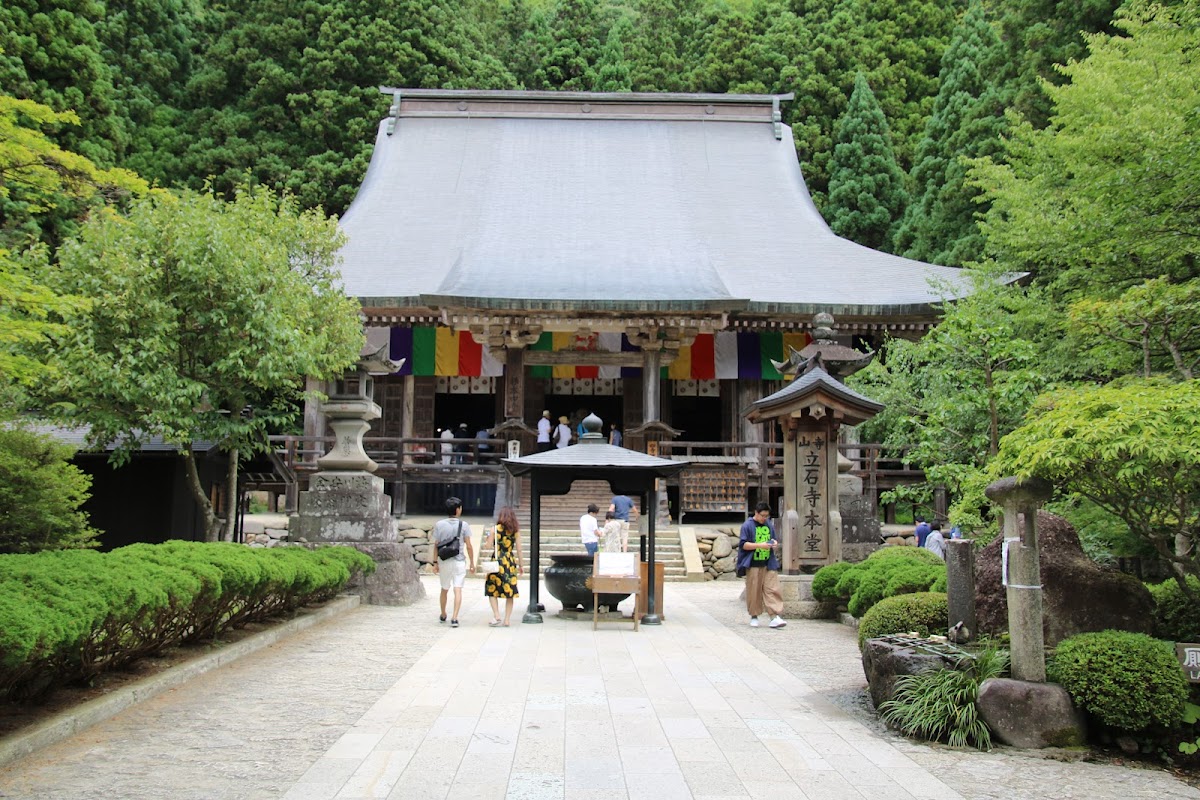
The main hall of Honzanji Temple is the only National Treasure building on the Shikoku Pilgrimage. It is a single-story, hip-and-gable roofed building with a tiled roof, strongly retaining the architectural style of the Kamakura period, and boasts an impressive size of five bays on the front and six bays on the sides.
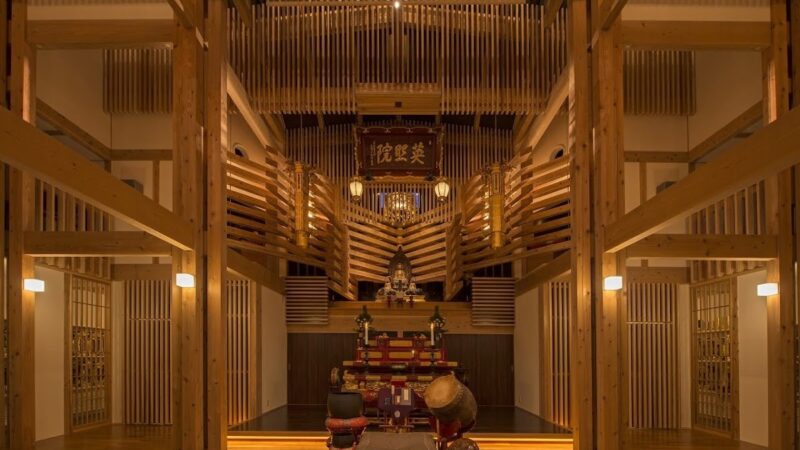
Architecturally, it exhibits a hybrid style of Daibutsu-yo (Great Buddha style) and Japanese style. The powerful brackets and thick pillars show the influence of Daibutsu-yo, making it a masterpiece that embodies the pinnacle of Kamakura period architectural technology. The main image, a Hayagriva Bodhisattva, is enshrined in a shrine inside the temple, and its solemn atmosphere captivates visitors.
In 1955 (Showa 30), a large-scale dismantling and repair was carried out, restoring the building to its original appearance. This repair scientifically clarified the building’s structure and construction date, further enhancing its value as a cultural property.
Main Image: Hayagriva Bodhisattva and the Unveiling of the Hidden Image
The Hayagriva Bodhisattva, the main image of Honzanji Temple, is strictly protected as a hidden image. Hayagriva Bodhisattva is one of the Six Kannon, a Kannon with a horse’s head and a wrathful expression. It has been worshipped especially for saving sentient beings lost in the animal realm, and also as a guardian deity of horses and other livestock.
While the main image, being a hidden image, is not usually open to the public, it is unveiled at a specific time each year. During these unveilings, many believers and visitors come, offering a precious opportunity to pay their respects directly to the main image. It is recommended to inquire with the temple in advance regarding the unveiling dates. ### Highlights and Cultural Assets within the Temple Grounds
Besides the National Treasure Main Hall, there are many other points of interest within the grounds of Honzanji Temple.
The Niomon Gate is an Edo period building, and powerful Nio statues welcome visitors. These Nio statues are also preserved as important cultural assets.
The Five-Storied Pagoda was destroyed by fire during the Meiji era, but its foundation stones still remain on the grounds, evoking the grandeur of the former temple complex.
The Daishido Hall houses a statue of Kobo Daishi and is an important hall that pilgrims always visit. Furthermore, ancient trees hundreds of years old are scattered throughout the grounds, creating a tranquil atmosphere.
The Bell Tower and Nokyosho (Temple Nosho Office) are also historical buildings, and the entire grounds convey the appearance of a temple that has continued since the Edo period.
Shikoku Pilgrimage and Honzanji Temple
Honzanji Temple, the 70th temple on the Shikoku Pilgrimage, is located in Sanuki (Kagawa Prefecture), the “Nirvana Training Ground” of the Shikoku Pilgrimage. It’s relatively easy to access, approximately 5km from the previous temple, Kannonji (No. 69), and approximately 4km from the next temple, Miyataniji (No. 71).
Along the pilgrimage route, the legend of the “Main Hall Built Overnight” and anecdotes of Kobo Daishi’s ascetic training at this site are passed down. Many pilgrims continue their journey, feeling the solemnity and historical weight of the National Treasure main hall before them.
At the temple office, you can receive Goshuin (temple stamps) and images, and pilgrimage supplies are also sold. It’s a warm and welcoming temple that provides courteous service to both novice and experienced pilgrims.
Access Information and Parking
Access by Train
- Approximately 15 minutes by car from JR Yosan Line “Kannonji Station”
- Approximately 20 minutes by car from Takamatsu Expressway “Mitoyo Torisaka IC”
Access by Car
- Approximately 15 km from Takamatsu Expressway “Mitoyo Torisaka IC” via National Route 11
- Parking: Free parking available on the temple grounds (approximately 30 spaces for regular cars)
Access by Bus
- Immediately after alighting at “Motoyama-ji-mae” bus stop from Kannonji Station
The parking lot is adjacent to the temple grounds and can accommodate large buses. It can get crowded during pilgrimage season and on holidays, so early arrival is recommended.
Visiting Information
- Visiting Hours: 7:00 AM – 5:00 PM (May vary depending on the season)
- Admission Fee: Free entry to the temple grounds (Donation required for viewing the interior of the main hall)
- Sutra Copying Hours: 7:00 AM – 5:00 PM
- Phone Number: 0875-62-2007
- Address: 1445 Motoyama-ko, Toyonaka-cho, Mitoyo City, Kagawa Prefecture 769-1506
Motoyama-ji Temple in Okayama Prefecture (No. 1 of the Mimasaka Saigoku 33 Kannon Pilgrimage)
Overview of Iwama-san Motoyama-ji Temple
Motoyama-ji Temple, located in Okayama Prefecture, is known as Iwama-san Motoyama-ji and is the No. 1 pilgrimage site of the Mimasaka Saigoku 33 Kannon Pilgrimage. The principal image is Kannon Bodhisattva, and it has been revered since ancient times as a training ground for mountain Buddhism and a sacred site of popular faith. ### Founding and History
Honzanji Temple is said to have been founded in 701 AD (Taihō 1) by the monk Raikan. It is a temple with a very long history dating back to the early Nara period, and it functioned as a place for mountain asceticism from that time.
During the Heian period, it developed as a training ground for mountain Buddhism, attracting many ascetic monks. Despite the effects of warfare during the medieval period, it continued to exist as a center of local faith.
During the Edo period, it received patronage from the lord of the Tsuyama domain, and the temple buildings were improved. Many of the current buildings were rebuilt during the Edo period, preserving the architectural style of that time.
Role as a Kannon Pilgrimage Site
As the first temple on the Mimasaka Saigoku 33 Kannon Pilgrimage, Honzanji Temple is an important temple serving as the starting point for pilgrimages. As a center of Kannon worship, it attracts many worshippers every year, and grand memorial services are held, especially on Kannon’s festival days.
The principal image, Kannon Bodhisattva, is revered as a compassionate Buddha who saves people from all suffering, and is particularly known for attracting many worshippers praying for recovery from illness and family safety.
Access and Visiting Information
For access and detailed visiting information for Honzanji Temple in Okayama Prefecture, we recommend referring to the Okayama Tourism WEB or the local tourism association. Due to its mountainous location, access by car is recommended.
Honzanji Temple (Tendai Sect) in Takatsuki City, Osaka Prefecture
Mountain Temple in the Northern Suburbs of Takatsuki
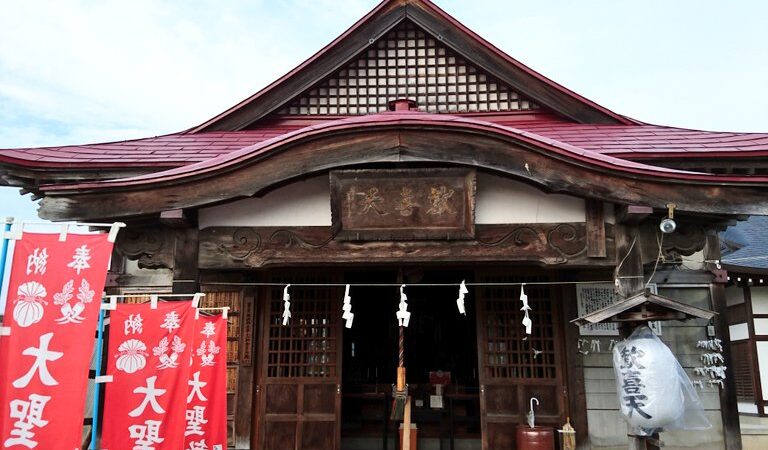
Honzanji Temple, located at 1-1-19 Okutenjincho, Takatsuki City, Osaka Prefecture, is a Tendai sect mountain temple. Nestled in a quiet mountainous area in the northern suburbs of Takatsuki, it is an ancient temple with a history as a sacred site of Shugendo (mountain asceticism).
Founding Legends and History
Honzanji Temple is said to have been founded by En no Ozunu, considered the founder of Shugendo (mountain asceticism), and later, around 770, it was established by Prince Kaijo, the elder brother of Emperor Kanmu and son of Emperor Konin.
With a long history dating from the late Nara period to the early Heian period, it initially functioned as a training ground for mountain asceticism. During the Heian period, it developed as a Tendai sect temple, attracting many monks for training.
During the Sengoku period (Warring States period), it received the patronage of the warlords who ruled the region. Matsunaga Hisahide donated land, and warlords such as Miyoshi Nagayoshi and Takayama Tomoteru and Ukon (father and son) issued letters of assurance regarding the temple’s land holdings. Takayama Ukon, in particular, is known as a devout Christian daimyo, and records show that he also provided protection to Honzanji Temple.
During the Edo period, it attracted many pilgrims as a temple in the Kyoto and Osaka area. Even today, it plays an important role as a center of local faith and as a temple that protects historical cultural assets.
Important Cultural Properties and Temple Treasures
Honzanji Temple in Takatsuki City is known for possessing many nationally designated important cultural properties.
The Wooden Standing Statue of Bishamonten and the Wooden Standing Statue of Sho Kannon were designated as National Important Cultural Properties in August 1950. These Buddhist statues are believed to be from the Heian period and are highly valued for their elegant form and exquisite carving techniques.
The Wooden Standing Statue of Fudo Myoo was designated as a Takatsuki City Tangible Cultural Property in October 1998. It is a distinctive work characterized by its powerful, wrathful expression and dynamic posture.
The two volumes of the Motoyama-ji Temple Documents were designated as a city tangible cultural property in March 1974, and are valuable historical materials for understanding the temple’s history and the local history from the medieval to early modern periods.
The Stone Hōkyōintō Pagoda was designated as an Osaka Prefecture tangible cultural property in August 1978. This stone pagoda retains the style of the Kamakura period and is an important historical site demonstrating the level of stonework technology at that time.
These cultural properties may be viewable during special public viewings or by prior reservation. Please contact the temple directly for details.
Atmosphere and Highlights of the Temple Grounds
Motoyama-ji Temple in Takatsuki City is a charming temple nestled in a quiet mountain area. The temple grounds are surrounded by deep greenery, maintaining a tranquil atmosphere despite its proximity to the city.
The main hall retains the architectural style of the Edo period and is characterized by its imposing construction. Ancient stone Buddha statues and pagodas are scattered throughout the grounds, evoking a long history.
Especially during the autumn foliage season, the temple grounds are beautifully colored, attracting many worshippers and tourists. In spring, cherry blossoms can be enjoyed, making it a temple where you can appreciate the beauty of nature throughout the seasons.
Access and Visiting Information
Access by Train/Bus
- Take the city bus bound for “Okutenjin” from JR Takatsuki Station or Hankyu Takatsuki-shi Station, get off at the last stop and walk for about 10 minutes.
Access by Car
- Approximately 30 minutes from the Meishin Expressway “Ibaraki IC”
- Parking: Parking space available on the temple grounds (limited number of spaces)
Visiting Information
- Address: 1-1-19 Okutenjin-cho, Takatsuki City, Osaka Prefecture 569-1051
- Visiting Hours: 9:00 AM – 5:00 PM (Please confirm)
- Admission Fee: Free for the temple grounds (Separate fee for special viewing of cultural properties)
- Phone Number: 072-688-0329 (Please confirm)
If you wish to view cultural properties, it is recommended that you confirm and make a reservation by phone in advance.
A Guide to Visiting Motoyama-ji Temples
Characteristics of Each Motoyama-ji Temple
While there are several Motoyama-ji temples throughout Japan, each possesses its own unique characteristics and charm.
Motoyama-ji Temple in Mitoyo City, Kagawa Prefecture is a highly valuable temple, both in terms of its architectural heritage and pilgrimage culture, as an important pilgrimage site on the Shikoku Pilgrimage, boasting a National Treasure main hall.
Motoyama-ji Temple in Okayama Prefecture is the first of the Kannon pilgrimage sites in the Mimasaka region, playing a central role in local faith. It is a valuable temple that preserves the tradition of mountain Buddhism.
Motoyama-ji Temple in Takatsuki City, Osaka Prefecture is a temple with a rich history of Shugendo (mountain asceticism) and numerous important cultural properties, offering a deep historical and cultural experience despite its proximity to the city.
How to Enjoy Pilgrimage and Sightseeing
When visiting Motoyama-ji temples, researching the historical background and cultural properties of each temple beforehand will lead to a deeper understanding and greater appreciation.
Those planning a pilgrimage to Shikoku are advised to take time to appreciate the national treasure architecture at Honzanji Temple in Kagawa Prefecture. Those interested in the Saigoku pilgrimage or regional pilgrimages should also consider visiting Honzanji Temples in Okayama and Osaka.
Each temple displays a different face depending on the season. You can enjoy the beauty of each season: cherry blossoms in spring, fresh greenery in summer, autumn leaves, and the tranquility of winter.
Manners and Precautions for Visiting Temples
When visiting temples, please observe the following manners.
- Behave quietly within the temple grounds and avoid disturbing other visitors.
- Take photographs only in designated areas (photography is often prohibited inside the main hall).
- Do not directly touch the principal image or cultural artifacts.
- When receiving sutra copying or temple stamps, be respectful.
- Always take your trash with you from the parking lot and temple grounds.
- Choose clothing that is not too flashy.
It is recommended to check the official website or call each temple in advance for information on the unveiling of hidden Buddha images or special exhibitions.
Summary: The Diverse Charms of Honzanji Temples
Temples bearing the name “Honzanji” exist throughout Japan, each with its own history and characteristics. These include Honzanji Temple in Mitoyo City, Kagawa Prefecture, a Shikoku Pilgrimage site with a National Treasure main hall; Honzanji Temple in Okayama Prefecture, the first temple of the Mimasaka Saigoku Pilgrimage; and Honzanji Temple in Takatsuki City, Osaka Prefecture, a Tendai sect temple housing numerous important cultural properties.
All of these Honzanji temples have supported local faith and protected valuable cultural assets throughout their long histories. Even today, many worshippers and tourists visit these temples to experience their historical and cultural value.
Visiting Honzanji Temple is not merely sightseeing; it’s a valuable opportunity to connect with Japanese Buddhist culture and local history. We encourage you to experience the unique charm of each Honzanji Temple firsthand.
When planning your pilgrimage or sightseeing, we recommend referring to official information from each temple and local tourism associations, and allowing ample time for your visit. Find peace of mind in the tranquil temple grounds and fully appreciate the weight of history and the beauty of the cultural treasures.