Complete Guide to Iwakiyama Shrine | 1200 Years of History, Benefits, and Visiting Information at the Sacred Peak of Tsugaru
Iwakiyama Shrine, located at the foot of Mount Iwaki in Hirosaki City, Aomori Prefecture, is a venerable shrine with over 1200 years of history, affectionately known as “Oiwa-sama” or “Oyama” by locals. Nestled in the embrace of the majestic Mount Iwaki, also known as Tsugaru Fuji, this shrine has long been revered as the Ichinomiya (first-ranked shrine) of Tsugaru Province and a guardian deity of the northern gate.
This article comprehensively covers everything you need to know before visiting Iwakiyama Shrine, including its history, benefits, highlights, traditional events such as the Oyama pilgrimage, and access information.
About Iwaki-yama Shrine | The Center of Tsugaru Faith
Iwaki-yama Shrine is located at 27 Terazawa, Hyakusawa, Hirosaki City, Aomori Prefecture. It sits at an altitude of approximately 200 meters on the southeastern foot of Mount Iwaki (1,625 meters above sea level). Formerly a national shrine of the lower rank, it is a highly prestigious shrine considered the Ichinomiya (first-ranked shrine) of Tsugaru Province.
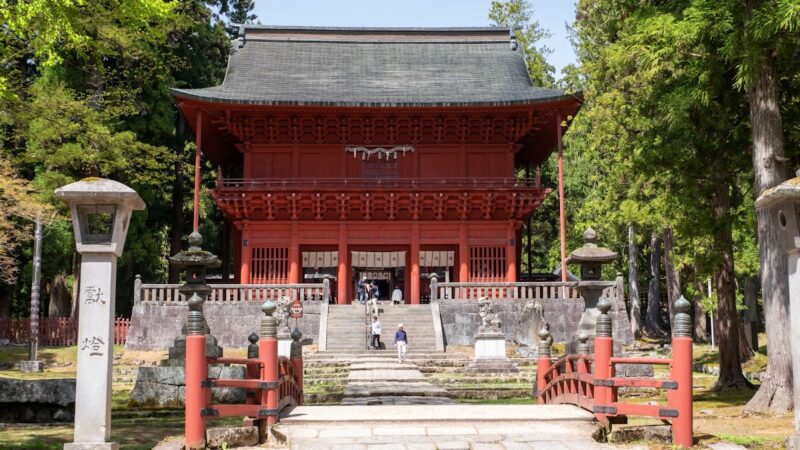
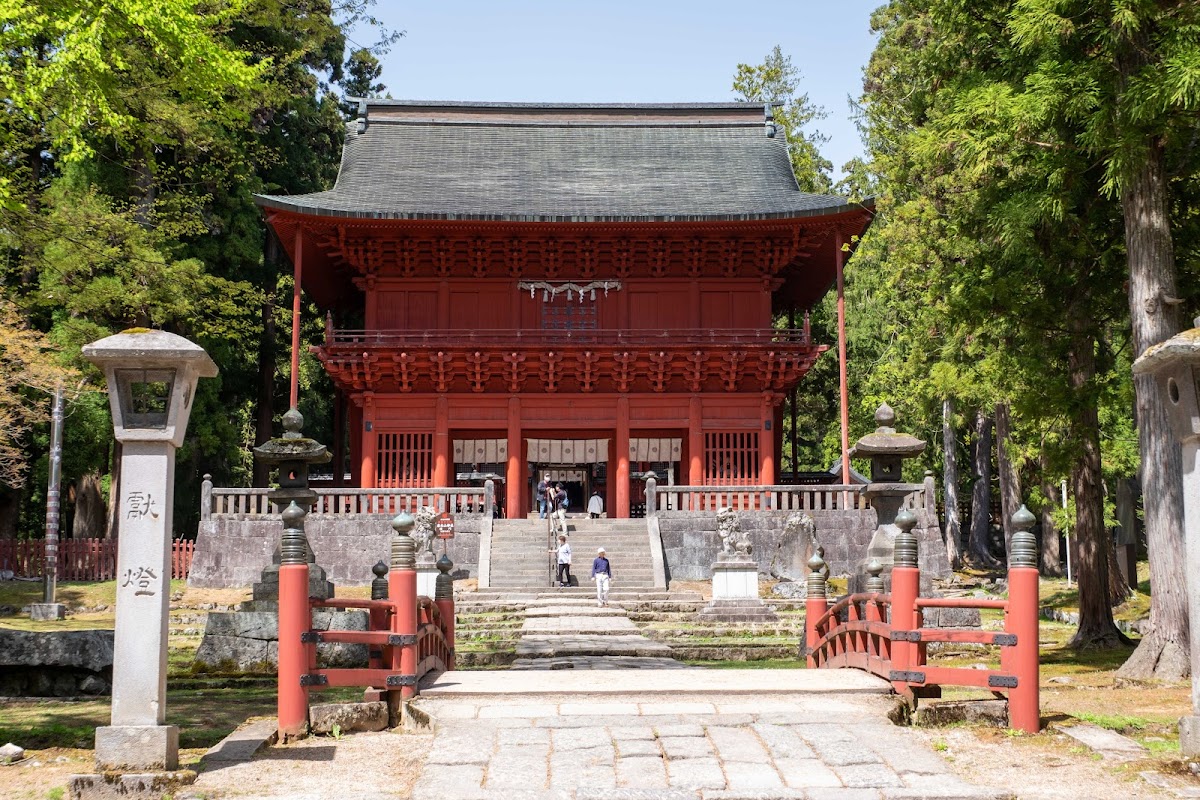
Its imposing beauty is widely known, earning it the nickname “Oku-Nikko” (Inner Nikko). The harmony between the cedar grove and the buildings creates a magnificent landscape. As the northernmost guardian shrine of Honshu, the structures, built using locally sourced cypress wood, have withstood the elements for over 390 years.
Deities and Faith
The following deities are enshrined at Iwaki-yama Shrine:
- Utsushikunitama-no-kami: Another name for Ōkuninushi-no-mikoto
- Tatsuhihime-no-kami: One of the three Munakata goddesses
- Ukanome-no-kami: Goddess of food and grains
- Ōyamatsumi-no-kami: God of mountains
- Sakanoue-no-Karitamaro-no-mikoto: Descendant of Sakanoue-no-Tamuramaro, the Shogun
These deities are revered as protectors of all aspects of people’s lives, including agriculture, fishing, commerce, medicine, and transportation. They are particularly known as gods of good fortune and have recently gained attention as power spots.
History of Iwakiyama Shrine | Over 1200 Years of History
Founding and Origins
The founding of Iwakiyama Shrine dates back to 780 AD (Hoki 11). It is believed that the construction of a shrine building on the summit of Mount Iwaki in that year marked its origin. Mount Iwaki, a sacred and divine mountain, has been revered as the god of development in Mutsu-Tsugaru, the guardian deity of agricultural and marine products, and the dwelling place of ancestral spirits.
Mount Iwaki, visible from all over Tsugaru, has bestowed the virtue of compassion upon the people and has been a cornerstone of local life and spiritual support. As an ancient shrine originating from mountain worship, Mount Iwaki itself is an object of worship, and the inner shrine is located at the summit.
From the Medieval to the Early Modern Period
During the medieval period, the shrine developed under the patronage of the rulers of the Tsugaru region. Especially after the Tsugaru clan established the Hirosaki Domain, the shrine received deep reverence from successive feudal lords, and the shrine buildings were constructed and repaired.
The existing shrine buildings were built by the Hirosaki feudal lords from the early to mid-Edo period, and many of them are designated as National Important Cultural Properties.
Modern Era
With the Meiji-era separation of Shinto and Buddhism, Iwaki-yama Shrine, which had previously been a syncretic Shinto-Buddhist shrine, was reorganized as a purely Shinto shrine. In 1871 (Meiji 4), it was ranked as a National Shrine of the lower rank, establishing its status as the Ichinomiya (first-ranked shrine) of Tsugaru Province.
Even today, as a renowned shrine protecting the northern gate, its reverence extends not only within Aomori Prefecture but throughout Japan.
National Important Cultural Property Shrine Buildings | Highlights and Architectural Beauty
The greatest highlight of Iwaki-yama Shrine is the group of shrine buildings designated as National Important Cultural Properties. Six buildings—the Tower Gate, Worship Hall, Main Shrine, Inner Gate, Mizugaki Fence, and Middle Gate—have been designated as Important Cultural Properties, showcasing the pinnacle of Edo period architecture.
Tower Gate (Important Cultural Property)
The first thing you encounter as you proceed along the approach to the shrine is the Tower Gate, built in 1628. This magnificent gate, with its three bays and single entrance, features a hipped roof and copper tile roofing, with striking vermilion pillars and intricate carvings. Hanging lanterns adorn the upper level, creating a solemn atmosphere.
Worship Hall (Important Cultural Property)
After passing through the Tower Gate, the Worship Hall, built in 1640, comes into view. It is a five-bay, three-bay hipped roof structure with a portico at the front. The interior’s coffered ceiling and carved decorations strongly reflect the style of the early Edo period.
Main Shrine (Important Cultural Property)
Built in 1694 (Genroku 7), the main shrine is a three-bay, flowing-style building with a copper tile roof. Located behind the worship hall, its exquisite carvings and the beauty of its vermilion paint are striking. Its magnificent and opulent construction speaks to the wealth and faith of the Hirosaki domain.
Middle Gate, Inner Gate, and Mizugaki (Important Cultural Property)
The middle gate, inner gate, and mizugaki (sacred fence) surrounding the main shrine were also built in 1694. These, together with the main shrine, form a unified space, enhancing the sacredness of the precincts.
Approach and Torii Gates
The approach leading to the shrine is lined with towering cedar trees on both sides, creating a solemn atmosphere. Multiple torii gates stand along the approach, guiding visitors step by step into the sacred precincts. The harmony between the cedar grove and the buildings is particularly beautiful, befitting its nickname, “Oku-Nikko” (Inner Nikko).
Oyama Sankei | A Traditional Tsugaru Event
An essential part of discussing Iwaki-san Shrine is the “Oyama Sankei” (mountain pilgrimage), held annually on the first day of the eighth month of the lunar calendar (currently early September). This event is the largest folk event in the Tsugaru region, praying for a bountiful harvest and family safety, and is designated as an Intangible Folk Cultural Property of Aomori Prefecture.
History and Significance of Oyama Sankei
The origins of Oyama Sankei are ancient and deeply intertwined with the worship of Mount Iwaki. The people of Tsugaru have sought divine protection and communicated with their ancestors by climbing Mount Iwaki, a sacred mountain.
Participants, clad in white robes, ascend from Iwaki-san Shrine to the inner sanctuary at the summit, chanting “Saigi Saigi” and playing mountain climbing music. This scene has become a quintessential symbol of the end of summer in Tsugaru.
The Mountain Pilgrimage in the Reiwa Era
The current mountain pilgrimage takes place over three days.
- Mukaiyama: The first day, when participants depart from each district to Iwakiyama Shrine.
- Yoiyama: The second day, when the eve festival is held at Iwakiyama Shrine.
- Tsuitachiyama: The third day, when participants climb to the inner shrine at the summit.
For the latest information, including the schedule for the 2026 mountain pilgrimage, please check the official website of Iwakiyama Shrine. A mountain music competition is also held, where music groups from each district compete.
Blessings and Power Spot
Iwakiyama Shrine is believed to offer various blessings and is known as a power spot.
Main Benefits
- Good Fortune and Prosperity: Particularly famous as a god of good fortune and prosperity.
- Abundant Harvest: Worshipped since ancient times as a guardian deity of agriculture.
- Business Prosperity: Prayers for the development of commerce and industry.
- Family Safety: Protection of family health and safety.
- Traffic Safety: Watching over safe travels.
- Healing from Illness: Also has aspects as a god of medicine.
Attractiveness as a Power Spot
The spiritual energy of Mount Iwaki itself, combined with the prayers of people spanning over 1200 years, makes it a powerful power spot. The following points, in particular, are noteworthy:
- Legend of the Dragon God: Legend says that a dragon god resides on Mount Iwaki, bringing blessings of water and abundant harvests.
- Sacred Site of Mountain Worship: Known as a training ground for Shugendo practitioners, it possesses strong spiritual energy.
- Power of Nature: Surrounded by cedar groves, the shrine grounds are filled with negative ions, purifying the mind and body.
Points to Note and Shrine Grounds Guide
Etiquette for Worship
When visiting Iwakiyama Shrine, please observe the following etiquette.
- Bow at the Torii Gate: Bow before passing through the torii gate to signal entry into the sacred area.
- Walking the Path: The center of the path is considered the path of the gods, so walk along the sides.
- Purification at the Water Basin: Purify your hands and mouth before praying.
- Two Bows, Two Claps, One Bow: In front of the main hall, bow twice, clap twice, and finally bow once.
Highlights of the Shrine Grounds
- Komainu (Guardian Dogs): The guardian dogs in front of the gate tower are known for their unusual upward-facing posture.
- Spirits of Anju and Zushiō: The spirits of Princess Anju and Zushiō, known from the Buddhist narrative ballad “Sanshō Dayū,” are also enshrined on the grounds.
- Sacred Trees: Giant cedar trees, hundreds of years old, stand in rows.
- Shrine Office: Goshuin (stamped seals) and amulets are available here.
Goshuin (Shrine Seal) and Amulets
At Iwaki-san Shrine, you can receive a Goshuin as a memento of your visit. Various amulets are also available, allowing you to choose according to your purpose, such as good fortune, traffic safety, or academic success.
Access to Iwaki-san Shrine
Location
Address: 27 Terasawa, Hyakusawa, Hirosaki City, Aomori Prefecture
Phone: 0172-83-2135
Access by Car
- From Owani-Hirosaki IC on the Tohoku Expressway: Approximately 40 minutes
- From Hirosaki City Center: Approximately 30 minutes
- Parking: Free parking available (approximately 200 regular cars)
The road leading to the foot of Mt. Iwaki offers spectacular views, especially during the autumn foliage season and snowy season. However, in winter, snow tires or chains are necessary due to snow accumulation.
Access by Public Transportation
- From JR Hirosaki Station: Take the Konan Bus bound for “Karekihira” and get off at “Iwakiyama Shrine” (approximately 40 minutes).
- Bus Frequency: Since the number of buses is limited, it is recommended to check the timetable in advance.
Visiting Hours
- Free Visiting: The shrine grounds are generally open for free worship.
- Shrine Office: 8:30 AM to 5:00 PM (may vary depending on the season).
Nearby Tourist Attractions
When visiting Iwakiyama Shrine, it is recommended to also visit nearby tourist attractions.
Mount Iwaki
Mount Iwaki, affectionately known as “Tsugaru Fuji,” is a popular spot for mountain climbing and hiking. You can access the 8th station by car via the Skyline, and take a lift to the 9th station. From the summit, you can enjoy spectacular views of the Tsugaru Plain and the Sea of Japan.
Hyakusawa Hot Spring Village
The Hyakusawa Hot Spring Village stretches around Iwakiyama Shrine. Known since ancient times as a therapeutic hot spring resort, it has also been used as a place to cleanse oneself after climbing Mount Iwaki.
Hirosaki City
Hirosaki City, with its castle town atmosphere, samurai residences, and Western-style buildings, is about a 30-minute drive away. The Hirosaki Cherry Blossom Festival in spring is particularly famous nationwide.
Iwakiyama Shrine in Every Season
Iwakiyama Shrine displays different expressions in each of the four seasons.
Spring (April-June)
As the snow melts, the trees in the shrine grounds begin to bud. The vermilion-lacquered shrine buildings amidst the fresh greenery are a beauty full of vitality.
Summer (July-September)
The shrine grounds, enveloped in deep green, are filled with cool air. The mountain pilgrimage in early September is a major event marking the end of summer.
Autumn (October-November)
The autumn foliage season is one of the most beautiful times to visit Iwaki-yama Shrine. The contrast between the green of the cedar groves and the red and yellow of the autumn leaves is magnificent.
Winter (December-March)
The shrine grounds, covered in snow, are enveloped in silence. The vermilion-painted shrine buildings stand out against the silvery world, creating a fantastical landscape. However, due to the snow, adequate equipment is necessary for visiting.
Cultural Properties and Preservation Activities of Iwaki-yama Shrine
The shrine buildings of Iwaki-yama Shrine are strictly preserved and managed as important national cultural properties. Regular restoration work is carried out, and efforts continue to pass on the architectural techniques and beauty of the Edo period to future generations.
The six buildings—the main hall, worship hall, tower gate, inner gate, sacred fence, and middle gate—were all constructed from the early to mid-Edo period, and are valuable resources for understanding the architectural style and decorative techniques of that time.
Prayers and Festivals at Iwakiyama Shrine
Iwakiyama Shrine holds various festivals throughout the year.
Main Annual Events
- New Year’s Festival (January 1st): A festival celebrating the New Year
- Spring Grand Festival (May): A prayer for a bountiful spring harvest
- Mountain Pilgrimage (Early September): Tsugaru’s largest folk event
- Autumn Grand Festival (October): A festival of gratitude for the harvest
Prayers and Supplications
The shrine office accepts various prayers and supplications.
- Family Safety
- Business Prosperity
- Traffic Safety
- Protection from Evil
- Prayer for Success in Exams
- Prayer for Safe Childbirth
We recommend making a reservation by phone in advance.
Summary | The Charm of Iwakiyama Shrine
Iwakiyama Shrine is a center of Tsugaru faith with a history of over 1200 years. It is a shrine with multifaceted value, boasting a group of shrine buildings designated as important national cultural properties, the tradition of mountain pilgrimages, and its appeal as a power spot.
The majestic shrine buildings standing at the foot of Mount Iwaki, also known as Tsugaru Fuji, the approach to the shrine surrounded by cedar groves, and the thriving tradition of mountain worship deeply move visitors. When you visit Aomori Prefecture, be sure to visit Iwakiyama Shrine and experience the world of faith that the people of Tsugaru have preserved for generations.
This shrine, affectionately known as “Oiwa-sama” or “Oyama,” will surely leave a special memory in your heart. The beauty of the four seasons, the solemn atmosphere, and the power of the sacred mountain warmly welcome visitors.