Complete Guide to Chichibu Shrine | The Charm and Visiting Information of Chichibu’s Guardian Shrine with a 2100-Year History
Chichibu Shrine is a venerable shrine with a history of over 2100 years, located in the central part of Chichibu City, Saitama Prefecture. Along with Mitsumine Shrine and Hodosan Shrine, it is counted as one of the “Three Shrines of Chichibu” and has been revered by the local people as the guardian shrine of the Chichibu region since ancient times. The “Chichibu Night Festival,” held every December, is one of Japan’s three major float festivals and is registered as a UNESCO Intangible Cultural Heritage.
This article comprehensively introduces information you should know before visiting Chichibu Shrine, including its history, enshrined deities, highlights, visiting information, and surrounding tourist spots.
History and Origins of Chichibu Shrine
A Long and Eternal History of Over 2100 Years
According to the early Heian period text “Sendai Kujiki – Kokuzō Honki,” the founding of Chichibu Shrine dates back to the reign of the tenth Emperor Sujin. It is said that the shrine originated when Chichibuhiko-no-mikoto, a tenth-generation descendant of Yagokoro-omoikane-no-mikoto, who was appointed as the first governor of Chichibu Province, enshrined his ancestral deity.
As the central shrine of Chichibu Province, which flourished even before the establishment of Musashi Province, it has played a central role in the faith of the Chichibu region. As a Shikinaisha (a shrine listed in the Engishiki), the fourth-ranked shrine of Musashi Province, and the Ichinomiya (first-ranked shrine) of Chichibu Province, it is a highly prestigious shrine that has attracted the faith of many people throughout its long history.
Tokugawa Ieyasu and Chichibu Shrine
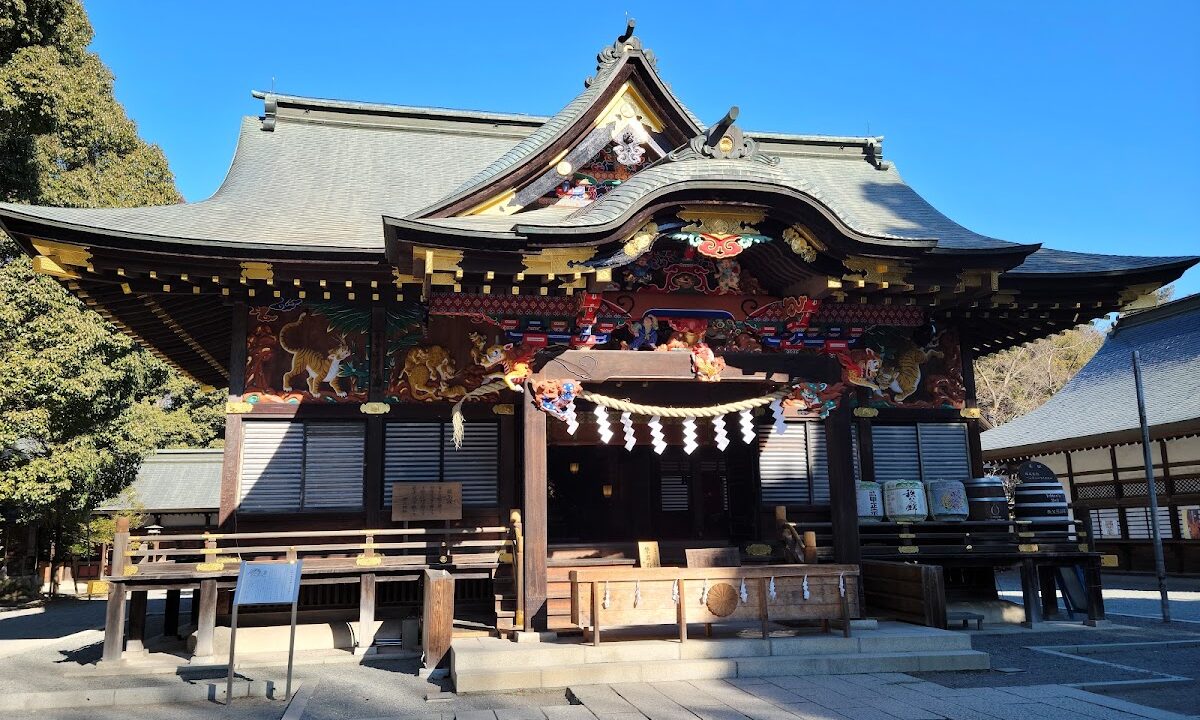
The current shrine building was donated by Tokugawa Ieyasu in 1592. This shrine building is designated as an important cultural property of Saitama Prefecture and is highly valued as a valuable structure that strongly retains the architectural style of the early Edo period. Its Gongen-zukuri style and majestic appearance, adorned with vividly colored carvings, continue to fascinate visitors. ## Deities and Benefits
The Four Deities Enshrined
Chichibu Shrine enshrines the following four deities:
Yagokoro-Omoikane-no-Mikoto
The principal deity, known as the god of wisdom. This deity is said to have given Amaterasu-Omikami the wisdom to open the Amano-Iwato cave when she hid there. He is believed to grant blessings for academic success, passing exams, and business prosperity, attracting the faith of students and business owners.
Chichibu-hiko-no-Mikoto
The provincial governor of Chichibu Province who was involved in the founding of Chichibu Shrine, and is considered the ancestral deity of the Chichibu region’s development.
Amenominakanushi-no-Kami
The primordial deity of the universe, worshipped as the god of the North Star. The connection between Chichibu Shrine and Myoken worship stems from the existence of this deity:
Prince Chichibu Yasuhito
He was the younger brother of Emperor Showa and, as a prince bearing the name Chichibu, had deep ties to the region.
Expected Benefits
- Academic Success/Prayer for Passing Exams: Protection from Yagokoro-Omoikane-no-Mikoto, the god of wisdom
- Business Prosperity/Success: Granting of thoughtful judgment
- Good Fortune and Prosperity: Protection from negative influences and increased luck through the belief in the North Star
- Family Safety and Prosperity of Descendants: Protection as the guardian deity of the region
Highlights of Chichibu Shrine
Beautiful Sculptures on the Main Hall
The greatest highlight of Chichibu Shrine is the vibrant sculptures adorning the main hall. These sculptures, said to be the work of Hidari Jingoro, a renowned craftsman of the Edo period, each hold deep meaning.
The Chained Dragon
The dragon carved on the north side of the main hall is known as the “Chained Dragon.” Legend says that when a dragon living in the nearby Amagaike Pond became unruly, Hidari Jingoro created this carving and chained the dragon to restrain it. The image of the chained dragon is incredibly powerful, and the exquisite detail of the carving is breathtaking.
The Owl of the North Star
On the north side of the main hall is a carving of an owl with its body facing forward but its head turned 180 degrees backward. This owl is considered a messenger of the North Star and is worshipped as an auspicious animal that brings no hardship (“fukurou”) and good fortune (“fukurai”). It is also a symbol of wisdom and is particularly popular among worshippers praying for academic success.
The Energetic Three Monkeys
In contrast to the “see no evil, speak no evil, hear no evil” monkeys of Toshogu Shrine, the three monkeys of Chichibu Shrine represent a positive attitude of “see well, hear well, and speak well.” Carved on the east side of the main hall, these “Energetic Three Monkeys” are believed to bestow wisdom for living life actively and are cherished as an encouraging message for modern people.
The Tiger Raising Its Cub
On the west side of the main hall, there is a carving of a mother tiger gently watching over its cub. It is said to have been carved by Tokugawa Ieyasu at the time of his donation, in prayer for the healthy growth of Prince Chichibu, Ieyasu’s son, and is believed to bring blessings for child-rearing and family harmony.
The Oak Forest
The forest where Chichibu Shrine is located is called the “Oak Forest” and has been protected as a sacred place since ancient times. Oak refers to deciduous trees such as sawtooth oak and Japanese oak, indicating that this area was once covered in a rich forest. Even today, ancient trees remain on the shrine grounds, maintaining a tranquil atmosphere despite its urban location.
Kagura Hall and Shrine Gate
Within the shrine grounds is the Kagura Hall, where important rituals are performed. Especially during the Chichibu Night Festival, Kagura (sacred dance and music) are performed here, adding to the festive atmosphere. The beautiful vermilion-lacquered shrine gate is a symbolic structure that guides worshippers into the sacred area.
The Charm of the Chichibu Night Festival
A Festival Registered as a UNESCO Intangible Cultural Heritage
The Chichibu Night Festival, the annual grand festival of Chichibu Shrine, is one of Japan’s most representative winter festivals, held every year on December 2nd and 3rd. Along with Kyoto’s Gion Festival and Hida’s Takayama Festival, it is considered one of the “Three Great Float Festivals of Japan,” and in 2016, it was registered as a UNESCO Intangible Cultural Heritage under the category of “Mountain, Float, and Procession Festivals.”
Magnificent Floats and Stalls
The highlight of the festival is the procession of six floats (kasaboko and yatai) through the streets of Chichibu. The kasaboko, reaching up to 7 meters in height, are adorned with gold and silver threads, and at night they are beautifully illuminated by lanterns. The yatai are accompanied by the Chichibu Yatai Bayashi music, its sounds resonating across the winter night sky.
Fireworks and the Pulling Up Dango-zaka Hill
On the night of December 3rd, approximately 7,000 fireworks are launched, making it one of the largest winter fireworks displays in Japan. The festival’s climax is the pulling up of the floats up the steep Dango-zaka hill; the sight of the floats ascending the slope accompanied by shouts and cheers is truly breathtaking.
Origin and Mythology of the Festival
The Chichibu Night Festival has a legend associated with it: the goddess of Chichibu Shrine (Myoken-sama) and the god of Mount Bukō (Ryūjin-sama) enjoy a rendezvous once a year. This myth is considered one of the reasons why the grand festival is held during the cold winter months.
Visiting Information and Access
Basic Information
Address
1-3 Banba-cho, Chichibu City, Saitama Prefecture 368-0041
Phone Number
0494-22-0262
Visiting Hours
Grounds are freely accessible (Shrine office is open from 9:00 to 17:00)
Admission Fee
Free
Parking
Paid parking available nearby (approximately 30 spaces)
Access Method
Access by Train
- Approximately 3 minutes on foot from Chichibu Station on the Chichibu Railway
- Approximately 15 minutes on foot from Seibu Chichibu Station on the Seibu Railway
The shrine is very close to Chichibu Station; after exiting the station and walking through the shopping street, you will immediately see the shrine gate. Its easy accessibility is one of the attractions of Chichibu Shrine.
Access by Car
- Approximately 30km (about 50 minutes) from Hanazono IC on the Kan-Etsu Expressway via National Route 140
- Approximately 40km (about 70 minutes) from Sayama-Hidaka IC on the Ken-O Expressway via National Route 299
Due to expected congestion on weekends and during the Chichibu Night Festival, we recommend using public transportation.
Tourist Spots Around Chichibu Shrine
Visiting the Three Chichibu Shrines
If you visit Chichibu Shrine, we highly recommend visiting all three Chichibu shrines.
Mitsumine Shrine
A mystical shrine situated on a mountaintop at an altitude of 1,100m. Known as one of the leading power spots in the Kanto region, it has a unique belief system that considers wolves as its guardian deities. Approximately 1 hour by car from Chichibu Shrine.
Hodosan Shrine
Located in Nagatoro Town, it is known for its blessings against fire and theft. You can also visit the inner shrine at the mountaintop via ropeway. Approximately 30 minutes by car from Chichibu Shrine.
Exploring the Stages of the Chichibu Night Festival
Around Chichibu Shrine, there are many sights related to the Chichibu Night Festival.
Chichibu Festival Hall
A facility exhibiting the history of the Chichibu Night Festival and actual floats. You can experience the festival atmosphere all year round.
Banba Street/Honmachi Street
These are the streets where the floats parade during the Chichibu Night Festival, and are walking paths that retain the old townscape.
Chichibu Meisen Museum
A facility where you can learn about the history and techniques of Chichibu Meisen (silk weaving), a traditional industry of Chichibu. Inside the building, which utilizes a factory building from the Taisho era, you can see actual looms and products, and experience Chichibu’s culture. Approximately 10 minutes on foot from Chichibu Shrine.
Seibu Chichibu Station Front Hot Spring Matsuri no Yu
A day-trip hot spring facility adjacent to Seibu Chichibu Station. Perfect for relaxing after visiting the shrine. The food court and souvenir shops featuring local Chichibu ingredients are also well-stocked.
Mount Bukō
Mount Bukō, a symbol of Chichibu, is a mountain with an elevation of 1,304m. It appears in the legends of the Chichibu Night Festival and has deep ties to Chichibu Shrine. There are hiking trails, and from the summit, you can enjoy a panoramic view of the Chichibu Basin.
Recommended Chichibu Sightseeing Plan
Power Spot Tour Plan (1-Day Course)
Morning
- Visit to Chichibu Shrine (1 hour)
- Visit to Chichibu Festival Hall (30 minutes)
- Stroll along Banba Street and Lunch (1 hour)
Afternoon
- Visit to Hodosan Shrine (1.5 hours)
- Stroll along Nagatoro Rock Formations (1 hour)
- Visit to Matsuri no Yu Hot Spring near Seibu Chichibu Station (1.5 hours)
Chichibu Night Festival Experience Plan (December 2-3)
During the Chichibu Night Festival, early arrival and overnight stay are recommended.
December 2nd (Eve of the Festival)
- Daytime: Visit Chichibu Shrine and explore the surrounding area
- Evening: Watch the float procession
- Night: Admire the floats illuminated by lanterns
December 3rd (Grand Festival)
- Daytime: Watch the festival music competition
- Evening: Watch the fireworks display
- Night: Watch the floats being pulled up Dango-zaka (climax)
Shibazakura (moss phlox) Tour Plan (Mid-April to Early May)
Chichibu is also famous for its moss phlox.
Morning
- Visit the moss phlox at Hitsujiyama Park (2 hours)
- Visit Chichibu Shrine (1 hour)
Afternoon
- Visit the Chichibu Meisen Museum (1 hour)
- Visit Chichibu Winery (1 hour)
- Relax in a hot spring (1.5 hours)
Chichibu Short Stroll Plan (Half-Day Course)
A compact plan for those with limited time.
- Visit to Chichibu Shrine (45 minutes)
- Stroll through the shopping streets around Chichibu Shrine (30 minutes)
- Lunch featuring local cuisine (1 hour)
- Souvenir shopping (30 minutes)
Chichibu Cuisine and Local Products
Chichibu Soba
Chichibu is known as a producer of high-quality soba noodles. Many long-established soba restaurants are scattered around the shrine, where you can enjoy fragrant, handmade soba.
Waraji Katsu-don
Waraji Katsu-don, a popular local dish in Chichibu, features a large pork cutlet resembling a straw sandal (waraji). The sweet and savory sauce is a perfect match.
Chichibu Meisen
Chichibu Meisen, a traditional craft of Chichibu, is a silk fabric characterized by its unique patterns and colors. Handkerchiefs and small items made from this fabric make excellent souvenirs.
Local Sake and Wine
Chichibu has several sake breweries, and its sake, brewed with the pure spring water of Mount Bukō, is highly regarded. Recently, wine made from Chichibu-grown grapes has also gained attention.
Annual Events at Chichibu Shrine
Chichibu Shrine holds various festivals throughout the year.
January 1st: Saitansai (New Year’s Festival)
February 3rd: Setsubun Festival (Bean-throwing Ceremony)
April 4th: Otauesai (Prayer for a Bountiful Harvest)
July 19th: Kawasesai (Prelude to the Chichibu Night Festival)
November 23rd: Niinamesai (Harvest Thanksgiving Festival)
December 2nd-3rd: Reitaisai (Grand Festival) / Chichibu Night Festival (The Largest Festival)
Visiting the shrine during these festivals will allow you to experience the charm of Chichibu Shrine more deeply.
Manners and Points for Visiting a Shrine
Basic Worship Etiquette
- Bow before passing through the torii gate.
- Cleanse your hands and mouth at the water basin.
- Walk on the path, avoiding the center.
- Perform “two bows, two claps, one bow” in front of the main hall.
- Recite your wish silently.
Goshuin (Shrine Seal)
Chichibu Shrine offers not only regular goshuin but also seasonal special goshuin. Bring your own goshuincho (seal book) or purchase one at the shrine office. Reception hours are 9:00 AM to 5:00 PM.
Amulets and Souvenirs
A variety of souvenirs are available, including amulets for academic success related to the god of wisdom, and lucky charms featuring the North Star owl. Amulets for passing exams are particularly popular during exam season.
Photography
Photography is generally permitted on the shrine grounds, but may be prohibited inside the main hall or during festivals. Please be considerate of other visitors and avoid causing any inconvenience.
Summary: Fully Experience the Charms of Chichibu Shrine
Chichibu Shrine, with its history spanning over 2100 years, continues to attract the faith of many people as the guardian shrine of the Chichibu region. From the exquisite carvings on the shrine buildings donated by Tokugawa Ieyasu, to the Chichibu Night Festival (a UNESCO Intangible Cultural Heritage), and the blessings of the god of wisdom, it offers plenty of reasons to visit.
Located in the heart of Chichibu City and easily accessible, it’s an ideal base for sightseeing in Chichibu. Combining a visit to the three Chichibu shrines and other nearby tourist spots will make for a fulfilling Chichibu trip.
Chichibu Shrine displays different expressions throughout the seasons. From the spring moss phlox season, the summer Kawase Festival, the autumn foliage, and the winter Chichibu Night Festival, there are new discoveries to be made at any time of year. Be sure to visit Chichibu Shrine and experience its history, culture, and sacred atmosphere.